Women as non-citizens in Bangladesh — and why the future must be feminist
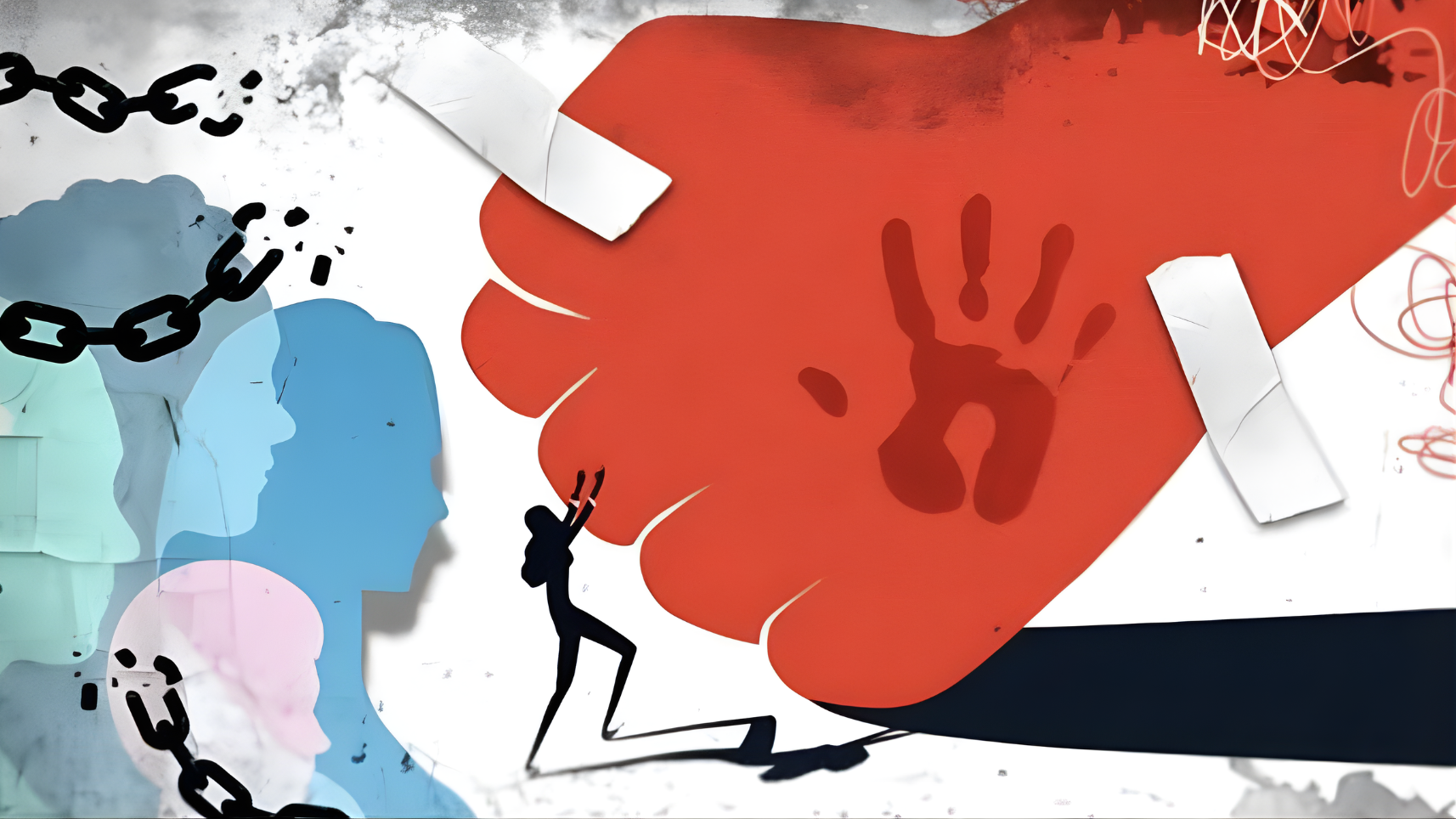
Political power in Bangladesh continues to circulate among men. Women appear as voters, as symbols, as footnotes, but rarely as architects. The recent election illustrates this clearly. Only seven women were directly elected to general seats in Parliament in 2026, a number strikingly similar to the seven women indirectly nominated from East Pakistan to the Constituent Assembly in 1970. Women remain citizens in name, but their citizenship is qualified and conditional.
Equality exists in constitutional text, but not in the lived design of law, politics, or social and economic life. The July movement promised renewal, yet Bangladesh 2.0 has so far been built largely by men, for men. From the Constitution to the courts, from the family to the university, from the kitchen to the factory floor, gender continues to determine whose rights can be suspended and whose pain can be ignored.
Constitutional betrayal: Inequality by design
The first and deepest source of women’s partial citizenship lies in the Constitution itself. Adopted in 1972, it promised equality for women but only “in public life”. That qualifier, tucked into Article 28, meant that women’s inequality was written into law at the inception of the Bangladeshi legal order. The post-war urgency of constitution-making is understandable; but had the text remained silent on this public–private distinction, courts might one day have interpreted equality more broadly. Instead, the founding text constrained women’s claims to justice from the beginning. Women were permitted to stand beside men in politics or office, but not as equals within marriage, property, or guardianship.
Even in the narrow domain of equal “public life”, women’s footing remains precarious. In recent months, several political groups have demanded the abolition of reserved seats for women in Parliament. Yet these seats remain one of the few entry points into politics for women, since parties rarely nominate them in winnable constituencies. Removing reserved seats without dismantling the deeper barriers to candidacy would be a regression.
Law, religion, and the failure of justice
Family law reproduces inequality within the private sphere. Under the different religious laws that govern marriage, divorce, and inheritance in Bangladesh, women do not share rights equal to those of men. Attempts to reform personal laws have repeatedly stalled under claims that reform would interfere with religion.
Across the Muslim world, family law has been reformed through ijtihad, or reasoned interpretation and wider consultation. Morocco’s 2004 family law reform and Tunisia’s restrictions on polygamy are examples. India codified women’s inheritance and divorce rights in the 1950s through the Hindu Code Bills. These reforms are imperfect, but they demonstrate that legal systems grounded in religious tradition can still pursue justice.
In Bangladesh, however, religion has often functioned as a boundary of political courage. Legislators and courts have treated reform as politically dangerous, even when injustice is plainly visible. What appears to be deference to faith is often simply the preservation of the status quo.
The majoritarian state
The question of women’s equality in Bangladesh has never been only about religion. It has been about how religion is used to define belonging. Political parties across the spectrum have treated faith as both a political resource and a tool of moral policing. The Constitution itself reflects this tension when it simultaneously embraces secularism and Islam as a state principle. That contradiction has allowed governments to invoke religion when convenient and ignore it when it is not. Women’s rights have often been the first casualty of this deliberate ambiguity.
One visible expression of this politics is the regulation of women’s bodies in public life. In majoritarian settings, control over women’s movement, dress, and behaviour becomes a marker of moral order. Over the years, clerics have issued fatwas restricting women’s public presence. Courts and rights activists have repeatedly intervened to declare such edicts illegal. Yet judicial intervention alone cannot permanently resolve an extralegal order that thrives on social power. Whenever civic space narrows, whether through heavy-handed state control or the rise of majoritarian or religious populism, the informal policing of women’s behaviour returns.
Recent public statements show how far this logic can travel. Some months ago, the media reported Bangladeshi religious and political figures admiring the “order” associated with Taliban governance, where courts operate without lawyers and authority is concentrated in male hands. Such remarks were not simply praise for administrative efficiency; they revealed an aspirational vision of power. Under Taliban rule, women are barred from secondary education and pushed out of public life. Admiration for such a system should alarm anyone who takes women’s equality seriously.
The same exclusions appear even in spaces that call themselves progressive. Panels, debates, and reform commissions in the post-uprising moment have been overwhelmingly male. Calls to normalise religious conservatives as “pluralism” have not been matched by comparable insistence on women’s participation. The implication is hard to miss: the religious Right must be accommodated; women can wait.
Justice deferred: From police station to the periphery
For women across Bangladesh, the path to justice is rarely straightforward. At the police station, they encounter disbelief or intimidation. At hospitals, forensic evidence may be delayed or mishandled. In court, proceedings stretch over years while witnesses face pressure to remain silent. Conviction rates in rape and other violent crimes against women remain, by some estimates, as low as 2 per cent.
Article 102 promises citizens the right to approach the High Court when other remedies are exhausted. In practice, it can function as a constitutional fig leaf. By the time a woman reaches the High Court, she has already endured the failures of police, doctors, prosecutors, and the wider legal system. For those without wealth or influence, the courtroom door may as well be closed. When formal institutions fail, public outrage becomes the only mechanism capable of compelling state action, and even that solidarity can fracture.
The Chittagong Hill Tracts remain one of the clearest examples of how inequality deepens at the periphery. Legally, the region continues to operate under the colonial-era Hill Tracts Regulation of 1900, which places it partially outside the ordinary jurisdiction of national law. That exceptional status has translated into exceptional vulnerability.
In September 2025, the rape of a twelve-year-old girl in Khagrachhari sparked protests that were met with prohibitions on assembly and state repression. Seven people died in the clashes that followed. A suspect was remanded, while others remained at large. According to a 2025 Share-Net Bangladesh study, of 17 reported rape cases involving indigenous women in the Hill Tracts, only five received police follow-up. The pattern reflects the same hierarchy that shapes justice across the country, only starker at the periphery.
The same logic of partial citizenship appears in the treatment of gender minorities. Bangladesh formally recognises a third gender, yet continues to criminalise same-sex relations under Section 377 of the Penal Code. Whatever moral disagreements may exist in society about homosexuality, criminal law should not be used to regulate the private lives of consenting adults. When trans activists such as Sahara Chowdhury, who stood alongside others during the July 2024 protests, later faced expulsion and vilification, it shows how quickly the language of inclusion can disappear once the political spectacle fades.
The political economy of dependence
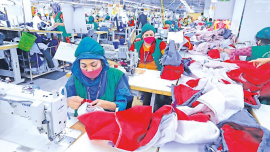
Economic policy has long reflected similar assumptions. Women’s labour is indispensable to the economy but is rarely recognised as such. Around 85 per cent of Bangladesh’s workforce operates within the informal sector, where women are heavily concentrated in low-paid and insecure work. The government recently acknowledged unpaid care labour in the national budget, and Bangladesh’s Time Use Survey measured domestic work for the first time.
Recognition alone does little to change structural conditions. Domestic workers remain largely unprotected under labour law. Women’s income is often treated as supplementary and is controlled by fathers, brothers, or husbands, who remain the recognised heads of households.
Development narratives often celebrate women’s resilience through microcredit and entrepreneurship programmes. Yet many such initiatives leave women with debt but without authority. The language of empowerment often focuses on rescuing women from violence or poverty. This framing mistakes the symptom for the cause. Violence persists because women lack equal power within the political system, the economy, and society.
Taken together, these legal, economic, and moral arrangements form a system that limits women’s full participation in public life. Constitutional ambiguity, unequal family law, informal labour markets, and programmes framed as empowerment often address the symptoms of inequality while leaving the deeper structures that produce it untouched.
Dehumanisation: Women as property
Across social classes, the treatment of women continues to follow a logic of possession disguised as protection. Control is framed as care. According to the Bangladesh Bureau of Statistics, 41.6 per cent of girls are married before the age of eighteen and more than eight per cent before fifteen. Early marriage is frequently rationalised as a form of protection. Poverty, social pressure, and fear of sexual violence combine to make marriage appear safer than independence. Parents who cannot afford to educate or protect their daughters may come to see marriage as the safer option. The result is the conversion of childhood into property and the erasure of choice and autonomy. Weak enforcement of child marriage laws, persistent dowry practices, and social surveillance of women’s movement reinforce the idea that women’s safety depends on control rather than freedom.
The demographic warning
Bangladesh’s fertility rate has now fallen below replacement level for the first time in its history. Demographers often interpret declining fertility as a sign of economic development and social change. Yet the picture is more complex. Research across countries shows that fertility patterns are also shaped by the conditions under which women live and work.
Societies in which women have autonomy, economic security, and support for balancing work and family life tend to sustain more stable population patterns. Where women face persistent insecurity, overwork, and unequal burdens of care, family life itself becomes harder to sustain. Equality, in this sense, is not only a moral or political question but also an economic one. Increasing women’s participation in the labour force and recognising unpaid care work are not only matters of fairness; they are part of the foundations that sustain families and communities.
Structural equality is necessary economic infrastructure. Legal reform must therefore move beyond symbolic recognition. Recognising unpaid care work must translate into childcare infrastructure, labour protections, and economic policies that support women’s autonomy.
The future is feminist
Bangladesh stands at a moment it calls renewal, yet women remain marginal to its authorship. From Parliament to panels, men continue to speak for the nation, while women remain an afterthought.
Given the accumulated injustices of our past, only feminist politics can complete the unfinished work of justice. Feminism is often caricatured as a demand for women’s superiority over men. In reality, it insists on something far more basic: that equality become a governing principle rather than a symbolic gesture. A democracy that incapacitates half its citizens cannot call itself free.
That shift requires legal reform that addresses structural inequality rather than reacting to violence after it occurs. The Anti-Discrimination Bill, still pending in Parliament, could mark an important step if enacted with meaningful enforcement. Laws that recognise unpaid care work, strengthen labour protections, and reform family law would move the conversation from episodic outrage towards structural equality.
The future of Bangladesh will not depend on winning the culture wars that consumed public debate during the reform fervour of the past two years. It will depend on whether equality remains performative or becomes a constitutional duty.
Dr Cynthia Farid is a lawyer and legal scholar.
Send your articles for Slow Reads to slowreads@thedailystar.net. Check out our submission guidelines for details.
International Women's Day / Beyond the celebration

Unequal homes

Abolish discriminatory inheritance laws now
Land, lineage, and the fight for Indigenous women’s rights

Online abuse is now a national crisis: Time to act

Why sexual harassment laws fail in practice

Women as non-citizens in Bangladesh — and why the future must be feminist
Public lands, patriarchal rules

Break barriers to women’s economic power

Editor's Note

Justice that lets every woman and girl live free from fear
Confronting gender inequality in Bangladesh’s labour laws
Women in justice and justice for women