Unequal homes
Under the laws currently in force in Bangladesh, the process of forming a family begins with marriage — entered into with the consent of a man aged 21 and a woman aged 18. Yet marriage is not merely two people walking a shared path through life. It carries with it a long continuum of family culture, religious values, and social expectations. There are times, however, when two people find it impossible to continue that journey together — and it is precisely at such moments that the issues of divorce, child custody, and maintenance come to the fore.
Case Study 1
Runa married Akbar in 2006 out of love, eloping against their families' wishes. Both families subsequently accepted the marriage. However, not long after the wedding, Runa began to suffer various forms of physical and psychological abuse at the hands of Akbar and his family members, on a range of pretexts.
When Runa was four months pregnant, Akbar and his family subjected her to further physical and mental abuse and drove her out of the home. As her parents were no longer alive, she took refuge at her maternal uncle's house, where she gave birth to a son. Even then, neither her husband nor anyone from his household enquired after her or the child, nor did they provide any maintenance whatsoever.
When Runa returned to her in-laws' home with her three-month-old son, Akbar and his family again refused to take her in and turned her away. In the meantime, Akbar had contracted a second marriage.
In 2010, Runa applied to Bangladesh Mahila Parishad — with her child — seeking both a peaceful resolution to her family crisis and shelter at Rokeya Sadan. Akbar was contacted on behalf of the organisation in an effort to reach an amicable settlement; however, he refused to take his wife and child back home or to provide any maintenance.
Subsequently, in 2011, assistance was provided to file a case in the Family Court for the maintenance of Runa and her son, as well as for the recovery of her dower (denmahr). The case remains ongoing to this day.
Case Study 2
In 2015, Promila and Subodh were married in accordance with Hindu rites and customs, in a family-arranged ceremony. Five years into the marriage, Promila discovered that Subodh had secretly contracted another marriage three years after their wedding, and that he had been regularly leaving home under the pretext of office tours in order to live with that woman. By this time, Promila had given birth to a son. Subodh provides no financial maintenance for Promila or their child. Promila works at a bank, and it is entirely from her own earnings that all household expenses are met. On various occasions, Subodh — claiming he needed funds to start a business — pressured Promila into taking out bank loans in her name, and he has not repaid the money. Subodh's parents support their son and are attempting to forcibly take their grandson away from Promila. Subodh, too, is threatening Promila over the phone in an effort to take the child away. Promila wishes to free herself from this relationship and seeks custody of her child.
These are not merely two isolated shadow cases. Across every region of the country, within families of many different communities, classes, and professions, countless individuals are being subjected to physical and psychological violence. What follows is a brief attempt to outline the legal framework governing marriage, divorce, maintenance, and child guardianship under the laws currently in force in Bangladesh.
In Bangladesh, Muslim marriage and divorce are governed by the Muslim Marriages and Divorces (Registration) Act, 1974, and the Muslim Family Laws Ordinance, 1961. Under these laws, both husband and wife have the right to dissolve the marriage. While the husband holds the direct and unilateral power of divorce, the wife may exercise the right to divorce in one of the following ways: through the delegated power of divorce (talaq-e-tafwiz), if such delegation has been recorded in Column 18 of the kabin-nama (marriage contract) — whether or not it has been so recorded — or through the court; alternatively, the marriage may be dissolved by mutual consent.
A Hindu marriage is solemnised in accordance with religious rites and observances, through the performance of the yajna (sacred fire ceremony) and the saptapadi (the seven steps). Under classical Hindu scriptural law, there is no provision for divorce. Bangladesh currently has the Hindu Marriage Act, 2012, under which registration of Hindu marriages is mandatory. This Act, too, contains no provision for divorce. However, the Hindu Married Women's Right to Separate Residence and Maintenance Act, 1946 grants Hindu married women the right to claim separate residence and maintenance in certain specified circumstances. Women may remarry upon the death of their husband. Although no formal provision for divorce exists, there is an established practice in Bangladesh whereby a Hindu woman may obtain a judicial declaration of separate residence through an application to the court, on the basis of which she may contract a subsequent marriage.
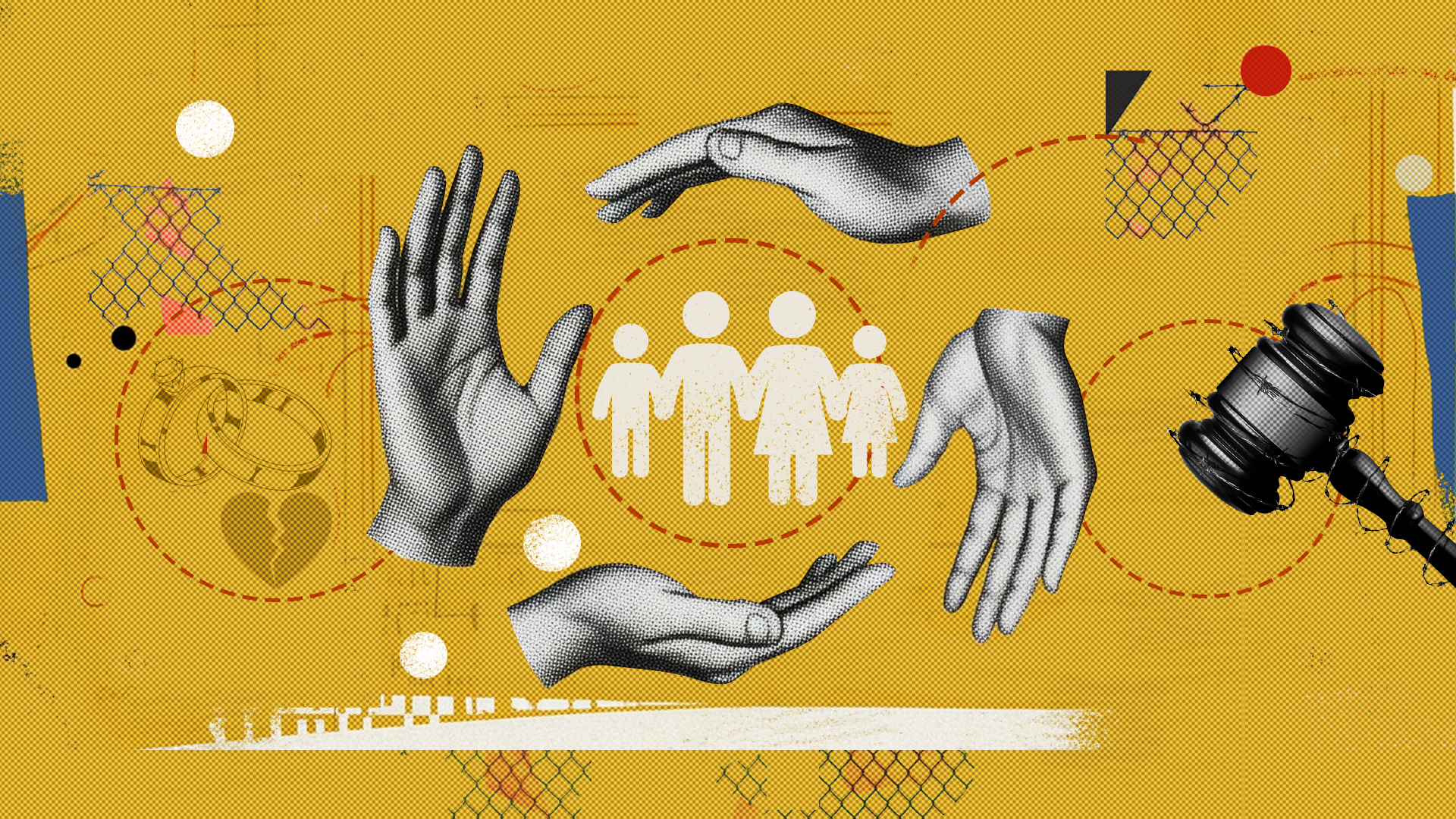
Under the Guardianship Act, 1890, and the Family Courts Act, 2023, guardianship in Bangladesh refers to the care, custody, and supervision of the person and property of a minor — that is, a child under the age of 18. While the father is recognised as the natural guardian, the court may appoint the mother or any other person as guardian in the best interests of the child (welfare of the minor). In such cases, the court gives paramount consideration to the child's overall wellbeing.
Maintenance (bharanposan) refers to the fulfilment of all basic necessities required for a person's sustenance — encompassing food, clothing, shelter, medical care, education, and other related expenses.
Following marriage, the provision of maintenance is an obligation incumbent upon the husband and a right vested in the wife. It bears no relation to the husband's financial prosperity, and his economic circumstances have no bearing whatsoever on the wife's entitlement. Should a divorce occur for any reason, the wife shall remain entitled to maintenance even after the dissolution of the marriage. This is, however, a limited right and subsists only for a restricted period of time. In law, the responsibility for a child's maintenance rests with the father — even where the child is living with the mother during the pendency of divorce proceedings, the financial responsibility for the child's upkeep remains with the father. In the case of Muslims, it is the father's obligation to provide maintenance for a son until he attains majority, and for a daughter until she is married. A Hindu, regardless of whether or not he possesses any property, is legally bound to maintain his minor son, his unmarried daughter, and his aged parents.
A review of the family laws currently in force reveals that the existing provisions governing marriage, divorce, child guardianship, and maintenance are actively generating inequality and asymmetrical power relations between women and men within the family. Beyond this, the fragmentation of family law along lines of community and religion is producing not only disparity between women and men, but also inequity and dispossession among women themselves. As citizens of Bangladesh, what we demand — in order to build families, a society, and a state grounded in true equality between women and men — is the guarantee of equal rights and the freedom to live in safety and dignity.
Adv. Dipti Shikder is the Director, Legal Advocacy & Lobby, Legal Aid Sub-committee at Bangladesh Mahila Parishad (BMP)
Send your articles for Slow Reads to slowreads@thedailystar.net. Check out our submission guidelines for details.
International Women's Day / Beyond the celebration

Unequal homes

Abolish discriminatory inheritance laws now
Land, lineage, and the fight for Indigenous women’s rights

Online abuse is now a national crisis: Time to act
Why sexual harassment laws fail in practice
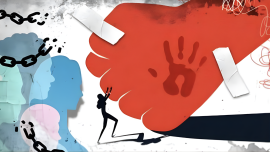
Women as non-citizens in Bangladesh — and why the future must be feminist
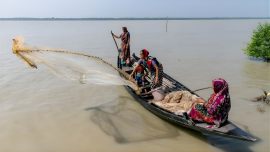
Public lands, patriarchal rules

Break barriers to women’s economic power

Editor's Note

Justice that lets every woman and girl live free from fear
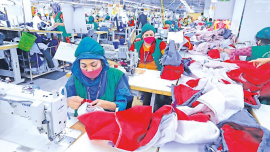
Confronting gender inequality in Bangladesh’s labour laws
Women in justice and justice for women