Break barriers to women’s economic power
In Bangladesh, we have a constitutional mandate in favour of non-discrimination and equality, regardless of a person’s gender. However, the reality in our society does not always reflect this constitutional commitment to women’s equality. Bangladesh has made notable progress in women’s education, economic participation, and social empowerment over the past few decades. Women’s increasing involvement in the labour market, education, and governance reflects the country’s efforts to advance gender equality. Women have also made significant gains in politics, including holding high-profile leadership roles.
Nevertheless, their representation in key decision-making bodies remains limited. For instance, the recent Consensus Commission, which includes seven members, excluded women entirely, undermining the rights guaranteed under Article 19 of the Constitution of Bangladesh. Women’s journey towards full empowerment continues to face persistent challenges, including structural inequalities, socio-cultural norms, and resistance from conservative religious groups. These obstacles restrict women’s freedoms and constrain their full participation in national development.
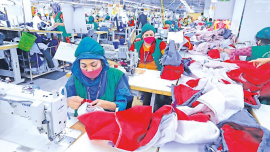
In the context of economic development in general, and women’s participation in the economy in particular, women have played a crucial role in Bangladesh’s growth over the last several decades. Women constitute the majority of the RMG workforce, contributing significantly to household incomes and national GDP; however, in recent years, women’s participation in the RMG workforce has declined to around 53 per cent from the highs of approximately 80 per cent in the previous decade. Microfinance programmes and small enterprise initiatives have further enabled women to develop entrepreneurial skills, thereby promoting financial independence and socio-economic empowerment. What is also often unrecognised are women’s contributions to agriculture, animal husbandry, and service-related activities such as domestic work, which are significant yet unaccounted for, as they fall within the informal sector.
Despite these achievements, women’s economic participation remains visibly constrained by informal employment, limited social protection, and workplace harassment. Approximately 96 per cent of female workers are engaged in the informal sector, making them particularly vulnerable to exploitation and economic instability. Women are often unable to reach leadership positions in industries such as RMG, where managerial and decision-making roles remain predominantly male-dominated, not because of a lack of ability or legal rights, but more often due to entrenched socio-cultural attitudes.
While legal frameworks exist to protect women’s rights, gaps remain in their enforcement and implementation. Policies frequently fail to address intersectional challenges, such as women’s unpaid labour, vulnerabilities arising from informal employment, and political underrepresentation. The laws of Bangladesh provide a number of protections and benefits for women workers. For example, there are specific legal provisions relating to maternity leave and benefits. The Labour Act 2006 provides for maternity leave of 16 weeks—eight weeks before the expected date of delivery and eight weeks after delivery. Wages must be paid in full in cash and disbursed promptly upon proof of pregnancy and delivery. An employee cannot be assigned arduous tasks, required to stand for prolonged periods, or given work that may be harmful to her health during this time. There are also laws aimed at preventing child marriage, domestic violence, violence against women, acid violence, and other related offences; however, the enforcement of these laws must be pursued more rigorously.
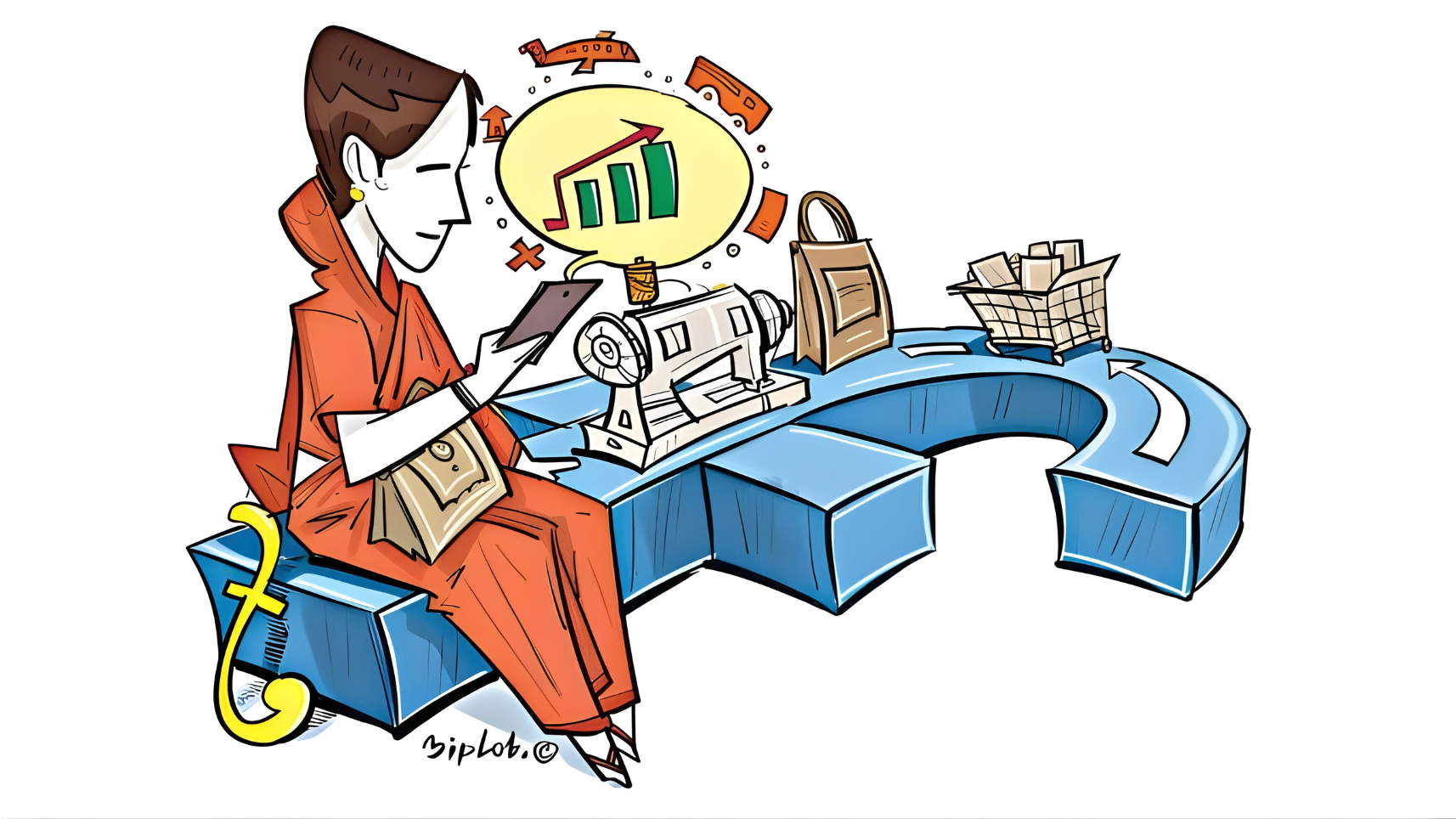
Muslim family law and other religious personal laws contain provisions regarding the distribution of inherited property, which have significant effects on the economic and financial affairs of women. Women are most often not given their mandated share of property on various pretexts. Even when they do receive it, they are frequently allotted less valuable land than male heirs. This reality consequently hampers women’s access to finance due to a lack of collateral. Bangladesh has introduced policies to ease the process for women entrepreneurs to obtain loans, including directing banks to provide up to BDT 25 lakh in loans to women entrepreneurs without collateral. There is no law requiring a guarantee from a male family member for a female entrepreneur to obtain a loan. However, in practice, bank officials tend to require such a guarantee. The Financial Express reported in 2024 that female entrepreneurs in small and medium-sized enterprises have very limited access to collateral-free loans from commercial banks. The report highlights that less than 5 per cent of total SME loans go to women.
During the Covid pademic, there was an upsurge in e-commerce and f-commerce, or Facebook commerce. Many women used Facebook to provide goods and services, including food and homecare, at affordable prices, facilitated by the absence of large overhead costs. However, the requirement of a trade licence in order to obtain bank finance became a constraint on expanding these businesses. Obtaining a trade licence requires a commercial address, which is expensive and often unnecessary for such small-sized enterprises. Many pressure groups, including chambers of commerce such as MCCI and DCCI, have strongly advocated the removal of such unnecessary constraints on the growth of these businesses. Some initiatives have also been undertaken to link women-led micro, cottage, and small enterprises into the supply chains of larger businesses. More positive, action-oriented policies need to be put in place to ensure that women-led businesses have the legal, policy, and fiscal framework necessary to formally enter the domain of economic activity, with full recognition of their enormous contributions to the nation. Ensuring their economic independence and physical safety is sine qua non for achieving genuine empowerment.
Economically, women’s access to leadership roles, professional training, and entrepreneurial opportunities must be expanded. Recognition of unpaid care work, alongside the provision of flexible arrangements or social protection, would help alleviate the disproportionate domestic burden that many women bear. Industries such as RMG, where women form the backbone of the workforce, could benefit from programmes that foster mentorship, leadership development, and fair workplace practices, thereby promoting both productivity and equality.
Socially, fostering cultural change is essential. Engaging community and religious leaders in dialogue about gender equality, incorporating gender education into curricula, and promoting the equitable distribution of household responsibilities can gradually reshape societal attitudes. In parallel, women’s safety, both offline and online, requires stronger safeguards, effective reporting mechanisms, and greater public awareness to ensure that participation in public life is secure and inclusive.
Finally, robust data collection and monitoring mechanisms are critical for informed policy-making. Accurate, gender-disaggregated data can guide interventions, assess progress, and enable timely adjustments to programmes designed to empower women. Through such a multi-dimensional strategy—linking law, the economy, culture, and safety—Bangladesh can move towards sustainable and meaningful empowerment of its women, allowing them not merely to participate, but to lead and shape the country’s future.
The discrepancy between women’s formal legal rights and their practical political influence remains stark. Increasing women’s participation in policy-making, administrative boards, and governance structures is essential to ensure that their perspectives inform national development. Fifty-one per cent of the country’s population must be mainstreamed if we are to address the aspirations of our growing youth population, enabling them to dream big and reach for the stars. We owe it to them.
Nihad Kabir is a Barrister at Law, Senior Advocate, Senior Partner at Syed Ishtiaq Ahmed & Associates.
Send your articles for Slow Reads to slowreads@thedailystar.net. Check out our submission guidelines for details.
International Women's Day / Beyond the celebration
Unequal homes
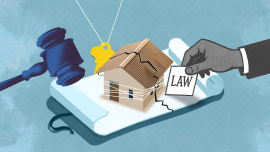
Abolish discriminatory inheritance laws now
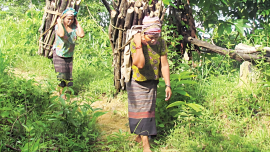
Land, lineage, and the fight for Indigenous women’s rights

Online abuse is now a national crisis: Time to act

Why sexual harassment laws fail in practice
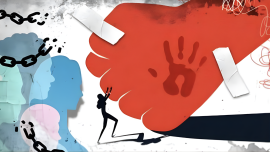
Women as non-citizens in Bangladesh — and why the future must be feminist
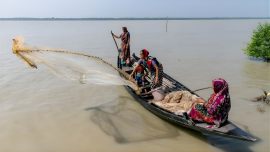
Public lands, patriarchal rules

Break barriers to women’s economic power

Editor's Note

Justice that lets every woman and girl live free from fear
Confronting gender inequality in Bangladesh’s labour laws
Women in justice and justice for women