Public lands, patriarchal rules

Land is more than soil. It is security in old age, collateral at the bank, and a buffer against poverty. While religion-based inheritance laws and other discriminatory land policies continue to deny women equal ownership within families, inequality does not end there. Rural and marginalised women face another layer of exclusion: restrictive systems governing public lands and wetlands that continue to privilege the male “head of household”, effectively shutting women out of state-managed resources as well.
“Even under laws such as the State Acquisition and Tenancy Act 1950, access to khas land, jolmohals (waterbodies), and forests is heavily influenced by local power dynamics. Local elites often control these resources, sidelining genuine beneficiaries,” mentioned Fariha Jesmin, Programme Manager at Badabon Sangho, a women’s rights organisation that works closely with rural and marginalised women. “Beneficiary lists may be decided based on political connections rather than need, and bureaucratic processes are lengthy, opaque, and complex, which are often inaccessible to rural women.”
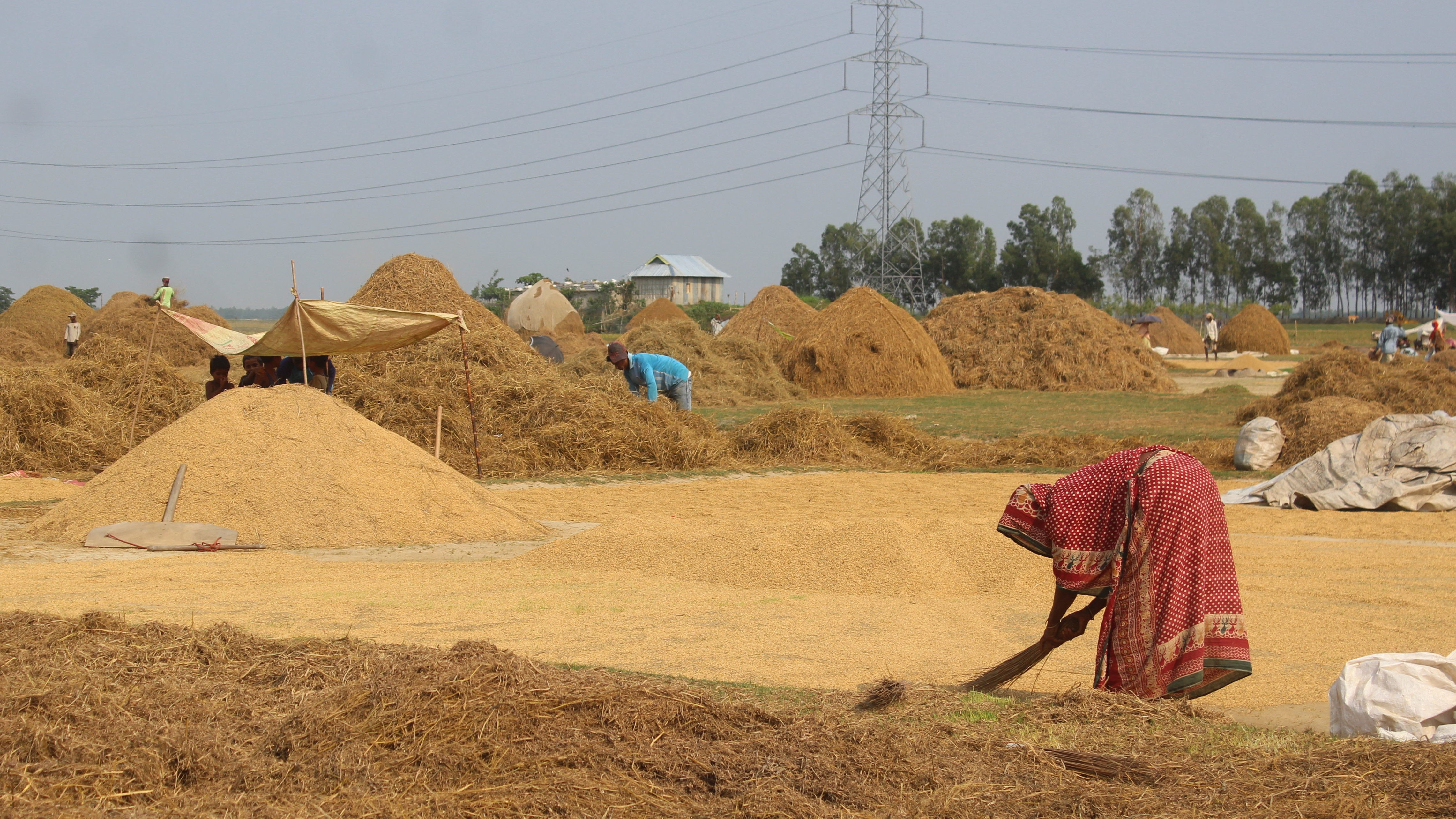
Across rural Bangladesh, thousands of women contribute daily to farming, fishing, and resource management. They cultivate crops, rear livestock, mend nets, process fish, and manage household economies. But when it comes to formal access to public land, wetlands, and agricultural credit, they remain largely invisible. “While inheritance rights remain a crucial issue, women's access to public land is a broader concern, with over 60 per cent of the population landless. Bangladesh's vast khas land remains ineffectively distributed,” emphasised Rowshan Jahan Moni, Deputy Executive Director, ALRD (Association for Land Reform and Development).
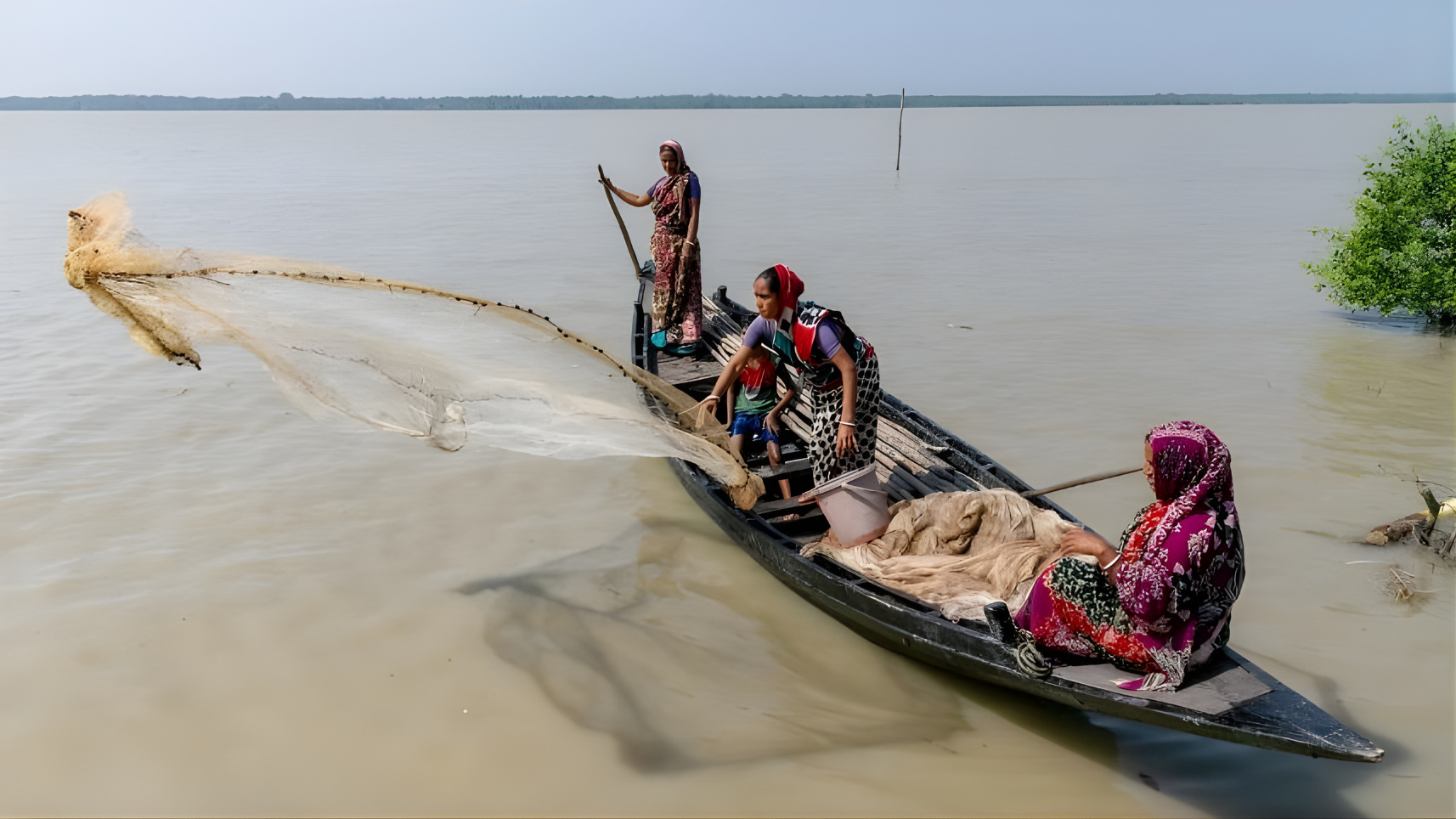
This exclusion is especially stark given women’s overwhelming presence in the rural economy. According to the BBS Survey (2022), women account for 58 per cent of agricultural workers, and nearly 74 per cent of all working women are engaged in agriculture. Yet ownership and control tell a different story. Data from SAJIDA Foundation show that only about 13 per cent of women in rural land-owning households hold formal title deeds, and a mere four to five per cent exercise effective control over agricultural land. A similar pattern is visible in fisheries: in the coastal and haor regions, an estimated 12 to 14 lakh women are directly or indirectly involved in fishing, according to the Department of Fisheries. Despite their central role in production, these women are discriminated against even in law and policy—recognised as labourers in practice, but rarely acknowledged as rights-holders on paper.
Recognition as a barrier
Recognition, in the context of women involved in the rural economy, is not merely symbolic—it determines who can lease public wetlands, access credit, secure social protection, or claim compensation after disasters. The Jalmohal Management Policy 2009 prioritises ‘genuine’ fishers organised into cooperatives. Yet despite women’s extensive involvement in fisheries, they are rarely recognised as fishers. Cooperatives are typically male-dominated, limiting women’s membership and decision-making power. Without cooperative membership and official recognition, women cannot apply for wetland leases.
“Male domination in cooperatives often limits women’s participation in decision-making and access to leases. The leasing process itself is complicated, requiring applications, verification, and bidding through government offices that are often inaccessible to rural women,” said Jesmin from Badabon Sangho.
The government issues fisher ID cards under the National Fisheries Policy 1998 to recognise legitimate fishers and grant benefits, including access to jolmohals. In practice, however, women are rarely issued these cards because fishing is socially viewed as men’s work. Without an ID, women cannot form eligible groups or apply for leases, leaving many active fisherwomen practically invisible.
“We are asked for our identification card every time we go to the Sundarbans and are often mistaken for pirates. An ID card would not only help us access support but also serve as recognition of our hard work,” said Selina Begum, a fisher from Chila-Mongla, Bagerhat.
Yet even ID cards may not be enough. The current legal definition of fisherfolk fails to recognise the full range of tasks women perform. As a result, they remain excluded from schemes such as Vulnerable Group Feeding (VGF), which is restricted to those engaged in Hilsa harvesting, a role dominated by men. “An ID card alone is not the solution. Policy reforms are required, with plans to introduce a new Motshojibi Card that better reflects women’s contributions,” noted an official from the Department of Fisheries.
The Khas Land Management and Distribution Policy of 1997 further entrenches discrimination by prioritising households with an “able-bodied son” when assessing applications from widows or women abandoned by their husbands. This preference for male-headed households disregards women’s own agency and capacity to farm, effectively penalising those without male members in the family.
Similar patterns of exclusion persist in agriculture. Although women constitute a large share of the farming workforce, the absence of land titles and official farmer status deprives them of access to government programmes. While khas land policies identify landless families, widows, and divorced women as priority beneficiaries, implementation often excludes their names from allocation documents. Joint ownership between spouses remains rare, and beneficiary lists are frequently shaped by political influence rather than need, sidelining marginalised women with little social capital.
The Khas Land Management and Distribution Policy of 1997 further entrenches discrimination by prioritising households with an “able-bodied son” when assessing applications from widows or women abandoned by their husbands. This preference for male-headed households disregards women’s own agency and capacity to farm, effectively penalising those without male members in the family.
Rafiqul Islam, Program Officer (Advocacy) at ALRD, raised another concern: “While the government's agricultural khas land distribution was a positive initiative, it has been informally suspended since 2014. Influential individuals continue to occupy khas land.” This leaves marginalised women in a state of perpetual waiting, while politically connected elites continue to illegally occupy and exploit these public lands.
Moreover, land ownership is closely tied to financial inclusion. Banks typically require land documents as collateral for agricultural loans. Although the Bangladesh Bank has provisions supporting women borrowers under agricultural and CMSME programmes, implementation remains uneven. Because land is rarely registered in women’s names, they struggle to meet collateral requirements. “Even when women are actively farming, they are often seen as ‘helpers’ rather than independent farmers, which reduces their eligibility for loans. Although policies allow for collateral-free or small loans for women, many local bank officials are hesitant to implement these provisions,” said Jesmin from Badabon Sangho. Women’s limited mobility, smaller professional networks, ‘land illiteracy’, and lack of access to financial information compound the problem.
What must change now
• Formally recognise women as producers and workers in all land, fisheries, and agricultural policies and databases.
• Issue fisher and farmer ID cards to women and reform eligibility guidelines to ensure transparent, inclusive identification processes.
• Amend the Jalmohal Management Policy 2009 to recognise women’s roles in pre- and post-harvest fisheries work and introduce mandatory quotas for women-led cooperatives.
• Promote women-friendly cooperatives and producer groups to strengthen collective bargaining and access to leases.
• Reform khas land distribution policies to allow joint spousal ownership or direct allocation to women, and digitise land records to reduce manipulation.
• Expand legal aid and community support services to help women navigate bureaucratic systems.
• Improve inter-ministerial coordination among fisheries, land, agriculture, and finance authorities to ensure inclusive and effective policy implementation.
Public lands are meant to serve the public good. Yet when patriarchal norms govern access, they cease to function as equalising tools. Until women’s names appear on land titles, lease agreements, ID cards, and loan documents, the gap between policy and practice will continue to persist.
Miftahul Jannat is a journalist at The Daily Star. She can be reached at miftaul@thedailystar.net
Send your articles for Slow Reads to slowreads@thedailystar.net. Check out our submission guidelines for details.

International Women's Day / Beyond the celebration

Unequal homes

Abolish discriminatory inheritance laws now
Land, lineage, and the fight for Indigenous women’s rights

Online abuse is now a national crisis: Time to act

Why sexual harassment laws fail in practice

Women as non-citizens in Bangladesh — and why the future must be feminist
Public lands, patriarchal rules

Break barriers to women’s economic power

Editor's Note

Justice that lets every woman and girl live free from fear
Confronting gender inequality in Bangladesh’s labour laws
Women in justice and justice for women