Land, lineage, and the fight for Indigenous women’s rights
The personal laws, including those on inheritance, that govern the lives of Indigenous peoples are rooted in custom. In contrast to the personal laws applicable to other citizens in the plains, the customary laws of Indigenous peoples of the Chittagong Hill Tracts are based on membership in one of the eleven distinct Indigenous communities, rather than on their religious affiliations. The common thread between the two is their shared denial of equal rights to women.
Though there is no uniform customary law governing all Indigenous communities across the region, the laws on inheritance follow a general principle while varying significantly between different ethnic communities and even among clans within the same community. Regarding the right to inherit land, the prevailing trend is that women cannot inherit their father’s immovable property if brothers are present, nor do they have rights to their husbands' property. In some communities, if there are no sons, daughters inherit property equally, while in others paternal uncles inherit. Additionally, customs differ concerning pre-marital property owned and post-marital property acquired by the mother, with some communities allowing equal inheritance for both sons and daughters, while in others daughters are the sole heirs. Only two clans, each from two ethnic communities, maintain a strict practice of allowing women to inherit paternal and spousal property — and even then, the share allocated to women remains substantially smaller than that granted to their brothers or children. The absence or inequality of inheritance rights has far-reaching consequences for Indigenous women — depriving them of attaining financial autonomy, diminishing their agency in decision-making, fostering their dependence on, or in extreme cases their subjugation to, male relatives, and ultimately reinforcing the very patriarchal systems that sustain their marginalisation.
While the substance of inheritance laws is inherently discriminatory towards women, the way traditional courts and the communities concerned interpret and enforce them further amplifies these inequalities. It needs to be noted that, unlike in the plains where the manner of civil litigation is regulated by the Code of Civil Procedure 1908 and the Family Court Ordinance 1985, these have no application in the CHT due to its specialised administrative regulations. Instead, personal law matters are tried by the chiefs of Mouzas and Circles. Given that these laws are regulated by unwritten customs, their application is subject to both certainty and confusion or discrepancy, depending on the knowledge, understanding of the laws, and competence of the village elders and/or traditional leaders presiding over traditional courts. The situation is further compounded by the fact that the composition of the traditional leadership is exclusively male; hence the interpretation of customary law is inherently shaped by, and reflective of, their privileged patriarchal worldview. In an effort to redress the issue, after years of awareness-raising campaigns on gender equality, efforts to build women’s leadership capacity, and collective consensus-building among communities, Indigenous peoples were able to initiate and sustain a reform that sought to reshape the traditional leadership system by introducing the appointment of Indigenous women to positions of traditional leadership. Twelve years on, much remains to be done. Yet meaningful improvements, in the form of comparatively less gender-discriminatory verdicts in family dispute cases, have already become evident.
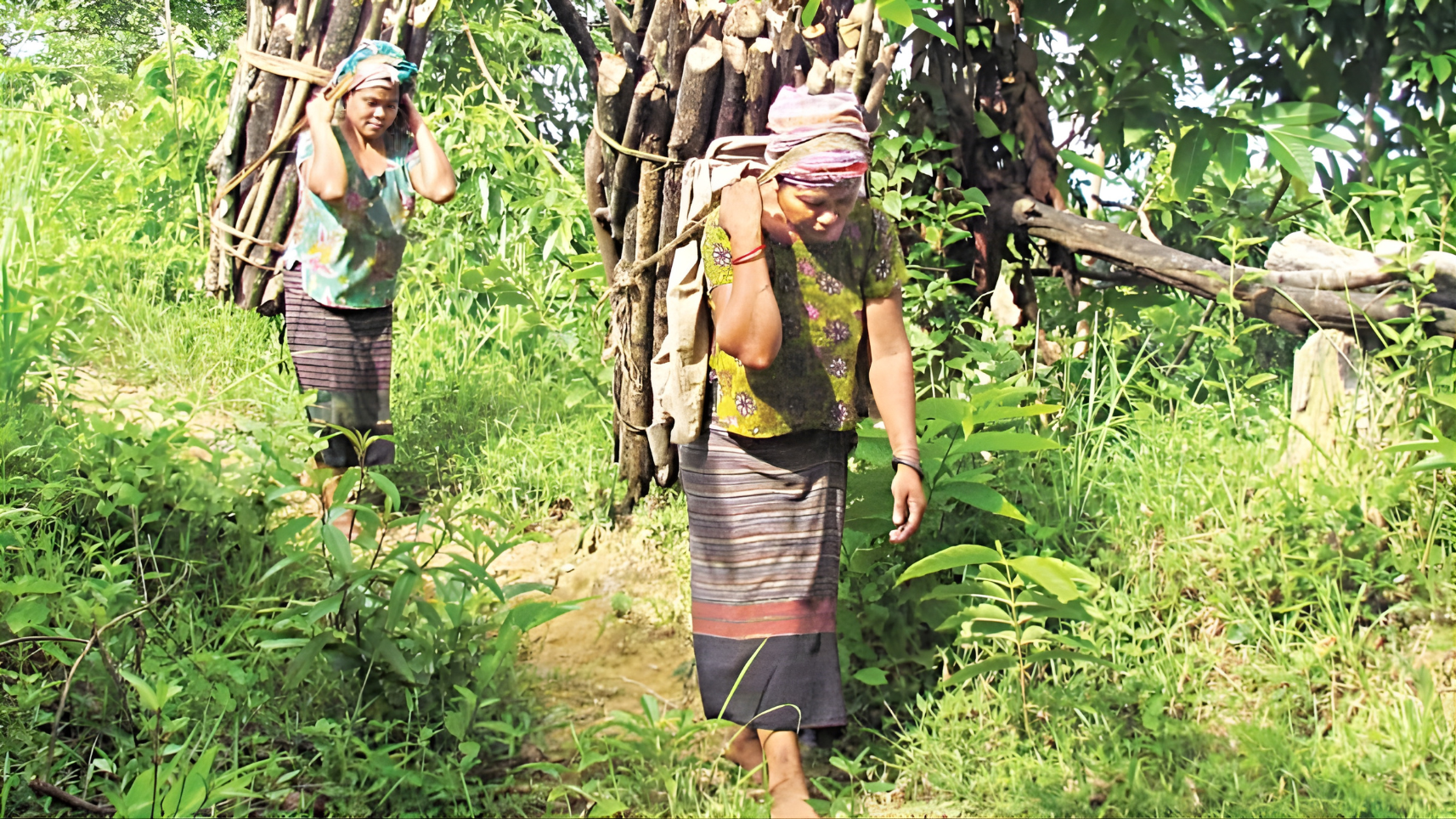
With regard to the content of the inheritance laws, the call to secure inheritance rights for Indigenous women in the CHT has steadily gained ground in recent years, thanks to the continued efforts of Indigenous women’s rights activists. Proponents of women’s rights have pointed out that, unlike personal laws that are rooted in divine commandments and hence cannot be changed, customary laws remain fluid, adaptable and, essentially, reformable. Laws emerge from prevailing social practices and evolve organically as those practices shift over time — unless such change is deliberately arrested.
Resistance to such reform stems from several quarters, most notably the imperative to preserve custom and the rejection of externally imposed ideas. Nevertheless, gender-discriminatory customs are capable of being reformed entirely from within, without external interference: first by securing community consensus, then through precedent-setting rulings of traditional courts. The outlawing of the long-standing custom of polygyny within the Chakma community is a testament to this.
On reforming inheritance law, the Bawm Indigenous community offers a compelling example, having collectively reformed inheritance laws that once denied women property rights, and by doing so secured Bawm women's right to inheritance, albeit not on equal terms with men. This reform stands as a precedent that other Indigenous communities can draw from and replicate in their own contexts. Beyond the reforms themselves, these cases also demonstrate Indigenous peoples’ right to self-determination in action — exercising autonomy over internal affairs and decisions on matters affecting them.
The concern most widely shared among Indigenous populations in opposing women's inheritance of land centres on the increasing instances of exogamous marriages in the CHT — particularly cases of Indigenous women entering into unions with non-Indigenous men from different religious backgrounds. Like the majority Bengali community, Indigenous communities are organised around patrilineal descent, in which a woman, upon marriage, is expected to shed her pre-marital ethnic and religious identity and assume those of her husband, with their children continuing his family's lineage. Consequently, within this patrilineal structure, granting Indigenous women inheritance rights is seen as a threat to the continuity of intact landholdings within families, clans, and ethnic communities — and by extension, as eroding cohesion and the very fabric of Indigenous society. Considering the long history of land disputes between Indigenous peoples and non-Indigenous encroachers, the concern that Indigenous women will be deliberately sought out for marriage as a means of gaining access to Indigenous land cannot be readily discounted. Regardless of how contentious this viewpoint may be, this concern held by the vast majority of Indigenous populations must be brought to the forefront and subjected to thorough deliberation — for without addressing it directly, any reform aimed at securing land inheritance rights for Indigenous women is unlikely to take hold. The key challenge lies in arriving at a resolution that simultaneously upholds women's equal rights while preserving and safeguarding the identity and integrity of Indigenous peoples and their societies.
Looking beyond one's own community for answers can be a valuable approach — particularly by studying the practices and/or reform initiatives of Indigenous communities elsewhere that operate under similar jurisdictional conditions and grapple with similar challenges. The inheritance law of the plainland Indigenous Rakhine people, for instance, can be considered the most gender-neutral law among all the Indigenous communities in Bangladesh. While men and women are equally entitled to inheritance of parental property, the share each receives may differ based on their contribution to the family rather than their gender, reflecting a principle of non-discrimination on the basis of gender and of equitable rather than strictly equal rights. All children and the surviving spouse are entitled to inherit from a deceased person’s estate, irrespective of their gender. However, the inheritance right is revoked for a child who has failed to fulfil his or her duties toward their parents during their lifetime in the manner expected of a responsible child. Within the Rakhine community, a child who enters into an exogamous marriage, particularly with a non-Indigenous person from a different religious background, is regarded as having acted in defiance of familial and communal expectations, effectively rendering him or her disobedient, and thereby disentitling the child from land inheritance.
There are other examples from around the world that merit careful observation as well. However, communities should exercise caution before replicating practices or reform initiatives from other Indigenous communities, and should extensively examine the unique historical, socio-cultural, economic, and political contexts that have shaped and sustained those practices within those societies.
What remains clear is that sustained awareness-raising efforts on the equal rights of women are essential to cultivating the broad-based consensus necessary for securing Indigenous women’s land inheritance rights. Although the process is inherently lengthy, it is precisely this deliberateness that will lend the resulting reforms their legitimacy and sustainability.
Rani Yan Yan is an Indigenous peoples' Human Rights Defender and Advisor of Chakma Circle, Rangamati, Chittagong Hill Tracts (CHT)
Send your articles for Slow Reads to slowreads@thedailystar.net. Check out our submission guidelines for details.

International Women's Day / Beyond the celebration

Unequal homes

Abolish discriminatory inheritance laws now
Land, lineage, and the fight for Indigenous women’s rights

Online abuse is now a national crisis: Time to act
Why sexual harassment laws fail in practice
Women as non-citizens in Bangladesh — and why the future must be feminist
Public lands, patriarchal rules

Break barriers to women’s economic power

Editor's Note

Justice that lets every woman and girl live free from fear

Confronting gender inequality in Bangladesh’s labour laws
Women in justice and justice for women