


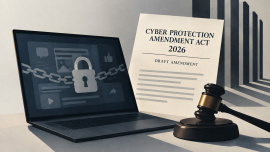
Law Review / The proposed Cyber Protection (Amendment) Act and free speech
5 October 2026
•
Law & Our Rights
Law Book Review / The worker at the end of the supply chain
7 October 2026
•
Law & Our Rights

Law Watch / Bangladesh’s measles crisis and the question of legal responsibility
7 October 2026
•
Law & Our Rights

Law Vision / How to ensure responsible use of AI in the courtroom
30 September 2026
•
Law Vision

Rights Advocacy / A new start for Bangladesh's National Human Rights Commission: The Real Test Begins Now
30 September 2026
•
RIGHTS ADVOCACY

How the proposed changes to the Cyber Protection Act contradict human rights standards
30 September 2026
•
Law & Our Rights

Law Opinion / Judicial Independence and the Quest for Institutional Autonomy in Bangladesh
23 September 2026
•
Law & Our Rights
BDCIDS Launches Discourse Series on Bangladesh and International Dispute Settlement
25 September 2026
•
Law & Our Rights

Reviewing the Views / The implications of using AI in adjudicating legal cases
9 September 2026
•
Law & Our Rights

Law Interview / The law addresses a long-standing social problem concerning daughters’ shares in their parents' property
16 September 2026
•
Law & Our Rights
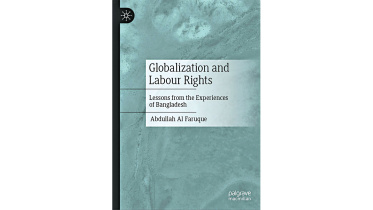
The worker at the end of the supply chain
Globalization has a habit of making people disappear.
7 October 2026

Bangladesh’s measles crisis and the question of legal responsibility
Measles is amongst the most preventable diseases known to medicine.
7 October 2026
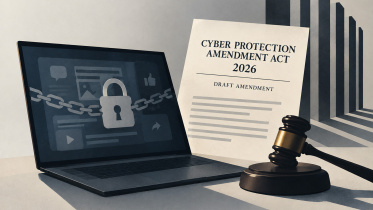
The proposed Cyber Protection (Amendment) Act and free speech
The Cyber Protection Act, 2026 (the ‘Act’) is the primary law regulating Bangladeshi citizens’ activities online. Recently, an Amendment bill has been proposed, and it has garnered the attention of netizens for some of its vague provisions.
5 October 2026
A new start for Bangladesh's National Human Rights Commission: The Real Test Begins Now
On 6 September, Parliament adopted a new legal framework for Bangladesh's National Human Rights Commission (NHRC), an institution that has long faced criticism over its independence and effectiveness.
30 September 2026

How the proposed changes to the Cyber Protection Act contradict human rights standards
We have a complicated history with cyber laws. The ICT Act, 2006; the Digital Security Act, 2018; and the Cyber Security Act, 2023 were all criticised for curtailing freedom of expression.
30 September 2026

How to ensure responsible use of AI in the courtroom
Should artificial intelligence (AI) be allowed inside the courtroom, and if so, how far should its role extend?
30 September 2026
BDCIDS Launches Discourse Series on Bangladesh and International Dispute Settlement
The Bangladesh Centre for International Dispute Settlement (BDCIDS) formally commenced its journey on 17 September, a date chosen to commemorate the 52nd anniversary of Bangladesh’s admission to the United Nations.
25 September 2026
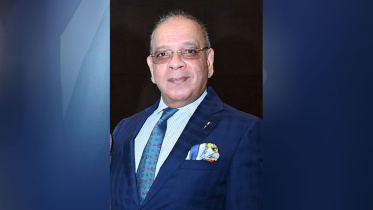
Judicial Independence and the Quest for Institutional Autonomy in Bangladesh
When we speak of constitutional law, we are accustomed to speaking of texts. But constitutions are not merely texts.
23 September 2026

Notable changes made to the Transfer of Property law
Recently, the government promulgated the Transfer of Property (Amendment) Act, 2026, creating a new category of gift which allows the donor to retain the right to enjoy the property’s benefits during their lifetime. The amendment inserted two new provisions after section 122 relating to gift, i.e. sections 122A and 122B.
18 September 2026

The law addresses a long-standing social problem concerning daughters’ shares in their parents' property
Recently, the government amended the Transfer of Property Act 2026, which introduces legal recognition of lifetime usufruct rights in respect of the transfer of property by way of gift.
16 September 2026
The protection of elderly parents is both a social and legal concern
Recently, the government amended the Transfer of Property Act 2026, which introduces legal recognition of lifetime usufruct rights in respect of the transfer of property by way of gift.
16 September 2026

Revisiting the administrative tribunal law
In administrative law, a ‘Tribunal’ is defined as an adjudicating authority that is neither a court nor an executive department.
9 September 2026

Rights and remedies of elderly parents
An elderly couple lives next door to us. Although both of their children are affluent, they do not visit their old parents or provide any sort of financial support. The couple is now very old and feeble, and they even struggle to manage daily household activities, such as buying medicines and arranging regular meals.
9 September 2026

The implications of using AI in adjudicating legal cases
In recent times, the vast expansion and regular use of Artificial Intelligence (AI) tools, more specifically Large Language Model (LLM) chatbots, such as ChatGPT, have gained immense popularity due to their free availability.
9 September 2026

Reserving seats for women on public transport
In our day-to-day lives, we often hear derogatory remarks involving designated women’s seats on public transport.
2 September 2026

The case for recognising curative petition in Bangladesh
Every litigation must come to an end. Criminal trials are not an exception to this principle. When a person is sentenced to death, the decision too eventually becomes final after it passes certain stages.
2 September 2026

Protecting Bangladesh’s ecological heritage through law
The enactment of the Forest and Tree Conservation Act, 2026 marks a significant development in Bangladesh’s environmental law regime.
26 August 2026

Workers’ rights and remedies against unjustified terminations
Lay-off, retrenchment and unjustified dismissals have become a pervasive reality for Bangladeshi workers, especially in the Ready-Made Garments (RMG) sector.
26 August 2026

Remedies for excessive electricity bills
Recently, a growing number of consumers across Bangladesh have reported unusually high electricity bills, with many claiming their monthly charges doubled or even tripled compared to previous billing cycles. In such circumstances, consumers have been baffled by one common question: where to seek redress, and how to avail it?
19 August 2026
When confessional statements may not lead to conviction
When an accused is reported to have confessed to the magistrate, most readers assume it to be conclusive evidence of guilt.
19 August 2026
Seven parties including NCP, BJP, AB party failed to submit poll expenses to EC
26 June 2026
•
National Election 2026
2026 Bangladesh elections 'a democratic milestone': Commonwealth Observer Group
15 June 2026
•
National Election 2026
EC gives 21 candidates until June 14 to file election expenditure reports
24 May 2026
•
National Election 2026
Local govt polls ‘challenging’, but no lack of effort: CEC
21 May 2026
•
National Election 2026