


Road accidents and the penalty regime
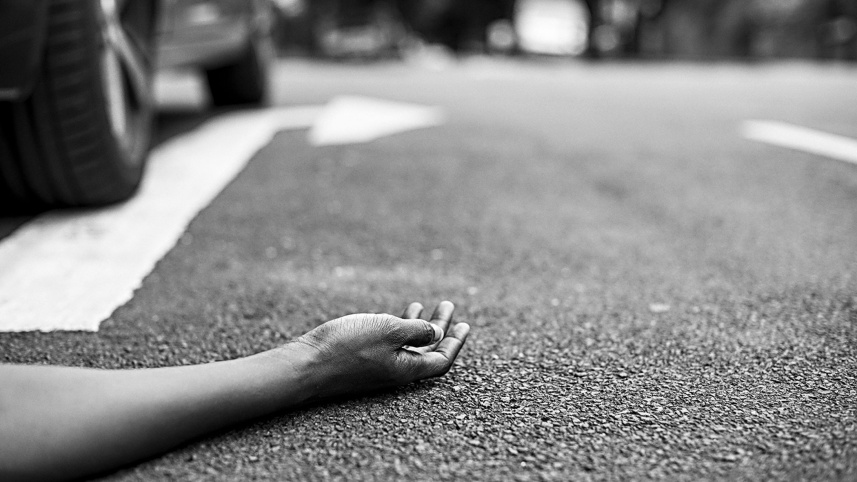
Our Penal Code of 1860 contains several provisions addressing acts that endanger human life, such as rash or negligent driving, resulting in hurt, grievous hurt, or even death. Notably, sections 279, 304B, and 338A of the Penal Code deal with these offences. However, in my view, a critical problem lies in the punishment prescribed under these provisions.
First, section 279 of the Penal Code 1860 states that whoever drives any vehicle, or rides on any public way in a manner so rash or negligent as to endanger human life, or to be likely to cause hurt or injury to any other person, “shall be punished with imprisonment of either description for a term which may extend to three years, or with fine which may, subject to the minimum of one thousand taka, extend to five thousand taka or with both”. Next, in section 304B, it is said that “whoever causes the death of any person by rash or negligent driving of any vehicle or riding on any public way not amounting to culpable homicide shall be punished with imprisonment of either description for a term which may extend to three years, or with fine, or with both”. This section raises serious question when read after section 279, because section 304B provides only three years imprisonment for causing death by accident, whereas, the same imprisonment is given in section 279 for endangering life or hurt.

Again, section 338A is also a relevant provision regarding the punishment for a road accident. It says that whoever causes grievous hurt to any person by driving any vehicle or riding on any public way so rashly or negligently as to endanger human life, or the personal safety of others, “shall be punished with imprisonment of either description for a term which may extend to two years, or with fine, or with both”. Hence, despite dealing with grievous hurt, this section prescribes a maximum 2-year imprisonment, less than the severest punishment for endangering life or hurt under section 279.
Now, if we critically analyse the different punishments provided in the abovementioned sections, we will observe that the punishments are inadequate, if seen against the present scenario. Clearly, maximum punishment of three years imprisonment is not capable of preventing these offences. It needs to be noted here that when section 304B was inserted in 1982, the punishment was up to seven years, but in 1985, the same was replaced with three years. Similarly, the punishment under section 338A was five years but was reduced to only two years later. In my opinion, the punishments prescribed presently are inadequate to deter this serious crisis of road accidents.
It also should be mentioned here that the Road Transport Act (RTA) 2018 was enacted to curb incessant road accidents in Bangladesh. Thought as a complement to the Penal Code, 1860, section 105 of the RTA provides that ‘…notwithstanding section 304B of the Penal Code 1860, any person whose reckless or negligent driving causes serious injury or death shall be liable to imprisonment up to 5 years, or a fine up to 5 lakh Taka, or both.’ It implies that the RTA will prevail over the Penal Code as to the punishment of the offence in section 304B. Yet the law has not been successful in making the roads safer despite its enactment in 2018, due to its weak enforcement.
Despite a growing opinion in favour of stricter punishment, changes to at least 12 sections were approved by the earlier Cabinet in March 2024, most of them aiming to lower the penalties and fines for drivers and assistants. Transparency International Bangladesh (TIB) had warned against these amendments noting that they might lead to increased corruption, irregularities, and disorder on the roads.
To sum up, the punishments provided for rash or negligent driving in the Penal Code need to be amended immediately. The present economic condition of the country, inflation, proportionality, etc. should be considered while fixing a more suitable punishment, while ensuring strict enforcement, regulation of corruption, and building mass awareness.
Md Saimon Khan
Law student,
University of Chittagong.
 For all latest news, follow The Daily Star's Google News channel.
Comments