


Protecting farmers from heat stress is also part of climate adaptation

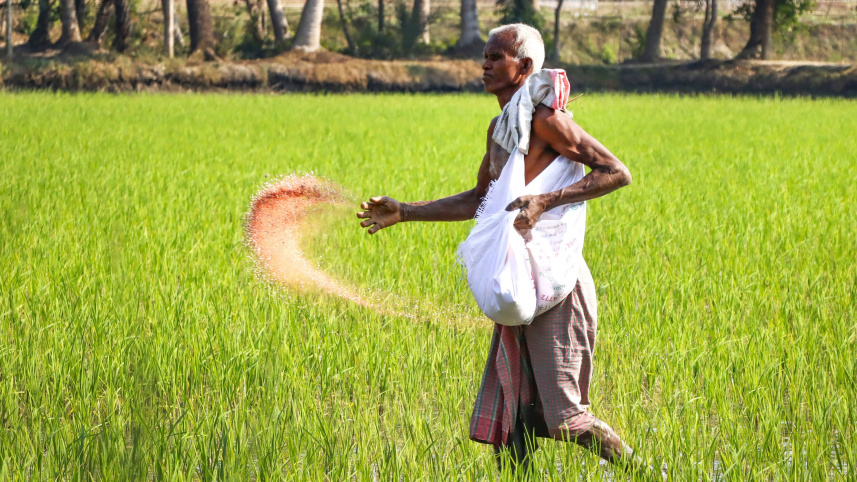
When a farmer has been working all day in the sun and goes home dizzy and nauseous, nobody counts it as a climate change impact. We usually talk about what rising temperatures do to crops, but rarely about what they do to the human body that grows and harvests them.
Bangladesh has a strong record in agricultural adaptation. Our research institutes have come up with rice varieties that tolerate salinity, submergence, and drought. Farmers have adopted floating gardens, alternate wetting and drying, and new cropping calendars. Embankments, cyclone shelters, and early warning systems have saved countless lives.

Yet, throughout this adaptation success story, the farm worker is almost invisible. Agriculture still employs close to half of the country’s workforce and much of the work is done by hand, in open fields, and during the hottest months of the year. The Boro harvest, which produces more than half of our rice, falls in April and May. Those months have become steadily hotter. In 2024, a prolonged heatwave pushed temperatures in the southwest above 43 degrees Celsius and forced schools to close across the country. But work on the fields did not stop.
What makes the heat in Bangladesh especially dangerous is the accompanying humidity. A reading of 38 degrees Celsius in Bangladesh can feel far worse and be far more harmful than the same temperature in a drier climate. When the body cannot shed heat, the result ranges from exhaustion and cramps to heatstroke, which can be fatal.
According to a study by Adelphi Global, Bangladesh could lose 4.84 percent of its total working hours to heat stress by 2030, with agriculture and construction projected to be hit hardest. The cost of climate change falls first on those with the least protection. A salaried officer who feels unwell can stay home, but a daily labourer who stops working loses the day’s wage. So, farmers keep working through dizziness and headaches while drinking less water than they need, often because clean water is not available. In Sri Lanka, researchers have linked chronic kidney disease among agricultural workers to hard labour in extreme heat. We do not know how widespread the problem is in Bangladesh because we have not yet looked into it.
Meanwhile, as men migrate to cities or abroad, women are doing more of the field work, with less access to shade, drinking water, and sanitation. Some drink less water on purpose to avoid needing a toilet, which makes them more vulnerable to heat illness. Pregnant women and older farmers, whose numbers are growing as rural youth exit agriculture, are at even greater risk.
There is a food security dimension, too. In haors, a delayed harvest can mean losing the entire crop to an early flash flood. Elsewhere, ripe paddy left standing is exposed to the elements and weather events. When heat slows workers down or keeps them out of the field, crops and incomes suffer together.
A cyclone leaves behind visible destruction, but a heatwave exhausts bodies, lowers wages, and causes kidneys to fail. These are usually reported too late. Additionally, national climate change adaptation planning focuses mainly on water, crops, coastal protection, and infrastructure. Our health system also rarely records heat-related illness, and almost never links it to occupation. But what we do not measure, we cannot manage.
Fortunately, many of the solutions are simple and affordable. First, the working day’s length should be changed. The Bangladesh Meteorological Department already issues heatwave alerts, and the Department of Agricultural Extension sends agro-advisories to farmers. These systems should be linked so that heat alerts reach farmers and labour contractors in plain Bangla, with clear advice to shift work to early morning and late afternoon.
Secondly, low-cost shaded shelters and drinking-water points at field clusters could be built through union parishads and local government programmes. Public employment schemes could adjust their summer working hours as a matter of rule. Third, heat-index-based parametric insurance could compensate labourers for workdays lost to extreme heat, so that no one has to choose between wages or their health. Fourth, mechanisation should be handled carefully. Combine harvesters reduce time spent in the heat, and government subsidies are expanding their use. But machines also displace labourers. Mechanisation should come with skills training so that displaced workers can move into operating and repairing machines instead of losing their livelihoods.
Finally, numbers about heat-related illnesses and affected occupations should be included in health surveillance. Farm labourers’ heat risk should be written into adaptation plans and climate finance proposals, including loss and damage claims. Sustainable development is not only about sustaining soil, water, and crop yields. It is also about sustaining the people whose labour turns those resources into food.
Dr Shahrina Akhtar is assistant professor at the Institute of Development Studies and Sustainability (IDSS), United International University (UIU), and an adjunct faculty member in the Department of Agriculture at Daffodil International University.
Views expressed in this article are the author's own.
Follow The Daily Star Opinion on Facebook for the latest opinions, commentaries, and analyses by experts and professionals. To contribute your article or letter to The Daily Star Opinion, see our guidelines for submission.
 For all latest news, follow The Daily Star's Google News channel.
Comments