


What India’s current protests mean, and what they do not

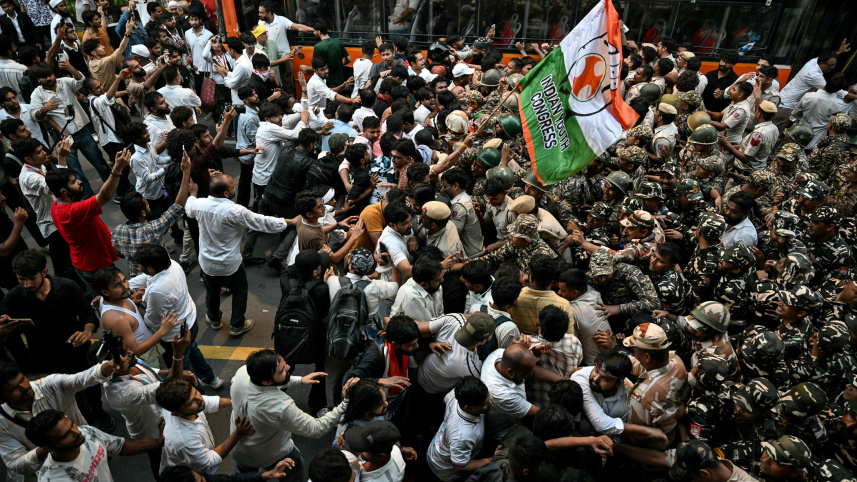
For decades, successive Indian governments have answered external critics with a familiar claim: whatever their flaws, whether corruption, patronage, or communal tensions, India is the world’s largest democracy where elections are free and fair, power changes hands legitimately, and so the government reflects the people’s aspirations. The protests now brewing in Delhi and elsewhere strike at the heart of that claim by targeting the very man who oversees elections: Chief Election Commissioner Gyanesh Kumar. Protesters want him to resign over a controversial voter-roll revision that has removed 13 crore names across the country, which critics say has benefitted the ruling BJP unfairly. The Election Commission, meanwhile, says it is removing only “duplicate and ineligible” entries.
The pressure grew after it was revealed that Kumar’s two fellow commissioners had formally raised concerns at least 14 times in 10 months. The commission describes this as “a normal part of deliberation” and, like BJP, denies wrongdoing. The Supreme Court has sought the commission’s response but has not suspended Kumar. Whatever the merits of the competing claims, the dispute has moved from a policy disagreement to a crisis of confidence in the election referee, and when millions doubt the impartiality of that referee, it is hard to fix. This is what makes this second phase of the Cockroach Janta Party (CJP) protests seem far more significant than the first.

The first phase, which saw education minister Dharmendra Pradhan forced to resign over exam paper leaks, looks mild beside what is unfolding now. At that time, CJP founder Abhijeet Dipke distanced the movement from the uprisings in Nepal and Bangladesh, pledging to keep dissent within the bounds of India’s constitution. The mood has since hardened, and the opposition has now moved from the sidelines to the front rows. Rahul Gandhi, the leader of the opposition, was detained three times in two days last week, once while leading nearly 300 INDIA bloc MPs towards Jantar Mantar. He has also called for the election chief to be tried for treason. Mamata Banerjee, who lost power in West Bengal in May, has vowed that her movement will continue until Kumar goes, while her Trinamool Congress (TMC) party is joining forces with its old rival, the CPM, against him. Even Bollywood, long wary of crossing the government, is showing up. Prakash Raj has emerged as a prominent figure in the movement, Imran Khan was among those detained, and Shabana Azmi, Naseeruddin Shah, and Vishal Dadlani joined the CJP’s October 2 rally at Mumbai’s Shivaji Park. A movement that began as a youth-led campaign is becoming a broader platform of resistance cutting across political, cultural, and generational lines.
The government’s response has, perhaps unsurprisingly, increasingly echoed the playbook Bangladesh witnessed in July-August 2024. On Saturday, Delhi was effectively locked down. Dozens of metro stations were shut, and mobile internet was suspended in the central business district. According to an estimate, around 3,000 people have been detained so far, while Dipke and two colleagues were taken off a plane upon arrival. Popular YouTuber Dhruv Rathee was also picked up from his home in Gurgaon. They were later released. At a special sitting on Sunday, the Supreme Court directed that metro and rail services as well as internet access resume normal operation and that peaceful protesters not be illegally detained, subject to law-and-order conditions.
The political rhetoric has also followed the same pattern as Bangladesh. On October 2, BJP legislator Parinay Fuke alleged that Naxalites and leftist groups were behind the protests and wanted to create “Bangladesh-like chaos” to overthrow the government. Some commentators even dismissed the “cockroach” movement as a “farce”, built on what they see as the myth of Gen Z revolutions in Bangladesh and Nepal. During Bangladesh’s uprising, the UN human rights office documented internet shutdowns timed to prevent protesters from organising, and estimated that as many as 1,400 people were killed between July 1 and August 15, 2024. Nothing on that lethal scale has occurred in Delhi, of course. But the use of pre-emptive shutdowns, mass detentions, communication restrictions, and accusations of foreign-inspired subversion is recognisably similar.
Still, India is not Bangladesh or Nepal, and the parallel should not be pushed too far. Bangladesh’s movement hardened into a one-point demand for the Awami League government’s exit only after the state responded to protests over the quota system with live fire. Nothing comparable has happened in India. India’s huge size and scale also factor in this: there is no single pressure point, as its federal structure disperses power, and BJP governs in so many states that turmoil in one or even a few cities would not bring its administrative machinery to a halt. But there is a “but,” and it lies in the ballot box. In the 2024 general election, Narendra Modi’s BJP lost its parliamentary majority and has since governed with the help of coalition partners. If the opposition sustains its protests, and doubts about voter rolls and other institutions keep gnawing at public confidence, BJP may find it much harder to retain power in 2029. The controversy has already cast a shadow over some of the party’s recent electoral conquests.
In West Bengal, for example, where BJP won 207 of 294 seats in May and ended the Trinamool Congress’s 15-year rule, more than 90 lakh names, disproportionately from TMC strongholds and Muslim-majority constituencies, were removed under the same revision. An analysis by Scroll found that in 105 BJP-won seats, the number of deleted voters exceeded the winning margin, suggesting that restoration of their votership could have delivered a different result. This, however, could not be the only deciding factor, with survey company C-Voter’s Yashwant Deshmukh also attributing the swing to disillusionment with Banerjee’s rule. Still, this is the kind of doubt that a credible election commission exists to prevent. Protesters are fighting to ensure that the election process remains fair and inclusive, and the government’s attempt to cast them as agents of chaos only reinforces their argument.
This again brings us to the most curious part of Delhi’s response: the attempt to use alleged foreign interference as a weapon against protesters. In Bangladesh, National Citizen Party Convener Nahid Islam has issued a statement expressing solidarity with India’s youth, saying their struggle “is not yours alone” and urging the authorities to release detained protesters and respect peaceful assembly. NCP spokesperson Asif Mahmud has separately condemned the detention of YouTuber Dhruv Rathee and Dipke. Certain sections of the Indian media, along with some senior BJP leaders, have seized on this as proof of a “foreign hand.” It is hard not to find this a little laughable. During Bangladesh’s uprising, many Indians—including students, writers, and commentators—stood in solidarity with the protesters. Rathee, now one of the most recognisable faces of the Indian protests, made several videos in support of Bangladesh at the time. Solidarity between young people across borders is not a conspiracy. It is what happens when people recognise a familiar struggle.
The questions that brought thousands onto the streets in India are locally grounded: how voter rolls have been revised, why two commissioners voiced objections, whether the process has been thoroughly transparent, and whether the man at the centre of the controversy should remain in office. These questions will be answered, or not, by Indian courts, institutions and, eventually, voters. Pointing at outside influences is just a cynical attempt to discredit the protesters and evade accountability for the questions they are raising.
Jannatul Naym Pieal is a writer, researcher, and journalist. He can be reached at jn.pieal@gmail.com.
Views expressed in this article are the author's own.
Follow The Daily Star Opinion on Facebook for the latest opinions, commentaries, and analyses by experts and professionals. To contribute your article or letter to The Daily Star Opinion, see our guidelines for submission.
 For all latest news, follow The Daily Star's Google News channel.
Comments