


We must prepare for disasters before they strike

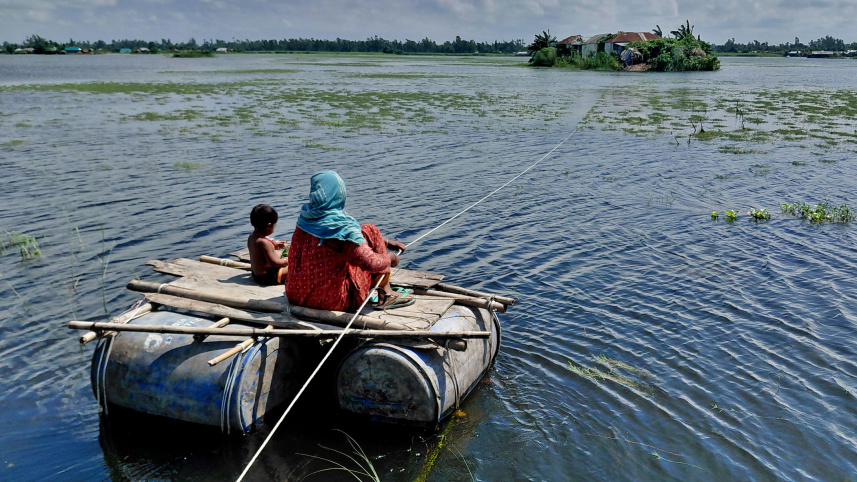
The theme for International Day for Disaster Risk Reduction this year—”Resilience Starts at Home”—resonates with profound optimism and practical hope for our nation. For millions of households across our delta, from the coastal stretches of the south to the hillside communities of Chattogram, home signifies not merely a physical shelter, but the fundamental foundation of life, dignity, and economic survival. Over the decades, Bangladesh has built an internationally recognised legacy of saving lives through robust community volunteer networks, extensive cyclone shelters, and reliable early warning systems. As we celebrate these remarkable achievements, we stand at an exciting threshold: transforming our disaster management paradigm from reactive recovery to proactive, household-centred resilience by Forecast-based Financing (FbF) or anticipatory action (AA).
Building resilience at the household level requires us to rethink our historical financial and operational practices. Historically, our disaster response mechanisms have been heavily weighted towards post-disaster relief and reconstruction. Between 2000 and 2023 alone, extreme weather events cost Bangladesh over $13.6 billion and affected more than 13 crore people. The urgency of shifting this balance was underlined again during the July 2026 flash floods, which affected over 12.8 lakh people across Bangladesh, destroying or damaging tens of thousands of homes, causing an estimated $17.3 million in livestock and fisheries losses, and forcing thousands into evacuation shelters.

While post-event aid remains critical, waiting until damage occurs places an immense strain on family budgets and national resources. Operationalising the National Strategy for Disaster Risk Financing 2025 and expanding dedicated disaster management funds at national, district, and upazila levels are vital steps forward. However, generating sustainable domestic funds for disaster management requires moving beyond routine budgetary allocations. Crucially, connecting local funds to global mechanisms like the Green Climate Fund (GCF) can bridge the adaptation financing gap—enabling pre-arranged financing and pre-emptive investments that protect homes, assets, and livelihoods long before floodwaters rise or storm surges breach our dykes.
Nature provides our most effective and sustainable shield for protecting homes and local communities. Across the country, nature-based solutions (NbS) offer practical, community-driven protection that complements hard engineering infrastructure. Coastal mangrove restoration dampens storm surges and prevents shoreline erosion, directly protecting coastal homesteads. In the Chittagong Hill Tracts (CHT), bio-engineering approaches—such as planting deep-rooting vetiver grass and Indigenous vegetation—bind fragile hillsides, preventing devastating monsoon landslides and keeping families safe in their homes. Furthermore, the government’s nationwide tree-plantation initiatives demonstrate how Ecosystem-based Disaster Risk Reduction (Eco-DRR) can be operationalised on a massive scale. Beyond sequestering carbon, large-scale tree planting stabilises riverbanks, reduces urban heat stress, improves soil integrity, and safeguards residential areas. Strengthening these initiatives requires systematically integrating green infrastructure into local upazila disaster management plans, urban settlement guidelines, and community maintenance frameworks.
Anticipatory action acts as the vital bridge that connects early warning indicators with household-level protection across all three phases of the disaster cycle. Far from being a standalone tool, AA ensures that resilience can begin at home before, during, and after a crisis. In the pre-disaster phase, it supports mitigation and preparedness by funding community nurseries, establishing bio-engineering green buffers on vulnerable slopes, and building local capacity. During the inter-disaster phase—the crucial window between a forecast trigger and impact—it releases pre-arranged financing to deliver unconditional cash transfers directly via mobile phones, helping families to fortify their dwellings, secure livestock, store clean water, and protect essential documents. Evidence shows that every $1 invested in AA can yield up to $7 in avoided losses and humanitarian savings. In the post-disaster phase, anticipatory frameworks guide eco-restoration and sustainable recovery, helping communities build greener buffers and restore local natural assets.
As we mark International Day for Disaster Risk Reduction, Bangladesh’s path forward lies in championing a proactive, nature-rooted framework that puts families and communities at the centre. By combining high-resolution forecasting from the Bangladesh Meteorological Department and the Flood Forecasting and Warning Centre (under the Bangladesh Water Development Board) with pre-arranged disaster financing and nature-based solutions, we can ensure that every household across the country is empowered to withstand climatic shocks. True disaster management is not measured by how effectively we clean up after a disaster, but by how well we can safeguard our homes, ecosystems, and our people before the storm arrives.
Mohammad Abu Toyab is a development professional focusing on disaster risk management. He can be reached at subalternweblog@gmail.com.
Views expressed in this article are the author's own.
Follow The Daily Star Opinion on Facebook for the latest opinions, commentaries, and analyses by experts and professionals. To contribute your article or letter to The Daily Star Opinion, see our guidelines for submission.
 For all latest news, follow The Daily Star's Google News channel.
Comments