Can Bangladesh bring its hilsa back?
The hilsa (Tenualosa ilisha), known locally as ilish, is Bangladesh's national fish and an integral part of the country's culture, heritage and food security. Bangladesh has long dominated global hilsa production, contributing about 75 per cent of the total catch, with most of the remaining 25 per cent shared between India and Myanmar. Within Bangladesh, the fishery accounts for approximately 11 per cent of national fish production and 1 per cent of the country's GDP.
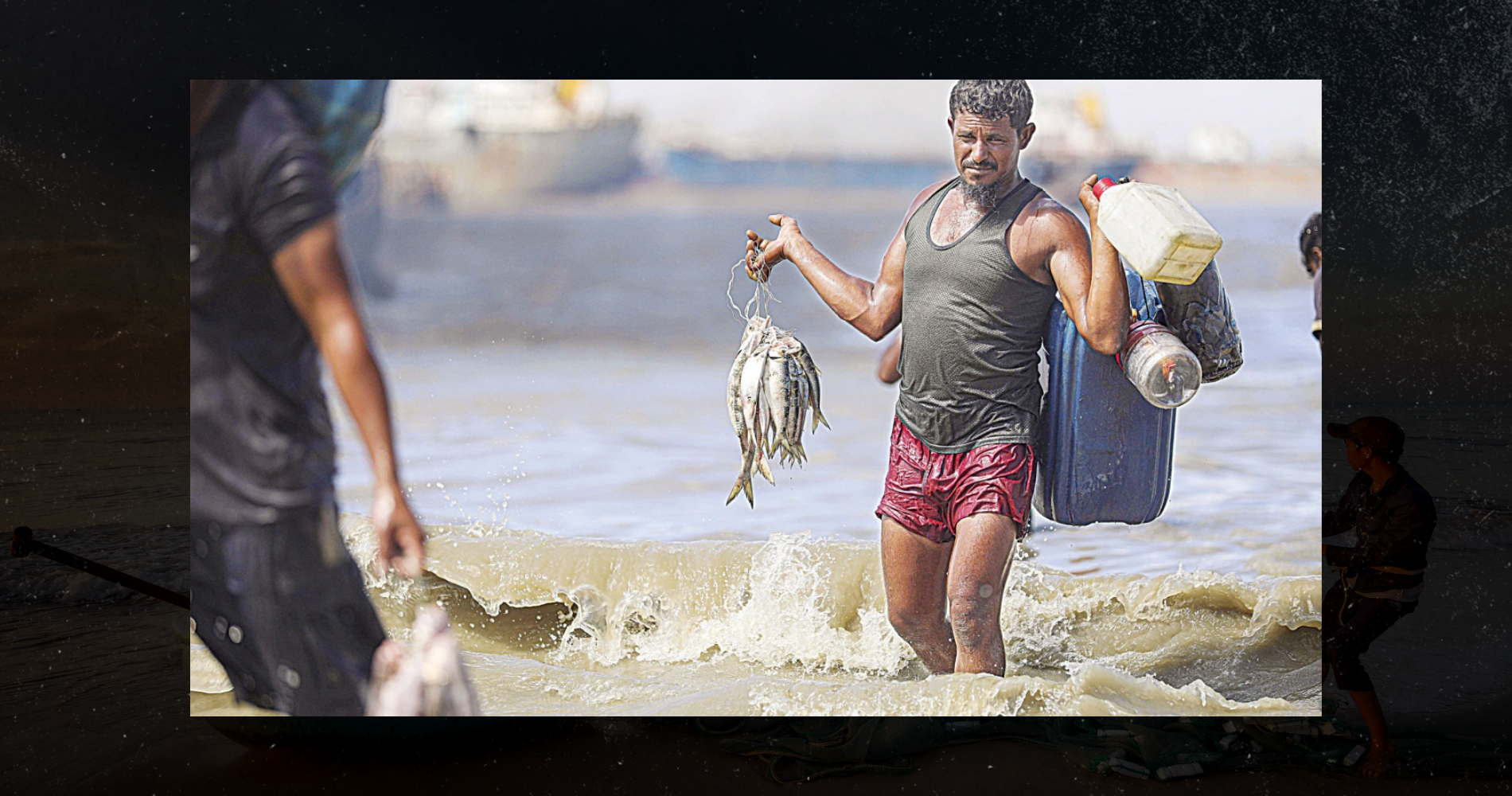
The fishery also directly supports about one million fishers working in riverine and marine waters, while indirectly sustaining another five million people engaged in processing, transport, net-making and trade, making it an important source of employment and livelihoods across the country.
Diagram 1: Migration overview
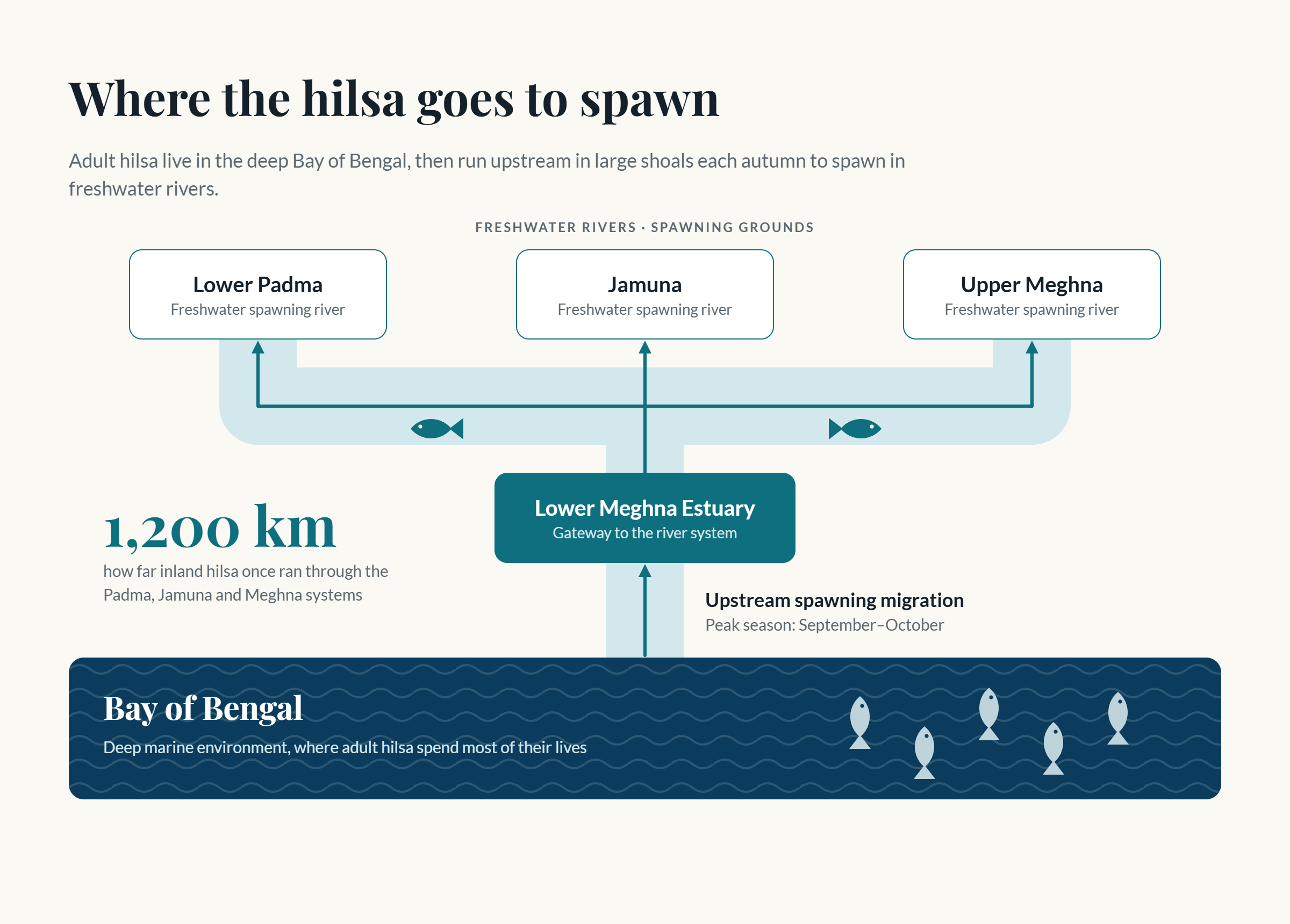
As an anadromous species, the hilsa spends most of its adult life in the Bay of Bengal. During the peak breeding season, mainly the autumn months of September and October, the fish migrate in large shoals into freshwater rivers, chiefly the Padma and Meghna, to spawn and complete this important stage of their reproductive cycle.
However, research indicates that the hilsa's spawning migration is being seriously disrupted. Hilsa production in Bangladesh fell from 5.71 lakh tonnes in 2022–23 to 5.00 lakh tonnes in 2024–25, a decline of about 12 per cent, despite the government's continuing efforts to manage and protect the fishery. This suggests that biological management measures alone, such as the seasonal fishing bans enforced by the Department of Fisheries since 2005–06, are no longer sufficient to address the emerging challenges. Climate change, severe environmental degradation and changes in river morphology are altering the species' historical migration routes, potentially diverting shoals towards deeper offshore waters and into the waters of neighbouring countries.
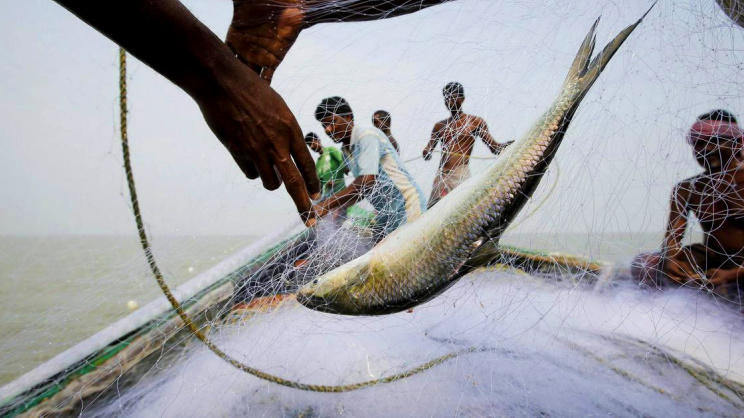
Shifting migration patterns
Historically, hilsa migrated up to 1,200 kilometres inland through the Padma, Jamuna and Meghna river systems. Major inland spawning grounds were distributed across districts such as Chandpur, Laxmipur, Barishal, Bhola, Patuakhali and Shariatpur. Today, such long-distance inland migrations are becoming increasingly rare, and the fish appear to be changing their traditional routes in several important ways:
Diagram 2: Shifting route comparison
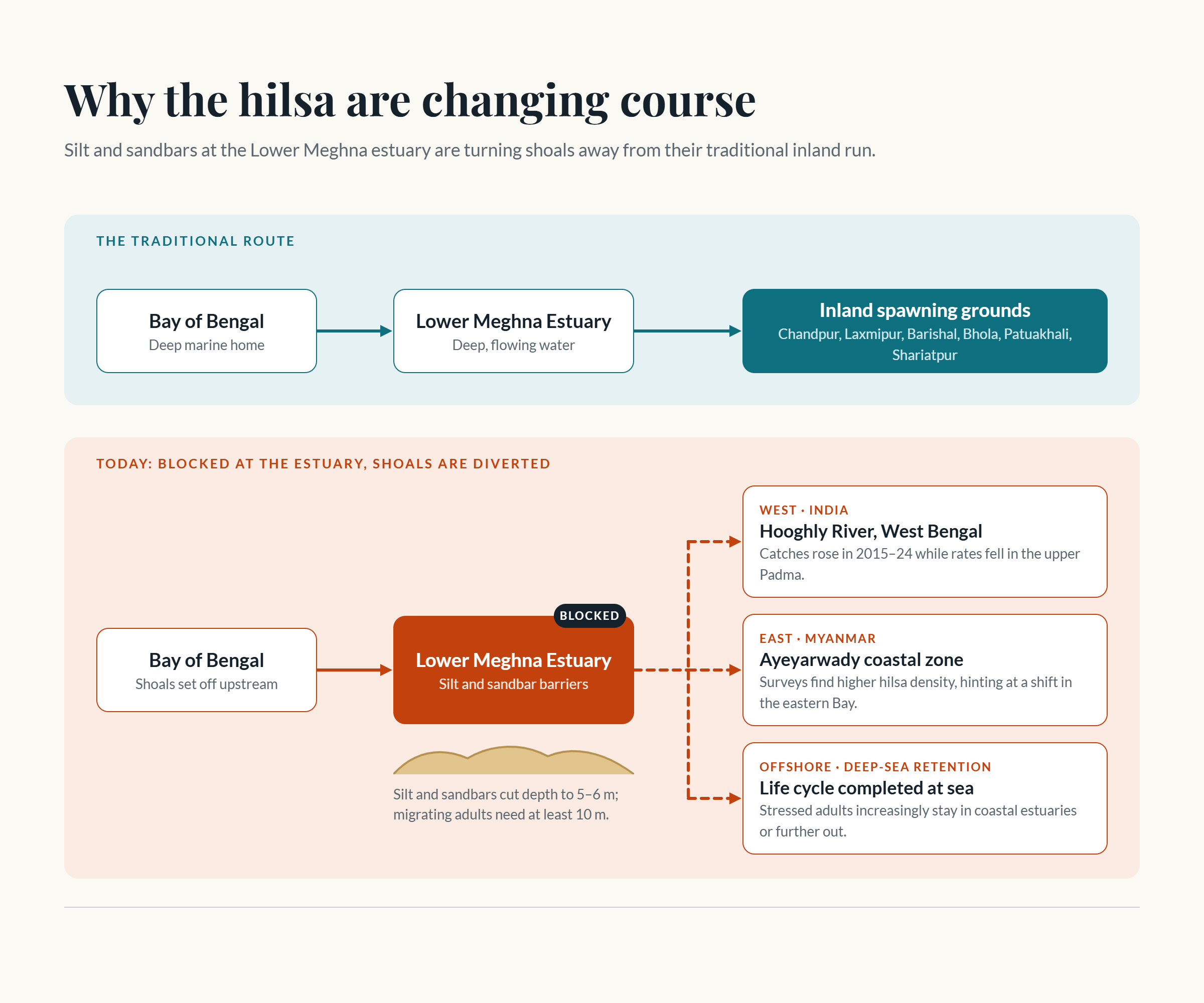
- Westward diversion (India): Catch data from 2015–2024 show increased hilsa availability in West Bengal's Hooghly River, alongside a declining catch per unit effort (CPUE) in the upper Padma. Tagging and estuarine studies point to a possible diversion through western marine and estuarine channels into Indian waters, suggesting changes in the distribution and movement of migrating shoals.
- Eastward diversion (Myanmar): Marine surveys indicate higher hilsa densities along Myanmar's Ayeyarwady coastal zone, suggesting a possible reorientation of migrating shoals towards the eastern Bay of Bengal and changes in their traditional patterns of movement.
- Deep-sea retention: Genomic and behavioural research at Bangladesh Agricultural University indicates that hilsa can adapt their behaviour to changing environmental conditions. When exposed to stressful conditions at river mouths, large adults are increasingly completing their life cycle further out at sea or in coastal estuaries, rather than undertaking their traditional long-distance migrations inland.
Key drivers of shifting migration
Four major factors are altering hilsa migration routes: changes in river morphology, climate change and hydrological shifts, thermal and industrial barriers, and overexploitation at estuarine entrances. Together, these pressures are affecting the environmental conditions and migration corridors that hilsa depend on throughout their life cycle.
Diagram 3: Key drivers of migration shift
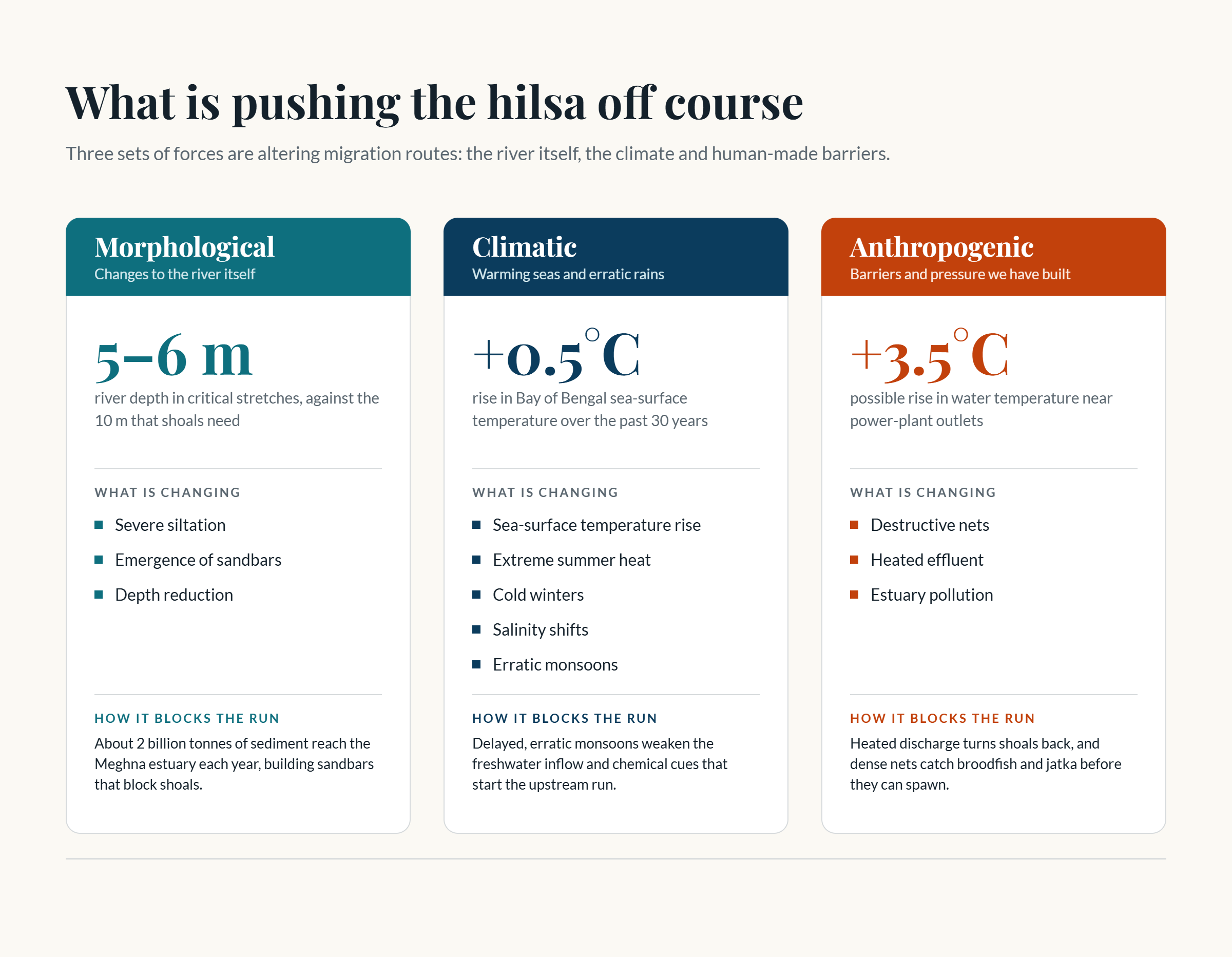
1. Severe siltation and morphological changes
Migrating adult hilsa need flowing water at least 10 metres deep, with strong currents, to navigate upstream successfully. Yet about two billion tonnes of sediment are carried downstream through the river systems each year, with substantial deposits accumulating in the Meghna estuary. Heavy siltation has reduced river depths to just 5–6 metres in critical stretches, creating submerged sandbars and other physical obstructions that can block or disrupt the movement of migrating shoals.
2. Climate change and hydrological shifts
Over the past 30 years, sea surface temperatures (SST) in the Bay of Bengal have risen by roughly 0.5°C, shifting salinity fronts and altering the distribution of marine habitats. Alongside extreme summer heatwaves and cold winters, delayed or erratic monsoon rains disrupt freshwater inflows and the chemical cues that hilsa need to begin their upstream migration. These changing hydrological conditions can further complicate the fish's ability to locate and reach suitable spawning grounds.
3. Thermal and industrial barriers
Infrastructure built close to designated sanctuaries, notably thermal power plants in Patuakhali, Barguna and Barishal, including the Payra, Patuakhali and Barishal plants, has introduced additional sources of thermal, acoustic and chemical stress into nearby aquatic environments. Heated wastewater discharged from these plants can raise water temperatures near the outlets by up to 3.5°C. Because hilsa are highly sensitive to temperature changes, these thermal barriers can potentially turn migrating shoals back towards the open sea, disrupting their traditional upstream migration routes.
4. Overexploitation at estuarine entrances
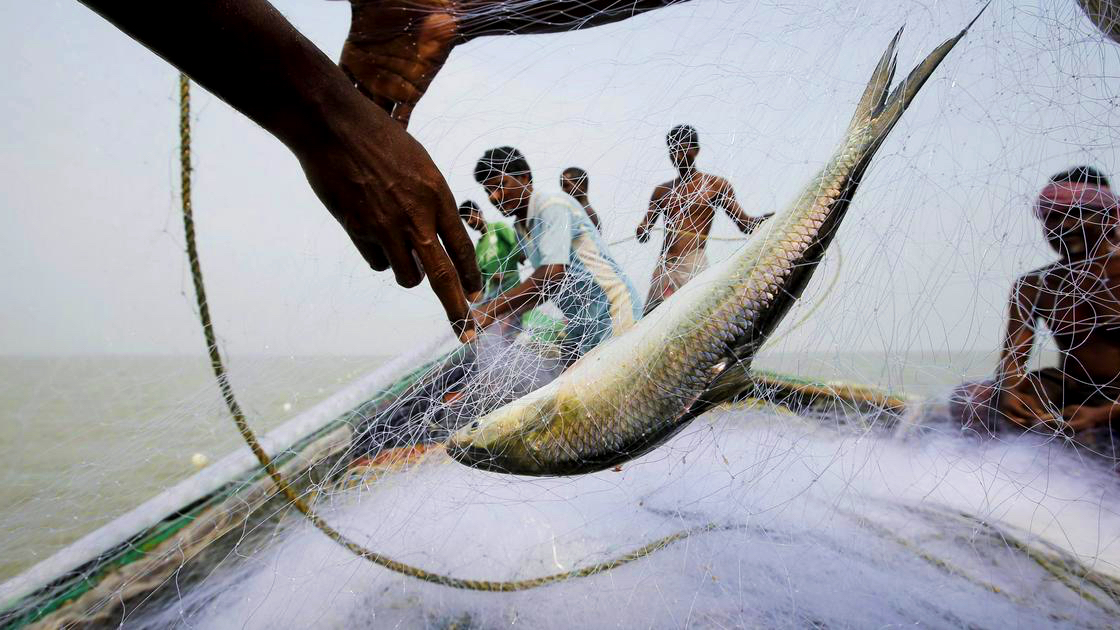
Dense networks of destructive fishing gear, such as monofilament gillnets (current jal) and estuarine set bag nets (behundi jal), form virtual walls across river mouths, including areas such as the Tetulia estuary. Adult broodfish are caught before they can reach freshwater sanctuaries and spawning grounds, while the indiscriminate catching of jatka (juvenile hilsa) severely limits the stock's ability to replenish itself and maintain healthy populations over successive breeding seasons.
Socio-economic impacts
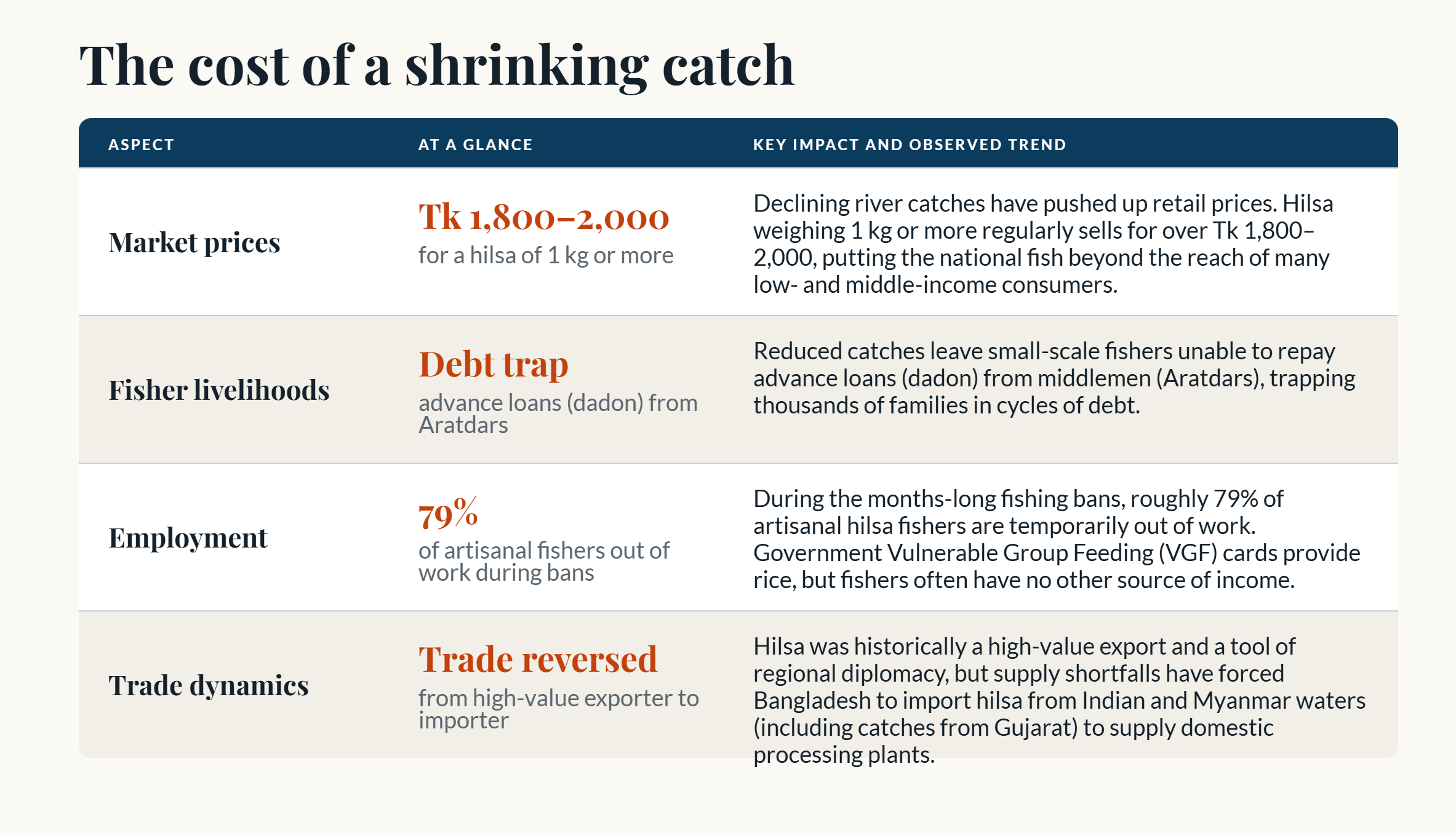
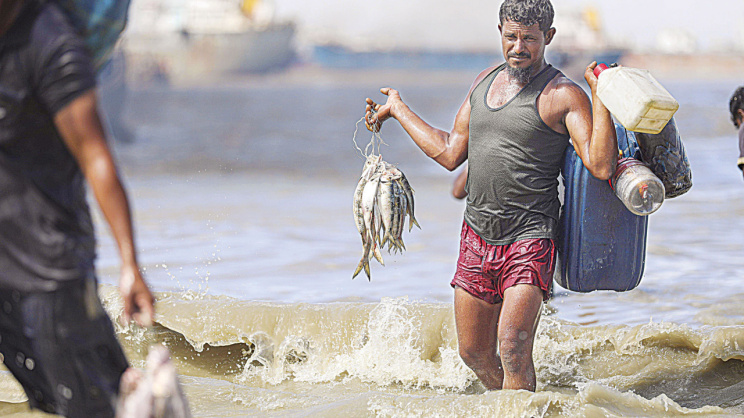
The declining hilsa catch and shifting migration routes have immediate social and economic consequences for Bangladesh, particularly for fishing communities whose livelihoods depend directly or indirectly on the availability of hilsa in rivers, estuaries and coastal waters.
Hilsa sanctuaries and spawning grounds
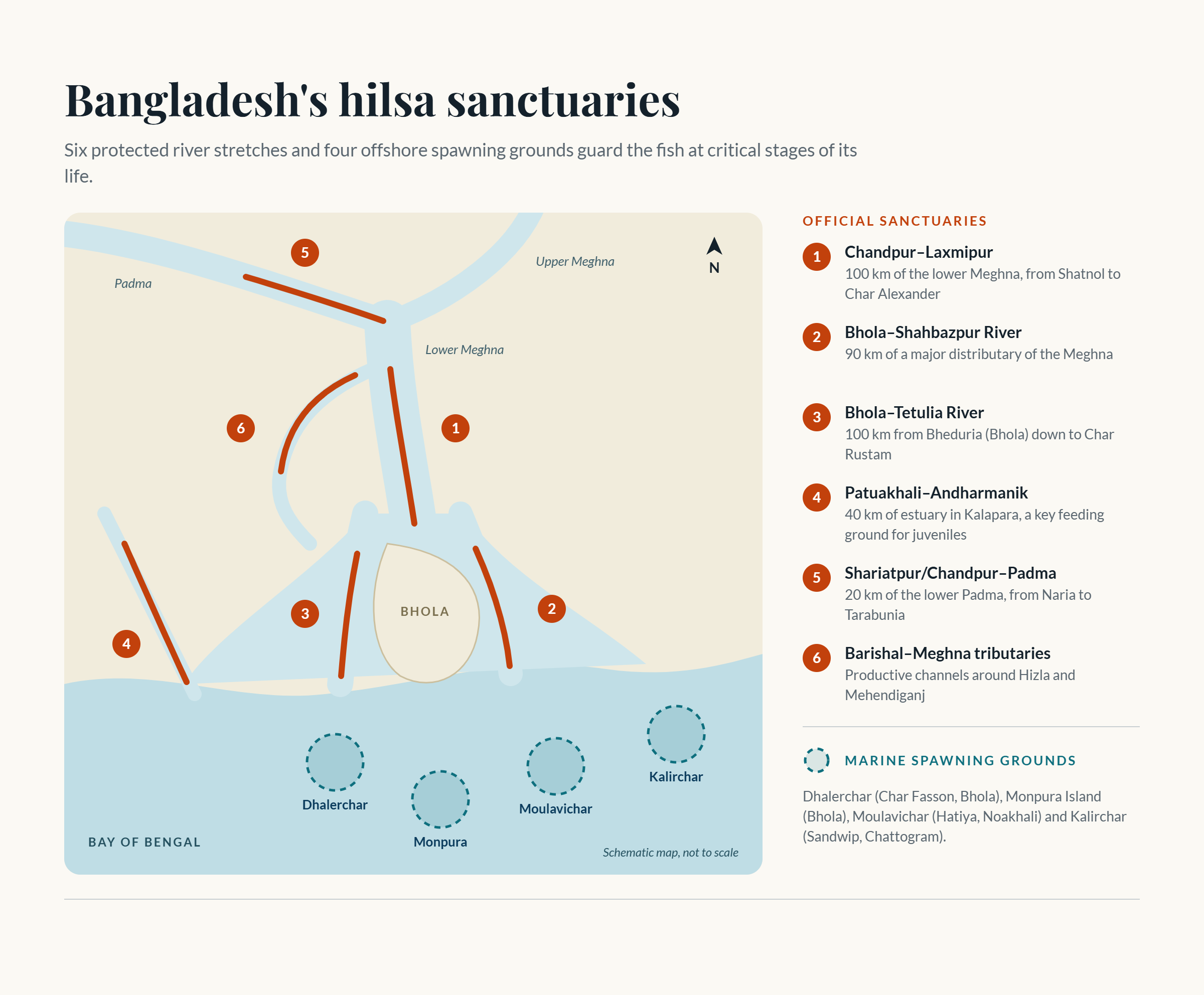
To counter overexploitation and protect hilsa at critical stages of their life cycle, Bangladesh has established six official hilsa sanctuaries, alongside four major marine spawning grounds. These protected areas are intended to safeguard important habitats, support successful reproduction and contribute to the long-term sustainability of the country's hilsa fishery.
Diagram 4: Sanctuaries map
Official sanctuaries
- Sanctuary 1 (Chandpur–Laxmipur): A 100 km stretch of the lower Meghna River, extending from Shatnol (Chandpur) to Char Alexander (Laxmipur).
- Sanctuary 2 (Bhola–Shahbazpur River): A 90 km stretch of the Shahbazpur River, one of the major distributaries of the Meghna.
- Sanctuary 3 (Bhola–Tetulia River): A 100 km stretch along the Tetulia River, extending from Bheduria (Bhola) downstream to Char Rustam.
- Sanctuary 4 (Patuakhali–Andharmanik River): A 40 km stretch of the Andharmanik River estuary in Kalapara Upazila, which serves as an important feeding ground for juvenile hilsa.
- Sanctuary 5 (Shariatpur/Chandpur–Padma River): A 20 km stretch of the lower Padma River, extending from Naria to Tarabunia.
- Sanctuary 6 (Barishal–Meghna tributaries): Productive river channels along the tributaries of the Meghna around Hizla and Mehendiganj.
Marine spawning grounds
Four offshore spawning areas complement these sanctuaries: Dhalerchar (Char Fasson, Bhola), Monpura Island (Bhola), Moulavichar (Hatiya, Noakhali) and Kalirchar (Sandwip, Chattogram). These areas provide important habitats for hilsa reproduction and contribute to the long-term sustainability of the fishery.
Transboundary issues and governance
Because Tenualosa ilisha is a shared fish stock across the Bay of Bengal Large Marine Ecosystem (BOBLME), no single country acting alone can fully protect the species throughout its migration routes and life cycle. Hilsa conservation can no longer be managed solely as a domestic issue. Effective protection requires harmonised transboundary governance involving Bangladesh, India and Myanmar.
- Farakka Barrage and freshwater inflow: Reduced dry-season flows from the Ganges weaken currents entering the Padma, potentially accelerating siltation and weakening the chemical cues that hilsa need for successful upstream migration.
- Asymmetrical fishing bans: Bangladesh enforces a strict, scientifically monitored 22-day broodfish fishing ban and months-long jatka protection periods, but India and Myanmar impose their bans on different dates. Consequently, fish protected in Bangladeshi waters can still be caught after crossing maritime boundaries into neighbouring countries' waters.
- Geographical indication (GI) and migration shifts: As hilsa shoals shift towards neighbouring waters, questions arise over the management and sharing of regional catches and how Bangladesh can maintain the economic and commercial benefits associated with its geographical indication recognition for hilsa.
Recommendations
Seasonal fishing bans alone cannot reverse the shift in hilsa migration patterns. Addressing the problem also requires ecosystem-based management, targeted capital dredging, stronger environmental protection measures and coordinated regional diplomacy to ensure the long-term sustainability of the fishery.
Diagram 5: Integrated hilsa recovery strategy
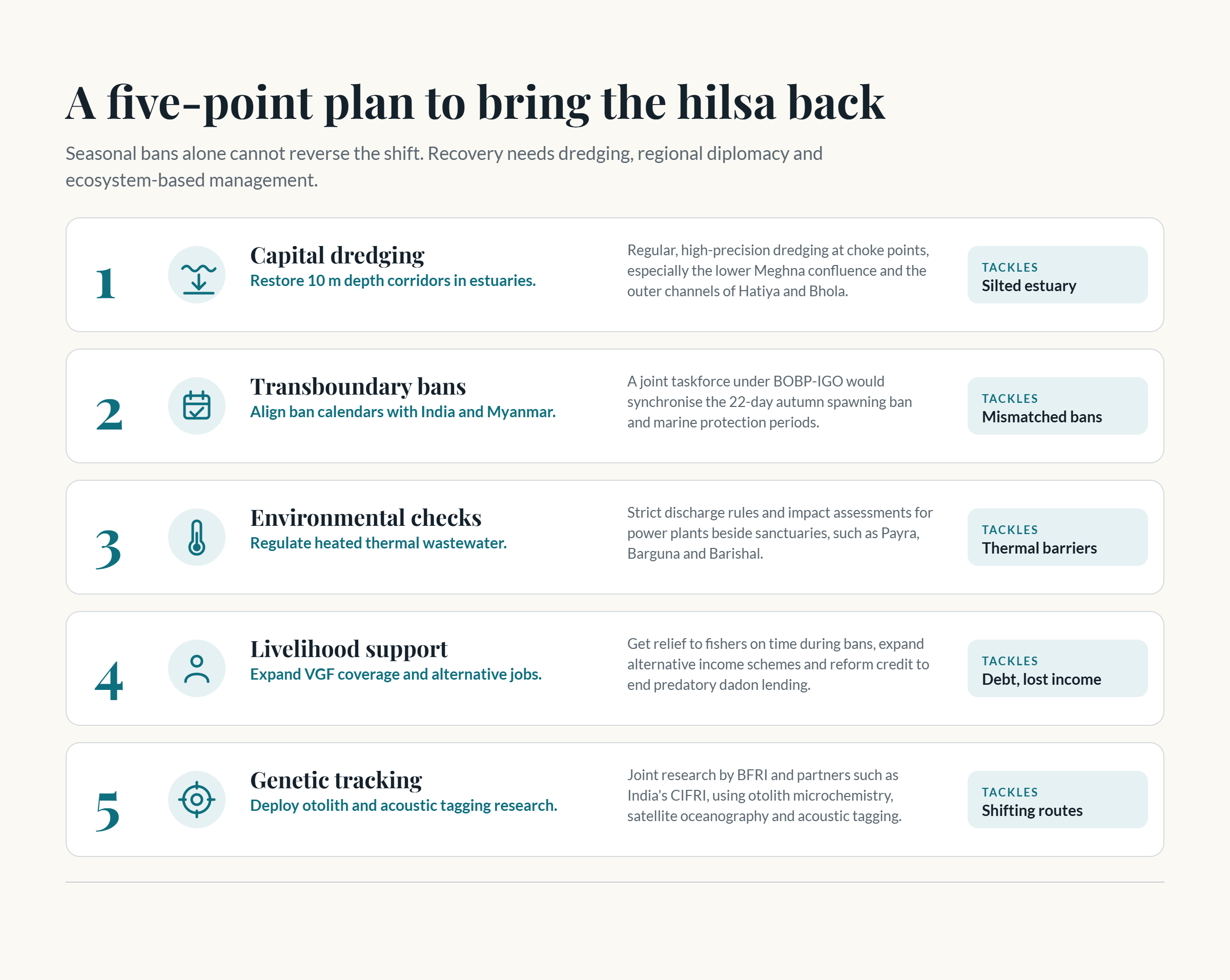
1. Targeted capital dredging of migration corridors
Prioritise regular, high-precision dredging at critical estuarine choke points, particularly the lower Meghna confluence and the outer channels of Hatiya and Bhola, to restore the minimum 10-metre water depth and maintain the current velocity that migrating hilsa shoals need to navigate inland successfully.
2. Harmonisation of transboundary fishing bans
Establish a joint management taskforce under the Bay of Bengal Programme Inter-Governmental Organisation (BOBP-IGO) to synchronise the 22-day autumn spawning ban and other marine protection periods across Bangladesh, India and Myanmar, ensuring more consistent protection of migrating hilsa stocks across national boundaries.
3. Environmental standards for industrial development
Enforce strict thermal discharge regulations and environmental impact assessments for power plants and industrial facilities located near hilsa sanctuaries, including those at Payra, Barguna and Barishal, to ensure that any increase in local water temperature remains below levels that could cause physiological stress to migrating hilsa.
4. Enhancing fishers' livelihood security
Expand alternative income-generating (AIG) programmes and ensure that Vulnerable Group Feeding (VGF) assistance reaches fishers on time during seasonal fishing bans. Improving access to affordable credit would reduce fishers' dependence on exploitative dadon lending and encourage greater compliance with conservation laws, while supporting the financial security of fishing households.
5. Advanced transboundary research and monitoring
Expand joint research between the Bangladesh Fisheries Research Institute (BFRI) and international counterparts, such as India's Central Inland Fisheries Research Institute (CIFRI), using otolith microchemistry, satellite oceanography and acoustic tagging to track shifting hilsa migration routes in real time and improve the scientific evidence available for regional fisheries management.
Dr M.A. Mazid is a former director general of the Bangladesh Fisheries Research Institute and a recipient of the Ekushey Padak.
Send your articles for Slow Reads to slowreads@thedailystar.net. Check out our submission guidelines for details.
Can the new strategy achieve Bangladesh’s renewable energy targets?

André Wink speaks / What we get wrong about the Indo-Islamic world
Bengali Muslims and the ghosts of India's citizenship politics

Bangladesh’s solar growth: Will the incentives be enough?

The missing link in Bangladesh's innovation economy
Dhaka’s battery rickshaw problem is economic, not just about traffic

The staircase between our mothers and care
Is Bangladesh prepared for the next food shock?
From more power to better power: Rethinking Bangladesh’s energy future