Growing out of LDC status: Bangladesh’s real negotiation at COP31

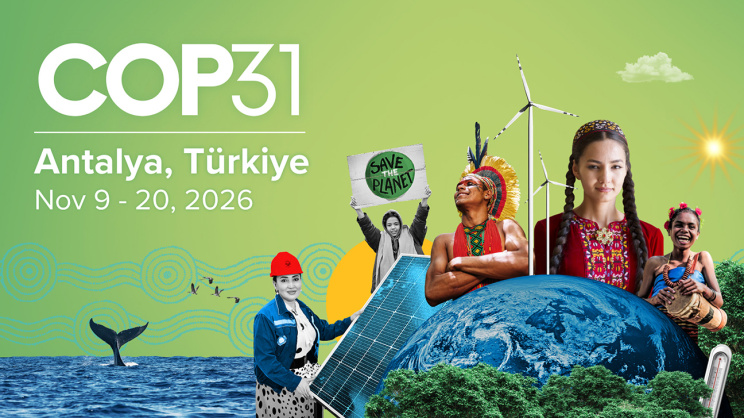
It is disorienting to watch a nation grow up, and Bangladesh will feel that twice this November. From 9 to 20 November, the 31st United Nations Climate Change Conference (COP31) will be held in Antalya. In an unusual arrangement for a COP summit, Turkey will host while Australia will lead the negotiations, and the preparatory meetings will be held thousands of miles away in the Pacific, in Fiji and Tuvalu. Organisers call it the “Implementation COP”: a summit meant to deliver on previous commitments rather than make new ones. In the same month, Bangladesh will formally graduate from the least developed country (LDC) category and move up a level in the international hierarchy.
For many years now, we have told ourselves that graduating from the LDC category is good news, a recognition of Bangladesh’s difficult journey upward. It is. Yet for anyone who has worked on climate and infrastructure finance for years, examining how the money is raised, structured and spent, the coincidence of the two events sends a clear message. Most of the concessional support available to Bangladesh so far, including finance, special market treatment and technical assistance, has come through the “least developed” doorway. As Bangladesh graduates, those doorways begin to close one by one. That is the central issue for Bangladesh at Antalya.
The paradox we carry
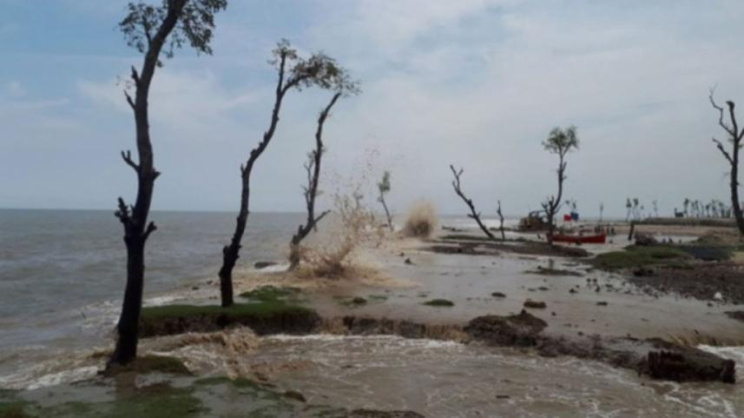
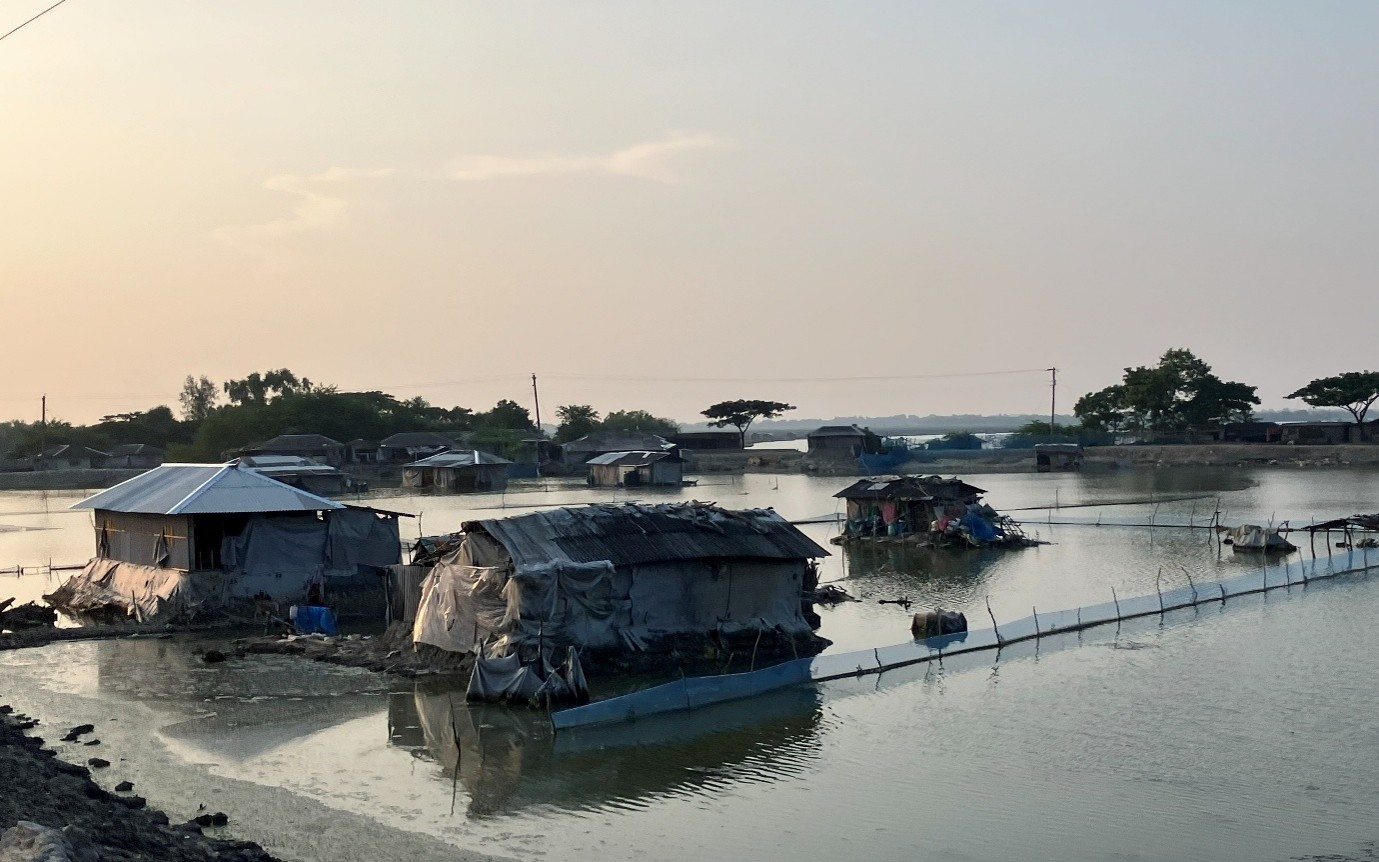
Bangladesh’s income is rising, but the vulnerability that actually counts has not changed: the country still ranks seventh in the world in one of the best-known climate risk indices. We continue to emit less than half of one per cent of global greenhouse gases. Rising per capita incomes do not reduce the amount of water coming over a coastal dyke. They also do not slow down a riverbank collapsing into the Jamuna River, nor do they push salt back out of a farmer’s fields in southern Bangladesh. The first demand Bangladesh should make at COP31 is therefore simple: let eligibility for climate finance be based on risk, not income. And because graduation should not be a penalty, we should request a transitional window of five to seven years, during which we retain access to concessional climate finance on terms comparable to today’s.
The character of the money, not its size
My second argument is one I often repeat because it gets lost in the headlines. We treat climate finance as a question of arithmetic: how much money arrived. The more relevant question is what kind of money it is: grants or loans? The finance goal set over the past two summits, $300 billion a year within a broader ambition of $1.3 trillion a year by 2035, sounds enormous. However, if the majority of that money arrives as debt, then a country responsible for almost none of this crisis will borrow to survive it. That is not fair. It is an ugly accounting practice.
Under our National Adaptation Plan, which runs to 2050, the cost of adapting to climate change is estimated at approximately $230 billion, with about $6 billion per year in external funding needed. Given the scale of the need, Bangladesh should insist that adaptation and loss and damage finance be provided as grants or highly concessional funding, so that today’s disaster does not become tomorrow’s sovereign debt. That makes it all the more damaging that COP30 quietly extended the deadline for tripling adaptation finance from 2030 to 2035. For families flooded this year, a five-year wait is a luxury they cannot afford. Meanwhile, the World Bank appears to be signalling lower climate targets, and one of the largest economies at the table has indicated that it will cut its contributions. What Bangladesh most needs from Antalya, then, is not another large number but predictability: money it can rely on over a horizon long enough to plan against.
From paper to hands
It is a common mistake to confuse adapting to the crisis with being destroyed by it. Raising a dyke to reduce flood damage is an adaptation. But when a char vanishes in a flood, taking homes, graves and a lifetime of memories into the river, that is loss, and nothing can replace it. The international fund established to help cover such losses exists on paper, but the money has not yet reached the people it is meant to help. Bangladesh should demand that these funds be usable nationally and disbursed as soon as possible. Families whose entire villages are lost in a single night do not have time to wait two or three years for various committees to approve proposals. They need a rapid-response mechanism. The fund must also learn to recognise losses that are difficult, if not impossible, to quantify on a spreadsheet: the language, culture and sense of place that disappear when communities are broken apart.
None of this should obscure the main point: adaptation is our real fight. Salt-tolerant crops, embankments, urban drainage, freshwater supply and the relocation of people already displaced by climate change are part of everyday life here, not a distant prospect. In negotiations on the Global Goal on Adaptation and its indicators, Bangladesh should push for locally led adaptation. What households in Satkhira or Kurigram know about protecting themselves may be far more valuable than decisions made in conference rooms in Dhaka.
The challenge we did not see coming
Then there is a challenge that has been almost absent from our previous positions, even though it strikes at the heart of our economy. On 1 January this year, the European Union’s carbon border levy took full effect, initially for cement, fertiliser, steel and aluminium. By 2030, it could be extended to many more imported goods, potentially including ready-made garments. When four-fifths of Bangladesh’s exports consist of clothing, and more than half of that clothing goes to Europe, this stops being an environmental footnote and becomes a question of economic survival. By some estimates, including garments in the levy could add around five per cent to costs. Combined with the tariffs Bangladesh will face once LDC graduation ends its duty-free access, the total could approach seventeen per cent.
Graduation and carbon pricing will, then, hit at the same time. Bangladesh’s stance at COP31 should be clear: cutting greenhouse gas emissions should not become another trade barrier for developing nations. Bangladesh is prepared to “green” its industries, but it needs technology, finance and enough time to make the transition. Friction over the levy at COP30 has already led to an annual forum on trade and climate, which began in June this year. That is precisely the forum where Bangladesh should push for fair financial assistance to transition sectors such as garments, leather and cement. The transition must also be equitable. Women workers, who make up a large share of the factory workforce, must be protected, not sacrificed, in the move to a green economy; their livelihoods should be built into the agreement from the start.
Selling carbon credits may generate some foreign currency in the short term, but our coastal forests and the mangroves of the Sundarbans should not be turned into cheap offsets for a distant company’s accounts.
Carbon markets also call for caution. Selling carbon credits may generate some foreign currency in the short term, but our coastal forests and the mangroves of the Sundarbans should not be turned into cheap offsets for a distant company’s accounts. Our green resources are capital for our own future, not commodities.
Asking, and showing
The questions will also get harder. Contributors, including investors, increasingly want to know whether their money will be used fairly and transparently to meet measurable objectives. Our newest climate pledge targets a quarter of our electricity to come from renewable sources by 2035. Yet renewables today make up less than five per cent of the mix, and achieving most of that target depends on outside help. To close that gap, we must first develop a pipeline of investment-ready projects and track them through a reporting and verification process that others can rely on.
Climate diplomacy is increasingly investment diplomacy. Instead of a list of complaints, let us bring a portfolio of bankable projects to Antalya: rooftop solar on factories, modernised transmission grids, energy storage and cleaner industrial technology, each supported by a credible financial model.
The government has already formed a committee to draft Bangladesh’s national position paper for COP31. I hope the paper is evidence-driven and that stakeholders, rather than external donors, have a meaningful role in shaping it. I also hope it addresses not just how much we need, but where the money will go once it arrives and who will be held accountable.
Where Bangladesh sits
At COP31, Bangladesh can enter the meeting room as more than a supplicant. Although we are graduating from the LDC group, our membership of the G77 and the Climate Vulnerable Forum will remain significant because of our history of struggle and the moral influence we hold. Several small island states face threats similar to our own, rising seas among them, which gives Bangladesh an opportunity to build a coalition for survival at the pre-summit meetings in Fiji and Tuvalu. If Bangladesh can emerge from this COP with a unifying message that we are not only victims of climate change but also partners in solving it, then perhaps that alone will have made the journey worthwhile.
This is when Bangladesh comes of age, and we should arrive in Antalya with that self-assurance. Our prospects may be rising, but our vulnerability is not falling. What is falling, and must keep falling, is everyone else’s justification for looking the other way. If we can win recognition of that single point at the bargaining table, along with the finance and fairness that should follow from it, our diplomacy in Antalya this November will have succeeded.
Subail Bin Alam is an engineer-economist. He is the Chief Operating Officer of Rancon Infrastructures and Engineering Limited, a Director of the Bangladesh Sustainable and Renewable Energy Association, a guest faculty member at ULAB, a Trustee of the Panam Institute, and is associated with the Centre for Science, Technology and Policy Diplomacy. He can be reached at contact@subail.com.
Send your articles for Slow Reads to slowreads@thedailystar.net. Check out our submission guidelines for details.
What is holding back solar in Bangladesh’s garment industry?
Confessions of a finance professor: The danger of putting profits first
The making of a cup of tea: Plantation, empire and the pursuit of quality
Why Bangladesh’s measles outbreak should be a wake-up call
From prediction to preparedness: How AI can help us navigate climate uncertainty

Crisis in Bangladesh’s Islamic banks: Liquidity is not capital, and a merger is not a cure

Can Bangladesh turn its OTT industry into global soft power?
An emergency action plan for a 100% renewable Bangladesh

Bangladesh’s gold paradox: From a shadow market to an export industry