Why Bangladesh’s energy crisis keeps coming back

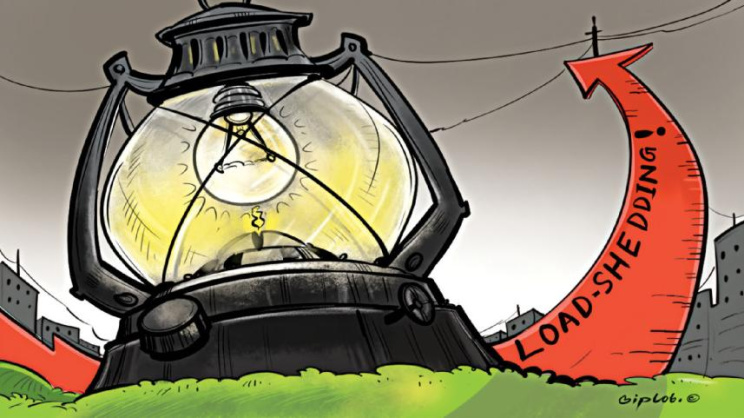
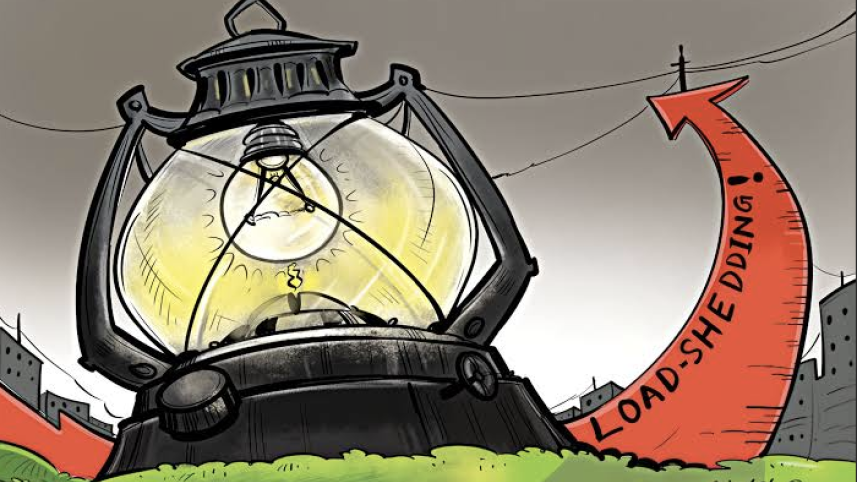
Why does Bangladesh remain trapped in recurring gas and electricity shortages despite decades of investment in the energy sector? Economist and energy activist Anu Muhammad speaks to The Daily Star about the policy choices behind the crisis, the country’s growing dependence on imported energy, and why he believes domestic gas, stronger national institutions and renewable energy offer a different path.
The Daily Star (TDS): Bangladesh is now facing severe gas shortages and load-shedding at the same time. What does this simultaneous crisis tell us about the country’s energy system?
Anu Muhammad (AM): Day after day, there is no gas. At the same time, we face four to five hours of load-shedding every day. I have never seen a situation where both gas and electricity were in such short supply at the same time.
It is true that this crisis did not begin with the current government. The policies that created these problems go back to the 1990s. They were broadly shaped by a neoliberal approach, with the World Bank, IMF, ADB and JICA playing important roles in shaping the policies and ideas behind it. The basic approach was to open entire sectors to private companies, especially foreign firms, and to judge investment mainly by its potential for profit.
In this policy framework, building national capability received little attention. The Production Sharing Contract (PSC) system was introduced in the early 90s, and foreign companies entered the sector, but national institutions did not develop at the same pace. Private profit took priority over the public interest.
Under Sheikh Hasina, this approach entered a new phase. Soon after her government came to power in 2009, it moved to sign a deal with ConocoPhillips. Bangladesh has several promising offshore blocks. Myanmar and India have found significant gas in similar geological structures, but Bangladesh has yet to properly explore its own offshore resources. At that time, the country was facing severe load shedding, so the government argued it needed a quick solution. Since then, the same argument- the need for a quick solution- has been used repeatedly to justify major energy sector decisions.
We protested against the deal because it was unfavourable for Bangladesh. The government responded with force, suppressed the protests and signed the agreement anyway. Later, we found that ConocoPhillips was not carrying out all the work itself. It subcontracted part of the work to a Chinese company, which came, carried out some initial work and then left. The promised quick solution never came.
ConocoPhillips, however, benefited from the deal. Its share price rose after the agreement was signed. That was in 2009. It is now 2026. If the government had followed the alternative we proposed, our offshore gas resources might by now be in national use under national control.
TDS: The 2010 Power Sector Master Plan was meant to set Bangladesh’s energy direction for years to come, and much of it has since been implemented. What does the situation today tell us about the direction that was chosen?
AM: Two important things happened in 2010: the enactment of the indemnity law for the energy sector steps and the Power Sector Master Plan (PSMP), prepared by JICA. Not a single Bangladeshi expert was there. A master plan for Bangladesh’s energy and power sector was prepared without a Bangladeshi expert on the committee! That was astonishing.
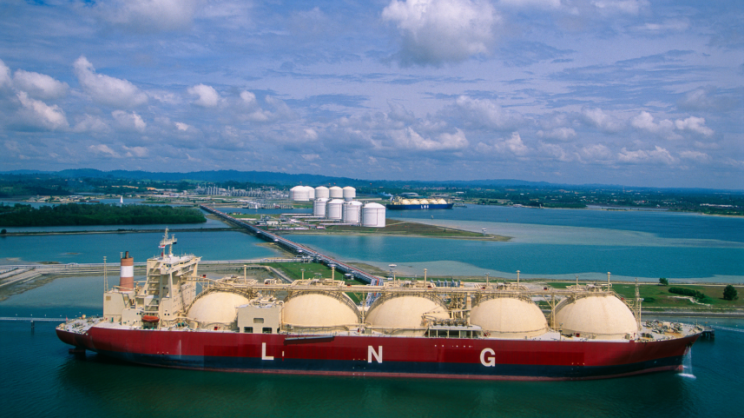
The plan directed three paths for Bangladesh: import LNG, coal-fired power and nuclear power. Renewable energy remained marginal, with no focus on building national capability. Following that path, the government built LNG terminals with the US and other foreign companies, expanded LPG use, added coal-fired power plants and began work on the nuclear plant. It borrowed heavily to finance these projects.
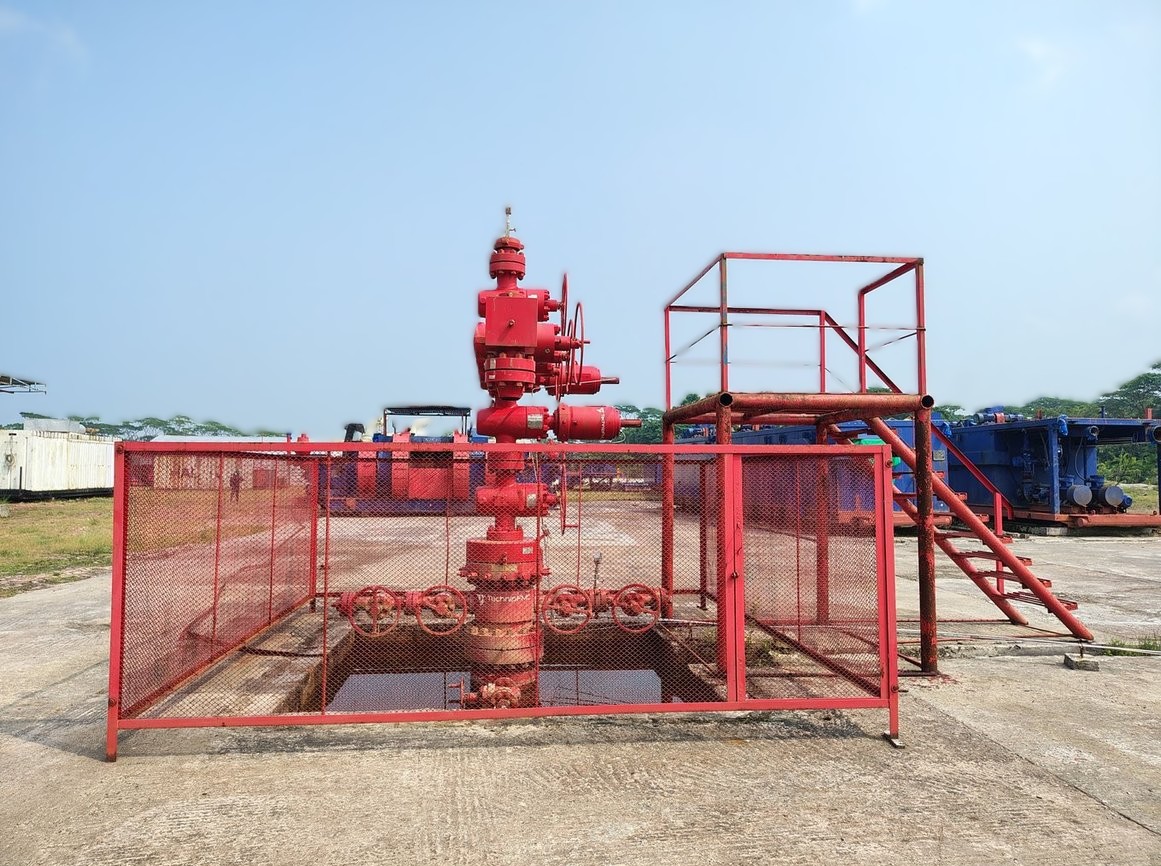
Today, coal-fired power plants have been built, LNG is being imported, and the nuclear power programme has advanced. Yet Bangladesh is facing an acute shortage of both gas and electricity. That is precisely why we need to examine the assumptions behind the master plan. These projects were presented as the answer to our energy problems, but the crisis has persisted despite them.
We also need to ask why the coal-fired plants are not operating as projected and why the nuclear plant has faced repeated shutdowns. There have been concerns over technical and safety issues, including problems involving safety valves. We raised questions about the nuclear project from the beginning, but there was very little space for critical discussion. Even sections of the media were reluctant to question a project that had been presented as a symbol of “national pride”.
Rampal is perhaps the clearest example of the government’s approach to coal. The proposed power plant triggered one of the longest-running movements against an energy project in Bangladesh, with strikes and demonstrations at home and protests abroad. We repeatedly argued that power generation has many alternatives, but the Sundarban has none. Yet the government went ahead, severely affecting the Sundarbans, the largest mangrove forest and a UNESCO World Heritage Site.
TDS: LNG is often presented as a quick way to address gas shortages. But what are the longer-term consequences of making imported LNG a major part of Bangladesh’s energy mix?
AM: Yes, LNG is often described as a bridge fuel that can solve short-term shortages. But we must also consider its long-term financial, environmental and energy-security costs. Relying on imported gas for decades is not a sound option.
First, the cost is extremely high compared to our own gas; it costs nearly 60 times as much for the same amount of gas as our own gas exploration. That is totally unsustainable. Second, LNG infrastructure creates environmental problems at the sites where it is built. Third, dependence on LNG leaves Bangladesh exposed to fluctuations in global energy prices over which we have no control.
There is also a technical vulnerability. Bangladesh has two LNG terminals. When one breaks down, repairs can take a month or even six weeks. If Excelerate Energy’s terminal repeatedly fails, the government should first ask why this is happening and why repairs take so long. The operator must be held accountable. Instead, we are seeing moves to sign more deals with the same company.
An import-dependent LNG system is therefore costly, environmentally damaging and technically vulnerable. Expanding it would only deepen Bangladesh’s risks of high uncertainty and high financial burden.

TDS: Why do Bangladesh’s energy policies remain largely unchanged even when governments change?
AM: Because some common forces remain active despite changes of the government. Many people think Sheikh Hasina’s government mainly tried to please India. That is not fully correct. Chinese projects and investment reached an unprecedented scale during her tenure, while much of the LNG engagement with US companies also took place under her government.
Many people expected the interim government to review these projects and change course. That did not happen. The forces shaping policy remained much the same: big business, the bureaucracy, and institutions such as the World Bank, IMF, ADB and JICA. In some cases, the interim government pushed the same policies even further.
We describe Sheikh Hasina’s rule as authoritarian, but authoritarianism also has an economic foundation. It is about who receives state contracts, which businesses enjoy political protection and who benefits from access to power. Protecting that economic order requires weakening institutions and limiting scrutiny. Under Sheikh Hasina, that went hand in hand with restrictions on the media, the suppression of dissent, arrests, enforced disappearances and killings.
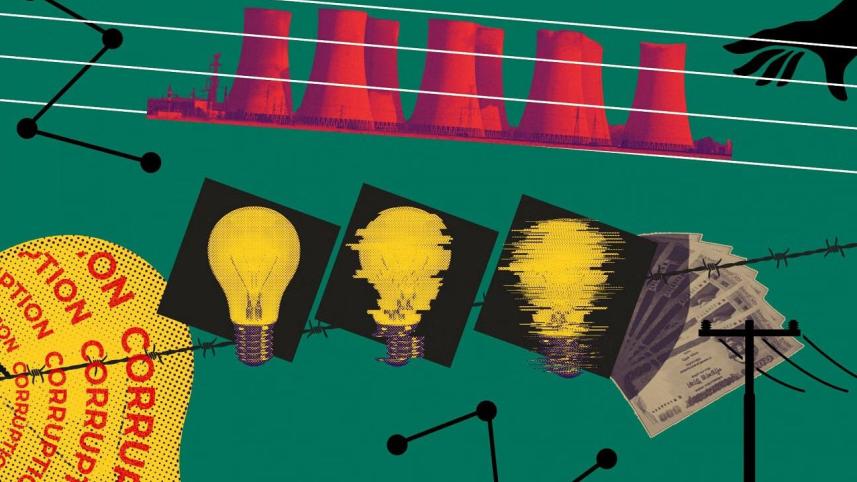
The expectation after her fall was not simply that the government would change, but that this underlying system would change with it. The interim government, however, failed to dismantle that economic structure, and I do not see the current government moving away from it either. The danger is that, instead of a democratic transition, one politically connected business elite will simply be replaced by another.
TDS: Bangladesh has relied on foreign companies for decades, often citing a lack of domestic capacity. Why has the country still failed to build that capacity?
AM: So far I know, BAPEX and Petrobangla have repeatedly proposed strengthening BAPEX and expanding its technical capacity. Yet within these institutions, officials who argue that Bangladesh can develop its own capabilities are often marginalised or transferred. Ultimately, this is a question of political priorities. If energy policy is shaped by powerful corporate interests, building strong national institutions will never be at the top of the agenda.
Since the 1980s, successive governments have repeated essentially the same argument: Bangladesh lacks the capacity, so it needs foreign companies. But countries do not acquire capacity by waiting for it to appear. They build it.
Look at Norway. When it discovered oil in the late 1960s, it initially depended heavily on foreign companies for expertise and technology. But it used that period to develop its own institutions, technical knowledge and human resources. India built ONGC, Malaysia built Petronas, and China developed state-owned energy companies that now operate around the world. None of these countries began with all the expertise they needed. They developed it over time.
In Bangladesh, however, lack of capacity has become a permanent justification for dependence. We often hear from the ruling elites that Bangladesh will become “the next Singapore”, but Singapore did not develop by assuming it was incapable of building and managing its own institutions; rather, it built a strong foundation.
When even a BUET professor says Bangladesh cannot develop such capacity, I have to ask: what, then, is BUET for? What are so many science and technology universities for? Universities, technical institutions and state agencies exist partly to produce precisely the knowledge and expertise a country needs. Why aren't teachers and students of these universities given the opportunity to grow internationally?
The deeper problem is that “we do not have the capacity” has become almost an article of faith. Many educated people accept it without asking why, after decades of investment and experience, that capacity has still not been developed. This creates a sense of inferiority and, at the same time, provides a convenient justification for one foreign-led project after another.
The deeper problem is that “we do not have the capacity” has become almost an article of faith. Many educated people accept it without asking why, after decades of investment and experience, that capacity has still not been developed. This creates a sense of inferiority and, at the same time, provides a convenient justification for one foreign-led project after another.
TDS: After years of opposing major energy projects, you began developing an Alternative Master Plan in 2017. What alternative did you propose for Bangladesh’s energy future?
AM: We opposed many energy projects, including Phulbari, ConocoPhillips and Rampal, because we were convinced that they would cause long-term harm to the country. After years of opposing governments’ wrong policies and harmful projects, we realised that we needed our own alternative. So, in 2015, we began work on an Alternative Master Plan and spent nearly two years developing it. In July 2017, we published the first draft.
Three groups took part in it: independent experts in Bangladesh with no company interests, experts abroad working from a public-interest perspective, and expatriate Bangladeshis with relevant expertise.
We concluded that Bangladesh does not need LNG imports, coal mining, coal-fired power or nuclear power. These projects are not only unnecessary; they could become a major long-term burden, even suicidal. Instead, Bangladesh can make fuller use of its own gas resources by developing national capability while rapidly expanding renewable energy. This combination would be cheaper, cleaner and sustainable.
No government can now say, “We had no alternative.” We are now updating the plan. The core arguments remain valid, while new data and experience from other countries have strengthened them. We plan to meet this month and continue the work next month. We are also studying Vietnam, India, and China, not to copy their approach but to understand how they expanded renewable energy so quickly.
The shift to renewable energy is becoming inevitable. But if it is handled badly, renewable energy could face the same fate as the Solar Home System.
TDS: Bangladesh’s energy crisis is immediate, but many proposed solutions will take years. What can realistically be done in the next one or two years?
AM: If we use the capacity we already have, we can make major changes onshore within one to two years. Bhola’s gas can be used in at least three ways: build a pipeline to the mainland, convert the gas to LNG and transport it, or generate electricity in Bhola and feed it into the national grid. We need a feasibility study to determine which option would be faster and cheaper. No such study has been done, even though the need is urgent.
Then there is Chhatak, near Tengratila, where the major blowout occurred. We still do not use its gas properly. If a national institution takes responsibility, production could begin within one to two years. Existing gas fields also need technical support and repairs. In some cases, output could increase within two to four months.
Offshore, we need short-, medium- and long-term plans to build national capacity and carry out exploration ourselves. We could make major progress within four to five years. Foreign companies can be hired for specific technical work, but ownership and control should remain with national institutions. That process needs to start now.
Solar is the other major opportunity. Researchers at home and abroad have estimated Bangladesh’s solar potential at several times its current electricity demand. Storage is not always necessary because much agricultural and industrial activity takes place during the day, when demand is high. Irrigation also uses the most electricity during daylight hours. Vietnam added about 11,000 megawatts of solar capacity in a single year during its energy crisis. Bangladesh’s peak demand is around 17,000 megawatts. The argument about land scarcity can be solved by taking planned utilisation of open space and rooftops.
The duty structure is a major obstacle. The government now offers a six-month duty exemption, but NBR conditions can shut out small businesses and ordinary citizens, as happened in the last budget. If coal receives duty benefits, renewable energy deserves more support. Bangladesh can also manufacture solar panels if the government creates incentives for local production.
We cannot leave the renewable-energy transition entirely to the private sector. The state has to take the lead, particularly in the early stages, by creating the infrastructure, incentives and regulatory framework needed for the sector to grow. If the government commits to long-term contracts at Tk 12 or Tk 14 per unit when comparable solar power can be produced in India for Tk 4 or Tk 5, those agreements can impose a substantial long-term burden on the state.
We also need to learn from the Solar Home System. The systems were expensive, the panels were often of poor quality, and the batteries were costly and unreliable. The lesson is simple: installing solar panels is not enough. Batteries, maintenance, technical support and financing all have to work together. The system also needs public awareness, training, incentives and, where necessary, subsidies.
Ultimately, changing course is the responsibility of the state. If the government treats the energy crisis with the urgency it requires, work on expanding domestic gas production and renewable energy can begin immediately, with tangible progress possible within months. But the transition must be carefully planned. Renewable energy has to become not simply another set of projects, but a reliable and sustainable part of Bangladesh’s energy system—one that earns public confidence and ensures public participation.
The interview was taken by Khairul Hassan Jahin.
Send your articles for Slow Reads to slowreads@thedailystar.net. Check out our submission guidelines for details.
The $5 billion opportunity Bangladesh is failing to see

How Bangladesh is failing its Qawmi graduates
Why is water-rich Bangladesh running short of water?

Bangladesh's education crisis: The future has already begun
The global injustice behind Bangladesh’s shipbreaking industry
How to make essential medicines affordable and accessible in Bangladesh
Can Bangladesh make its plastic waste policy work?
Dhaka accidentally built the city planners now want. Can we make it liveable?

Can Bangladesh produce its own knowledge?