How Bangladesh is failing its Qawmi graduates
Religious educational institutions have always done more than teach religion. They build communities, support the poor, and provide education to individuals who might otherwise have nowhere else to go. Across South Asia, there are many forms of religious educational institutions. In Bangladesh, for example, Muslims have madrasas, Christians have missionary schools, Hindus have tols, and Buddhists have Pali schools. Since Bangladesh is a Muslim-majority country, with around 91 percent of the population identifying as Muslim, madrasas play a particularly significant role in society.
In Bangladesh, there are mainly two types of madrasa systems. The first is the Aliya madrasa system, which provides both religious education and secular subjects such as Bangla, English, mathematics, and science. This combination helps students acquire skills that can be useful in the labour market. The second is the Qawmi madrasa system, which focuses primarily on religious and theological education. Most importantly, these institutions largely operate without direct state intervention. They maintain their own funding systems and receive financial support from a variety of sources, primarily community donations. As a result, they largely function according to their own rules and regulations. Furthermore, they follow a curriculum based on the Deobandi tradition of Dars-e-Nizami, developed independently of the state education system and rooted in the same intellectual tradition as the famous Darul Uloom Deoband, established in India in 1866 in opposition to British colonial educational policies.
Bangladesh’s missing Qawmi numbers
There are estimated to be more than 20,000 Qawmi madrasas in Bangladesh. However, because these institutions are decentralised—meaning they are run independently by local communities rather than by a central government authority—there are no comprehensive official statistics or reliable data establishing their exact number. Similarly, there is no definitive official figure for how many students study in them. Estimates differ significantly depending on the source. Some place the figure at around 1.4 million students across roughly 15,000 institutions, while others suggest it could be considerably higher. According to The Daily Star, examination participation under Befaqul Madarisil Arabia Bangladesh alone—just one of several Qawmi boards—grew from 225,631 students in 2022 to 349,776 in 2025. If smaller and unregistered madrasas are also counted, the total number of Qawmi institutions could exceed 60,000 nationwide. This is not merely a matter of imprecise record-keeping. It reflects something more structural: because Qawmi madrasas largely operate outside direct state authority and have historically resisted government oversight in order to preserve their institutional autonomy, the state has only a limited window into this vast educational world.
A country cannot effectively plan its labour market, allocate educational resources, or design social policy for a population it cannot adequately see or measure.
This absence of data is not simply a bureaucratic inconvenience. It is one of the largest missing pieces in the country's human capital infrastructure. A country cannot effectively plan its labour market, allocate educational resources, or design social policy for a population it cannot adequately see or measure. And the population studying in Qawmi madrasas is neither small nor negligible.
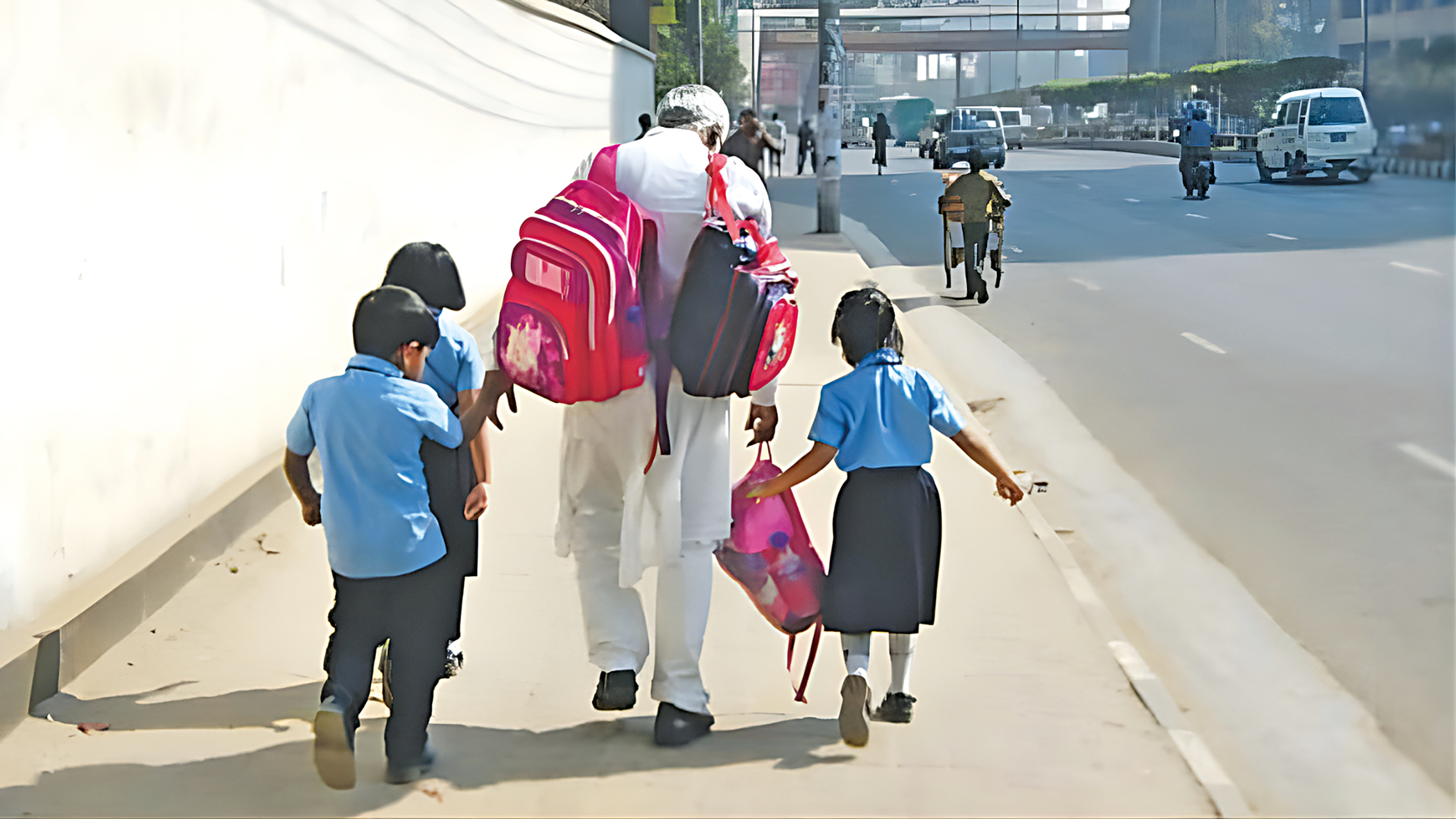
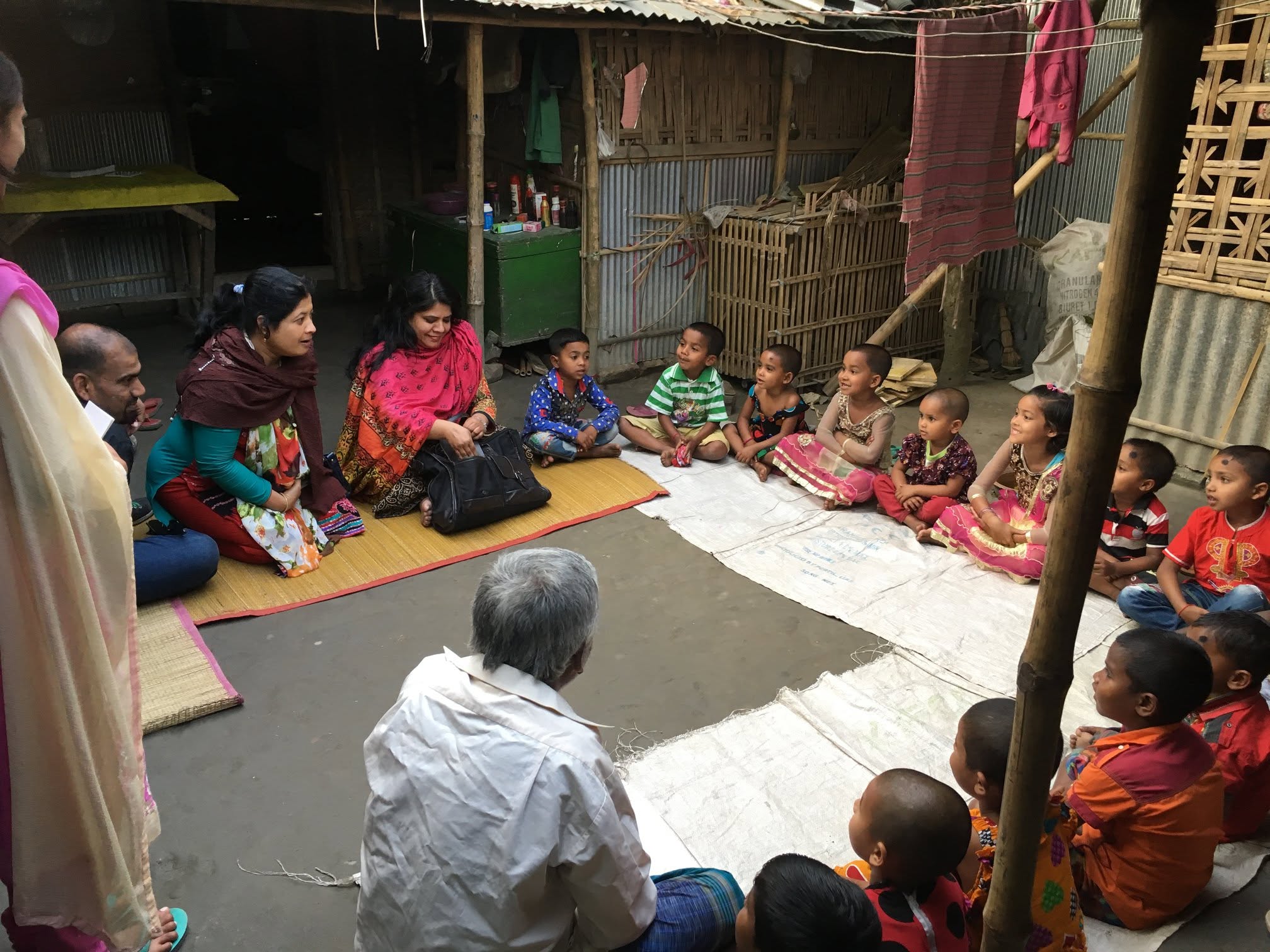
Many of the students who study in these institutions come from marginalised socio-economic backgrounds. Significantly, many of these institutions also perform a role similar to that of orphanages and residential welfare institutions in Bangladesh, providing free or heavily subsidised education, food, and accommodation. These facilities make Qawmi madrasas particularly accessible to students from disadvantaged backgrounds who might otherwise struggle to continue their education.
Until there is a reliable national count of these institutions and their students, it will remain impossible to understand the true scale of this educational sector—or the scale of what Bangladesh stands to lose if its graduates remain disconnected from wider educational and economic opportunities.
Years of study, few opportunities
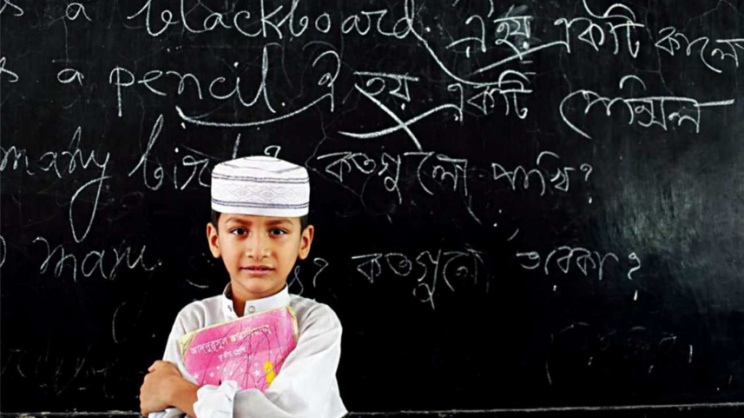
A typical Qawmi student spends between ten and fifteen years engaged in rigorous study, including classical Arabic, Quranic exegesis, jurisprudence, logic, and rhetoric. After completing the highest level of study, Dawra-e-Hadith, graduates possess extensive religious knowledge and are recognised within their communities as scholars. They often go on to become imams, teachers, counsellors, and mediators in communities across the country. In many places, they are among the most trusted and influential local figures.
Although Qawmi madrasa certificates were officially recognised by the state in 2018, when the government granted the Dawra-e-Hadith degree equivalence to a master's degree in Islamic Studies, this recognition has functioned more symbolically than practically. The recognition did not come with mandatory curriculum reforms or expanded state oversight, meaning that the gap between Qawmi education and the demands of the formal labour market remained largely unchanged. In practice, Qawmi education and its certificates are still not fully recognised across the state, wider society, and, especially, the labour market. Consequently, many students face uncertainty after graduation as they struggle to find employment opportunities that correspond to their years of education and training.
General education graduates can at least apply for a wider range of jobs, but Qawmi graduates often cannot even apply for many positions, let alone secure employment. As a result, these highly trained individuals, who carry with them years of specialised religious knowledge, are often denied sufficient opportunities and recognition to contribute to the mainstream labour market.
Qawmi graduates possess what economists sometimes call 'trust capital': they are often high-trust figures within their communities, capable of reducing social friction and strengthening local cooperation.
An overlooked human resource
What makes the situation of Qawmi graduates especially troubling is not just the labour market gap, but the absence of adequate infrastructure to bridge it. Qawmi graduates possess what economists sometimes call "trust capital": they are often high-trust figures within their communities, capable of reducing social friction and strengthening local cooperation. But the modern labour market has few mechanisms to recognise or mobilise this form of social capital. There is no verified professional profile system, no comprehensive national database linking their qualifications to the broader economy, and no clear policy pathway that takes their specific forms of knowledge seriously as a potentially productive social resource.
Comparative examples suggest that this situation is not inevitable. Indonesia, for instance, has taken steps to integrate its pesantren network—a system with some structural similarities to Qawmi madrasas—into national digital systems through the Ministry of Religious Affairs' Education Management Information System, creating stronger institutional links between religious education and the wider national system without requiring students to abandon their religious education. Bangladesh has solved complex development challenges before: it developed a garment industry that exports billions of dollars' worth of products annually and scaled up digital financial services across a largely rural population. Each of these transformations occurred because infrastructure was built where little or none had previously existed. The Qawmi network already conducts centralised examinations involving hundreds of thousands of students annually. The missing layer is an institutional mechanism that connects religious education more effectively to economic participation.
The 2018 recognition of Qawmi degrees was a beginning, but it was a beginning that was not followed by the institutional work necessary to make that recognition fully meaningful. A symbolic gesture towards inclusion, without the data and institutional infrastructure needed to support it, changes very little for a graduate who cannot find suitable work.
The first and most urgent step, therefore, is simply to count. Without a national database—one that records institutions, enrolment figures, qualification levels, and graduate outcomes—Bangladesh will remain unable even to determine the scale of the human resource it is failing to utilise.
Imtiaz Ahmed Siddik holds a master's degree in sociology from South Asian University, New Delhi. He can be reached at Imtiazahmedsiddik@gmail.com.
Send your articles for Slow Reads to slowreads@thedailystar.net. Check out our submission guidelines for details.
Why is water-rich Bangladesh running short of water?
Bangladesh's education crisis: The future has already begun
The global injustice behind Bangladesh’s shipbreaking industry
How to make essential medicines affordable and accessible in Bangladesh
Can Bangladesh make its plastic waste policy work?
Dhaka accidentally built the city planners now want. Can we make it liveable?
Can Bangladesh produce its own knowledge?
How we are killing Dhaka
Can Bangladesh afford not to invest in Bhola’s gas?