The untold side of Bangladesh's climate migration
Climate change is not only producing displacement. It is also reshaping the lives of those who remain. Understanding why people stay and what enables or constrains that choice should be central to how the country plans its adaptation.
When climate change is discussed in Bangladesh, migration usually occupies the centre of the conversation. Rising seas, cyclones, riverbank erosion, and salinity intrusion are widely expected to make some places increasingly difficult to inhabit, pushing households to move in search of safety and livelihoods. The concern is well founded. Bangladesh has extensive experience of climate-related displacement, and the World Bank has projected that as many as 13.3 million Bangladeshis could be internally displaced by climate impacts by 2050. But another side of this story deserves far greater attention: the many people who remain.
Our research in southwest coastal Bangladesh, conducted over nearly two decades, makes that side of the story visible. This is a landscape where environmental risk is not hypothetical. Communities live with cyclones, tidal flooding, salinity, erosion, and the repeated deterioration of embankments. For instance, in May 2009, Cyclone Aila breached the embankments around Gabura, a union of Shyamnagar Upazila in Satkhira District. Salt water poured into the fields and did not drain away. For months afterwards, families whose homes had been submerged were forced to live on the embankment, a narrow strip of earth just a few metres wide, caught between the flooded village on one side and the river on the other. Seventeen years on, most of those families are still in Gabura. Yet many residents do not treat migration as the obvious solution. That fact is easy to record and surprisingly hard to explain.
The reason is not simply that they lack the money to move, nor does staying mean that they underestimate the risks. Their decisions are shaped by what we describe as tetheredness: the social, economic, cultural, and aspirational relationships that connect people to place.
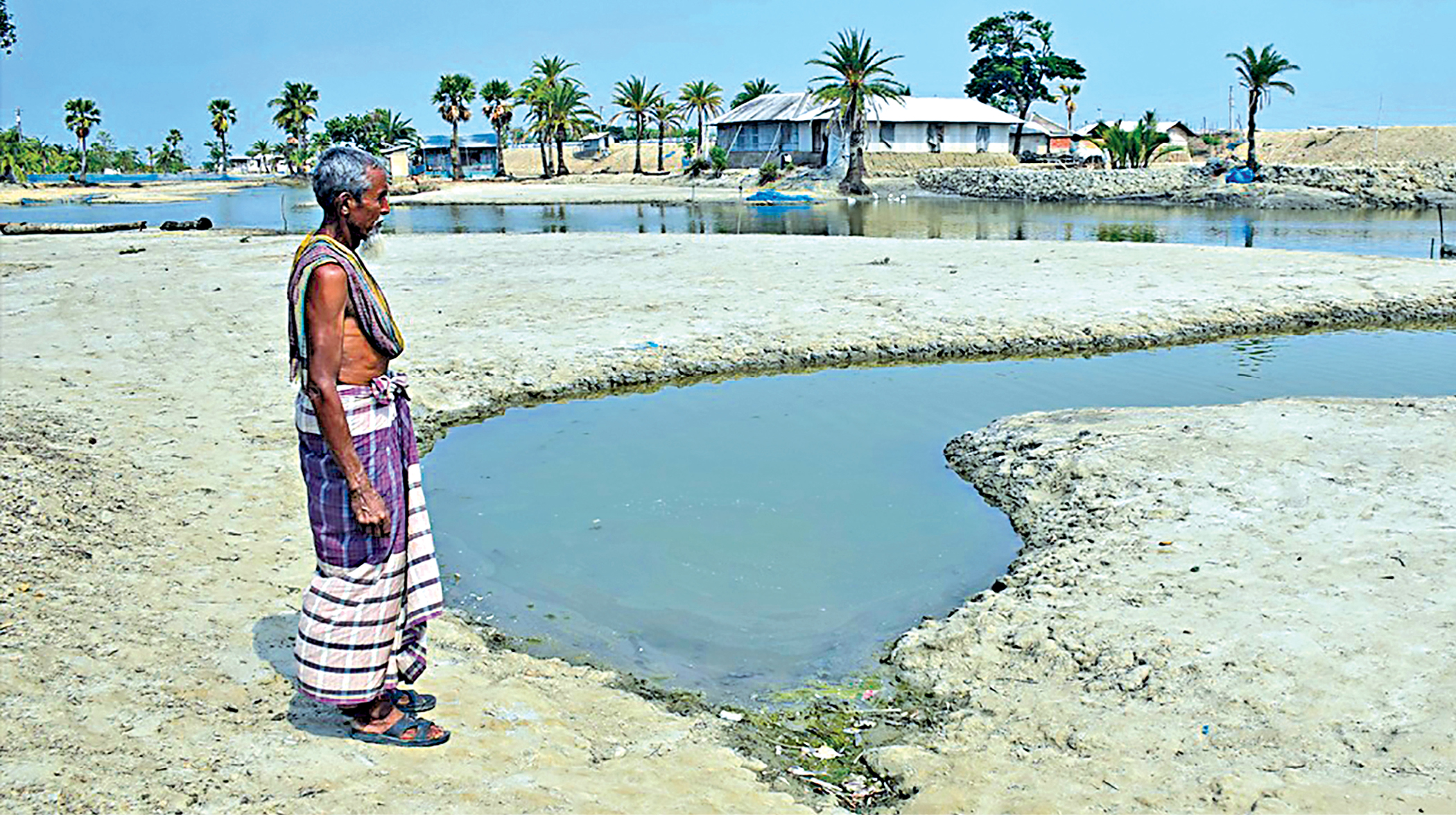
This perspective changes how we should understand climate adaptation. The question is not only whether environmental change pushes people away. It is also how attachment to place, social relationships, livelihoods, and expectations for the future shape people's willingness and ability to remain.
The difference between a cyclone and a slowly changing landscape
The distinction between rapid- and slow-onset hazards is important for understanding why people stay. A cyclone produces a recognisable crisis: there is a warning, an event and an aftermath, and the destruction can be seen and counted. Riverbank erosion, salinity intrusion and siltation unfold gradually. Land disappears incrementally, agricultural conditions deteriorate over time, and water quality changes season by season. This difference is not merely physical. It also changes how people interpret risk.
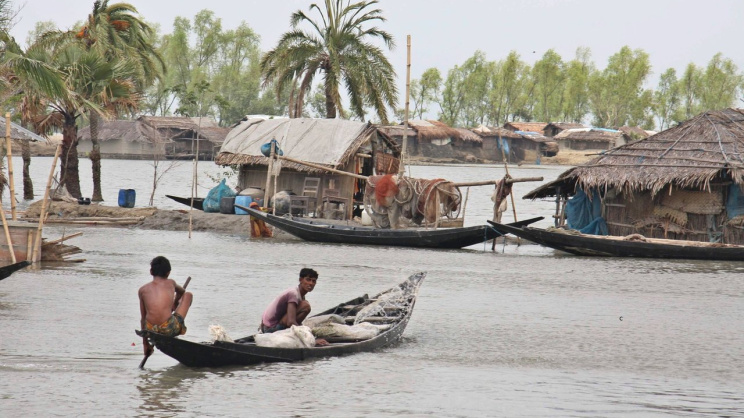
Our research suggests that cumulative hazard experience increases responsiveness to flooding and salinity, but not necessarily to erosion. Repeated exposure to erosion may instead contribute to risk normalisation, a process through which an environmental threat comes to be perceived as an enduring condition of everyday life rather than an exceptional disaster. This helps explain why continued exposure does not automatically result in migration. When the river takes a small piece of land each year, there may be no single moment at which a household decides that it has become impossible to stay. Instead, people adjust incrementally. They repair, rebuild, diversify livelihoods and lean on relatives and neighbours. One resident captured the resulting sense of inevitability: “The river takes what it wants.” Such statements should not be read simply as fatalism. They can also represent an adaptation to a risk embedded in everyday life.
Staying is a decision shaped by relationships
The tendency to equate staying with helplessness is one limitation of conventional climate migration narratives. A household does not necessarily remain in a place because it has no agency. It may remain because the place provides forms of security that are difficult to reproduce elsewhere. Our analysis identifies four dimensions of tetheredness: locational, economic, social and aspirational.
Locational tetheredness refers to attachment created through familiarity, cultural identity and proximity to family and community. As one respondent explained, “We know every corner of this village; leaving it feels like leaving part of ourselves.” Economic tetheredness is tied to livelihoods and assets. A woman told us, “If we leave, where will we keep our cattle or find work like here?” These statements point to a crucial feature of adaptation: environmental risk is only one input into the decision. People weigh the risks of remaining against the risks of leaving. Migration may reduce exposure to one set of hazards while creating new economic and social vulnerabilities, such as the loss of land, livestock, employment, family support and locally embedded knowledge. For households whose livelihoods rest on these resources, moving is not an unambiguous improvement. It is another form of uncertainty.
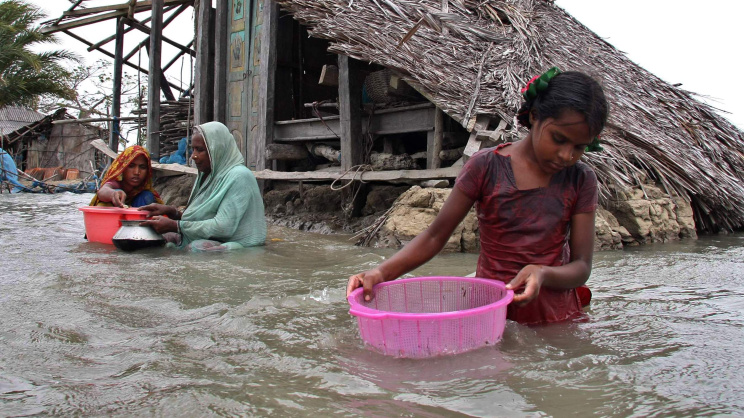
The third dimension, social tetheredness, is particularly important. People do not adapt as isolated individuals. They respond through families, neighbourhoods, community organisations and informal networks. Our fieldwork found widespread participation in early warning systems and embankment repair. Community-based disaster risk management can strengthen local capacity by creating mechanisms for exchanging information, coordinating action and mobilising collective resources. An NGO worker explained the role of these networks simply: “Our NGO meetings are where we hear what is happening and decide together what to do.” Another participant described the strength of collective attachment even more directly: “We do everything together in unity. That's why we don't go anywhere. We will live and die in one place.”
Social cohesion does not merely provide emotional support. It shapes people's practical capacity to remain. At the same time, social relations are not always harmonious. Our findings show that community conflict can coexist with collective adaptation: communities can be fragmented in some respects while still cooperating around particular environmental challenges. This is why resilience should not be treated as a fixed characteristic of a community. It is produced through relationships, institutions, and collective practices, and it can be eroded as readily as it can be built.
The fourth dimension is perhaps the most important for understanding why people continue to stay: aspirational tetheredness. People are attached to places not only because of their past, but because of what they imagine those places could become. In our research, aspirations for younger generations were among the strongest dimensions of attachment. One farmer told us: “We know things are difficult, but we believe life here can still get better for our children.” Staying, in other words, is not necessarily a rejection of change. People may recognise environmental deterioration while still believing that their community has a future. If adaptation policy assumes that climate-vulnerable populations will inevitably abandon their homes, it overlooks the aspirations of those who want to remain and improve the conditions of life where they are. But attachment should not be mistaken for resilience.
The costs of staying
Policy discussions tend to celebrate communities that “resist displacement”. Such narratives can be empowering, but they can also obscure what staying costs. Repeated disasters gradually erode household resources and confidence. Our analysis indicates that disaster exposure is associated with lower overall tethered resilience. One participant expressed this cumulative effect precisely: “Every time the cyclone comes, it feels like we lose a part of our confidence to stay.”
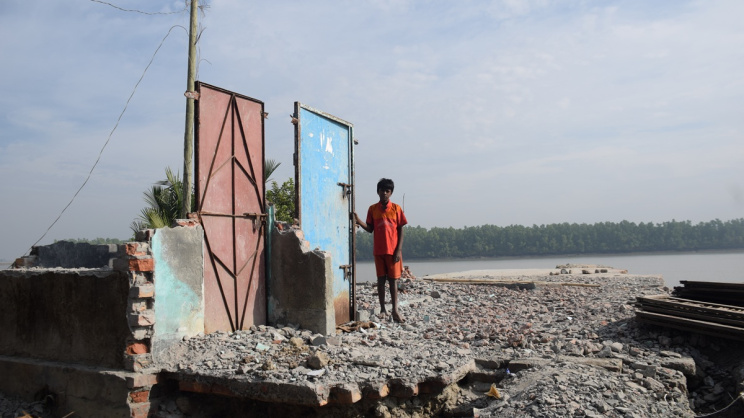
This is the paradox at the heart of climate adaptation in coastal Bangladesh: the same place can be a source of both vulnerability and security. A household can remain in place while becoming progressively less secure. It can keep repairing its house while losing productive land, maintain its livelihood while exhausting its savings, and stay physically present while growing steadily less certain of its future. Staying, therefore, tells us very little unless we also ask under what conditions people are staying. The more frequently shocks arrive, the harder that balance becomes to sustain, creating a condition we call adaptation fatigue: the cumulative psychological, economic and social burden of repeatedly responding to environmental stress.
Community-based adaptation matters, but unevenly
The experience of Gabura also illustrates why community-based disaster risk management matters. Most respondents in our study reported receiving early warnings, and many participated in embankment repair. These practices show that communities have substantial capacity for collective action, and our analysis suggests that participation in community-based disaster risk management is positively associated with social tetheredness. But such interventions do not benefit everyone equally. Adaptation is socially differentiated across age, generation, economic condition and social identity. “Community resilience” should never be treated as though every member of a community has the same resources or opportunities. The capacity to stay is itself unequally distributed, and so is the capacity to leave.
Bangladesh rightly invests heavily in embankments, cyclone shelters, early warning systems and disaster preparedness. These investments save lives and remain indispensable, and they sit at the heart of the Bangladesh Delta Plan 2100, the country's flagship long-term climate policy. But the experience of communities such as Gabura suggests that infrastructure is only one part of the adaptation solution. An embankment can reduce physical exposure, but it cannot determine whether people have viable livelihoods. An early warning can provide information, but it cannot guarantee that a household has the resources to act on it. A repaired embankment can protect land, but it cannot reproduce the social networks that make a place feel like home. Climate adaptation must therefore move beyond a purely infrastructural understanding of resilience and invest as deliberately in social capacity, local institutions, collective efficacy, livelihood security and people's ability to exercise meaningful choices about their futures.
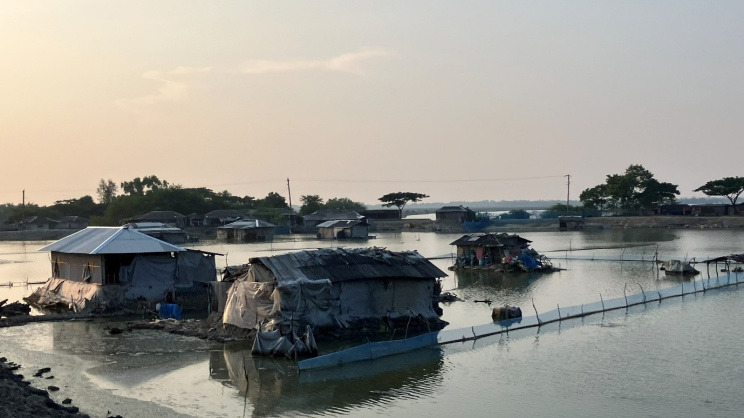
This matters most for slow-onset hazards. If erosion and salinity are treated merely as technical problems, policy will miss their social consequences: changing livelihoods, weakened confidence, altered aspirations and increasingly difficult decisions about whether to stay.
The politics of staying
The people we met in Gabura did not describe their lives in the language of climate adaptation theory. They talked about land, livelihoods, children, neighbours, cattle, embankments and the river. But these everyday concerns reveal a sophisticated form of adaptation. They show that climate decisions are not made by calculating environmental exposure alone. They are shaped by memory, identity, social relationships, economic dependence and expectations about the future. This is why the politics of staying deserves a far more prominent place in Bangladesh's climate debate.
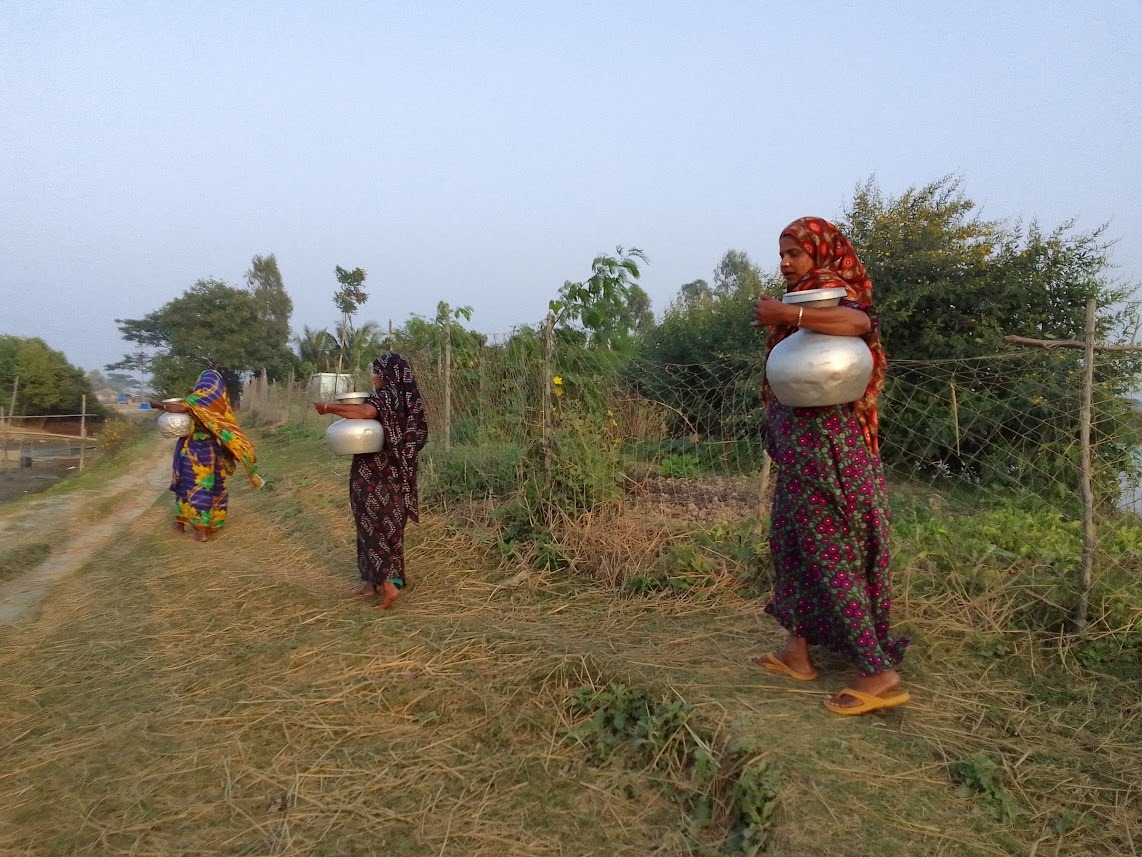
Those reasons for staying, however, should not be used to shift the responsibility for adaptation onto communities themselves. When residents repeatedly repair embankments, diversify livelihoods and absorb losses, they are doing the work that policy should be supporting, not substituting for. The task of policy is not to decide on people's behalf whether staying or leaving is the better response. It is to make either one survivable. As the ground beneath coastal Bangladesh continues to shift, our understanding of climate adaptation must shift with it. The central question is no longer simply, “Who will migrate because of climate change?” We must also ask: “Who is staying, why are they staying, and what will it take for staying to remain a genuine choice?”
For communities such as Gabura, the answer begins with something simple: home is more than a location on a map. It is a network of relationships, livelihoods, memories, and hopes. Even on shifting ground, people stay because they still believe there is a future worth staying for. Recognising that belief as legitimate, rather than as a problem to be solved by relocation, should be part of how Bangladesh designs the next stage of its climate strategy.
Beyond the choice to migrate
Perhaps the most important lesson from two decades of research in Gabura is that the language of “climate migration” is too narrow to describe the choices people are actually making. Mobility and staying are not opposites. A household may send one member elsewhere for work while maintaining a home in the village. A young person may migrate temporarily while remaining strongly connected to family land. Another household may decide to stay because its social networks and livelihoods make remaining more viable than moving. Migration and non-migration are better understood as points along a spectrum of strategies for negotiating environmental uncertainty.
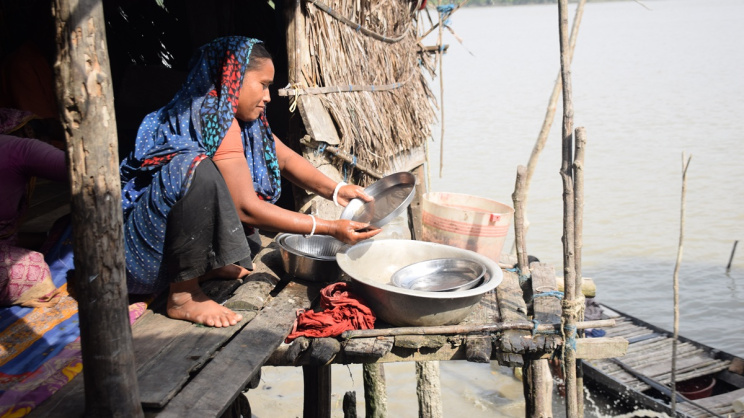
The policy question, then, is not whether people are “resilient enough” to stay, nor whether migration should be promoted as the inevitable solution to climate vulnerability. It is whether people have genuine choices. If households want to stay, they should have the resources and institutional support to remain safely and with dignity. If they want to move, they should be able to do so without forfeiting their livelihoods, social protection, or rights. And if they are uncertain, policy should preserve their options rather than forcing premature decisions.
Bishawjit Mallick is an associate professor of Climate Change and International Development Studies at the Faculty of Geosciences, Utrecht University, the Netherlands.
Oishi Rani Saha is a research assistant with the Facilitating Livelihoods through Advancing Smart Habitats in Peri-Urban Bangladesh (FLASH) Project at the Institute of Water and Flood Management (IWFM), Bangladesh University of Engineering and Technology (BUET).
Md. Nasif Ahsan is a professor in the Economics Discipline at Khulna University.
Send your articles for Slow Reads to slowreads@thedailystar.net. Check out our submission guidelines for details.
‘Situation under control’, but at whose expense?
Dhaka's unbearable heat: Who suffers the most?
Enforced disappearance in Bangladesh / Who investigates the state?
Gibbons, kingfishers and the changing world of Adampur Reserved Forest

More than refugees: How Rohingya youth are reclaiming their story
Behind every cup / The mental toll on women tea workers
From Shyamnagar to Kurigram: Women work, but where is the income?
Waiting for April: The other side of migration in the Sundarbans
Where have Bangladesh’s hilsa gone?