Bangladesh’s gold paradox: From a shadow market to an export industry

Gold is once again making headlines in Bangladesh. Between 2000 and 2025, the price of 22-carat gold increased thirty-fold. However, the more recent increase comes against a backdrop of continued uncertainty in international gold markets.
On September 19, the Bangladesh Jewellers Association (BAJUS) raised the price of 22-carat gold by Tk 1,691 to Tk 234,621 per bhori. The increase followed a week without a price rise. The adjustment is the latest in a year of pronounced volatility: domestic prices reached a record Tk 286,000 per bhori on January 29, subsequently fell below Tk 220,000, and have fluctuated since.
For consumers, these movements raise familiar questions about when to buy. For jewellers, there is uncertainty about inventory costs and sales. But the daily fluctuations obscure a more consequential question for Bangladesh’s economy: how can a country sustain a large jewellery industry while importing so little of its principal raw material through formal commercial channels?
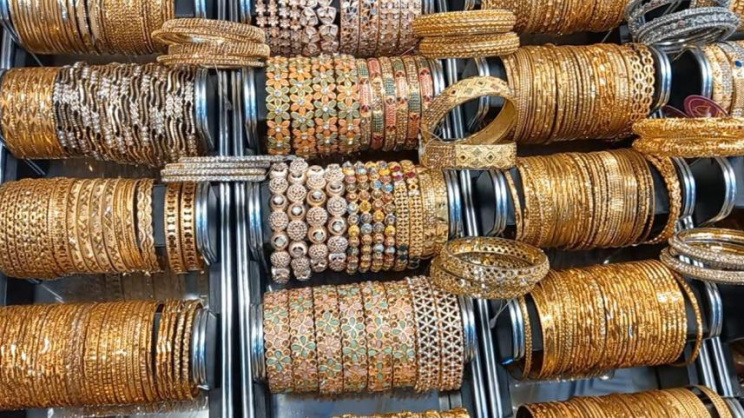
The question becomes more striking when viewed against developments elsewhere in Asia. In August, Malaysia’s trade promotion agency, MATRADE, reported that the country’s total jewellery trade had reached RM12.13 billion in the first half of 2026, an increase of 10 percent. In 2025, Malaysia exported RM10.1 billion worth of jewellery, up 9.3 percent from the previous year. Its principal export destinations included the United Arab Emirates, Singapore and Thailand.
Bangladesh and Malaysia occupy very different positions in this industry. Bangladesh has a deeply rooted culture of gold consumption, an extensive retail network and a substantial pool of skilled artisans. Malaysia has leveraged its manufacturing capabilities to become a significant player in the international jewellery trade. The contrast is not simply about entrepreneurial ability. It raises a development question: why has Bangladesh struggled to turn an established domestic industry into a source of formal trade, export earnings and public revenue?
The state struggles to capture revenue from a thriving market, while legitimate businesses face obstacles to importing raw materials and developing export operations.
The answer lies in a fragmented policy framework. Customs authorities are expected to prevent illicit gold flows, the Bangladesh Bank must safeguard foreign exchange stability, and industry regulators must oversee production and trade. Yet restrictions intended to achieve one objective can undermine another. The state struggles to capture revenue from a thriving market, while legitimate businesses face obstacles to importing raw materials and developing export operations.
Recent government initiatives suggest that this problem is finally receiving attention. But formalising the gold economy will require more than another policy document. It demands a coordinated strategy that combines intelligence-led enforcement, predictable legal imports and a credible programme of industrial upgrading.
A thriving industry with an opaque supply chain
Gold occupies a distinctive place in Bangladesh’s economic and social life. Jewellery is purchased for weddings, inherited across generations and held as a form of household wealth. Demand extends well beyond metropolitan centres. From established jewellery districts in Dhaka and Chattogram to district towns and smaller commercial hubs, gold retailing supports a dispersed network of enterprises and craftspeople.
Industry estimates put annual domestic demand at roughly 20–40 tonnes. BAJUS represents a substantial organised segment of the trade, while estimates of the wider industry point to tens of thousands of enterprises and a large artisan workforce. These figures indicate considerable economic activity, although the absence of a comprehensive, independently verified industry census means they should be treated as estimates rather than precise counts.
Yet formal commercial bullion imports have remained exceptionally limited relative to this activity. The industry obtains gold through several channels, including recycled jewellery, passenger baggage and informal cross-border transactions. The baggage channel is legally distinct from smuggling: gold brought in by travellers may comply with applicable customs rules, even though passenger imports are not a substitute for a transparent commercial supply chain.
Industry insiders have long maintained that informal sources account for a substantial share of Bangladesh’s gold supply. Yet the precise proportion is difficult to establish. Gold enters through several channels, including legally declared passenger baggage, recycled jewellery and illicit cross-border transactions. Some gold brought into Bangladesh is reportedly smuggled onwards to India rather than absorbed by domestic consumers. The more consequential fact is that formal commercial bullion imports remain extremely limited relative to the scale of the domestic jewellery industry.
This has important fiscal consequences. Bangladesh’s tax-to-GDP ratio is already low, and the gold sector illustrates how an opaque supply chain can narrow the effective tax base. When bullion does not enter through formal commercial channels, the government loses opportunities to assess and collect applicable import-stage revenue and to establish reliable records of transactions. Retail VAT and business income taxes are separate matters; the existence of some tax collection at the point of sale does not resolve the weaknesses upstream.

Informality also imposes costs on legitimate businesses. Firms that seek bank finance, maintain proper accounts, and comply with import procedures may face greater uncertainty than competitors that source gold outside proper channels. The resulting incentives work against formalisation, investment and scale.
Nor can Bangladesh treat the problem as purely domestic. Gold in Bangladesh is costlier than in neighbouring countries. Reports have linked informal gold movements with hundi and other cross-border financial transactions. The extent of those connections requires careful investigation, but the potential implications extend beyond customs revenue to financial integrity and foreign exchange management.
The regional experience reinforces a basic economic lesson. India’s changes in gold-import duties have repeatedly prompted debate over incentives for smuggling. Pakistan has experienced sharp contractions in recorded gold imports during periods of economic and import restrictions. Neither comparison offers a ready-made policy for Bangladesh, but both show why official import figures alone can be misleading when demand persists and the relative cost of legal supply changes.
The policy implication is straightforward. Enforcement matters, but it cannot succeed in isolation from the conditions under which legitimate firms obtain gold.
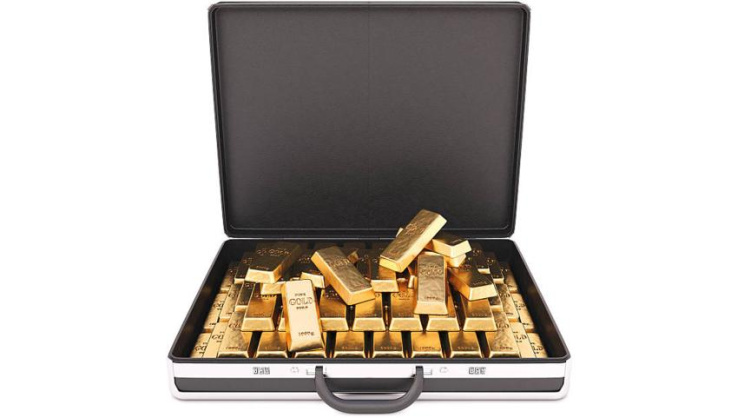
The dual challenge: Deter illicit trade and enable legal commerce
Bangladesh faces two related institutional challenges. Its customs system must identify increasingly sophisticated illicit movements of gold, while its financial and trade regulations must make legitimate commercial imports sufficiently predictable for businesses to use them.
These functions cannot be pursued independently. More aggressive border enforcement, without improvements in legal access to raw materials, may raise the costs and risks of informal trade without creating a viable alternative. Conversely, easier imports without effective monitoring could create opportunities for diversion and abuse.
The first task is therefore to modernise customs intelligence. Gold is compact, valuable and relatively easy to move across borders. Detection cannot depend primarily on routine inspections or occasional high-profile seizures. Customs needs stronger risk profiling, better information sharing, trained specialist officers and equipment suited to detecting concealed gold—including forms that conventional visual inspection may miss.
Intelligence-led enforcement also requires credible informant networks and systematic analysis of trade and passenger movements. The objective should be to distinguish high-risk transactions from legitimate activity, rather than subject every trader or traveller to the same degree of scrutiny. A more capable customs administration would improve detection while reducing unnecessary delays for compliant businesses.
The second task is to extend that intelligence effort beyond Bangladesh’s borders. Dubai and Singapore are important hubs in the regional precious-metals trade. The Ministry of Foreign Affairs may consider placing Customs Attachés in these locations, with clear mandates for liaison with foreign customs authorities, information exchange and cooperation on suspicious shipments and financial flows.
Bangladesh’s established customs representation in Brussels, associated with engagement with the World Customs Organization, could also be strengthened as a platform for wider international cooperation. Additional specialist revenue officers, appropriate information-sharing arrangements and sustained institutional links would make overseas representation more useful than a purely ceremonial diplomatic presence.
This is not an argument for turning our embassies into enforcement outposts. It is an argument for recognising that modern customs administration increasingly depends on relationships with counterpart agencies abroad. Where illicit supply chains cross jurisdictions, domestic seizures alone address only one part of the problem.
The third task is to make the legal route commercially workable. Bangladesh Bank’s concerns about foreign exchange stability are legitimate. Gold is an imported, high-value commodity, and an unrestricted import regime would not be a prudent response to macroeconomic pressures. But uncertainty over permissions, letters of credit and access to bullion makes long-term manufacturing investment difficult.
A better framework would establish transparent eligibility requirements for authorised importers, predictable procedures for commercial imports and proportionate monitoring of how imported gold is used. Customs and Bangladesh Bank should be able to reconcile import records with manufacturing, sales and export documentation. Tariffs and charges should also be reviewed against regional conditions so that legal imports do not face avoidable cost disadvantages.
The aim is not to subsidise gold consumption. It is to bring an existing market into a system that can be supervised, taxed and, where commercially viable, connected to export production.
The aim is not to subsidise gold consumption. It is to bring an existing market into a system that can be supervised, taxed and, where commercially viable, connected to export production.
A policy opening that must translate into practice
Bangladesh is not starting from zero. In June 2026, the National Board of Revenue issued rules governing the import of gold bars and pieces under bonded-warehouse arrangements for the manufacture and export of gold jewellery. This provides a regulatory route through which eligible export-oriented businesses can obtain raw materials for production.
In August, the Ministry of Commerce initiated consultations on a revised Gold Policy, seeking to strengthen the sector’s formalisation, legal trade, export development and revenue contribution. Representatives of Bangladesh Bank, NBR, the Export Promotion Bureau and BAJUS participated in the process.
These developments are significant because they acknowledge the need to address the gold economy as a connected system rather than a series of isolated regulatory problems. But issuing rules is only the beginning. Their value will depend on whether firms can actually use the facilities, whether approvals are timely, and whether oversight is credible.

The bonded-warehouse framework, for example, must balance two objectives. Exporters need access to imported inputs without the costs and delays that would make them uncompetitive. At the same time, the authorities must be able to verify that duty-free gold is used for authorised production and that finished products are exported as declared.
That calls for traceable inventory records, appropriate audits and coordination among customs, banks and exporters. Excessive paperwork could render the facility ineffective; weak controls could undermine its credibility. The test of reform is whether it can achieve both facilitation and accountability.
From gold consumption to jewellery exports
Formalisation would improve revenue administration and market transparency. Its larger economic promise, however, lies in the possibility of transforming jewellery from a predominantly domestic retail business into a more export-oriented manufacturing industry.
Bangladesh’s existing artisan base offers a starting point. Craftsmanship is embedded in family enterprises and established commercial clusters. But traditional skills alone do not guarantee export competitiveness. International buyers also demand reliable quality, consistent production, timely delivery, credible certification and designs suited to particular markets.
Malaysia’s experience illustrates the importance of this wider ecosystem. MATRADE identifies Penang and the Klang Valley as major production centres, combining traditional craftsmanship with modern manufacturing techniques. Its 2025 export markets included the UAE and Singapore—two locations that are also relevant to Bangladesh’s proposed expansion of customs cooperation. The Malaysian figures demonstrate the scale of an established international trade; they do not imply that Bangladesh can reproduce that performance simply by liberalising gold imports.
Bangladesh will need to develop its own competitive proposition. That could include distinctive designs, skilled craftsmanship, reliable production for overseas buyers and, eventually, higher-value branded products. The immediate task is to identify which product segments and destination markets offer realistic entry points.
A coordinated industrial strategy should therefore connect raw material access with quality infrastructure. Reliable hallmarking and assay services, internationally accepted certification, modern production equipment and training in design and manufacturing would help firms meet buyers’ requirements. Technical institutes and industry associations could collaborate on upgrading artisans’ skills, while export-support institutions could assist firms with market information, buyer contacts and participation in trade fairs.
Commercial diplomacy has a role here, distinct from customs intelligence. Bangladesh’s overseas missions can help identify potential buyers and understand market requirements. Customs Attachés would focus on regulatory cooperation and illicit-trade risks; commercial officers would support market access and business relationships. Their mandates should complement one another rather than become blurred.
The industry’s ambitions are substantial. Business leaders have spoken of the potential for Bangladesh to generate US$12–14 billion in jewellery exports. This is an industry aspiration, not an independently established forecast. Reaching anything close to that scale would require sustained investment, reliable input supply, international market access and years of capability development.
The appropriate policy response is neither to dismiss the ambition nor to adopt the headline figure as a government target. It is to test the opportunity: establish a credible baseline for existing production and exports, identify constraints faced by export-ready firms, and measure progress against verifiable indicators.
A coordinated strategy, not another isolated reform
The central obstacle is institutional fragmentation. NBR can improve customs procedures, but it cannot independently resolve uncertainty over bank-financed imports. Bangladesh Bank can establish import arrangements, but it cannot provide international product certification or develop overseas buyers. The Ministry of Commerce can revise policy, but the industry will not become export-ready without investment by firms and improvements in workforce skills.
A practical next step would be a jointly administered implementation plan, with clearly assigned responsibilities across these agencies and industry representatives. It should track a small number of outcomes: uptake of legal commercial imports, use of bonded facilities, processing times, compliance findings, independently recorded jewellery exports and improvements in certification capacity.
The plan must also distinguish between domestic gold consumption and export-oriented manufacturing. The two activities share a raw material but raise different policy questions. Measures intended to promote exports should not become an indirect subsidy for unmonitored domestic trading. Equally, restrictions designed to manage domestic bullion demand should not unnecessarily obstruct verified export production.
Bangladesh’s garment industry offers a useful institutional lesson. Its export success emerged not from labour availability alone, but from the interaction of entrepreneurship, imported-input arrangements, production capabilities and access to international markets. Jewellery has different characteristics and risks, particularly because its raw material is exceptionally valuable. Nevertheless, the broader principle remains relevant: existing productive capabilities become internationally competitive when institutions enable firms to invest, comply and trade.

Gold’s renewed price rise will understandably attract attention from households and retailers. But the more important economic story is not whether a bhori becomes more expensive next week. It is whether Bangladesh can build a system in which a valuable commodity enters through accountable channels, supports productive enterprise and contributes to public revenue.
The recent gold-policy revision and bonded-warehouse rules provide an opening. The opportunity now is to connect them with modern customs intelligence, overseas cooperation, predictable commercial imports and a credible programme of industrial upgrading.
Bangladesh needs both a stronger barrier against illicit gold flows and a more accessible front door for legitimate trade. If it can build the two together, an industry long associated primarily with household wealth and informal commerce could become a more visible contributor to formal employment, export diversification and the national economy.
M Niaz Asadullah is a professor of economics at the University of Dhaka and a visiting professor at the University of Reading, UK.
Send your articles for Slow Reads to slowreads@thedailystar.net. Check out our submission guidelines for details.

Anu Muhammad speaks / Why Bangladesh’s energy crisis keeps coming back
The $5 billion opportunity Bangladesh is failing to see

How Bangladesh is failing its Qawmi graduates

Why is water-rich Bangladesh running short of water?

Bangladesh's education crisis: The future has already begun
The global injustice behind Bangladesh’s shipbreaking industry
How to make essential medicines affordable and accessible in Bangladesh
Can Bangladesh make its plastic waste policy work?

Dhaka accidentally built the city planners now want. Can we make it liveable?