What we get wrong about the Indo-Islamic world

In conversation with André Wink, a renowned historian of the medieval Indo-Islamic world and professor emeritus of history at the University of Wisconsin–Madison.
The Daily Star (TDS): Let us begin with your intellectual journey. What drew you to the study of Indian Islam from such a broad historical perspective, and which intellectual influences shaped your approach?
André Wink (AW): I began my explorations in Indian history as an undergraduate and graduate student in the 1970s and early 1980s. Academic life in the Netherlands was very different then. These decades were a time of great prosperity in comparison with what came before, yet in Dutch academia, everything was done on a shoestring and moved slowly; the humanities were mostly a cottage industry. But the Netherlands had still quite recently, and reluctantly, even traumatically, pulled out of its major overseas colony, the so-called Netherlands East Indies. There was still an intense interest in these decades, in Dutch society as a whole, in all things ‘Indian’, which mostly meant ‘East Indian’, and in the great era of Dutch/European overseas expansion that had now come to an abrupt end. It provided certain powerful impulses to the academic study of history as well.
At the time, unlike today, I myself was not particularly interested in the Netherlands East Indies, neither in the heroic exploits of the Dutch East India Company (VOC), which ended in bankruptcy, nor in the benevolent despotism of the colonial era, nor in the uniquely ill-executed Dutch-Indonesian decolonisation effort that drew such well-deserved international opprobrium. Instead, I had become interested in the pre-Mongol history of Afghanistan. I had the idea that the Mongol conquests, not the Umayyad or early Abbasid conquests, nor even those of the Ghaznavids or Ghurids, were the most important factor in the conversion to Islam and the social transformation of much of Afghanistan and other parts of Asia.
This was so, I conjectured, because the Mongol conquests were accompanied by widespread devastation and population and animal movements that overturned its antique ‘pagan’ culture and made possible, or invited, radical transformation. The idea was, to an extent, counterintuitive because all the medieval Muslim historians that I had read were in agreement that the Mongol conquests were the greatest disaster that ever happened to the Islamic world. However, I saw the Mongol conquests as a kind of medieval world war that changed the direction of social and religious as well as intellectual life, especially in those parts of Muslim-dominated Asia that suffered the most, somewhat in the way the First World War changed that of Europe. I still do, and I have taken up the subject again in the most recent volume of Al-Hind.
But, back then, my plans for further research on this question were thwarted by the Soviet invasion of Afghanistan in December 1979. I relocated to western India, where I lived in Mumbai for a while, and taught myself Marathi in order to be able to read and immerse myself in the still-extant eighteenth-century archives and other documentation left behind by the Marathas. The aim was not only to study a major pre-colonial Indian state, but also to become better prepared for the study of the more fragmented medieval source material and, accompanied by extensive linguistic preparation in other relevant languages, eventually return to my original interest in the effects of the Mongol conquests in Afghanistan and elsewhere, and then also approach subsequent Mughal history from that angle.
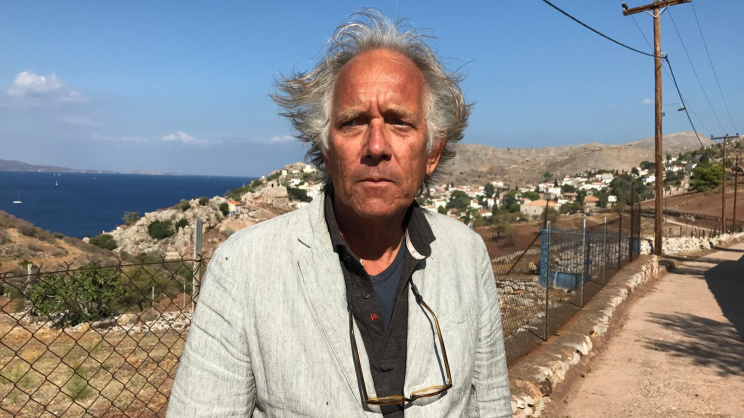
After I completed a book on the eighteenth-century Maratha Svarajya, I thus moved back in that direction. At some point, I was invited to present an outline of my emerging understanding of the history of the entire ‘world region’ that I called ‘the Indo-Islamic world’ and the Arab geographers called ‘Al-Hind’ at one of the ongoing Cambridge-Delhi-Leiden-Yogyakarta conferences on the comparative history of India and Indonesia. Out of this came my multi-volume book Al-Hind: The Making of the Indo-Islamic World, which begins in late antiquity and will end in about 1800.
I now live in Greece, where, facilitated by the internet, I am producing the fifth volume (really the sixth, as the fourth volume consists of two sub-volumes), which is taking me back to the eighteenth century. Of course, neither that volume nor any of the other volumes of Al-Hind offers a theological understanding of history. In writing the entire series, I have benefited from innumerable historians and social scientists, as well as linguists and geographers, and many scientists, of the present and the past (including many from the colonial past), but I deal with the theologians only tangentially.
Most important for me has been the understanding offered by almost all pre-modern historians and geographers around the world, most famously by the ancient Greek historian Herodotus (5th century BC) and the North African historian/sociologist Ibn Khaldun (14th–15th century AD), that peoples and their roles in history should be understood within the environments in which they live, not as biological races. This is not to be overdeterministic about it, but rather to reflect a concern with the complementarity of different ecosystems and the historical interplay of peoples with different modes of life.
An entire modern literature of displacement has also been an important source of inspiration to me, including great writers like Joseph Conrad and V. S. Naipaul, and the rare others of similar stature, as well as many of lesser stature.
TDS: Could you explain how the ideas of Bharat or India were shaped in the Islamic intellectual tradition? Romila Thapar argues that al-Hind, which came into common use from around the twelfth century onwards, referred to all the lands beyond the Indus as viewed from West Asia. You also write that ‘Muslims first defined India as a civilisation, set it apart conceptually, and drew its boundaries’, particularly in the ʿajāʾib al-Hind tradition. To what extent was this conception of India shaped by the expansion of Islam itself, and to what extent by political, commercial and intellectual interactions between South Asia and the wider Islamic world?
AW: Anyone who studies history will have to come to terms with the fact that for many centuries, and indeed millennia, the world was not divided into nation-states as it is today. The modern nation-state of India is something very different from historical India, or, let’s say, India as it was understood in ancient, medieval and early modern times. My understanding of the meaning of Al-Hind, the socio-geographical term which I adopted as the title of one of my books, is mainly derived from the Arab geographers of the eighth to fifteenth centuries, authors like Al-Masudi (c. 896–956 AD), Al-Biruni (973–1048), Al-Idrisi (1100–1165), and so on. These authors defined the medieval contours of India with remarkable precision and consistency, and at the same time with openness, as a world region ruled by both Hindu-Buddhist kings and, increasingly, Muslim rulers, extending from an area somewhat to the west of the Indus River and parts of Afghanistan in the west to the farthest recesses of the Malay-Indonesian archipelago in the east.
The essential point is that India embraced both what today we call South Asia and Southeast Asia, as well as much of the Indian Ocean world. This vision was not unique to the Arab geographers. The Ilkhanate historian Wassaf, in the fourteenth century, also speaks of Java as part of the bilād-i-Hind. Albuquerque regarded Aden, Hormuz and Malacca (Melaka) as the three most important cities in India, none of which are in India today.
Ottoman documents from the sixteenth to the eighteenth century classify the Sultanate of Aceh, the vilāyat-i-Açi, in North Sumatra as part of India. The Dutch sometimes referred to the East Indies as Hindia. There are countless more illustrations of this. Terms like Bharat, on the other hand, have nothing to do with the Arab/Muslim geographical tradition or European influence, and it is therefore not surprising that contemporary Hindu nationalism uses that term for India rather than Al-Hind.
TDS: Historian A. B. M. Habibullah argued that while Arab merchants laid the foundations of India’s earliest Muslim communities, it was the Turks and other Central Asian peoples who transformed Islam into a major political force. Similarly, you write that Central Asia was the principal reservoir of the mobile manpower and military power that enabled Islam to advance in India. Why is Central Asia so crucial to understanding the establishment and expansion of Islam in medieval India? More broadly, how did developments beyond the subcontinent shape the political and religious history of the Indo-Islamic world?
AW: A. B. M. Habibullah (1911–1983) was an important historian in India and later Bangladesh who wrote a seminal book called The Foundation of Muslim Rule in India, which I believe was first published in 1945 and went through many later editions, one of which, I am happy to report, I have in my library here in Athens. I have used it quite a lot. His emphasis on the importance of the Turko-Mongol world for Indian history is the same as mine, as you seem to agree. Might I suggest, in all modesty, that my book is partly an update of Habibullah’s work, apart from being an attempt to go far beyond it?
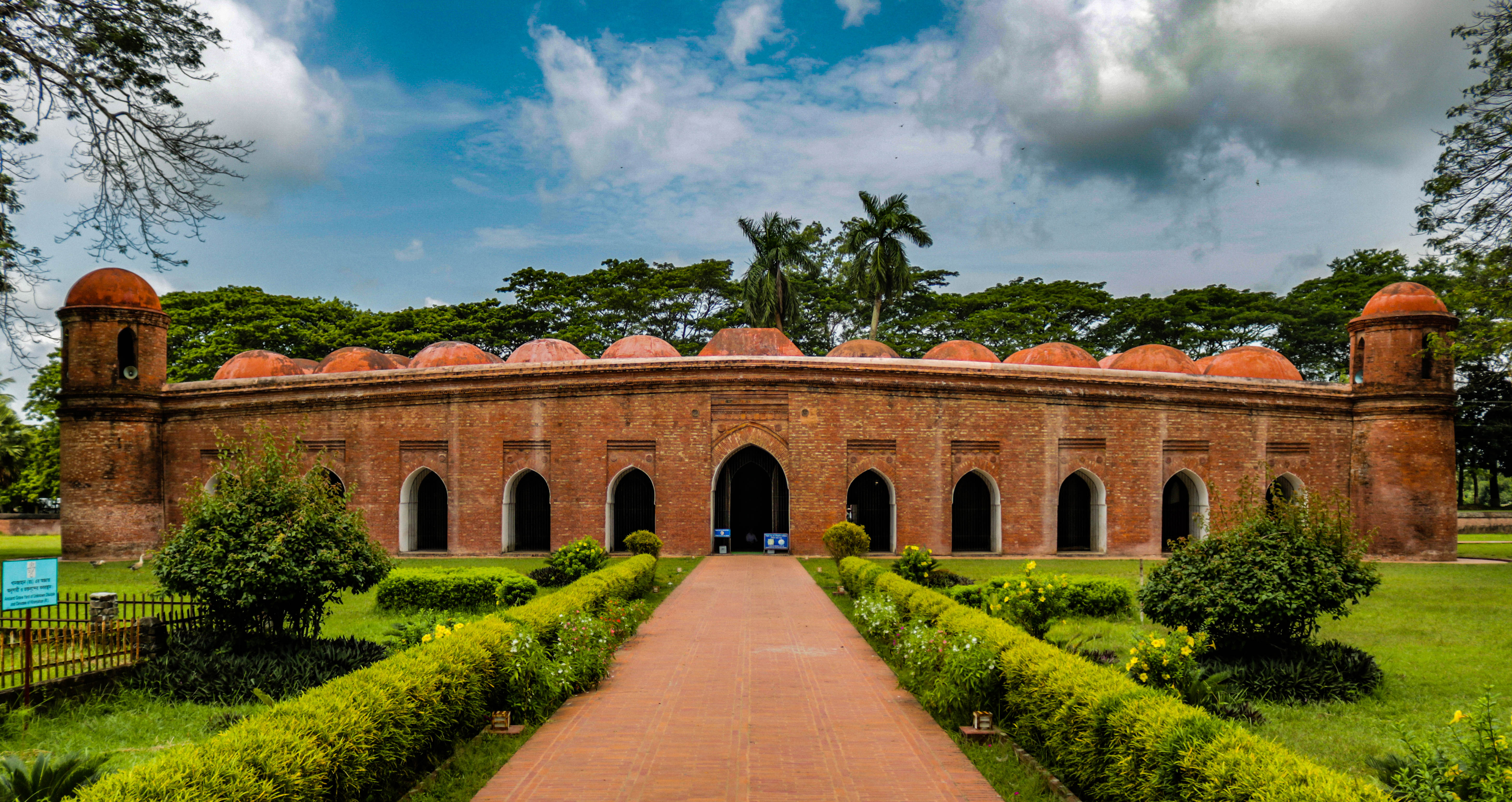
This new emphasis on Central Asia that Habibullah adopted was an important corrective at a time when the Islamic world was still mostly associated with Arabia. The Arabs were, of course, also important in South Asia and Southeast Asia because they played a role in Indian Ocean trade and, whatever we mean exactly by ‘Arabs’, they were the main actors in the Islamic conquest of Sind. But after the tenth century, the Turko-Mongol world, and the Afghans within it, became far more important, ‘the makers of the second Islamic world’. The reasons for this new prominence of the Turko-Mongol world have to do with the military and political institutions of the Central and Inner Asian nomads as developed from early medieval times and subsequently in interaction with an environment that differed widely from Arabia, West Asia and the Mediterranean. Many chapters in some volumes of Al-Hind are devoted to a new interpretation of this long-known process, giving special attention to the environment in which it occurred.
To understand the Indo-Islamic world, we have to abandon a cornerstone of Western historiography, which is that the city was the key category of historical development, the phenomenon that defined and propelled civilisations.
TDS: In your work, you suggest that the ‘second Islamic world’ in India was more detached from imperial and urban traditions than anywhere else in the ‘first Islamic world’ of the Arab lands. You argue that the unstable ecological conditions of monsoon India and its distinctive geography played an important role in shaping this outcome. Could you elaborate on how environmental and geographical factors influenced the development of Islam in India?
AW: I think there is a dimension of Indian history here that is woefully understudied, although less so in the colonial literature than in more recent scholarship. It is my conviction that, due to the region’s geographical conditions, the pre-Islamic heritage of India (in the medieval sense) was radically different from that of Persia and the Mediterranean world, setting it on a different path from the outset. The Umayyad Caliphate emerged at the heart of the ancient world and took over its prodigious urban life. The Indo-Islamic world, as I see it, arose in a region without such an ancient imperial heritage and with no such continuous tradition of urban life.
Some people who heard or read this proposition for the first time initially reacted with scepticism or even disbelief, and, in rare cases, outrage. It is my experience, however, that such people almost without exception overcame their scepticism after reading the many pages I devoted to the subject. The evidence is quite compelling. In any case, I was not trying to provoke anyone and have massively substantiated the argument.
So again, the argument is that the ancient past, the heritage of the ancient past, and the transition from the ancient to the medieval past were entirely different here. Indeed, the ‘second Islamic world’ was disassociated from imperial and urban traditions to a degree not found anywhere in the ‘first Islamic world’. It was largely the geographical factors at work in the unstable environment of monsoon India that thwarted the growth of such traditions.
If the Mediterranean became the most durably and densely urbanised of all major world regions, making ‘the city’ its pre-eminent analytical historical category, no comparably dense and durable patterns of urban life ever developed in the ecologically unstable environment of the river plains of monsoon India. This was demonstrably the major world region with the most extreme and highest-impact environmental instabilities of all kinds: hydrological, seismic, climatological, meteorological and volcanic, as well as all possible combinations thereof.
Often built from perishable materials rather than stone or brick, Indian cities were more like ‘rurban’ settlements and subject to a much higher degree of disruption than their Mediterranean counterparts. I call this pattern ‘labile rurbanism’. The consequences for the development of the Indo-Islamic world were enormous. To understand the Indo-Islamic world, we have to abandon a cornerstone of Western historiography, which is that the city was the key category of historical development, the phenomenon that defined and propelled civilisations.
TDS: Romila Thapar argues that ‘Aryavarta’ is a shifting geographical concept: ‘In the Vedic texts, it extends from the Doab to about the middle of the Ganges valley. In the Buddhist texts, it moves a little eastwards. In the Jain texts, it moves still further east.’ This seems to reflect the gradual eastward expansion of agriculture and settled society. You also write that significant agricultural expansion and the growth of a settled social order did not gain real momentum in India until the early medieval centuries. Could you elaborate on why agriculture spread relatively late to the east of the Indus and why, for a long time, it remained insufficient to sustain large empires? Why did early medieval India emerge as a land of kings, priests, peasant societies and the earliest Hindu temples in rural settings, rather than one dominated by ancient cities?
AW: I think what Professor Thapar has been arguing about the shifting meaning of the concept of Aryavarta is entirely correct and an important contribution among the very many she has made over a long career. I certainly look forward to acquiring a copy of her new intellectual autobiography, to learn about whatever more she has to say about history, including this issue.
I have observed, however, like many others, including Professor Thapar herself, a certain amnesia when it comes to the ancient Indian past. There have been people, like the noted medievalist and Sanskritist Johan Huizinga (1872–1945) in the Netherlands, who had an ‘Indological crisis’, despaired about the possibilities, or rather the potential, of Indian history, and threw in the towel. I am not one of them. I think such people have, to a large extent, been looking for the wrong thing in the wrong way at the wrong time.

What I mean is this: amnesia is itself a kind of empirical evidence that teaches us something important about the ancient past. In light of this, certain conclusions are possible. I have argued that we have to do more to reconstruct the settlement history and the process of agricultural expansion of the Indian subcontinent and other parts of monsoon Asia from ancient times onwards, building, in effect, on the insights of Professor Thapar and others. This means pulling texts, archaeology and the sciences together.
I have tried to present a rather rough and provisional outline of that momentous process in ancient and medieval times and came to the conclusion that it occurred rather late in comparison with that of the more arid territories to the west. That does not mean there was no agricultural expansion in ancient times. I do believe, however, that in the times of the Mauryas and the Guptas, it had not progressed far enough to sustain genuinely extractive imperial formations such as those we had in Persia and the Mediterranean.
Correspondingly, I regard these ancient empires, for the most part, as forms of ritual sovereignty rather than counterparts to the highly militaristic and centralised Persian or Roman empires. The earliest genuine empires of that kind do not emerge in India until early medieval times: the Gurjara-Pratiharas and other such proto-Rajput formations, the Rashtrakutas, Palas, Colas, and so on. The reason for this relative lateness is the simple fact that the monsoon lands were more difficult to clear because of the wetter climate, and demographic growth was much slower here. This is also the reason that the Neolithic Revolution of India occurred in the Indus Valley and not, for example, in Bengal.
TDS: You note that the entire Indo-Islamic period formed part of a much broader phase of Islamic expansion and hegemony across the East. You also argue that one of its defining features was the growth of an Indian Ocean world economy, with India at its centre and the Middle East and China as its two dynamic poles. Could you elaborate on this larger economic system? How did the Indian Ocean world compare with medieval Europe’s Mediterranean economy and the wider world of Christendom? In what ways were these two interconnected worlds similar or different in terms of trade, political power and cultural exchange?
AW: It is important to acknowledge, even if it seems rather obvious, that the Indo-Islamic world was open-ended. That it was connected to the rest of the world. Its historical development was not only one of Islamic expansion (through trade, migration, conquest, conversion and whatever other means). Europe and Africa played a role in it at all times, as did China. It was connected in all sorts of important ways to the Mediterranean world, already in Roman times, and even more so in the medieval period through Egypt and numerous other combined land-and-sea routes, as also in the early modern centuries, even after the opening up of the sea route from Europe to India and China.
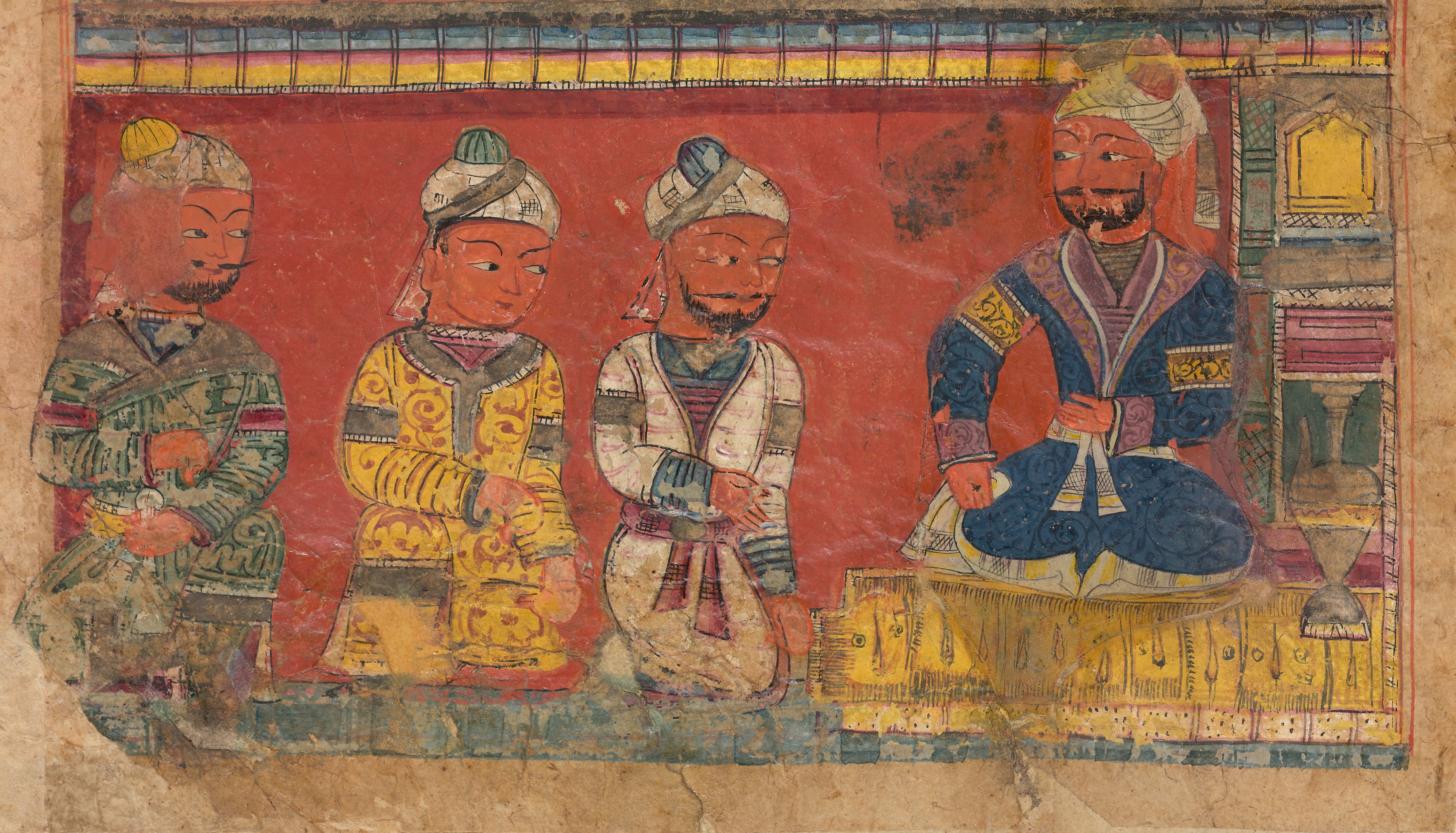
But it is one of the myths of Indian history that the Indian Ocean was a zone of ‘peaceful navigation’ and that it was the Portuguese who introduced ‘the Mediterranean pattern of armed trade’ here. This myth has been propagated by K. M. Panikkar, Fernand Braudel, K. N. Chaudhuri and virtually all other historians of Indian Ocean trade until fairly recently. In the light of new research by myself and others, I don’t think this is tenable any longer.
To be sure, the Mediterranean has historically been a violent arena in which imperialism, politics, religion, war, trade, slavery and piracy were closely intertwined. But it was no different in the Indian Ocean. From one end to the other, slave-raiding, seaborne attack, naval escorts and patrols by warships, armed merchant vessels, the enforcement of sea and port blockades, protection rackets, piracy, taxes on maritime trade, coercive economic diplomacy, religious propaganda, enforced tribute payments, port rights, militarily enforced monopolies of shipbuilding, salvage rights, customary claims of maritime sovereignty against rivals — all these practices and more prevailed throughout the Indian Ocean for many centuries before and after the arrival of the Portuguese. Like the nomadic frontier to the north and west of the subcontinent, prior to the nineteenth century the maritime frontier was always a violent and lawless frontier of mobile wealth.
The interview was taken by Priyam Paul.
Send your articles for Slow Reads to slowreads@thedailystar.net. Check out our submission guidelines for details.
Bengali Muslims and the ghosts of India's citizenship politics

Bangladesh’s solar growth: Will the incentives be enough?

The missing link in Bangladesh's innovation economy
Dhaka’s battery rickshaw problem is economic, not just about traffic
The staircase between our mothers and care
Is Bangladesh prepared for the next food shock?
From more power to better power: Rethinking Bangladesh’s energy future

Growing out of LDC status: Bangladesh’s real negotiation at COP31

What is holding back solar in Bangladesh’s garment industry?