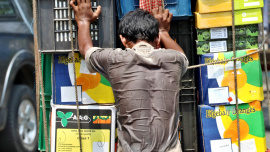
Fewer fish, higher costs: The struggle of Bangladesh’s Hilsa fishermen

Every Hilsa season brings familiar questions in Bangladesh: How much fish has been caught? Why are prices so high? Are fishing bans and conservation measures working? But along the coast, fishing families are asking more immediate questions: Will this trip bring home enough money to buy food? How will the next loan instalment be paid? And what happens if the boat returns with almost nothing?
For families who depend on the sea, a poor catch is not simply a bad fishing trip. It can mean fewer meals, borrowed money and several months of debt. It can mean a fisherman leaving the sea to work as a day labourer on shore, while his family survives on lentils, leafy vegetables and whatever small fish they can catch in a canal.
Bangladesh’s Hilsa industry directly involves almost 500,000 fishers, with another two million people estimated to be indirectly involved, according to figures cited in the Hilsa Resource Development and Management Project in 2022. The country also accounts for around 80 per cent of the global Hilsa supply. Yet behind these numbers are households whose lives are tied to a fish they often cannot afford to eat themselves.
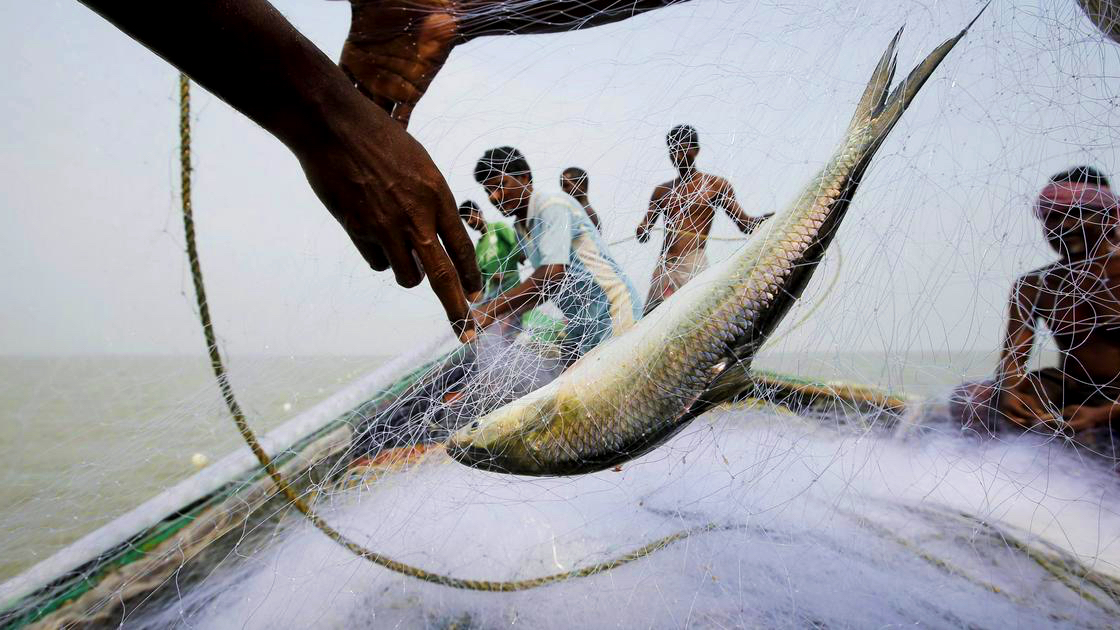
But the economics of that work have changed. “Fish is very scarce now compared to before, and when combined with the increase in fuel prices, it makes things very difficult for us,” said Harun, a Hilsa fisherman from Kuakata.
His description of a typical trip shows how little of the value of the catch reaches an ordinary crew member. Provisioning a boat can cost around Tk 2 lakh. If fish worth Tk 4 lakh is sold, the amount left after expenses is divided according to the boat’s share system, with the crew’s portion divided among 17 or 18 workers.
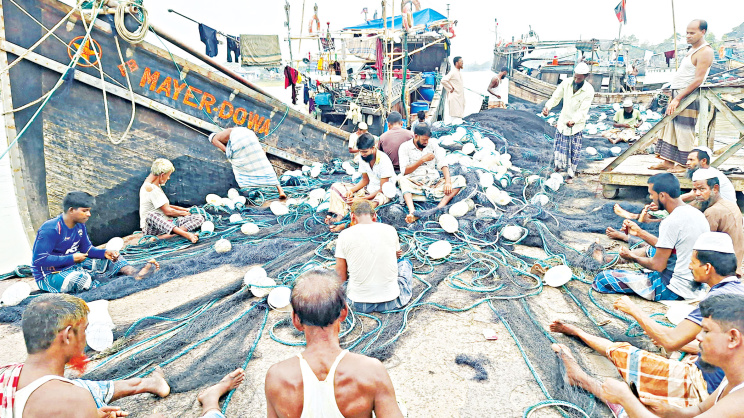
Harun says that, in such circumstances, he may receive around Tk 4,000 from a trip. With two trips in a month, he may earn about Tk 8,000. “We cannot even buy a piece of clothing or provide good clothes for our family members. We cannot afford to educate our sons or daughters in a good school because of a lack of money,” he said.
In Aliganj, a village in Mithaganj Union of Patuakhali district, the households of Parvin and Kamrunnahar face the same uncertainty when fishing provides too little income.
“Everything is so expensive now. It has become difficult to manage even our everyday expenses,” Parvin said. When the catch is low, she said, household expenses become harder to meet. Their meals often depend on vegetables and leafy greens they grow themselves, and getting enough food is a struggle.
When fishing does not provide enough income, she said, fishermen in her village turn to other work. Some take up daily wage labour, while others travel abroad, go to another district or take up additional work.
The expenses are basic ones: food and schooling. But when few fish are caught, even these everyday necessities become difficult to afford. “For our family, it causes hardship. Money is scarce now. When fish is caught, money comes in; if money does not come in, how will the household run?” she said.
Kamrunnahar said they borrow from NGOs and other people. When her husband earns again, even if it is only a small amount, they gradually repay what they owe while continuing to run the household.
There is also another form of borrowing embedded in the fishing system: dadan, or an advance from a boat owner. Harun describes a system in which a fisherman may take a Tk 20,000 advance from a boat owner at the beginning of a six-month fishing season. The money is supposed to be repaid from his share of the catch. When the fishing is good, the arrangement can work. When catches are poor, however, the advance becomes another debt hanging over the fisherman.
There is a bitter irony in this dependence on Hilsa. As the market price of the fish rises, the people who catch it can find themselves increasingly unable to afford it. Harun says a kilogramme of Hilsa can sell for as much as Tk 2,500. At that price, keeping part of the catch for his own family becomes a luxury. “We are the ones catching the fish, but we cannot afford to eat it ourselves,” he said.
“If we earn enough over the six months, the boat owner deducts the advance from what we are owed,” Harun said. “But if a crew member earns nothing, how is he supposed to repay it at the end of the season?”
There is a bitter irony in this dependence on Hilsa. As the market price of the fish rises, the people who catch it can find themselves increasingly unable to afford it.
Harun says a kilogramme of Hilsa can sell for as much as Tk 2,500. At that price, keeping part of the catch for his own family becomes a luxury. “We are the ones catching the fish, but we cannot afford to eat it ourselves,” he said.
The same calculation shapes life in Kamrunnahar’s household. Her husband brings home only a small amount of Hilsa for the family, and even that happens rarely. Most of the catch has to be sold. “If we keep the fish instead of selling it, how will we run the household?” she said. “Food is not our only expense. There are so many other things a family has to pay for.”
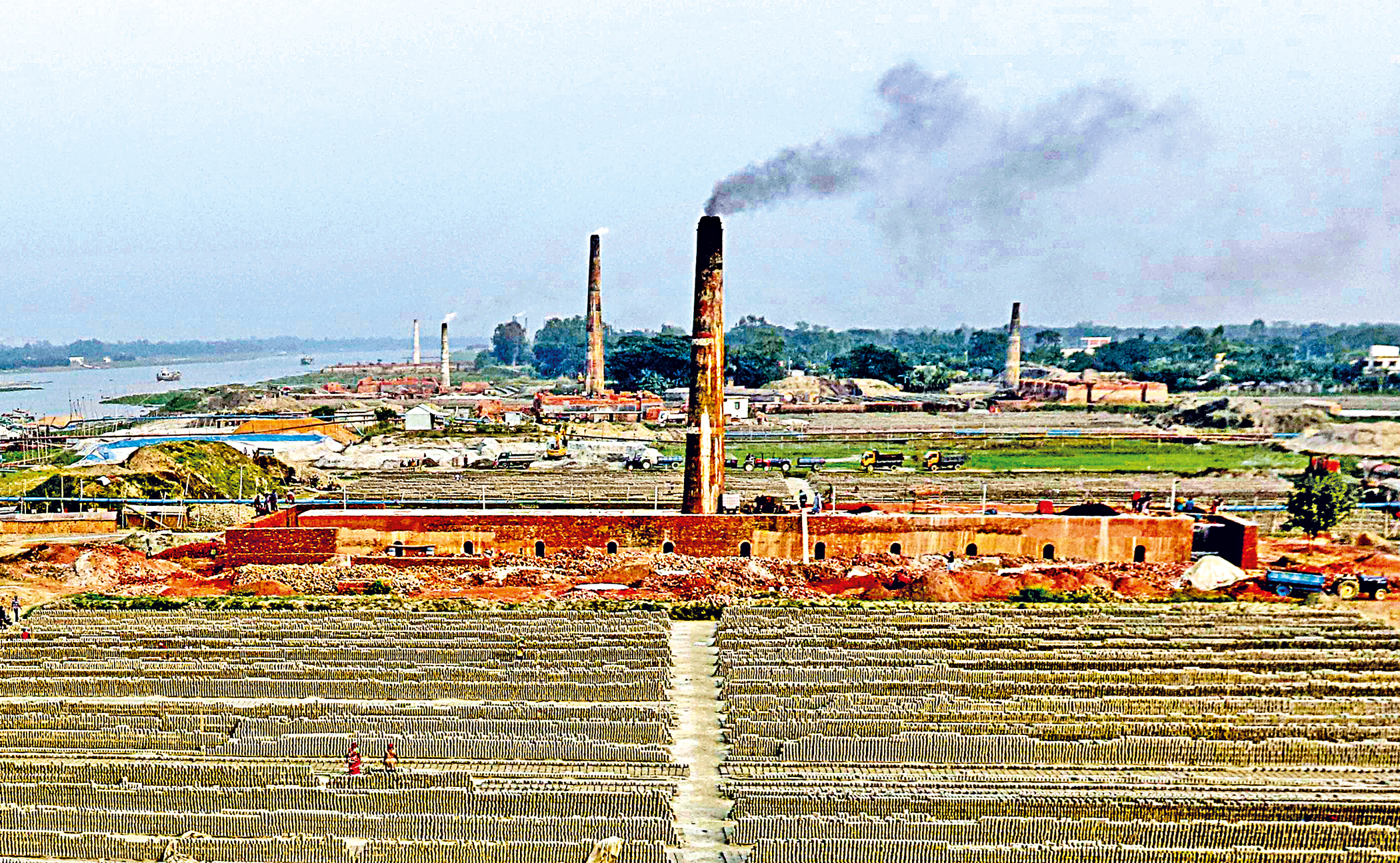
Those pressures become even more acute during fishing bans, when families lose their principal source of income. Government assistance is intended to help fishing households survive while fishing is prohibited, but the support still leaves families struggling to meet expenses that rice alone cannot cover. “If a family receives 30 kg of rice for an entire month, is that really enough for them to survive for the whole month?” Kamrunnahar asked.
Even when rice is provided, families still have to pay for cooking oil, salt, soap, medicine, their children’s education and debt repayments. When the assistance is exhausted, fishermen have little choice but to find other ways of earning enough to survive.
For Harun, that means leaving the sea behind temporarily and working as a day labourer. “When I come back to shore, I may be a fisherman, but I still have to work as a day labourer,” he said. “I have to sell my labour, digging earth or working in the fields, just so I can pay the weekly loan instalment. This is how we live.”
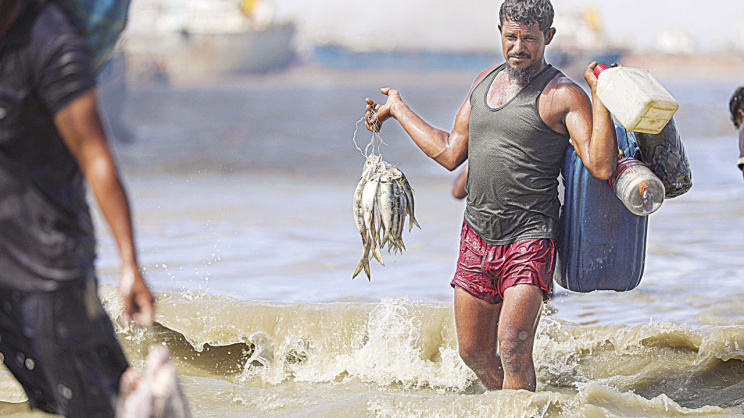
Parvin sees the same pattern in her village. When fishing no longer provides enough income, families cannot afford to wait for conditions to improve. “People take whatever work they can find when they need to,” she said. “Nobody can afford to sit at home without earning.”
Fishing families are therefore being squeezed from both sides: there are fewer fish to catch, while both the cost of going to sea and the cost of maintaining a household have risen.
Harun remembers when that equation was less punishing. He says a barrel of fuel that once cost Tk 17,000 now costs Tk 25,000, even as the volume of fish caught has declined. At the same time, food, clothing and other household necessities have become considerably more expensive.
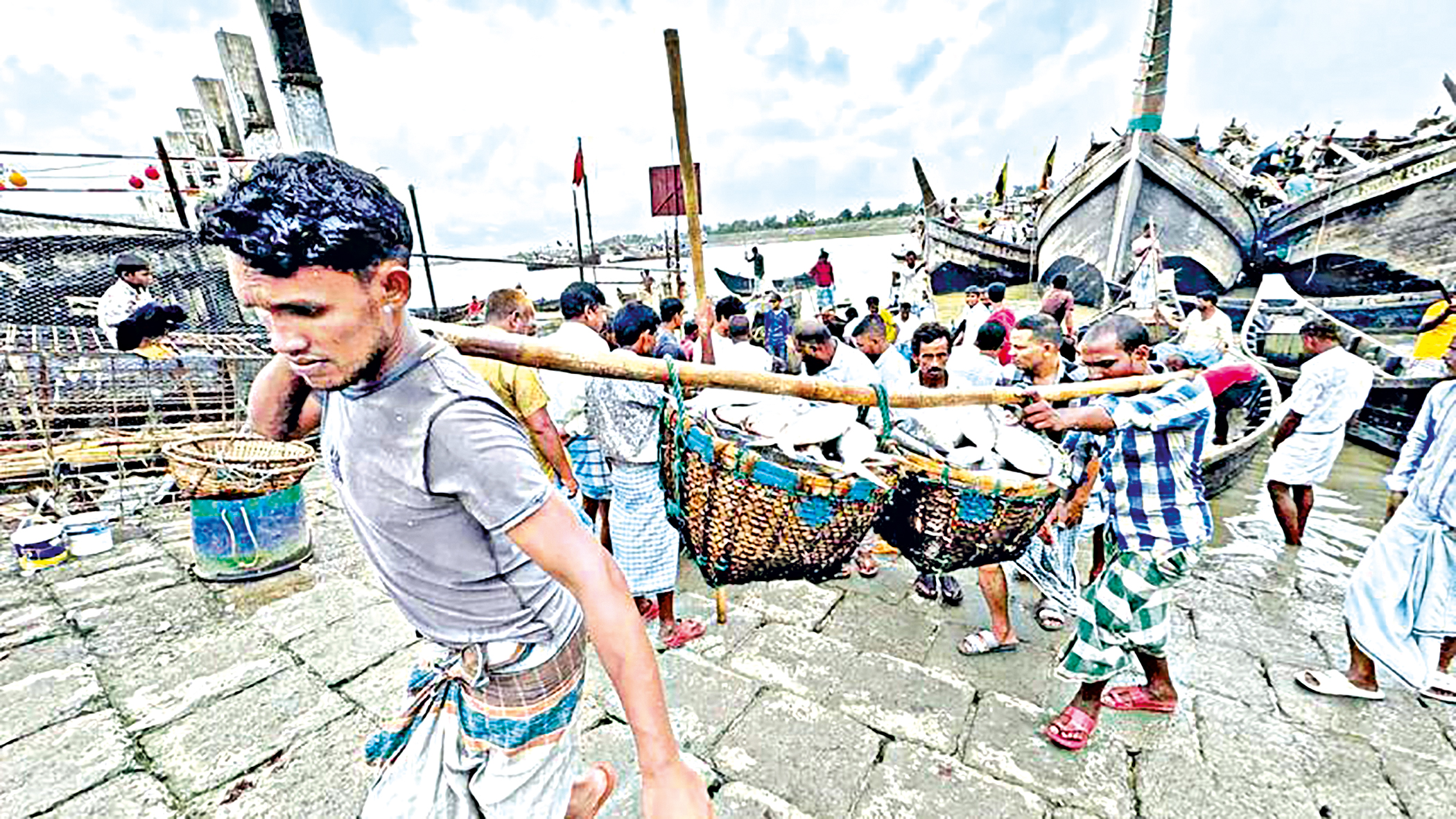
“Ten years ago, there were more fish and food was cheaper,” he said. “We could live reasonably well then. Now we catch fewer fish, but food, clothes and everything else we need cost much more. How are we supposed to feed our families?”
The Department of Fisheries already identifies alternative income-generating activities and skills training as important components of Hilsa management, and one government programme has targeted alternative employment opportunities and training for fishing families. But training alone does not necessarily create an income, just as rice alone cannot sustain a household through a fishing ban. Fishing families need adequate seasonal support, affordable credit, viable alternative sources of income, lower fishing costs and better-targeted assistance. Several of these measures already exist within the policy framework. The greater challenge is ensuring that they are implemented effectively and reach the families who need them.
Ystiaque Ahmed is a journalist at The Daily Star.
Send your articles for Slow Reads to slowreads@thedailystar.net. Check out our submission guidelines for details.
Between Gabura and India: Work, loss and unequal choices

Duli to Baaji: Whose gaze shapes indigenous representation?

The everyday resistance of Rohingya women the world rarely sees
The banyan tree that became a restaurant for birds

What did we ask about Mariam while she was still alive?
Why Dhaka cannot simply ban the rickshaw
The elephants had to be rescued again. Where is the accountability?
‘Situation under control’, but at whose expense?
The untold side of Bangladesh's climate migration