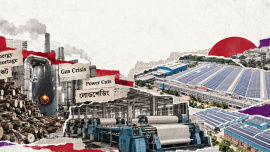
Can the new strategy achieve Bangladesh’s renewable energy targets?

Bangladesh has made renewable energy promises before. The 2008 policy aimed for 10 per cent of power from renewables by 2020. A 500 MW solar programme followed in 2012, then the 2023 Integrated Energy and Power Master Plan. In 2025, a new policy arrived alongside a National Rooftop Solar Programme that aimed to add 3,000 MW of rooftop solar by the end of that year. By June 2026, the country had officially recorded 418 MW of rooftop solar in total.
Every plan brought headlines but left the country in much the same place. Depending on whose figures you use, installed renewable capacity sits somewhere between the 1,559 MW cited by the Bangladesh Investment Development Authority and the 2,000 MW assumed by the government’s newest document. Total generating capacity is close to 29,000 MW.
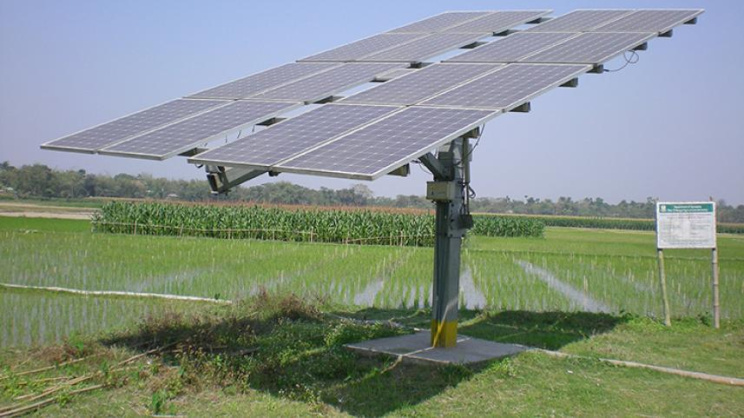
The newest document is the National Renewable Energy Development Strategy (2026–2030), approved by the cabinet on 9 July. It was finalised on the recommendations of a committee formed after a special cabinet meeting in April, with feedback from 31 ministries, agencies, research institutions and investor bodies. Its goal is at least 20 per cent of electricity from renewables by 2030, rising to 30 per cent by 2040.
My reaction was scepticism. On closer reading, the scepticism became something more complicated.
The arithmetic, and the gap inside it
The strategy assumes demand will grow by about 6 per cent a year, taking today’s summer peak of roughly 18,000 MW to 24,000–25,000 MW by 2030, a figure the State Minister repeated in Parliament in September. (Strictly, 6 per cent annual growth reaches 24,000 MW in five years rather than four, but the discrepancy is minor.) At a system load factor of about 0.65, that implies annual demand of around 135,000 GWh. Twenty per cent of that is about 27,000 GWh of renewable generation.
With solar at a capacity factor of 20 to 22 per cent, the strategy says this needs 12,000 to 14,000 MW. Its plan adds 10,450 MW: 5,500 MW of rooftop solar, 4,500 MW of ground-mounted solar, and 450 MW of wind, waste-to-energy and other sources.
Here is the problem the document does not discuss. At a 20 to 22 per cent capacity factor, 27,000 GWh requires about 14,000 to 15,400 MW. Run the numbers the other way, and the existing base plus 10,450 MW produces roughly 17 per cent of projected demand. Allow for hydro and waste-to-energy running at higher load factors, assume every megawatt is built on time, and the plan still falls short of its own 20 per cent. If the true starting point is 1,559 MW rather than 2,000, the gap widens.
This is not a prediction about implementation. It is arithmetic on the strategy’s own assumptions. Unless capacity targets rise or demand comes in lower, the achievable share is closer to 17 per cent than 20 per cent. Still, the strategy deserves credit for its candour: by showing its working, it also shows where it can break.
The policy has already started moving
On 1 September, the Power Division gazetted an incentive for battery-backed rooftop solar: a Tk 8 per-unit cap on generation cost, plus a 20 per cent profit margin and an 11.25 per cent premium, giving Tk 10.50 per unit for surplus power sent to the grid. Systems installed by 28 February 2027 earn that rate until February 2030. A week later, the cabinet approved a 180-day waiver of duty and VAT on solar equipment imports, cutting the tax burden to 1 per cent. On 31 August, the Power Division asked the Finance Division to arrange $2 billion from the Asian Development Bank for rooftop solar. In Parliament, the State Minister reported that around 60,000 acres of unused government land had been identified, with about 30,000 acres earmarked for solar under public-private partnerships.
An announced megawatt is not a financed megawatt. A financed megawatt is not a built megawatt. And a built megawatt is not necessarily a megawatt delivered to the grid.
These are real moves. But an announced megawatt is not a financed megawatt. A financed megawatt is not a built megawatt. And a built megawatt is not necessarily a megawatt delivered to the grid. Bangladesh has a long habit of celebrating the early milestones. The grid counts only the last one.
The pace required is sobering. The plan needs about 1,160 MW of new capacity every six months until the end of 2030. The government’s own six-month progress report counted roughly 200 MW of solar added to the grid in its first half-year. The schedule demands about six times that pace, sustained for four and a half years.
Where it can break, in order of severity
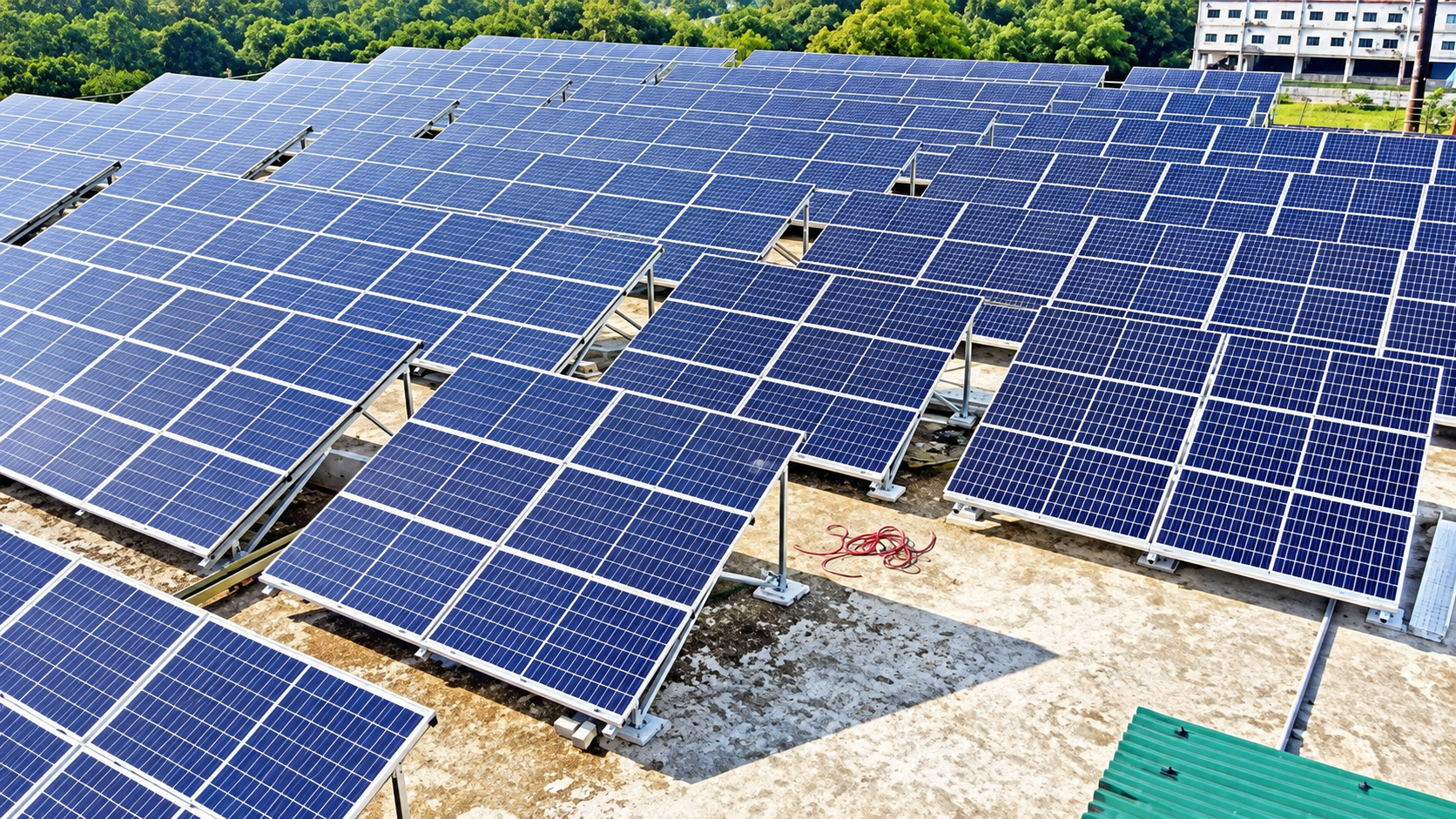
The rooftop bet. More than half the plan rests on rooftop solar, and the curve is steep: 400 MW in 2026, 1,000 MW in 2027, 1,500 MW in 2029. Net metering has existed since 2018, yet a recent CPD count found just 4,551 net-metered rooftop systems totalling 213 MW.
Industry is not starting from scratch. An IDCOL assessment in August found more than 3,600 MWp of rooftop potential, requiring Tk 16,295 crore of investment. Textiles and garments alone account for 2,815 MWp. But that figure covers industrial premises only, and IEEFA’s independent estimate of industrial potential is similar, at 3,500 to 4,000 MWp. So even if industry delivers everything it plausibly can, another 1,500 to 2,000 MW must come from homes, offices and public buildings. That is exactly the segment where last year’s 3,000 MW target fell flat.
The September incentive is a genuine improvement, but its timing is off. The rooftop curve peaks in 2028 and 2029; the incentive closes to new systems in February 2027. A developer weighing a 20-year asset cannot plan around a rate that expires before the ramp begins. A three-year incentive can start a market. It cannot, on its own, create a bankable 20-year one. Critics also point out that households paying around Tk 14 per unit for grid power are offered Tk 10.50 per unit for what they export, and that the battery requirement raises upfront costs and lengthens the payback period.
Underneath sits a problem no circular can fix. Every unit a building generates for itself is a unit the distribution company no longer sells. Utilities judged on sales have every reason to let rooftop applications sit. Until utilities are assessed and paid on connections processed rather than units sold, approval delays will remain a silent veto on the curve. The strategy’s sticks are sensible but politically sensitive and easy to delay: a building-code mandate on roof use, and higher holding tax from 2028 for non-compliant city buildings.
Policy whiplash. Investors can price a bad policy. They cannot price one that keeps changing, and that uncertainty makes every other risk worse. In late 2024, the interim government cancelled letters of intent for 34 unsolicited solar projects, about 2,344 MW, because they had been awarded without tender. The principle was sound: open bidding later cut tariffs by more than a third. But developers say some $300 million had already been spent, the refund provision in implementation agreements was scrapped, and some replacement tenders drew one bidder or none.
This year, the pattern continued on a smaller scale. Between June and September, importers of solar equipment faced three different tax regimes. The June budget removed import duty but left 15 per cent VAT and 2 per cent advance income tax. In August, customs stations misread the new order and charged industrial importers 17 per cent instead of 1 per cent until the NBR stepped in. At the same time, the industry association said duties on batteries, the very equipment the new rooftop rate requires, exceeded 50 per cent. Then, in September, came the 180-day waiver that cut the burden to 1 per cent.
The question is no longer whether land exists but whether it is titled, contiguous, near transmission lines and free of people who already depend on it.
So what happens after March 2027? The waiver lapses that month, just weeks after the Tk 10.50 window closes to new rooftop systems. Both cliffs arrive before the strategy’s steepest years have even begun, and the government has not said what follows. The likely result is a rush to install before the deadlines, then a stall while the market waits to learn whether the incentives will be extended, cut or dropped. Importers asked for a two-year VAT waiver and got six months. The fix is not necessarily a bigger incentive but a predictable one: a schedule, published now, showing how the tariff and the tax relief will step down each year to 2030. A developer can plan around a declining incentive. Nobody can plan around a deadline with nothing behind it.
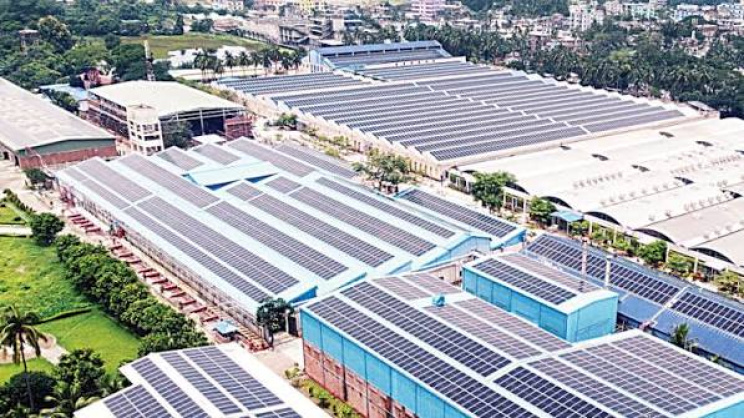
Land: from quantity to quality. On paper, the land constraint has eased considerably. At the commonly cited 3 to 4 acres per megawatt, 30,000 acres could host 7,500 to 10,000 MW, well above the 4,500 MW ground-mounted target. The question is no longer whether land exists but whether it is titled, contiguous, near transmission lines and free of people who already depend on it.
The evidence is not encouraging. A 2026 BIGD policy brief, using satellite analysis and fieldwork, found solar projects converting farmland and forest at scale even where environmental assessments called the sites non-agricultural. It also documented broker-led land acquisition with poor compensation. The strategy’s commitments to protect farmland and livelihoods will be tested site by site, not acre by acre.
The strategy now accepts a non-binding comfort letter instead of a bank’s letter of commitment, and offers payment guarantees: a quiet admission that bankability, not just land, sank earlier projects.
Grid absorption. Integrating 10,000 MW of variable output into a gas- and oil-based fleet is a serious engineering task. The document shows real depth: forecasting and scheduling for solar plants with penalties for deviation, frequency control through Free Governor Mode of Operation and Automatic Generation Control, mandatory grid studies before approval, and battery storage at a “reasonable level” for ground-mounted projects.
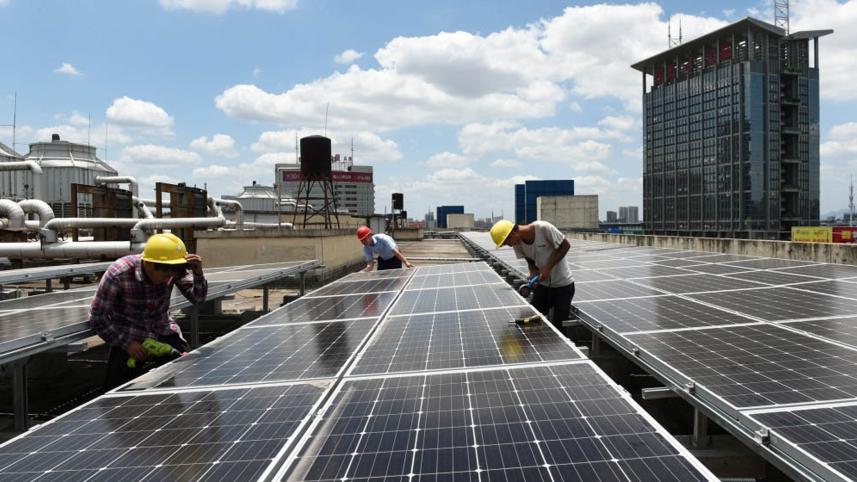
Two problems remain. First, the strategy commissions consultants to determine how much variable renewable capacity the grid can safely absorb each year. Yet it has already fixed the annual targets the study is meant to inform. We are building the plane while still surveying the runway. Second, the strategy does not define a “reasonable level” of storage, or say who pays for it. If developers pay, tariffs rise, and the promise of cheaper power weakens. If the cost is socialised, it is a subsidy by another name. The strategy also proposes declaring evening hours a “super peak”, precisely when solar produces nothing. The battery requirement in the September incentive is a partial answer, not a system-wide one. And if generation runs ahead of transmission, the result is curtailment, which damages an investment case faster than any tariff dispute.
Finance. The strategy does not give a price tag, so here is an estimate. IDCOL’s figures imply about Tk 4.5 crore per megawatt for industrial rooftop solar, putting 5,500 MW at roughly Tk 25,000 crore. The Rampal plant is budgeted at about Tk 5.65 crore per megawatt, putting 4,500 MW of ground-mounted solar at a similar sum. Together, that is around Tk 50,000 crore, or about $4 billion, before a single battery or transmission line. The $2 billion sought from ADB would cover roughly the rooftop half.
The government’s own response to that request is telling. A Finance Division official reportedly said the money could not come as budget support and that, without financial backing, the initiative would not move. The Renewable Energy Development Fund at the heart of the strategy is still only a proposal. Climate funds such as GCF, GEF and CIF are slow and competitive. Domestic banks are working through a non-performing loan crisis, and lending rates remain punishing for long-tenor assets.
But the deeper problem is not just the interest rate. It is who carries the risk: payment risk from a cash-strapped offtaker, currency risk on imported equipment, regulatory risk if tariffs change mid-life, and land, curtailment, performance and residual-value risk. The sector does not need the government to provide all the money. It needs the government to make projects investable enough for someone else to provide it.
Coordination. The implementation tables show responsibility spread thinly. Solar irrigation alone involves the Agriculture Ministry, BADC, BMDA, LGED, DPHE, the Water Development Board, Bangladesh Bank and the NGO Affairs Bureau. This kind of diffusion helped sink earlier plans.
The symptoms are already showing. Within weeks of approval, the Finance Division was reportedly exploring funds for 3,000 to 4,000 MW of extra rooftop solar before next summer, two to three times what the strategy itself expects by the end of 2027. When several official numbers circulate for one target, investors price in the uncertainty.
The strategy’s remedies are quarterly inter-ministerial meetings, a National Policy Council under the Prime Minister, an online monitoring dashboard and public quarterly scorecards. The scorecards matter most, because they alone create outside pressure. Whether they appear on time and name agencies that miss deadlines will reveal more about the government’s seriousness than any target.
The back-loading problem
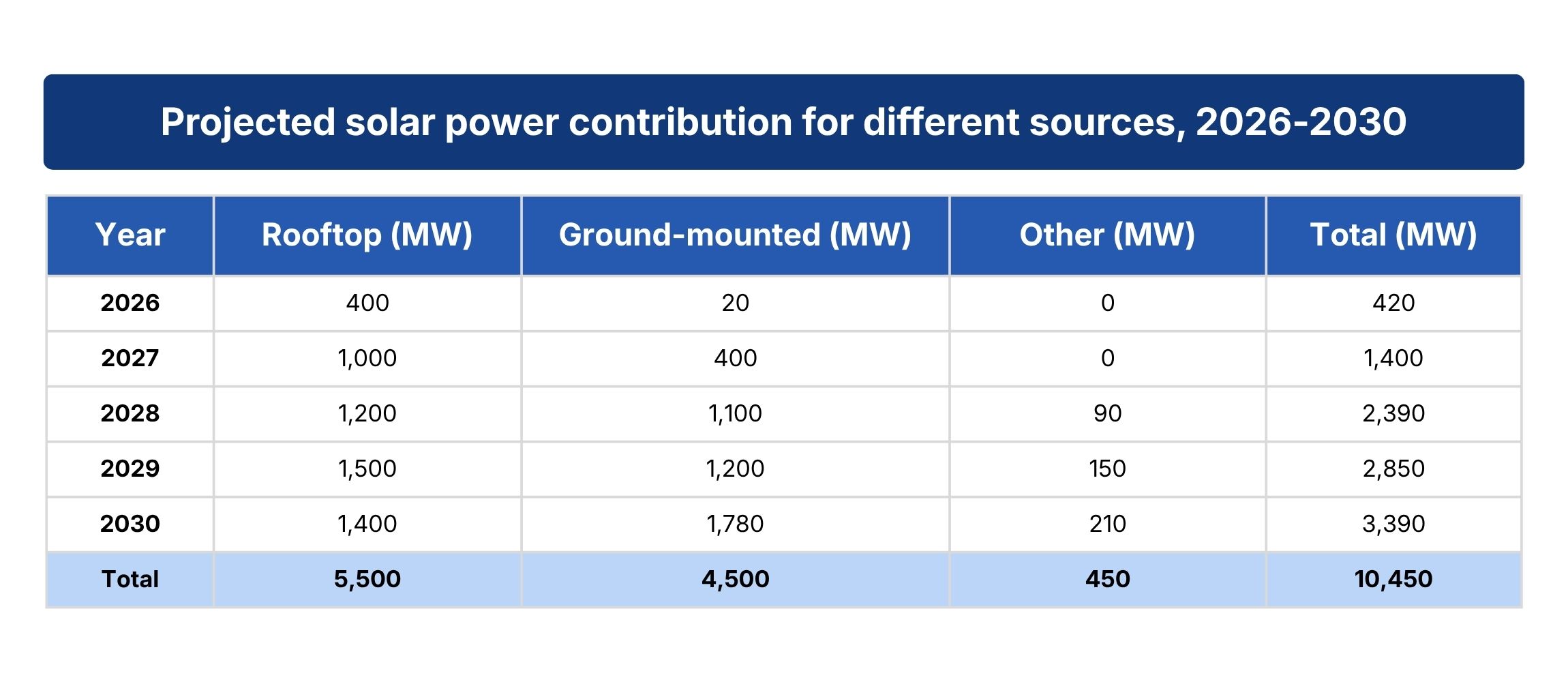
Of the 10,450 MW, 8,630 MW (about 83 per cent) falls in the last three years. The logic is fair: 2026 and 2027 are for land selection, tendering, financing and grid studies, and any honest plan front-loads preparation.
But back-loading has a side effect that the strategy does not discuss. The mid-term review is scheduled for July 2028. By then, the preparation years will be over and the heavy installation years will only be starting, which makes it the easiest moment, politically, to lower the targets. The strategy calls itself a living document. Living documents can also be quietly euthanised.
Why we should not write it off
Industry is already ahead of the official statistics. IEEFA identified 667 MW of rooftop solar across 239 industrial establishments, against 418 MW in government data. Counting smaller systems, it puts the national figure near 1 GW, with more than 500 MW in the EPC pipeline. Factories are responding to high tariffs and buyers’ decarbonisation demands, policy or no policy. The question is whether policy can turn that industrial momentum into the residential and public-building volumes the target needs.
The demand-side chapter is the most underrated part of the document. An evening super peak to curb use, 8 am office starts from March to September, mandatory audits for large consumers and a proposed surcharge on inefficient appliances all cost less than a megawatt of new supply and work faster. Its weakness is that the headline 15 per cent saving has no stated baseline, no enforcement mechanism for the audits and no penalty for non-compliance. Instruments without measurement tend to become intentions.
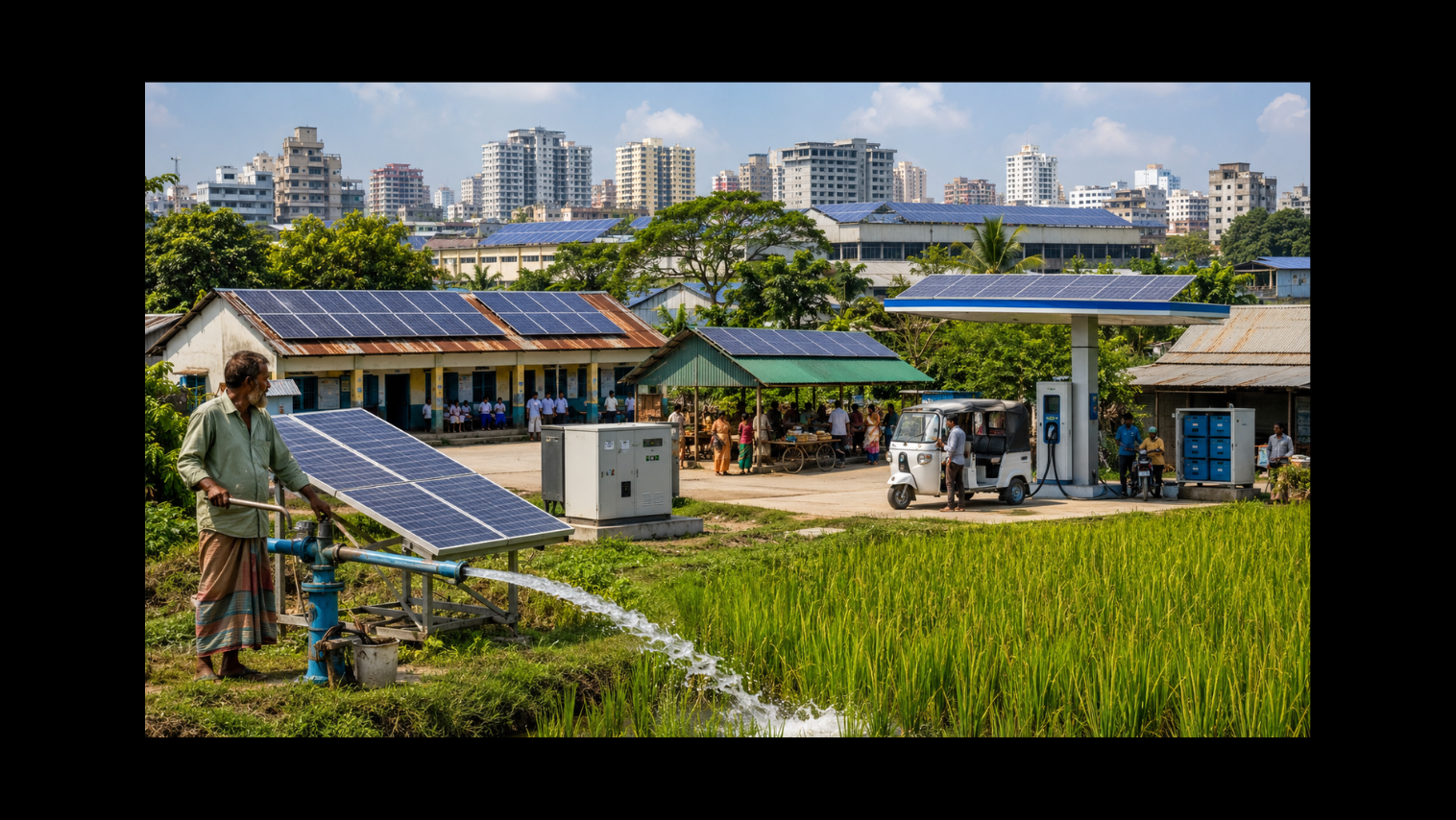
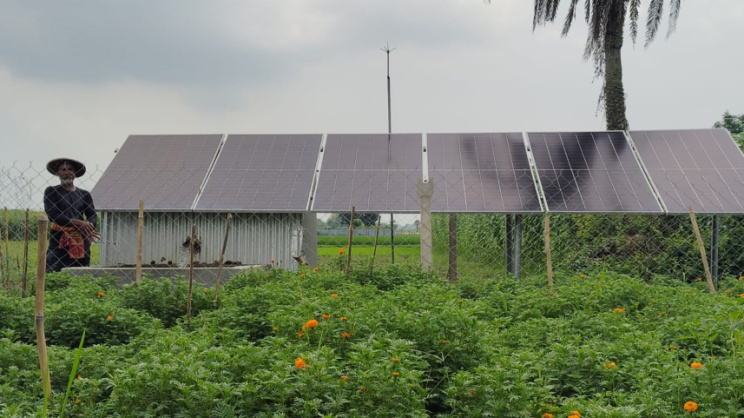
Solar irrigation is better understood as import substitution than as climate policy. The strategy counts about 1.2 million diesel irrigation pumps; BADC’s latest survey found only 4,058 solar-powered units nationwide. IEEFA estimates that converting a third of diesel irrigation to solar would save about $244 million, roughly Tk 3,000 crore, in diesel imports every year.
The carbon credit chapter is the first serious attempt in a Bangladeshi energy document to link projects to Article 6 of the Paris Agreement, including the administratively demanding corresponding adjustments that let credits be sold internationally.
The carbon credit chapter is the first serious attempt in a Bangladeshi energy document to link projects to Article 6 of the Paris Agreement, including the administratively demanding corresponding adjustments that let credits be sold internationally. Mandatory registration for all Power Division projects, run by a dedicated branch, is a small clause that could prove valuable if that branch is properly staffed. The strategy also promises to share carbon revenue among the government, developers and local communities, but does not say in what proportions. That detail will decide whether credits benefit communities or become another form of extraction.
Finally, the just transition and skills chapters name issues earlier documents ignored: local hiring, protecting farming and fishing livelihoods, grievance mechanisms, recycling for panels and batteries, and at least 30 per cent women among trainees. Naming a problem does not solve it, but it sets a standard against which action can be judged.
What success should look like
The useful test is not whether the strategy hits 20 per cent; on its own arithmetic, it was never quite built to. It is whether the strategy builds the machinery that makes the decade after 2030 easier than the one before, and that can be checked well before 2030.
By mid-2027, four things should be visible:
- The Renewable Energy Development Fund exists with committed capital, not just a gazette notification.
- A uniform benchmark tariff for rooftop producers has been set through a public hearing, as the strategy promises.
- The duty and VAT waiver and the Tk 10.50 rooftop rate both have published successors, not last-minute extensions.
- At least two quarterly scorecards have been published.
By the July 2028 review, five numbers should be on the table: megawatts actually commissioned; megawatts that have reached financial close; the share of rooftop applications approved within the stipulated time; how much the fund has deployed; and how much variable renewable capacity the grid can safely absorb, according to the study the strategy commissions.
If they are published and honest, targets can be adjusted on evidence rather than convenience. By July 2028, Bangladesh should not need another renewable energy target. What it will need is an audited scorecard showing how much of the existing one has actually been built.
Subail Bin Alam is an engineer-economist. He is Chief Operating Officer of Rancon Infrastructures and Engineering Limited, a Director of the Bangladesh Sustainable and Renewable Energy Association, a guest faculty of ULAB, a Trustee of the Panam Institute and a founding member of the Centre for Science, Technology and Policy Diplomacy. He can be reached at contact@subail.com.
Send your articles for Slow Reads to slowreads@thedailystar.net. Check out our submission guidelines for details.

André Wink speaks / What we get wrong about the Indo-Islamic world
Bengali Muslims and the ghosts of India's citizenship politics
Bangladesh’s solar growth: Will the incentives be enough?

The missing link in Bangladesh's innovation economy

Dhaka’s battery rickshaw problem is economic, not just about traffic

The staircase between our mothers and care
Is Bangladesh prepared for the next food shock?
From more power to better power: Rethinking Bangladesh’s energy future

Growing out of LDC status: Bangladesh’s real negotiation at COP31