How can Bangladesh rapidly expand solar capacity?

After the United States and Israel attacked Iran, Tehran hit back by restricting ship traffic through the strategically vital Strait of Hormuz and striking energy installations in US‑allied Middle Eastern states. Global supplies of both oil and liquefied natural gas (LNG) have fallen. The current shortfall is more than twice the combined supply deficits of the 1970s oil crisis.
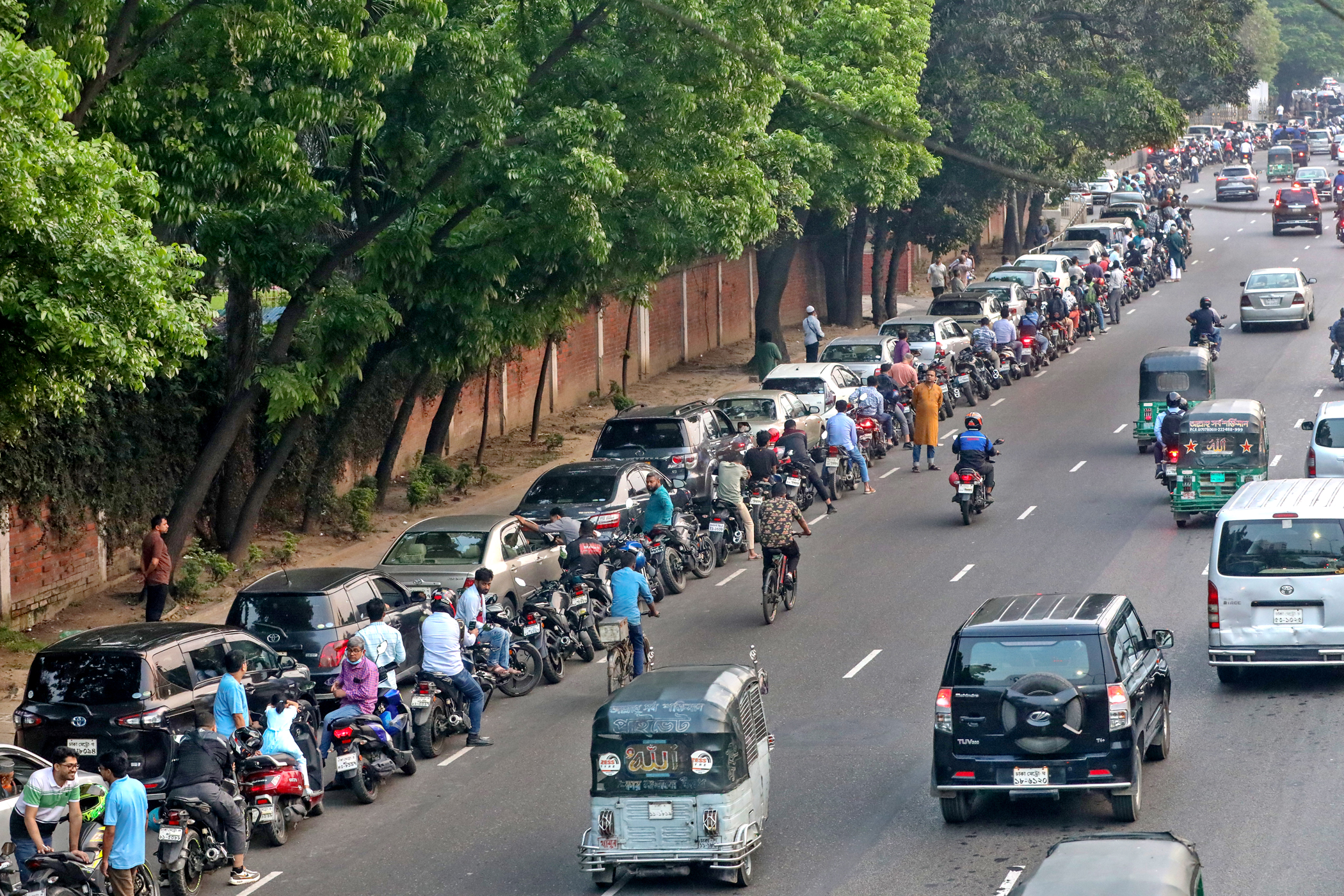
Iran’s attacks on Qatar’s LNG plants destroyed 17 percent of Qatar’s LNG capacity. Qatar then declared force majeure and walked away from its long‑term supply obligations. It is no longer bound to sell LNG to many countries at previously agreed lower prices. Bangladesh now has to buy LNG at much higher spot market rates.
The government of Bangladesh, on average, gives Tk 60 billion (6,000 crore) in LNG subsidies each year. In 2024–25, it budgeted Tk 60 billion, but extra cargo imports pushed the actual need up to Tk 89 billion (8,900 crore). For 2025–26, Tk 60 billion was again projected for gas subsidies, yet this figure is now expected to rise severalfold. To keep buying fuel, Bangladesh will have to borrow, and it has already begun seeking loans from various sources. Managing this mounting pressure on the economy will be extremely difficult in the coming years.
This latest Middle East war has once again exposed how vulnerable Bangladesh becomes when its LNG dependence grows. If that dependence continues, there will be no easy exit. In past crises, “quick fixes” pushed Bangladesh deeper into reliance on foreign power and energy technologies. If the country repeats that pattern now, breaking free of this dependence in future will be even harder.
Meanwhile, not only LNG but also coal prices have increased. Some are now saying it was a mistake not to extract Bangladesh’s domestic coal. Yet the question of why gas extraction has not progressed over the past two decades is rarely discussed. In these twenty years, Bangladesh has made very little headway in drilling new gas wells. The BNP government has said in its 180‑day work plan that it will start drilling new wells on a priority basis. All of these steps are needed to address the crisis, but they will take time.

What quick solution can Bangladesh pursue now? It can rapidly advance solar power projects. This includes large land‑based solar projects, rooftop solar power, and solar pumps for irrigation. The question is whether solar projects can really be completed so fast. Since 2021, I have been researching why Vietnam was able to connect so much solar power to the grid so quickly. As part of this work, I went to Vietnam and spoke with investors, experts, researchers, and officials. I tried to understand whether such rapid expansion is possible at all, and how Vietnam actually did it.
Vietnam has already set an example. During Covid in 2020, in just one year, it added about 11,000 MW of solar power to the grid, 48 percent of which was rooftop solar. Starting from almost zero in 2018, by the end of 2020 Vietnam’s solar capacity reached 16,500 MW, about 25 percent of its total capacity. I travelled there at that time to investigate the reasons for this success. I interviewed experts, researchers, and investors. The key reason was government intervention. Many believe the main driver was the feed‑in tariff incentive. A feed‑in tariff is a policy that guarantees renewable energy producers, for a specified period of time, a fixed price per unit of electricity they supply to the grid—usually higher than the market price. My own inquiry revealed another factor. If the feed‑in tariff had been open‑ended, the target would not have been reached so quickly. A fixed time limit was crucial. Only those who could connect solar to the grid within one year—by December 2020—were allowed to sell power at a guaranteed fixed price for 20 years. This incentive not only met the target; it exceeded it and motivated investors on an extraordinary scale.
The latest Middle East war has once again exposed how vulnerable Bangladesh becomes when its LNG dependence grows.
At that time, the cost of solar power was falling almost every day. The later a project starts, the cheaper each unit of electricity could become. In such a situation, investors usually wait and speculate, hoping costs will drop further. Vietnam broke that pattern. The government offered a fixed price, higher than production cost, but only for a limited time. This guaranteed that any solar power fed into the grid during that window would be bought at that rate. That one signal changed everything. Investors rushed in. The “experiment” worked so well that they supplied far more electricity to the grid than the government had planned.

Vietnam had another advantage. Most loans came from local banks. Investors who had just gained experience in solar projects in China and Thailand quickly shifted to Vietnam to grab the opportunity. When banks saw that the government was backing these projects and that profits were likely, they stopped hesitating. Lending increased, and project risk fell sharply.
In Bangladesh, the same kind of policy is still treated with doubt. Even two years ago, the idea of rooftop solar with a fixed feed‑in tariff sounded unrealistic to many. If anyone suggested paying a higher‑than‑cost tariff for 15 years, the first question was: why should the government carry such a big financial burden?
Yet the reality has been different. LNG‑based and coal‑based projects have created a much bigger financial burden than such a solar scheme would have. The nuclear project is also getting more expensive every year because of construction delays. If all these costs are added up, the argument against solar incentives looks much weaker. Simply put, if the government does not act now, it will be very hard to add three to four thousand megawatts of solar power to the grid quickly.
There is another obstacle. In Bangladesh, everyone talks about “green finance,” but getting a bank loan for renewable projects is still very difficult. Political and economic uncertainty increases risk. Banks fear they will not get their money back.

This mistrust became very clear at a CPD seminar in January. Officials from the Power Development Board (PDB) said that power purchase agreements have left PDB carrying a growing financial load. On the other side, business leaders said they cannot invest without a guaranteed sales contract at a fixed price. If, after finishing a project, they are not sure they can sell electricity at an agreed tariff, their interest in investing simply disappears.
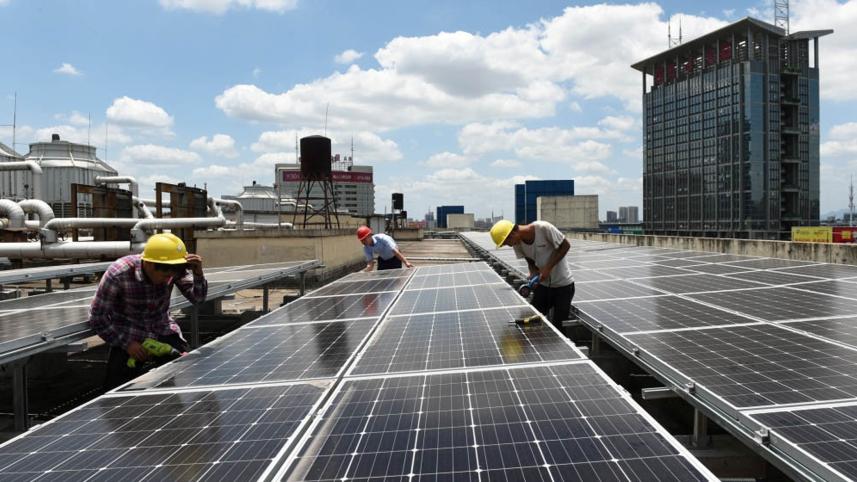
In the past, power purchase agreements existed; in the newly revised framework, purchase guarantees for new projects are absent or unclear. This is exactly where the government must step in. Rooftop solar could be rolled out on government buildings, schools, hospitals, factories, and commercial and administrative offices nationwide. Studies already show the scale of this opportunity: even on the most conservative estimates, Bangladesh can install at least 4,000 MW of rooftop solar, and if only 10 percent of suitable roofs were used, the potential rises to above 10,000 MW. Solar irrigation has begun—3,524 systems have been installed so far, saving 60.7 MW—but here too, the economic and managerial bottlenecks must be identified and targeted incentives offered urgently.
Policy signals have been mixed. When the interim government repealed the Quick Enhancement of Electricity and Energy Supply (Special Provisions) Act 2010, it automatically froze 31 renewable power projects with a combined capacity of 2,942 MW that had Letters of Intent under the Sheikh Hasina government. Many developers had already sunk costs into land and financing. After scrapping those LoIs, the Power, Energy and Mineral Resources Ministry called fresh tenders, in several rounds, for 55 solar plants totalling 5,500 MW, this time under the Public Procurement Act 2006 and Rules 2008, in the name of “competitive” procurement. Yet only three packages drew a single bid each, and 13 packages attracted no bids at all. This is not a sign that solar is unviable; it is a sign that, without clear purchase guarantees and credible policy, even willing investors will stay away.
A government committee later re‑evaluated the earlier solar projects and found that proposed prices had fallen by an average of 24.6 percent. Investors and officials disagree on the reason for the price decline. Business groups say costs dropped because technology improved. Some officials counter that the first round lacked transparency and competition, with irregularities and bias keeping prices artificially high; the re‑evaluation, they argue, simply corrected this. In truth, both explanations may be partly right. What matters now is the outcome: solar has become cheaper just as oil, coal and gas have become more expensive, making solar far more competitive. If Bangladesh moves quickly, it can use this window to cut energy import dependence.
Most solar panels will still come from China, and for many projects, land acquisition, due diligence and price revisions are already done. What is missing is targeted government incentives and clear purchase guarantees for new projects. At the same time, Dhaka’s long‑standing rooftop solar requirement has spawned a different problem: a syndicate has exploited public ignorance, installing cheap, low‑quality panels to comply with the requirements, cashing in while systems lie under‑maintained or non‑functional. In many buildings, panels are installed but not connected through net metering, so the power is never fed into the grid. The result is wasted investment, wasted capacity—and a public justifiably sceptical about solar, precisely when we need it most.
Pakistan offers a final, telling example. Like Bangladesh, it became heavily dependent on coal and LNG and failed to advance its own gas fields. LNG and coal imports, high capacity charges and a falling rupee pushed electricity prices through the roof. Yet as Pakistan scaled up solar, much of that burden fell. One estimate suggests that during the current Middle East turmoil, Pakistan saved nearly 12 billion USD in LNG and oil import costs thanks to its solar expansion. India and Sri Lanka, too, have sharply increased their reliance on renewables.
These are not fairy tales; they are recent, concrete experiences. Rapid solar expansion is possible. But it demands clear incentives, removal of bureaucratic and financial obstacles, public confidence, doorstep services, and lower costs through scrapping taxes on solar equipment. And solar has a structural advantage: there is no capacity charge. The state only pays for the electricity actually delivered to the grid. An additional advantage is that the government does not have to ensure energy supply to get these power plants running. During times of crisis or price rise, the government can remain free of stress.
In the coming months, some special interest groups will try to use this crisis to revive coal extraction in Bangladesh. If we again increase our dependence on coal and LNG, we will once more fall behind the rest of South Asia on renewables. The rational response in a dollar crisis is the opposite: lean into solar and save foreign exchange. That also means planning a coal phase‑out, not a coal revival. The coal plants that were built over the last decade have already locked us in far enough. If we now open the door to domestic coal mining to “feed” them, we will give these plants a permanent alibi to keep running and shut down any serious transition to solar.
Bangladesh still has a choice: double down on the fuels that made this crisis—or treat the crisis as the moment to change course. Rapid expansion of solar is the key solution, both to save dollars and decrease geopolitical risk originating from high import dependence.
Dr. Moshahida Sultana is an Associate Professor, Department of Accounting, University of Dhaka.
Send your articles for Slow Reads to slowreads@thedailystar.net. Check out our submission guidelines for details.
Can Bangladesh afford not to invest in Bhola’s gas?
Bangladesh’s renewable policy: Still too little but not too late
Prabhat Patnaik speaks / Why the Global South must rethink export-led growth
Bhotekoshi flood: Another warning from the Himalayas. Are we listening?
Renewing the Ganges Water Sharing Treaty: What should Bangladesh do?

What it really costs to live in Dhaka
Why Nepal’s devastating floods should no longer surprise us

What kind of doctors does Bangladesh need?
Why aren’t we talking about the health risks of battery rickshaws?