


Renewables are a natural hedge against fossil fuel shocks

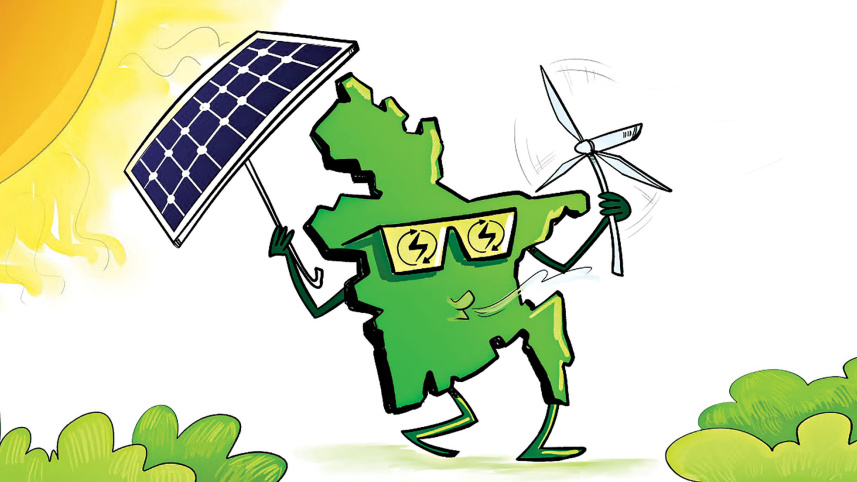
Like the rest of the world, Bangladesh is currently grappling with the geopolitics-led energy supply disruption, described by the International Energy Agency (IEA) as the biggest ever threat to energy security. Four years ago, the country experienced a comparable crisis stemming from the Russia-Ukraine war. Despite that experience, it finds itself the least prepared to navigate the tumultuous situation we are seeing today.
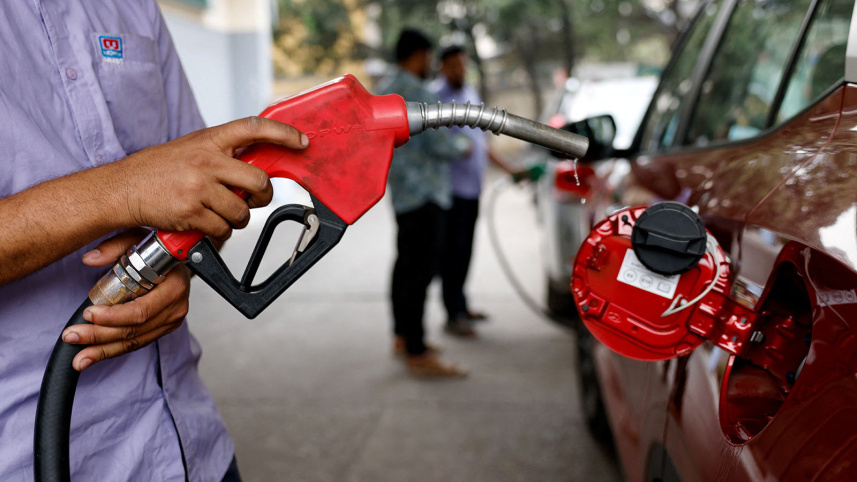
The abrupt supply disruption, owing to the closure of the Strait of Hormuz, which carries one-fifth of the global oil annually, and suspension of LNG supply from Qatar following a drone attack, has sent a shockwave through the international fossil fuel market, leading to a massive surge in oil and LNG prices. In Bangladesh, high import prices have already raised the energy sector’s subsidy burden, tempting the government to draw a loan of $2 billion from international agencies.

As renewables are capable of providing partial insulation from fuel price volatility, it goes without saying that the country should swiftly expand its renewable energy capacity.
Bangladesh has radically transformed its power sector over the last decade and a half, but without a focus on the urgency of accelerating renewable energy and enhancing energy security. As the country relies more heavily on imported fossil fuels than domestic energy resources, it is now experiencing perpetual vulnerability with a surging fiscal burden.
For instance, the Bangladesh Petroleum Corporation (BPC) reportedly approved eight lakh tonnes of diesel purchase from the spot market at an average cost of Tk 169.75 per litre ($1.38). Since Bangladesh has kept the diesel price fixed at Tk 100 per litre ($0.81), the spot purchases will result in a revenue shortfall of Tk 69.75 per litre. The monthly subsidy on account of diesel consumption of approximately 375,000 tonnes will soar to Tk 3,100 crore (approximately $252 million), excluding import duty and the commissions of BPC and traders.
Likewise, Bangladesh’s spot purchases of LNG cargoes at an average price of about $21.79 per million British thermal units (MMBtu) in March 2026 requires an average subsidy of Tk 67.5 per cubic metre ($0.55), excluding import duty, terminal and regasification fees. Assuming an average monthly LNG consumption of 25 billion cubic feet, the subsidy burden will rise to Tk 4,774 crore ($390 million).
The $2 billion loan that Bangladesh has sought will only meet the subsidies for LNG and diesel consumption for just over three months (based on the current prices, three months’ subsidies for diesel and LNG are $756 million and $1.17 billion, respectively). The subsidies will also rise in the power sector due to the costly furnace oil and coal.
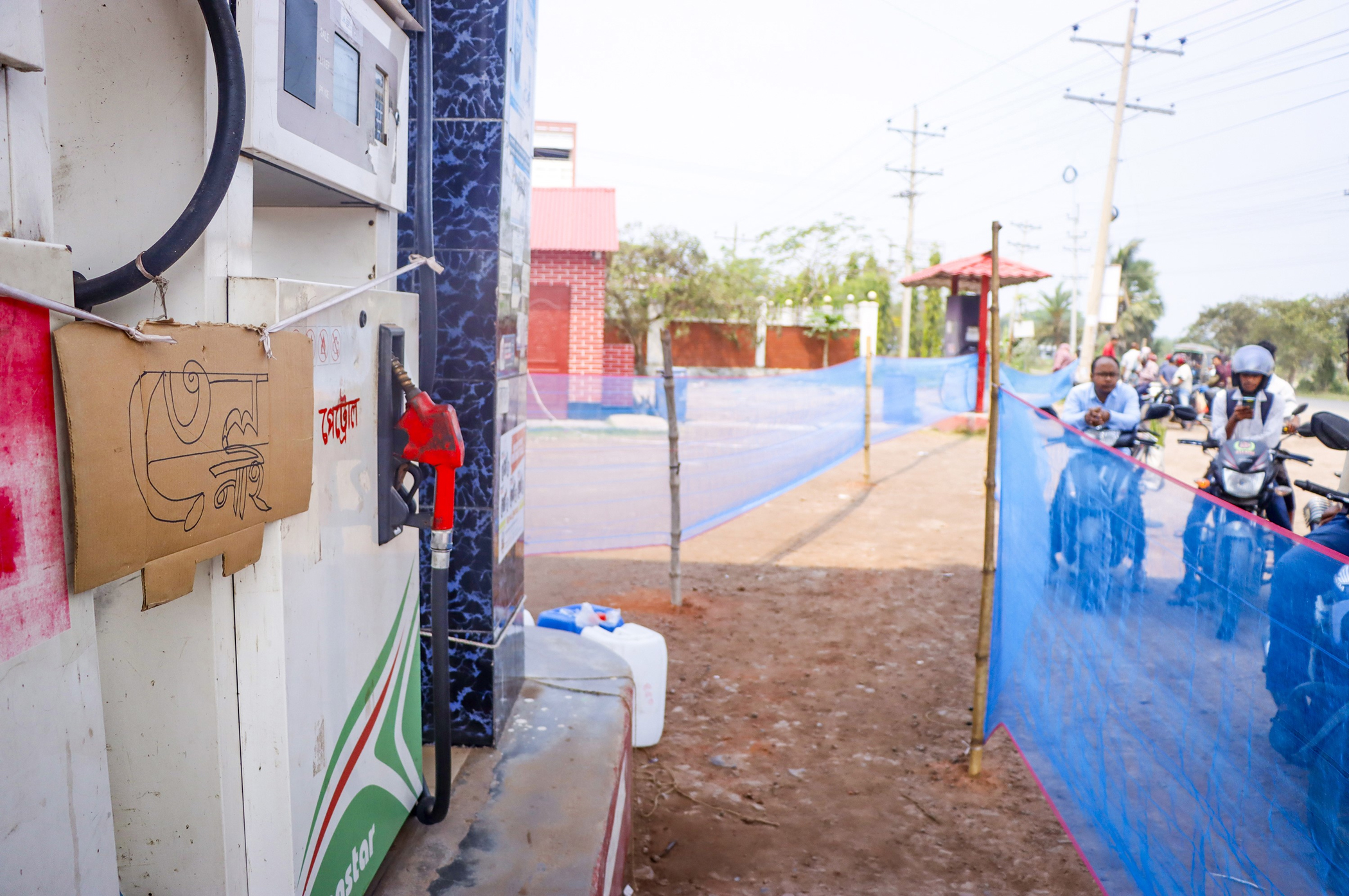
A protracted Middle East crisis will, therefore, significantly strain the country’s energy and power sectors, compelling the government to resort to rationing. This may ultimately lead to an adjustment of tariffs of electricity and different fuels.
However, once implemented, the tariffs of renewable energy projects remain fixed, providing a natural hedge against fossil fuel price volatility in the international market. As a country heavily reliant on imported primary energy, Bangladesh could take this opportunity to swiftly shield itself from the fuel price hikes.
Pakistan offers an example of rapidly scaling up solar energy, thereby insulating itself from fuel price volatility. Despite slow progress until 2022, its distributed solar capacity reached 34,000 MW in 2025, reducing the demand for grid-based power by 11 percent in FY2025 compared to FY2022. Pakistan’s year-on-year demand for LNG also fell by 15.4 percent in 2025, driven by higher solar power generation.
Bangladesh may draw lessons from this success story to design its renewable energy transition pathway based on relevance and its capacity.
For more than a decade and a half, following the formulation of the country’s first renewable energy policy in 2008, policymakers in Bangladesh have largely remained sceptical about the large-scale contribution of renewables in the country’s overall energy system. Among other things, land constraints continued to raise concerns. However, recent IEEFA discussions with people and solar energy service providers in several villages highlight immense opportunities for deploying distributed solar systems across the country. Over the last six to eight months, households and businesses in each village installed rooftop solar capacity of about five to eight kilowatt (kW). Villagers are even taking up rooftop solar projects with battery back-up for mosques. A comparatively high frequency of load-shedding in rural areas is encouraging people to consider rooftop solar systems.
Bangladesh reportedly has 87,230 such villages, which could spearhead a mini solar boom. Apart from households, these villages accommodate schools, colleges, and religious institutions. Solar-powered irrigation could also replace the diesel-run systems. As a rough estimate, an average distributed solar installation of 25 kW per village could swiftly raise the combined capacity to about 2,180 MW, which is more than the country’s reported installed renewable energy capacity of 1,698.28 MW.
IEEFA notes that the individual service providers purchase solar panels and batteries from the country’s capital and install them in rural areas but lack sufficient technical capacity to follow the standard operating procedures. This excludes the qualified technicians deployed by NGOs to execute solar irrigation projects in rural areas. Therefore, the Bangladesh government, with support from development agencies, technical universities, and the Sustainable and Renewable Energy Development Authority (SREDA), could consider designing appropriate training programmes for developing the capacity of rural technicians. Bangladesh should also ensure the availability of high-quality solar panels and accessories for the sustainability of projects.
The country should also motivate people to help spur distributed solar energy projects by offering import duty exemptions on solar accessories and battery storage systems. Thailand, for example, has extended personal and corporate tax exemptions to incentivise investment in renewable energy and energy efficiency.
Bangladesh should urgently draw lessons from its high degree of imported fossil fuel dependence relative to its low share of renewable energy, as this trend is shrinking its fiscal space and making its energy and power sectors unsustainable. It should now swiftly scale up renewable energy that has the potential to free up financial resources.
Shafiqul Alam is lead energy analyst for Bangladesh at the Institute for Energy Economics and Financial Analysis (IEEFA).
Views expressed in this article are the author's own.
 For all latest news, follow The Daily Star's Google News channel.
 Follow The Daily Star Opinion on Facebook for the latest opinions, commentaries, and analyses by experts and professionals. To contribute your article or letter to The Daily Star Opinion, see our guidelines for submission.
Comments