Can Bangladesh save its haor food bowl?
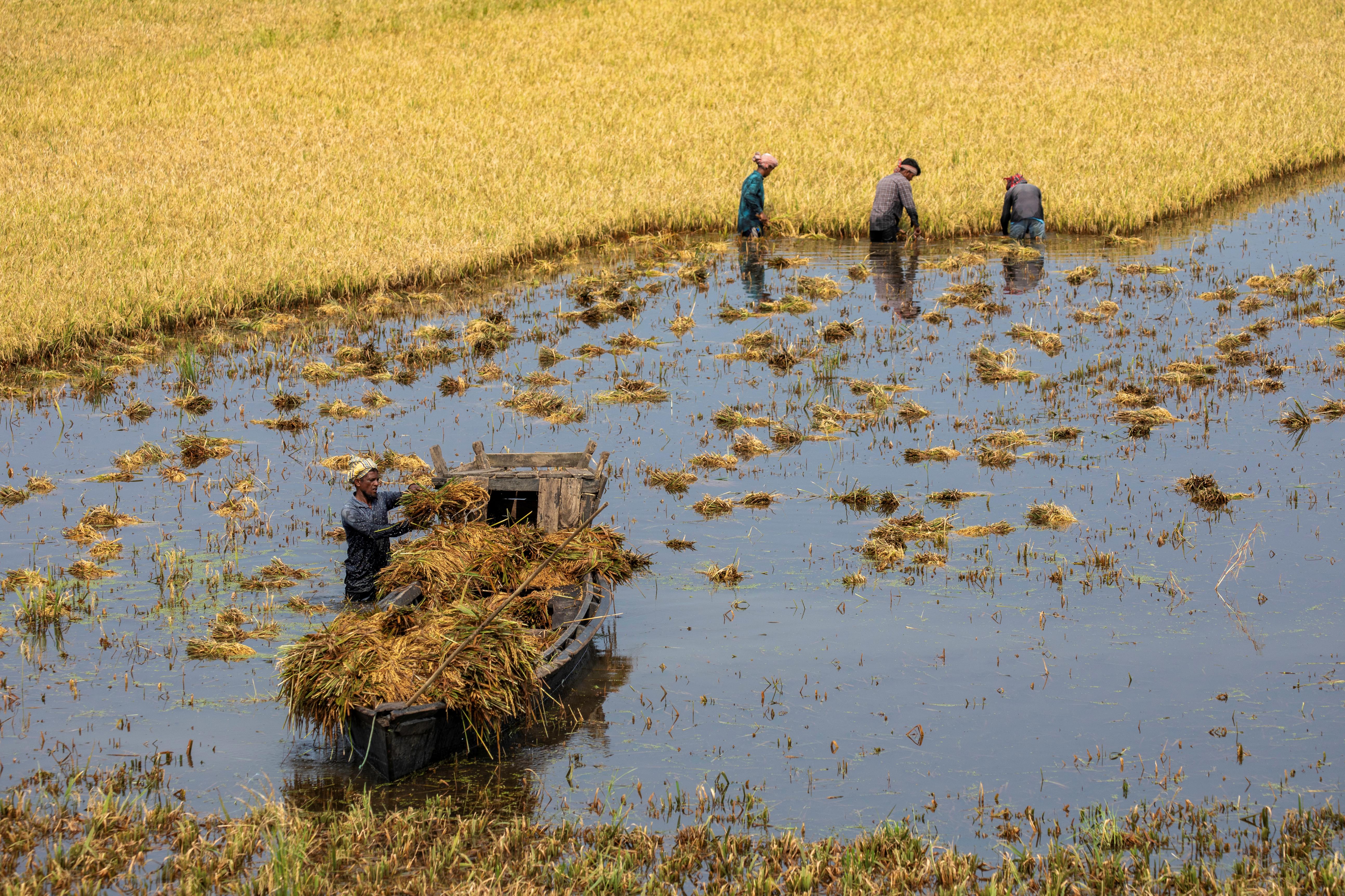
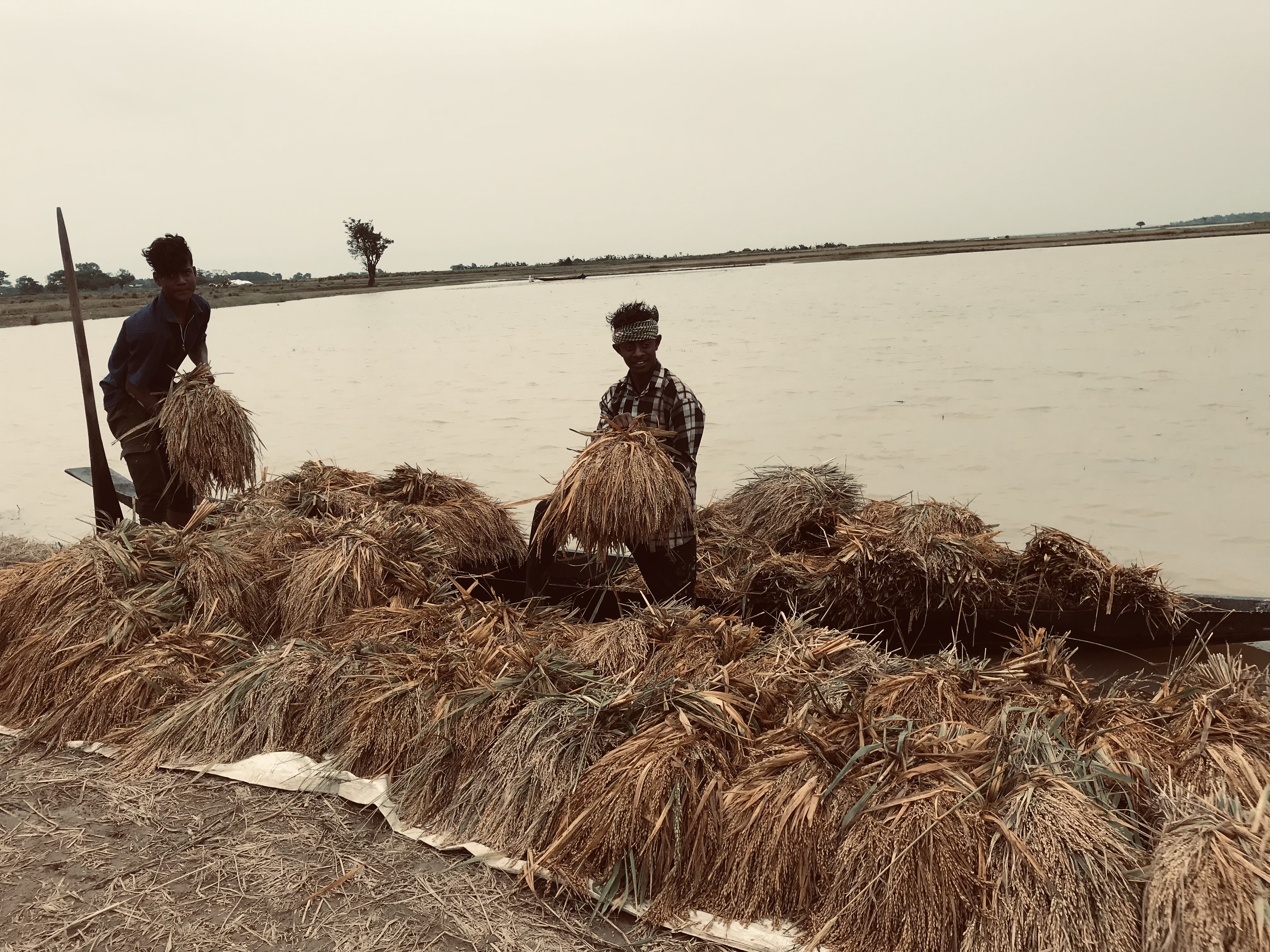
The silence in Bangladesh's Haor Basin this mid-May is not the peaceful quiet of a rural afternoon; it is the heavy, suffocating silence of an early-monsoon flash flood disaster that arrived suddenly, caught us unprepared, and caused suffering to farmers. As the Surma and Kushiyara Rivers overtopped their banks in the first week of May, they didn't just bring too much water from the Meghalaya hills-they brought the wreckage of a year's worth of labour and loss of livelihoods, submerging the ready-to-harvest Boro paddy that represents the lifeblood of northeastern Bangladesh.
For residents of Sunamganj, Netrokona, and Sylhet, early monsoon flash floods are a recurring nightmare. However, the 2026 inundation carries a sharper sting. Coming at the peak of the harvest, the breach of embankments like the one at Boroghatti Beel serves as a grim reminder that our current climate adaptation strategies are leaking.
A system under strain
The Haor Region is a unique ecosystem, a vast wetland that provides nearly one-fifth of Bangladesh's total Boro rice production. But this production is fragile due to climate change risks. The window between the ripening of the Boro crop and the onset of pre-monsoon rains is shrinking. Climate change has shifted the goalposts; the "early" flash floods of the past are now becoming the "standard" April-May reality.
While the government's recent announcement of a three-month food assistance program for farmers living in the Haor is a necessary lifeline for the thousands of farmers who watched their livelihoods sink, we must ask: how long can we rely on post-disaster relief? A Taka 14.3 billion project for dredging and embankment strengthening is on the table, but infrastructure alone is a static solution to a fluid problem.
The human toll and the gender gap
Beyond the statistics of hectares of rice production lost, it reflects a deeper social crisis. In the Haor, women are often the silent custodians of the post-harvest process. When the floods hit, it is the women who scramble to save seeds, manage dwindling household food supplies, and lead the recovery in homes partially submerged. Any long-term solution that ignores the leadership and specific vulnerabilities of rural women farmers is destined to be incomplete.
Furthermore, the labour crisis during this flood has been acute. With migration patterns shifting, the shortage of available hands to harvest paddy before the water rises has led to thousands of tons of rice rotting due to submersion, moisture, and a lack of drying.
Infrastructure alone cannot save Haor.
Successive governments have prioritised submersible embankments as the first line of defence after the devastating 2017 floods. Reforms such as the Kabita Nitimala were introduced to improve transparency and local participation in embankment construction and maintenance.
Yet breaches continue to occur. Maintenance is often delayed; monitoring is uneven, and embankments cannot cope with increasingly erratic flood peaks. More importantly, embankments are being treated as a guarantee, but they merely reduce production risk-they do not eliminate it.
The uncomfortable lesson is that no amount of concrete can fully protect a single‑crop system against a changing climate.
Beyond the embankments
To truly protect the livelihood of Haor farmers, we must move toward "Climate-Smart" landscape management.
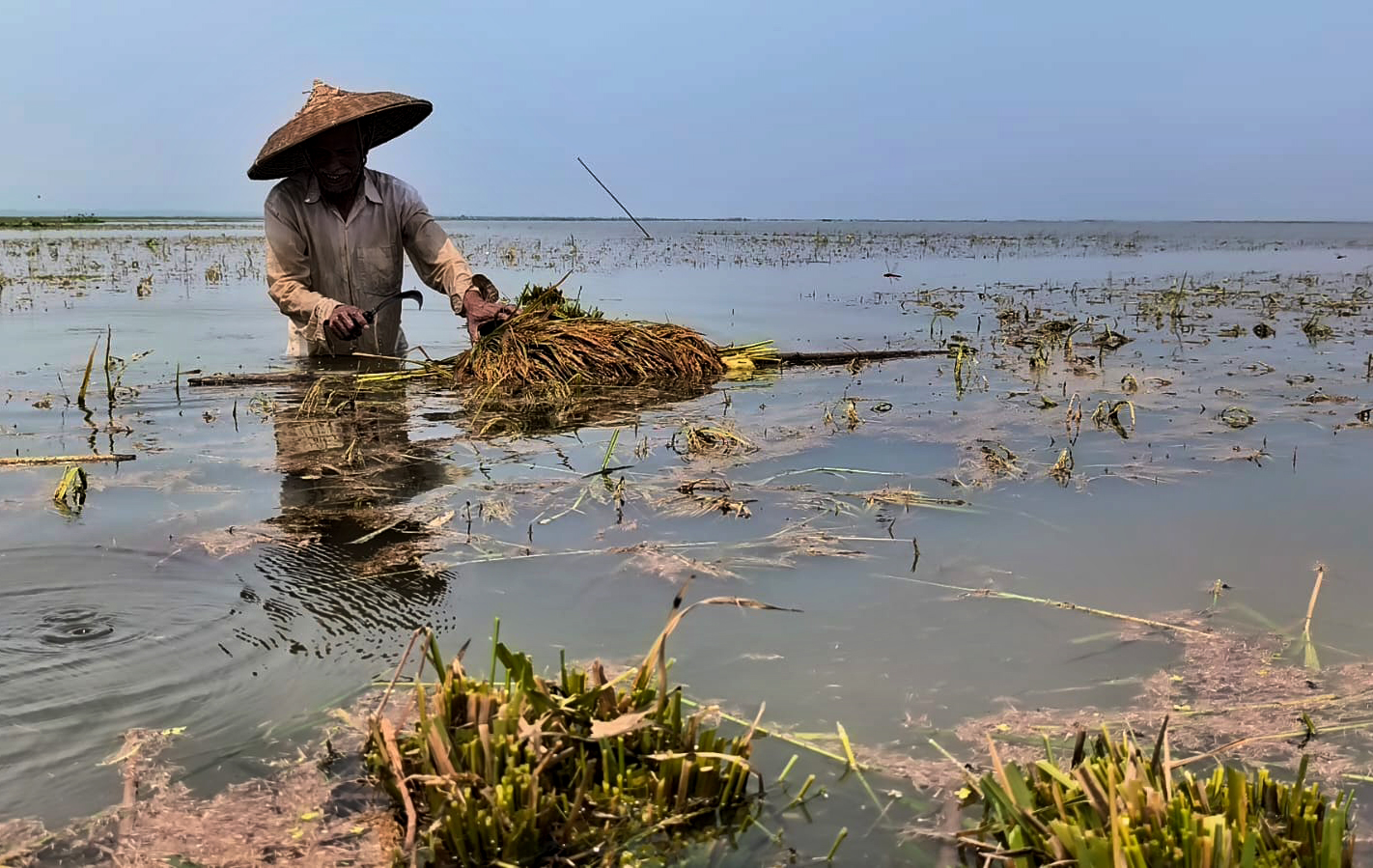
The flash floods of 2026 should be a turning point. We cannot continue to treat the Haor Flood as a seasonal tragedy. The Haor Region is a food basket of Bangladesh, and its farmers-the men and women standing waist-deep in water to save what remains of their harvest-deserve a strategy that makes their agriculture and livelihoods resilient. If we do not act now to modernise our approach to this unique landscape, we aren't just losing rice; we are losing the battle for food security and the livelihoods of millions in a changing climate.
The real vulnerability lies in the cropping system.
The Haor economy has evolved into a highly concentrated agricultural production system. Nearly the entire lowland area is dedicated to one long‑duration Boro crop, planted in December and harvested in late April or May, with limited diversification. When monsoon floods arrive early, farmers face a brutal choice: harvest immature paddies at a loss or lose everything.
Continuous rainfall over the past week has triggered a severe labour shortage in the Haor Region, compounding the challenges for farmers already racing against time to harvest their Boro crops. Farmers in the Haor Region have suffered a further decline in Boro paddy prices as intermittent rain and clouds continue to prevent proper drying of harvested crops. The floods are hitting a crop already under strain. A recent United States Department of Agriculture report projected national rice production would fall 0.7% this season. It attributed lower Boro yields partly to disrupted irrigation and fertiliser use, caused by fuel and fertiliser shortages linked to the Middle East conflict (USDA Grain and Feed Report, 2026).
The uncomfortable lesson is that no amount of concrete can fully protect a single‑crop system against a changing climate.
Flash floods in the Haor Basin are not new. What is new is their timing and frequency. Climate variability, intensified pre‑monsoon rainfall, upstream land use changes, and silted rivers together have altered the basin's hydrological rhythm. Yet our agricultural calendar, rice varieties, and flood control strategies are still built around yesterday's climate. What was once efficient is now risky.
Resilience, by contrast, comes from flexibility. And flexibility starts with crops. This requires the development and scaling of Haor-specific climate-resilient agricultural solutions.
Seeds, timing, and early action - our best line of defence
Boro is the dry-season irrigated rice crop planted during December-January and harvested during April-May. It accounts for nearly 55 per cent of Bangladesh's annual rice output. In the Haor Region, Boro rice is cultivated on 1.2 million ha, accounting for 25% of total Boro rice production and 15% of total annual rice production in Bangladesh (BBS 2023).
Recent research and pilot initiatives offer hope. Short-duration, cold-tolerant rice varieties that mature 10-20 days earlier than typical high-yielding varieties can significantly reduce exposure to April-May flash floods. Combined with early transplanting, staggered planting dates, and improved seedbed management, farmers can "outrun" rising water levels.
These approaches are already familiar to researchers and institutions like the International Rice Research Institute (IRRI) and the Bangladesh Rice Research Institute (BRRI). What is missing is scale-reliable seed supply, extension support, and policy backing to move farmers away from a narrow dependence on a few popular long‑duration varieties. Recently, with funding support from the Krishi Gobeshona Foundation (KGF), IRRI and BRRI have co-developed a short-duration and cold-tolerant variety, BRRI Dhan 118, suitable for the Haor Region. In this area, the available rice varieties usually succumb to the cold spell during the flowering stage; however, this newly developed variety can withstand it, yielding up to 6 t/ha and being harvestable by the end of March if sown between 25 October and 1 November. However, scaling new, improved rice varieties suitable for this region is crucial. A dynamic extension framework and a climate-resilient rice value chain are important for promoting these improved varieties.
With the funding support from HSBC Bank, IRRI has been promoting a project on "Climate-Smart Rice Value Chain in the Haor Region of Bangladesh (CS-RVC) in the five upazilas of Sunamganj and Kishoreganj districts. The project addresses challenges at the research-for-development nexus and introduces the 3A Framework – Awareness, Accessibility, and Affordability - to strengthen the rice seed system and promote climate-smart farming in this region. Through this framework, newly improved inbred rice varieties can be promoted and scaled in the community.
Awareness: Equip farmers with the knowledge and skills to make informed decisions. Capacity building on modern rice cultivation, quality seed production, processing, and marketing, pest and disease management advisory support, and head-to-head varietal demonstrations of the improved rice varieties and network linkages among rice value chain actors can create awareness on the ground to enhance the adoption of the new rice varieties suitable for this region.
Accessibility: By promoting Community Seed Banks, certification for seed growers, seed preservation support, and mechanisation support to ensure access to quality seeds locally, on time, and in good condition, even during climatic stresses and connectivity challenges.
Affordability: Coordinated seed awareness, access, and supply stabilisation strengthens affordability and market links across the rice value chain.
Our agricultural calendar, rice varieties, and flood control strategies are still built around yesterday's climate. What was once efficient is now risky.
The 3A framework ensures farmers know about, have access to, and can afford quality seeds, strengthens the seed sector, and supports resilient harvests.
We can only ensure a resilient seed system while leveraging science, innovation, partnership, and enabling environmental accelerators, such as policy, institution, human capital, and data, to be grounded and create an impact on food security and inclusive livelihood.
On the other hand, crop diversification is very limited in the Haor Region. To ensure inclusive livelihoods and cropping intensity in the Haor region, where farming largely depends on the boro season, a holistic approach, including modelling and the design of cropping patterns for the high, mid, and deep Haor, is required. In the upland haor, the potential for sweet potatoes, chilli, mustard, groundnuts, and other vegetables, along with rice, is huge. On the other hand, in the mid-harvest land, short-duration and higher-yielding rice varieties such as BRRI dhan96 and BRRI dhan105 showed promising results in terms of pest and disease susceptibility through the CS-RVC project launched in 2024. In recent flash floods, farmers who cultivated BRRI Dhan96 were able to harvest their paddy earlier than with the varieties they had previously cultivated. The promotion of these new varieties was not a single-crop demonstration effort. Rather, a collective effort of the 3A framework through which all the value chain actors of the rice system, like farmers, seed dealers, millers and other relevant government stakeholders, were gathered together in the "Crop Cafeteria" and saw the different rice varieties compared to the local check variety BRRI dhan28 vs improved varieties like BRRI dhan96, 101, 104, and 105. Among them, all the value chain actors ranked BRRI Dhan96 as the best-performing variety over the last two consecutive seasons.
If frameworks like 3A and awareness efforts like "Crop Cafeteria" are introduced, climate-vulnerable farmers in the Haor Region can build their climate and livelihood resilience. Besides, promoting women-led Community Seed Banks provides an inclusive pathway to viable businesses rather than treating them solely as grassroots institutions that supply seeds locally, conserve agrobiodiversity, and safeguard seed sovereignty. We can promote these local seed banks and help them become certified to produce and sell seeds. This can give them the motivation to continue their non-profitable work and turn it into a profitable business with proper scientific knowledge. This would ensure the timely availability and affordability of the newly developed inbred rice and other crops, thereby shielding the seed system.
From economic and livelihood perspectives, agricultural innovations such as seed systems and improved agronomy are far cheaper and more impactful than repeated embankment repairs or emergency procurement adjustments. Yet these measures remain underscaled, constrained by weak seed supply chains, limited incentives, and slow institutional uptake.
By equipping farmers in the Haor Region, we can ensure that both the formal and informal seed sectors act together to meet demand and ensure a timely seed supply.
Adopting the 3A framework to increase awareness on climate-smart rice varieties, strengthen the seed system, and promote crop diversification in the rice-based farming system can improve rice and crop yields, diversify income sources, enhance nutrition, and build climate resilience in the Haor Region. This approach can create a ripple effect in other rice-growing regions.
From reactive relief to proactive resilience
Government responses after floods are often swift: relief distribution, procurement adjustments, rehabilitation plans. These measures matter, but they address symptoms, not causes. A comprehensive, integrated agricultural development strategy is required to save this food bowl.
A resilient Haor strategy should focus on these strategies:
- Early-warning synchronicity: Integrating local indigenous knowledge with appropriate weather forecasting to give farmers a 10-day head start rather than 48 hours to make their crop management decisions.
- Crop resilience: Strengthening the seed system and accelerating the distribution and strengthening the value chain of short-duration, cold, and flood-tolerant improved rice varieties that can be harvested before the April-May floods surge. Following the climate vulnerability assessment, an inclusive crop zoning for the low, mid and upper Haor basin is required. Improving rice-based farming, along with other potential crops, livestock, and fisheries, is important.
- Ecosystem restoration: Shifting focus from just "hard" embankments to "soft" solutions like restoring natural water flow and dredging silted riverbeds, and restoration of the swamp forest would support nature-based solutions to reduce flood risks and crop damage
- Bottom-up mechanisation support: Widespread deployment of combine harvesters suited for wetland terrain is no longer a luxury; it is a survival requirement against flood risk. However, when the Haor becomes a landscape of deep mud and rising water, traditional heavy combine harvesters-even those with tracks-often get bogged down or "bottom out" in the soft clay. In such critical windows where every hour counts, the solution must shift from heavy machinery to buoyant, portable, or community-integrated technology. Also, developing business models for mechanisation services and capacity-building of Local Service Providers (LSPs) is crucial for the long-term sustainability of agri-mechanisation in the Haor Region. The failure of mechanisation during this crisis is particularly telling. High-capacity combined harvesters, often touted as the future of our agriculture, have largely "bottomed out" in the knee-deep mud and rising water. With rental fees for operational machines tripling due to the high-risk conditions, the smallholder farmer is left with no viable mechanical recourse to save their year's work in the critical 48-hour window before a flash flood peak.
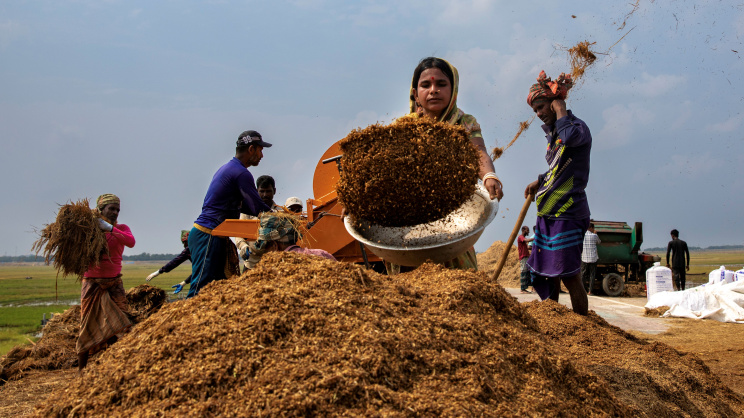
The 2026 pre-monsoon Haor Floods and large Boro rice damage manifest a looming national food crisis amid increasing climate change risk. Repeated Haor crop losses eventually result in higher rice imports, increased market intervention, rising pressure on food subsidies, and a draining of the fiscal budget. These are not isolated rural setbacks; they affect inflation, foreign exchange, and public finance.
The Haor region feeds the nation. Roughly a quarter of Bangladesh's Boro rice comes from these wetlands. Protecting it requires more than embankments and post-flood compensation. It demands a shift toward integrated solutions of climate-smart agriculture, smarter risk management, forward-looking investment decisions, and local capacity building and awareness.
The floods will return in the coming years, whether they become another fiscal headache or a turning point in how Bangladesh manages climate risk in agriculture, depends on the choices made now.
Rehana Noor is the assistant manager at International Rice Research Institute (IRRI), Bangladesh, and she can be reached at r.noor@cgiar.org
Dr Humnath Bhandari is the country representative of the International Rice Research Institute (IRRI), Bangladesh, and he can be reached at h.bhandari@cgiar.org
Send your articles for Slow Reads to slowreads@thedailystar.net. Check out our submission guidelines for details.
Can Bangladesh bring its hilsa back?
Can the new strategy achieve Bangladesh’s renewable energy targets?

André Wink speaks / What we get wrong about the Indo-Islamic world
Bengali Muslims and the ghosts of India's citizenship politics
Bangladesh’s solar growth: Will the incentives be enough?

The missing link in Bangladesh's innovation economy
Dhaka’s battery rickshaw problem is economic, not just about traffic

The staircase between our mothers and care
Is Bangladesh prepared for the next food shock?