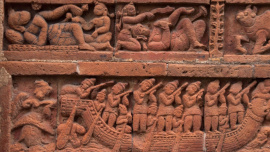
Slave raids in Bengal and the making of Arakan’s power

Slave raiding arose from expansionary trends that transformed Arakan from a conquest state into a trading state. While commerce is generally suggested as the chief reason for this transformation, we will argue that territorial acquisition, military compulsion, ethnic contestation and cultural differences also played significant roles in the process. A power like Arakan, which had failed to adopt new productive technologies, had to turn to slave raiding in response to the demands of warfare and the money market.
I
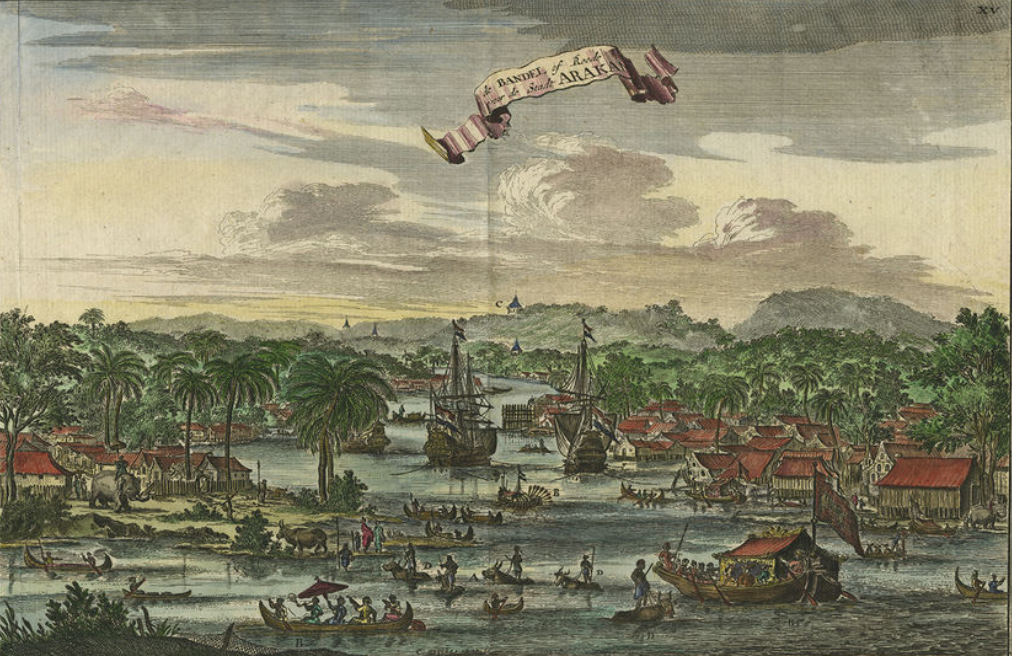
Arakan had to depend on systems of trading and raiding for the development of its statecraft and social structure. However, from the 1590s to the 1650s, Ayutthaya’s aggressive commercial policies under Naresuen, Songtham and Prasart Thong threatened Arakan’s Bay of Bengal trade. A proactive mercantile policy that would bring in enough silver to enable participation in the larger eastern Indian Ocean trade was the only way out.
Arakan’s slave trade had both international and domestic components. It was propelled into this trade by external compulsions (the need for silver through international trade) and internal pressures (expansionary wars and financial deficits) during the seventeenth century. Initially, as a landlocked country with an inhospitable coastline, Arakan held little interest for European traders.
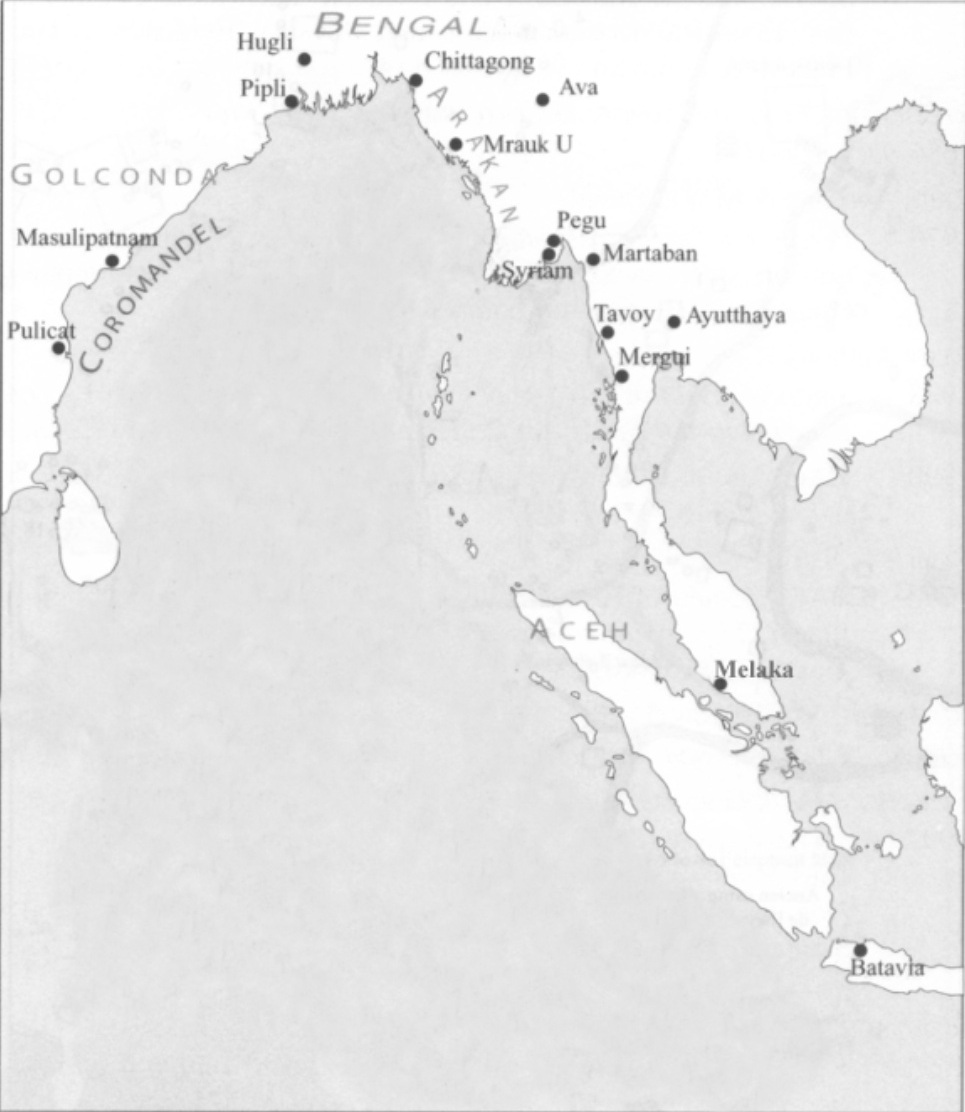
Tomé Pires, writing around 1515, and Alexander Hamilton, writing in the 1690s, noted that it had good harbours but offered little in the way of commerce. Apart from elephants from the interior and rice from the coastal plains, Arakan had few commodities to trade. Moreover, in the absence of an irrigated wet-rice core, its agrarian base was unstable, and its rice supply was uncertain because of frequent flooding in the Kaladan and Lemro river basins.
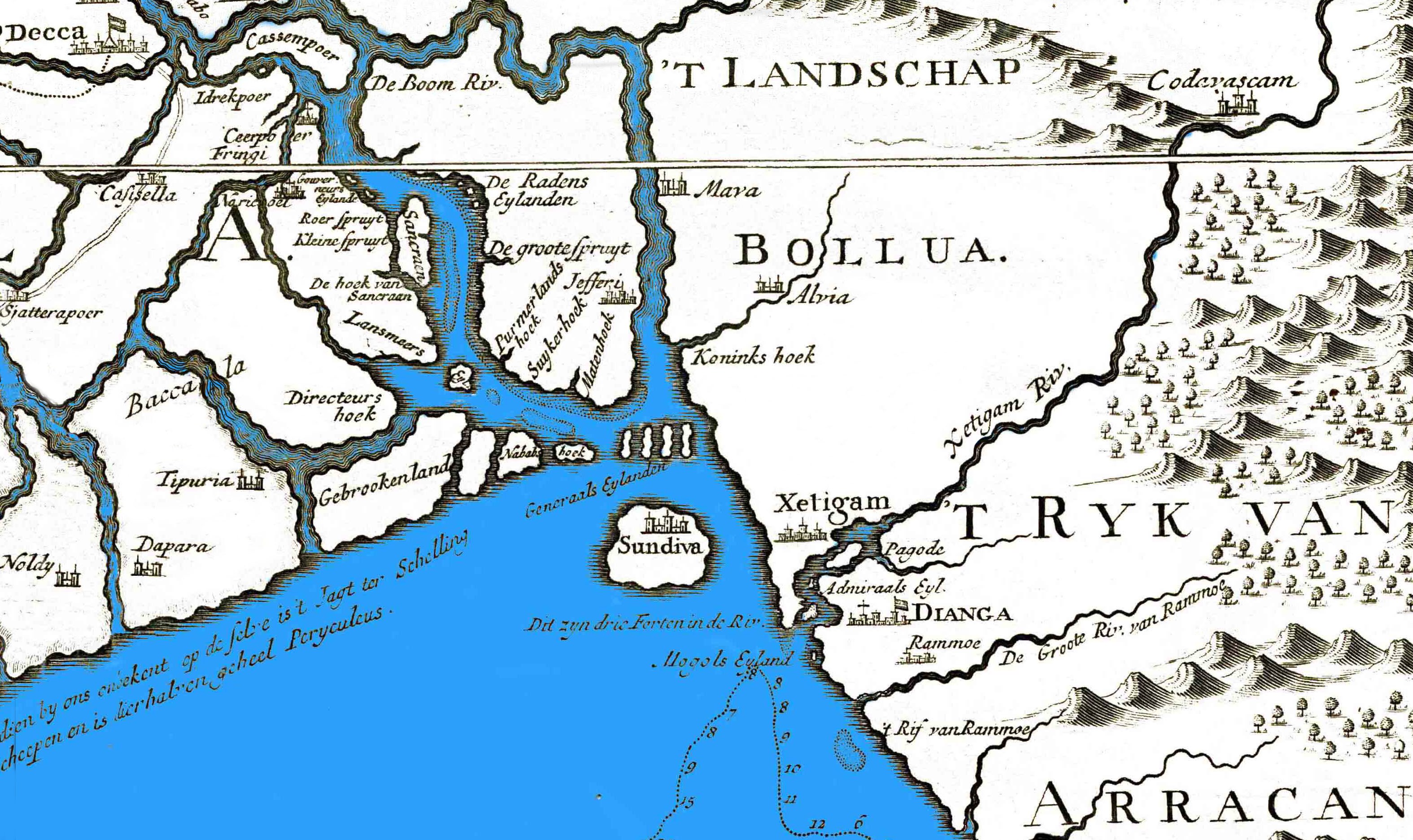
The Portuguese avoided Arakan, preferring, under the terms of their 1559 treaty, to use the ports of southeastern Bengal. The Dutch maintained a regular factory at Mrauk U only from the 1620s. At this point, a marketable commodity entered the picture: slaves. Raiding thus became a means for Arakan to sustain itself. Subsequent Portuguese and Dutch demand for slaves saw Hugli, Pipli, Chittagong-Dianga, Sandwip and Mrauk U supplying enslaved people to Goa in the west and Batavia in the east.
II
There was also a political factor. Arakan needed arms because its borders were vulnerable to assaults from the Toungoos to its south and the Mughals to its west. Between 1599 and 1610, Arakan undertook its greatest territorial expansion with the assistance of Portuguese mercenaries. This expansion proceeded in two directions: into the Ganges-Brahmaputra delta and towards the lower Irrawaddy delta, which was under the control of the Toungoo rulers of Lower Burma. This brought Arakan into direct conflict with the Mughals and the Burmese.
Driven by a war economy, Arakan imported guns and slaves in increasingly large numbers. Peasants were turned into soldiers. In 1605, the rebel officer Min-kamaun turned 5,000 Bengali and Mon cultivators assigned to the Thinkyin pagoda into warriors and attempted to seize Mrauk U. Three or four thousand Bengalis fled with their families into the eastern hill country (the Shan States) in the aftermath of Min-kamaun’s campaign.
Arakan’s raids continued southwards. King Thalun (r. 1629–1648) of the restored Toungoo state of Burma stationed warships as far north as Prome to deter Arakanese penetration. When he returned to Ava from Pegu in 1635, Thalun brought with him Mons, Burmese, Shans, Siamese, Indians, Yuns and Tavoyans and settled them on village lands allotted in return for military service. As the Toungoos reconsolidated their position, Arakan was pushed onto the defensive. Its treasury was exhausted, and alternative sources of finance had to be found.
III
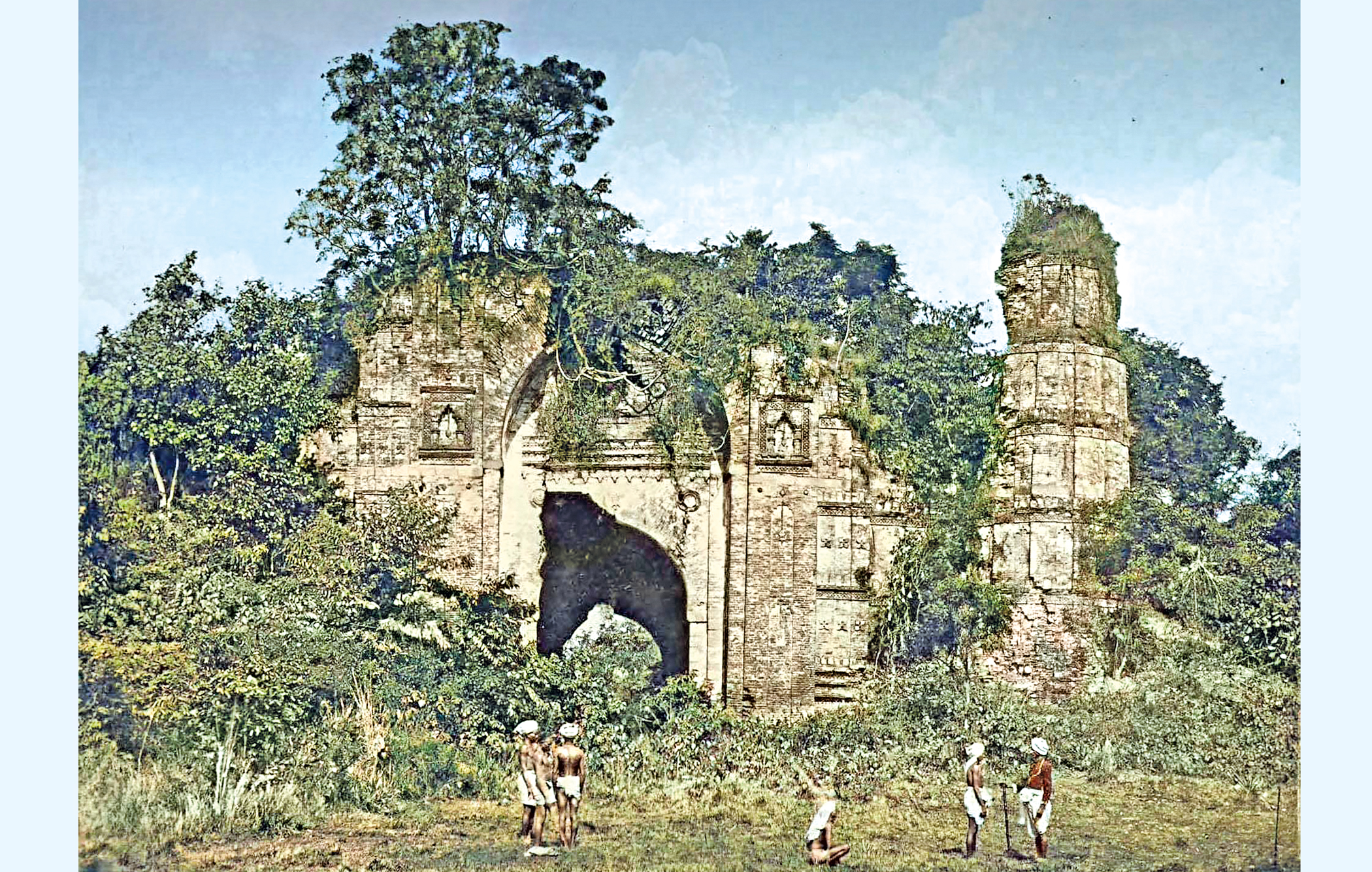
Closer to home, regional circumstances also changed. As the Arakanese Maghs confronted the Turkic Mughals, a cultural collision between a minor coastal power and a mighty agrarian behemoth became inevitable. When Arakanese captives were presented to him at court in 1613, Jahangir noted: ‘they are a bunch of animals that look like human beings. They eat every part of every kind of sea and land animal and in their religion nothing is forbidden’. The larger resources at the Mughals’ command (the Azo and Ahom campaigns of the 1660s involved 300,000 cavalry, 500,000 foot soldiers, elephants, camels and cannons, all sustained by numerous slaves), new methods of warfare (horses, artillery and cannons, as opposed to elephants and boats), new agrarian techniques and a fiscal policy that worked to the detriment of Bay of Bengal trade highlighted the differences between the two powers.
The unequal relationship became manifest when Thiri Thudhamma (r. 1622–1638) ascended the throne. During Mughal subahdar Fidai Khan’s tenure in the 1630s, the southeast became a war zone. The region was assigned as jagir, and practically no revenue was remitted to Delhi. At the height of their power, when Islamic cultural influence was supposed to be predominant at court, Arakanese kings no longer felt it necessary to proclaim their universalism by adopting Muslim names. From 1634 onwards, the practice of minting coins in Bengali, Persian and Arakanese was discontinued. Henceforth, only Arakanese was used.
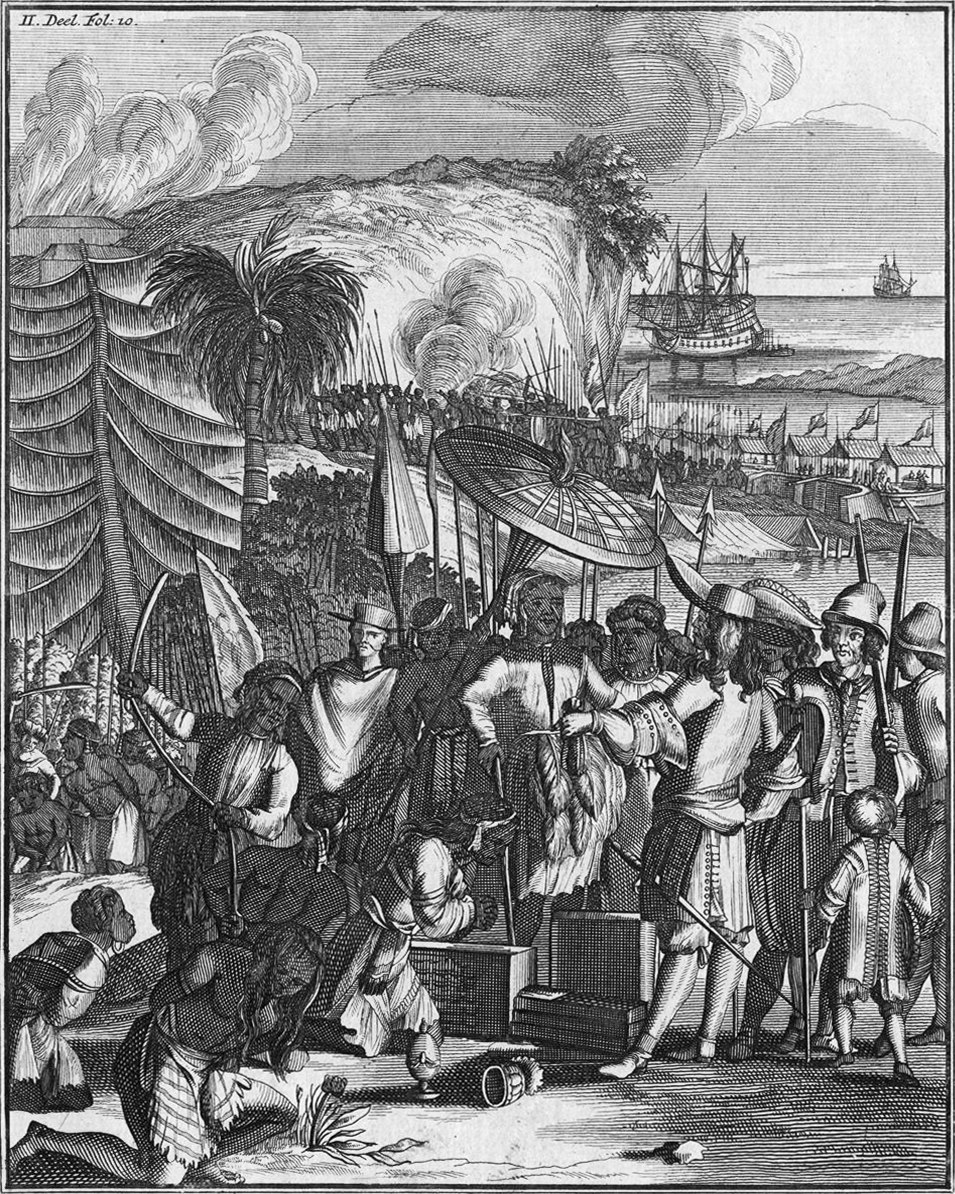
Arakan’s view of dwadas Bangla (the twelve delta polities) as part of its realm was a source of antagonism. In fact, it claimed territory extending as far as Kolkata and Murshidabad. The raids can thus be seen as an assertion of a former regional status based on Arakan’s integration into maritime and trans-Yoma networks, as well as a military ideology grounded in a vision of past territorial grandeur. The notion of a fixed border, an inevitable corollary of Mughal expansion, and the premise that Arakan breached it through its slave raids were simply unacceptable to Arakan, because it viewed territory as a fluid mandala. Naramitlha had surrendered dwadas Bangla in return for the Bengal sultan’s help in regaining his throne; when he was restored in 1428, the debt was paid, and he wanted the territories back. Nevertheless, while the sultanate lasted, relations remained amicable, and the sixteenth century saw no raids. But as the Mughals advanced into the delta, their civilisational rhetoric, closely bound up with their notion of territory (mulk, mamlikat), alienated Arakan. The promotion of Bengali literature and anti-Mughal rhetoric among Arakan’s Buddhists and Muslims can be seen as attempts by Arakan to build on regional Bengali sentiments to counter Mughal expansion.
The intensification of Magh raids was therefore a response to challenges to Arakan’s authority in the region. Despite their rhetoric and manpower, the Mughals could not stop the raids. The Mughal chronicler Shihabuddin Talish even commented that a hundred Mughal boats would flee if they sighted as few as four Arakanese boats!
IV
The ethnic factor was important in military reconfigurations and left its imprint on society. In 1638, Narapati of Arakan placed many Chittagong Muslims in his army to confront the Mughal subahdar, Islam Khan Mashadi. In 1644, he expelled Chittagong’s inhabitants and resettled them in Dhanyawaddy. A document from Chittagong dated June 1777 noted that ‘almost three fourths of the inhabitants of Rekheng are said to be natives of Bengal; or descendants of such’.
A study of the composition of Arakan’s army reveals how various ethnic groups sustained its war machine. The army consisted of some 40,000 to 50,000 men between the sixteenth and eighteenth centuries, including Rakhine, Bengali, Sak, Pathan, Persian and Moor soldiers. When Pegu was invaded in 1598–99, 65 per cent of the army was composed of non-ethnic Rakhines: Bengalis accounted for 16 per cent, Thets 13 per cent, Kanrans 10 per cent, and mercenaries and vassals 26 per cent.|
Jacques Leider demonstrated how the army’s composition changed over time. In the fifteenth and sixteenth centuries, it was mainly Arakanese, supplemented by some mountain peoples and Bengali mercenaries. During the sixteenth century, the army incorporated greater numbers of Portuguese mercenaries, and after Pegu’s defeat, a large number of Mons entered its ranks. In the seventeenth century, the army was staffed by Bengali Muslim mercenaries. At the time of the Bhulua campaign of 1610, the army numbered 60,000, equivalent to almost 40 per cent of the population. Guns were also imported in increasingly large numbers.
From the end of the sixteenth century, a shortage of bullion affected the entire Bay of Bengal world. During the seventeenth century, this scarcity became acute. Since the state did not have enough money to buy arms and pay its mercenaries, alternative sources of funding had to be found. The army was financed through grants of customs duties and rights to participate in the slave trade.
V
The ethnic element was not restricted to Arakan. From the mid-fifteenth to the early sixteenth century, northern mainland Southeast Asia became increasingly important geopolitically. Ethnicity was a recurring feature of developments in the region. These included the rise of the Maw Shan and their confrontation with Ming China around the 1430s–1440s; the expansion of Lan Na (Chiang Mai); the rise of the Shan states of Mong Mit and Mohnyin between the 1480s and 1527; Ava’s shift from its Shan base towards a Burman model, along with the adoption of the chakravartin political ideal; and the expansion of the Manipur and Ahom states.
The foundation myth of the Tai Ahom in Assam identifies its founder as Sukhapa, who marched into Assam around 1228–29 and conquered Kamrup around 1231. There are clear links between the Ahom and the Möng Mao (Pong) polity of Lu-chuan. According to Möng Mao legend, Sukampha became king of Pong in 777, and his brother Samlongpha invaded Cachar, Tripura, Manipur and Assam. The similarity between the lists of Ahom rulers and those of the Tai Mao, whose rulers share similar names, cannot be coincidental.
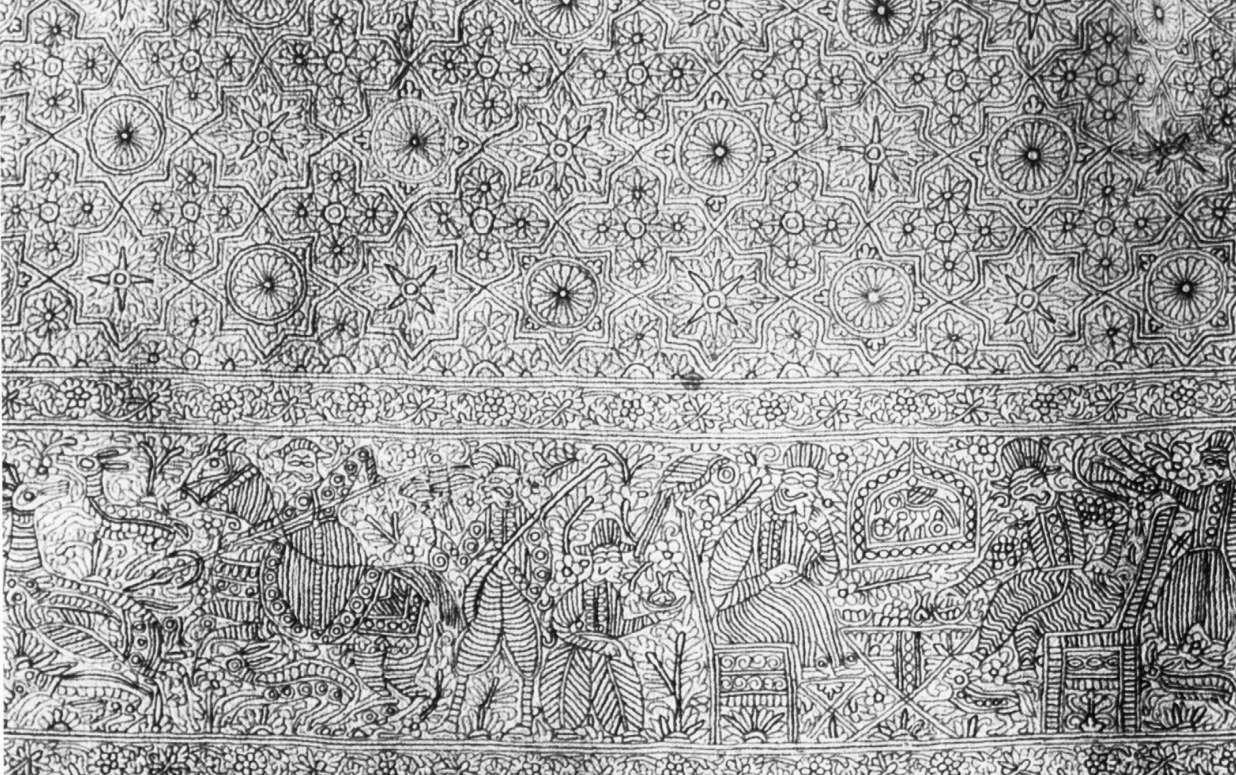
Expansionary wars led to new political and ethnic configurations. Ming China’s expansion destabilised the small Tai states in the Yunnan-Ava corridor. China now controlled the output of the Bawdin and Yadanatheingyi mines at Namtu, in and around Mogok, and the mines in Yunnan, which were traditional sources of silver, gold and tin for the region. When Ava reverted to Shan domination in the sixteenth century, the Shan dynamic became more significant for Arakan and Bengal. Yunnan’s silver and tin entered the region via Ava and Kamrup, and also through Tripura and Sylhet via Manipur. Ahom campaigns against eastern hill tribes such as the Naga, Chutiya, Abor, Dafla and Miri at this time reveal the need to renegotiate relations with the Shan corridor. Manipur’s wars against the Shan states can be understood as reflecting a desire to access vital trade routes, obtain Mogaung’s abundant jade and Nogmung’s amber and silver, and gain entry to Mohnyin’s ruby mines, which formed the basis of Ava’s wealth.
Notably, Arakan did not raid these polities. Ethnicity clashed with empire only in the southeast.
VI
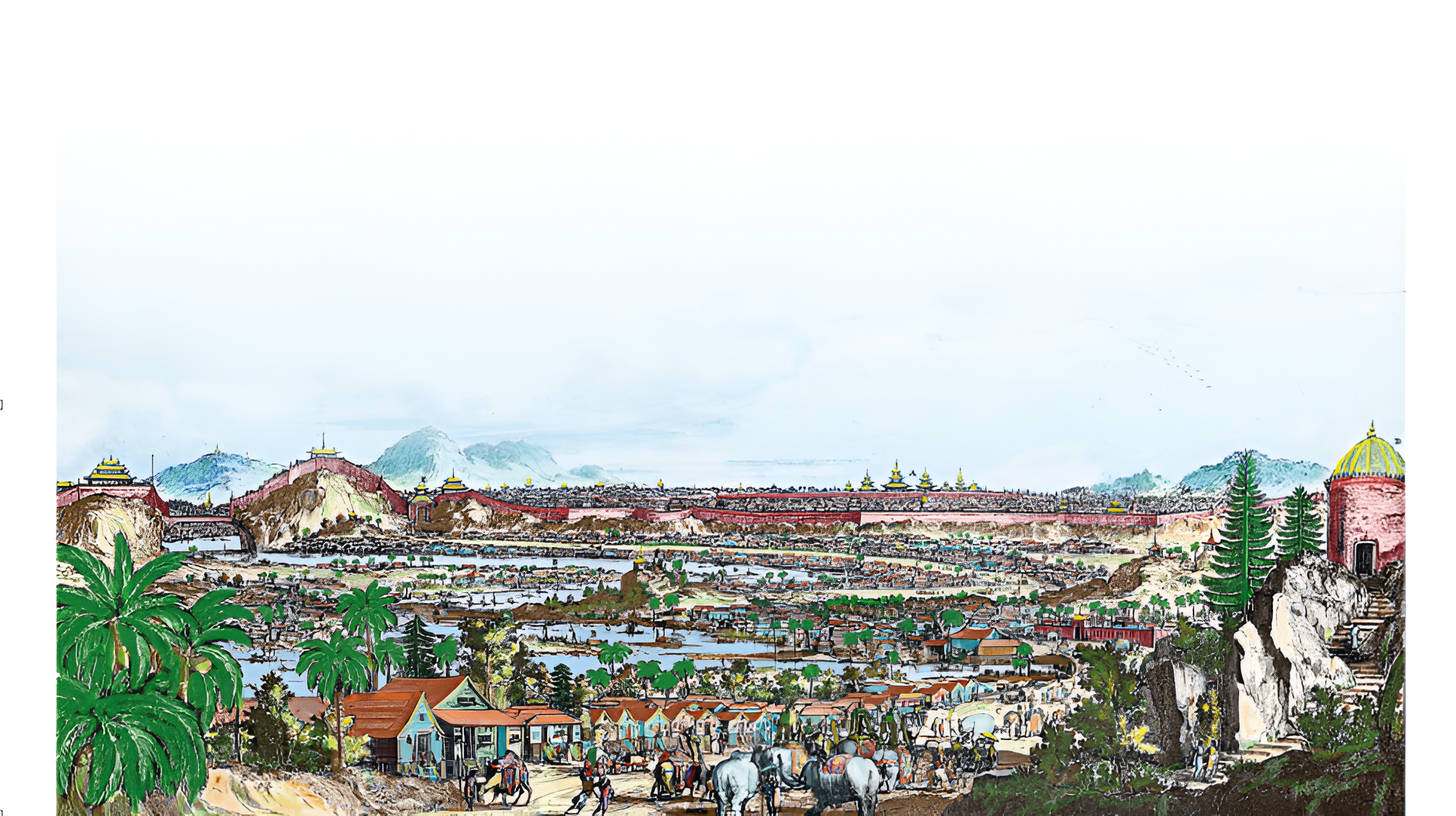
The chronic shortage of manpower within Arakan was yet another reason it engaged in the slave trade. Enslaved people were both state-owned and privately held. Slave ownership became a mark of status in Arakanese society. In the second half of the seventeenth century, Arakan introduced a new variant of the trade whereby nobles directly claimed enslaved people as captured booty. Similarly, instead of imposing a poll tax on imported slaves, the king directly claimed a share of the captives. It seems that skilled workers and craftsmen were selected for resettlement. Enslaved people were also used to clear forests for cultivation as the state sought to reshape the agrarian landscape on commercial terms. Wet-rice cultivation, which greatly increased agricultural output, was undertaken by enslaved Bengalis.
Shihabuddin Talish observed that ‘[o]nly the Feringi pirates sold their prisoners. But the Maghs employed all their captives in agriculture and other kinds of service.’ The document of June 1777 remarks: ‘Upon their arrival there (at Arakan), they were conducted to the rajah, or sovereign, who chose from among them, for his slaves, all the handicraftsmen, and most useful persons; amounting to about one fourth of the whole number: the rest he returned to the captors; who conducted them by ropes about their necks, to a market; and there sold them for twenty, to seventy rupee, each; according to their strength abilities &ca. The purchasers assigned them the cultivation of their lands, and other laborious employments; giving each person for his monthly support, only fifteen seers of rice’.
VII
Arakan’s extraordinary expansion had severe consequences not only in Bengal but also within Arakan itself. Raiding continued into the eighteenth century, but overstretched by its expansion, Arakan began to decline. It was conquered by Konbaung Burma in 1785, bringing an end to the Mrauk U dynasty, which had ruled the kingdom for almost 350 years. The raids had already ceased. However, as late as 1836, the American Baptist minister Reverend Howard Malcolm remarked on the persistence of slavery in Arakan. We do not know where the enslaved people came from. Perhaps they were descendants of the original captives from Bengal?
Rila Mukherjee is a historian and the author of India in the Indian Ocean World: From the Earliest Times to 1800 (Springer Nature, 2022) and Europe in the World from 1350 to 1650 (Springer Nature, 2025).
This is the concluding part of a four-part series on the slave trade in Bengal.
Send your articles for Slow Reads to slowreads@thedailystar.net. Check out our submission guidelines for details.
The missing daughters of colonial Bengal

How Nobel laureate Anne Carson discovered new possibilities within language

Dipankar Gupta speaks / The history of caste is not what we think

From al-Andalus to the Mughals: How empires become identity

From artificial intelligence to the artificial state: Is the trajectory inexorable?
157th Birth Anniversary of Mahatma Gandhi / Gandhi’s return to Noakhali
Why does Tagore still trouble Bangladesh’s idea of ‘us’?

Can Bangladesh make better use of its zakat money?
Three revolutions that reshaped the world