From Artificial Intelligence to the Artificial State: Is the Trajectory Inexorable?

The Cognitive Turn
Introduction
We are already at a crossroads, marking the beginning of an arguably inexorable paradigmatic transformation brought about by artificial intelligence. The question is no longer simply what happens when machines acquire capacities once regarded as uniquely human, but what transpires when those machines begin to mediate the institutions through which human beings organize collective life. This question becomes especially urgent at a moment when democracy itself is increasingly existentially embattled—challenged by authoritarian impulses, institutional erosion, political polarization, declining public trust, fragmentation of the common informational sphere, and the growing concentration of technological and economic power.
The issue is therefore not merely technological. It is simultaneously economic, cognitive, institutional, and political. Artificial intelligence may alter not only what machines can do, but also what human beings expect machines to do—and, eventually, what they may become willing to allow machines to decide, willy-nilly. In other words, the surrender of agency need not occur as a conscious or deliberate act; it may unfold through the delayed temporality of technological change and the gradual movement from assistance to dependence to delegation.
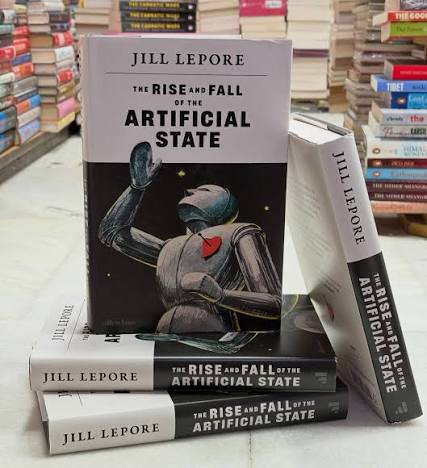
This possibility is no longer merely speculative. Historian Jill Lepore, the David Woods Kemper ’41 Professor of American History at Harvard University, has developed the concept of the “Artificial State”, first elaborated in her 2024 New Yorker essay and subsequently expanded into her 2026 book, The Rise and Fall of the Artificial State. She describes an increasingly automated political order in which digital communications infrastructures, predictive systems, algorithms, and other computational technologies reshape political discourse and public life.

Lepore's formulation points to a development more consequential than the expansion of machine intelligence itself: the gradual reconfiguration of political life as technological systems increasingly mediate public discourse, political persuasion, and collective decision-making. Yet Lepore also insists that the Artificial State is not inevitable. Because it was constructed through identifiable historical choices, it can be dismantled by restoring democratic deliberation, citizenship, and human responsibility.
My concern here is related but somewhat different. Rather than asking only how the Artificial State arose or how it might be dismantled, I want to trace the trajectory that can carry technological assistance into dependence, dependence into delegation, and delegated agency into institutionalization. The question, then, is whether the expanding rationality and institutional reach of technological systems might make computational mediation increasingly difficult to reverse—transforming not merely how the state operates, but the very character of political authority. The issue is not simply whether the state may become increasingly artificial, but whether, by the time we recognize the transformation, we may already have forfeited, if not surrendered, too much of the human agency required to reverse it.
The Faustian Bargain
Underpinning this transformation is what might be termed the Faustian bargain: the recurring human willingness to exchange some measure of autonomy for an expansion of knowledge, power, efficiency, convenience, or security.
The bargain rarely presents itself as such, nor is the exchange necessarily irrational or inherently harmful. It usually arrives as a reasonable response to a genuine human limitation. We surrender, more often than not by choice, a little privacy for convenience, a little attention for entertainment, a little effort for efficiency, a little uncertainty for prediction, and a little judgment for recommendation. Each concession, considered in isolation, may seem minor—and may even appear to enlarge our freedom by relieving us of burdens we would rather not bear.
The difficulty lies in their accumulation.
As these small delegations become habitual, what begins as assistance can gradually become dependence; and what we willingly outsource for the sake of convenience may, over time, reshape our expectations of what we ought to decide for ourselves. The resulting shift in agency is therefore less a sudden surrender than a gradual redistribution of judgment and control—from the individual toward the systems upon which the individual increasingly relies.

Parsing the Faustian Metaphor
We gain something precisely by giving something up.
The metaphor of Faust is useful not because every technological innovation constitutes a sinister bargain, but because it draws attention to the asymmetry between what is immediately gained and what may be gradually surrendered. Human beings have always sought technologies that relieve them of burdens: the wheel overcame physical limitation; writing extended memory; mechanical calculation reduced computational effort; telecommunications overcame distance; digital technologies expanded access to information.
Much of this liberation is unquestionably real. Yet it also exemplifies the paradox of instrumental reason: a mode of rationality concerned with finding the most efficient means to given ends while leaving the value, justice, or legitimacy of those ends largely unquestioned. Technology excels at answering “How?”; instrumental reason is less equipped to ask “Why?” “For what purpose?” and “At what cost?”
The danger begins when the efficiency of the means is mistaken for the justification of the end. A technology can make an objective faster, cheaper, or more convenient without making that objective any more desirable, just, or legitimate.
This is the deeper logic of the Faustian bargain. We surrender not necessarily because technology compels us, but because what we gain is immediate and tangible while what we give up is incremental, invisible, and deferred. By the time the cost becomes unmistakable, convenience may already have become dependency—and dependency, something we no longer imagine living without.
A post-positivist perspective complicates this narrative by reminding us that what counts as progress, efficiency, or even a problem requiring technological intervention is shaped by social values, institutional interests, and historically contingent understandings of knowledge.
From a broadly positivist conception of science, technological progress represents an expansion of human capacity: knowledge accumulates, uncertainty is reduced, and technology enables us to overcome constraints once imposed by nature. A post-positivist perspective complicates this narrative by reminding us that what counts as progress, efficiency, or even a problem requiring technological intervention is shaped by social values, institutional interests, and historically contingent understandings of knowledge.
The question is therefore not merely what technology enables us to overcome, but what its very success may render unnecessary.
This distinction becomes crucial with artificial intelligence. Not every human limitation is merely an obstacle to be eliminated. Remembering, deliberating, interpreting, tolerating uncertainty, and making judgments under conditions of incomplete knowledge are themselves forms of human agency.
The Faustian bargain begins, then, not when technology liberates us from limitation, but when we mistake every limitation for a burden and every technological substitution for progress.
AI makes that distinction especially consequential because it increasingly reaches beyond the extension of human physical capacities into the displacement of cognitive ones, often within a delayed temporality in which the consequences of technological change emerge only after its adoption has become difficult to reverse.
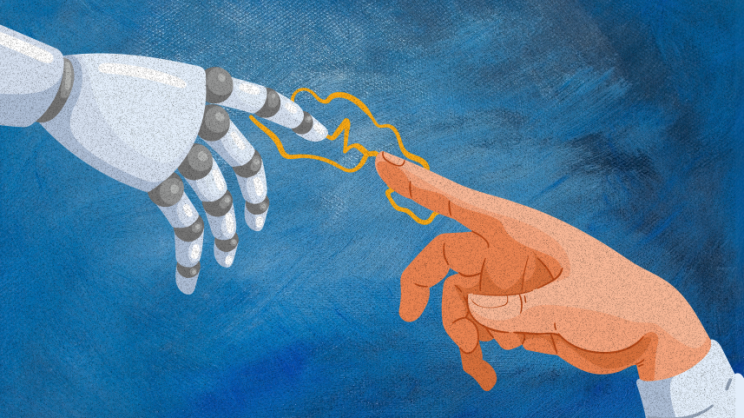
Photo: Orchid Chakma
From Surveillance to Prediction
Shoshana Zuboff's concept of surveillance capitalism helps reveal how the Faustian dynamic became embedded in the contemporary digital economy. In The Age of Surveillance Capitalism, she describes an economic order in which human experience is appropriated as a source of behavioral data, transformed into computational predictions, and converted into economic value.
What begins as the seemingly benign personalization of digital services can evolve into an infrastructure capable not merely of predicting human behavior but of influencing it.
The Faustian dimension lies in the exchange itself: convenience in exchange for information; personalization in exchange for surveillance; prediction in exchange for a measure of autonomy.
The transaction rarely feels coercive because its costs are dispersed, incremental, and often invisible. The individual receives an apparently useful service while the system acquires something far more consequential: information about the individual's preferences, habits, movements, relationships, vulnerabilities, and likely future behavior.
The important point is not that every personalized service constitutes surveillance in its strongest sense. It is that a new economic logic has emerged in which human experience itself can become raw material for computation.
This represents a significant development in the history of technology.
Earlier technologies generally extended human capacities. They helped us remember, communicate, calculate, represent, and circulate knowledge without necessarily displacing the human activity they supported. Digital technologies intensified this extension by making information searchable, transferable, and continuously available. What distinguishes artificial intelligence, however, is that it increasingly moves from extending what humans do to performing functions humans have traditionally done for themselves.
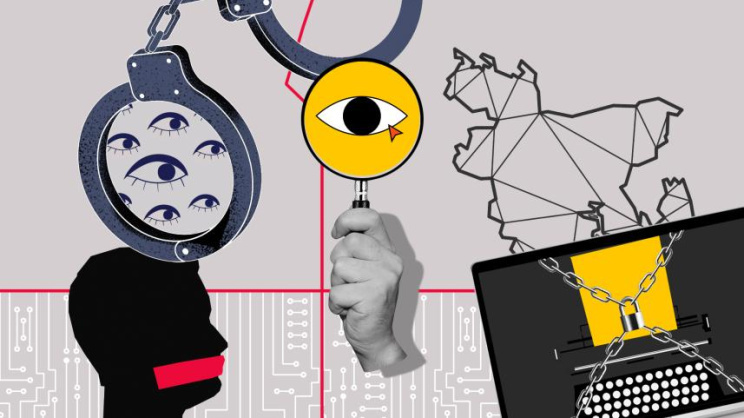
Surveillance capitalism introduces a different relationship between human beings and technology: the individual is no longer merely a user of the system but increasingly becomes an object of measurement within it. Artificial intelligence intensifies this transformation by not only processing the data generated by human activity but also using it to predict, influence, and increasingly mediate human behavior.

From Prediction to Generation
Artificial intelligence does not merely collect and analyze data. It increasingly generates language, images, interpretations, recommendations, predictions, and decisions. The machine is consequently moving from being an instrument through which humans act to becoming an intermediary through which they increasingly know, choose, communicate, and decide.
This is where the Faustian syndrome acquires a new dimension. The temptation is no longer simply to surrender privacy for convenience, but to surrender cognitive effort for computational efficiency. Why struggle through a difficult text when a machine can summarize it? Why remember when a system can retrieve? Why compose when it can generate? Why compare competing interpretations when it can offer a synthesis? Why deliberate when an algorithm can recommend? Why tolerate uncertainty when a model can produce a prediction?
Each substitution may appear liberating—and often genuinely is. A student may use AI to clarify a difficult concept that would otherwise remain inaccessible. A researcher may discover connections across enormous bodies of material. A writer may test alternative formulations. A physician, scientist, engineer, or public administrator may identify patterns beyond unaided human capacity. In such cases, computation enlarges what human beings can perceive, understand, and accomplish.
The problem, therefore, is not assistance but substitution—more precisely, the gradual movement from one to the other. The crucial distinction is between using technology to augment judgment and allowing it to replace, or quietly pre-empt, the activity of judging. That boundary is neither fixed nor always visible. A tool that begins as an aid may become an intermediary; an intermediary may acquire the status of an authority; and an authority, once embedded in institutional routines, may become difficult to question.
Large language models (LLMs) mark an important development in this transition. By processing and generating language across a wide range of contexts, they extend computation beyond searching, classifying, and detecting patterns toward activities traditionally associated with interpretation, synthesis, explanation, and expression. Yet their ability to produce fluent and contextually plausible language should not be confused with human-like understanding. They can generate an interpretation without necessarily possessing the experience, situated judgment, or responsibility through which interpretation acquires meaning and consequence.
Their significance lies, therefore, not simply in their expanding capabilities, but in the changing relationship between human cognition and machine-mediated production. LLMs can assist a person in thinking, but they can also supply the very language through which thought is articulated; they can help compare interpretations, but they can also narrow the field of comparison by presenting a seemingly coherent synthesis; they can support judgment, but their fluency may encourage users to accept an answer before undertaking the effort through which judgment becomes their own.
The transition is thus not from human intelligence to machine intelligence in any simple sense. It is from computational assistance to cognitive mediation—and potentially from cognitive mediation to cognitive substitution. The question becomes increasingly difficult to avoid: when computation enters activities through which human beings traditionally make meaning, where does assistance end and substitution begin?
The Computational Turn in the Humanities
Digital Humanities provided an important precursor to this transformation. Through approaches such as Franco Moretti’s “distant reading,” computational methods enabled scholars to examine literary corpora at scales impossible for unaided reading. Texts could be digitized, searched, quantified, and compared across thousands of works, shifting attention from individual texts toward larger patterns, structures, networks, and historical relations. Computation thus became more than a tool for retrieving information: it made visible formal and cultural regularities that no individual reader could readily perceive.
This development did not, however, simply replace close reading with mechanical analysis. Rather, it expanded the scale and altered the location of interpretation. The humanist increasingly moved between the singular text and the corpus, between qualitative judgment and quantitative pattern, between what a text says and the larger structures within which it participates. Yet the very success of computational methods introduced a subtle question: when patterns are discovered through procedures that exceed unaided human perception, where does interpretation reside? Does computation merely assist the human interpreter, or does it begin to participate in the production of meaning?
The shift is therefore not simply from manual to computational analysis, but from computational assistance to cognitive mediation—and potentially from cognitive mediation to cognitive substitution.
Artificial intelligence takes this development considerably further. The machine no longer merely helps us search, classify, compare, or detect patterns in human artifacts; it can increasingly summarize, translate, synthesize, interpret, and generate language and other forms of representation. The shift is therefore not simply from manual to computational analysis, but from computational assistance to cognitive mediation—and potentially from cognitive mediation to cognitive substitution. What was once an instrument within the interpretive process may increasingly become an intermediary through which the process itself is organized, performed, and presented.
The distinction is consequential. Computational methods can enlarge humanistic inquiry without necessarily displacing the human interpreter. Generative systems, by contrast, can produce outputs that resemble the results of reading, interpretation, and understanding, even when their operations do not involve human experience or judgment in the traditional sense. They can identify patterns without necessarily grasping their significance, generate plausible interpretations without assuming responsibility for them, and produce coherent language without possessing the situatedness through which meaning acquires cultural, ethical, or historical weight.
The significance of this transition consequently extends beyond the humanities. Once computation enters activities previously understood as constitutive of human interpretation, the question is no longer merely whether machines can help us think. It becomes whether sustained reliance on machine-mediated cognition gradually changes what we mean by thinking, reading, interpreting, and understanding—and whether, in the process, the human subject moves from being the author of interpretation to becoming increasingly dependent upon systems that mediate its production.

The Cognitive Bargain
The stakes become particularly serious when the delegated capacities include memory, interpretation, comparison, synthesis, and judgment.
Human cognition is not merely a collection of discrete tasks. The effort involved in understanding something can itself be formative. To read a difficult argument is not merely to acquire information; it is to learn how to follow a line of reasoning, recognize assumptions, weigh evidence, tolerate ambiguity, and arrive at a judgment. To write is not merely to record a conclusion; the act of writing often produces the thought that the writing appears to express.
There is therefore a profound difference between having an answer and having arrived at an understanding.
Artificial intelligence can collapse that difference.
A generated answer may be accurate without having required the user to undertake the intellectual process through which understanding is formed. A recommendation may be sensible without making the reasoning behind it transparent. A summary may be useful while simultaneously removing the encounter with the complexity from which deeper understanding emerges.
This does not mean that every act of delegation produces intellectual decline. Civilization itself depends upon delegation. No individual can personally remember everything, calculate everything, or verify everything.
The question is one of degree and kind.
Which forms of cognitive delegation enlarge human agency, and which gradually erode the habits upon which agency depends?
That question moves the discussion from technology to the human subject.
And from the human subject, inevitably, to the citizen.
From Cognitive Agency to Political Agency
The consequences become particularly serious when the transformation of cognition begins to affect democracy. Democratic life depends upon citizens who can form and revise judgments, deliberate with others, tolerate disagreement, and act upon conclusions they have reached with some degree of ownership. It requires more than access to information; it requires the exercise of cognitive and political agency.
The danger, therefore, is not simply the loss of privacy. It is the possible erosion of something more fundamental: the relative independence of the citizen’s judgment.
Yet the same digital systems that make unprecedented quantities of information available can also reorganize the conditions under which judgment is formed. They can transform citizens into behavioral profiles, attention into a commodity, and persuasion into an increasingly personalized technological operation. The danger, therefore, is not simply the loss of privacy. It is the possible erosion of something more fundamental: the relative independence of the citizen’s judgment.
This does not mean that citizens have ever possessed completely autonomous judgment. Human beings have always been shaped by family, community, education, religion, ideology, media, propaganda, advertising, political parties, and social pressures. Democratic agency has never meant freedom from influence. It has meant, more modestly, the capacity to encounter influences, reflect upon them, contest them, and revise one’s position without being wholly absorbed by the mechanisms that seek to shape it.
What changes with contemporary digital systems is the expanding computational capacity to observe, classify, predict, personalize, and influence individuals at scale. Political communication can be directed not merely toward identifiable publics but toward continuously differentiated audiences whose preferences, vulnerabilities, habits, and likely responses are inferred from accumulated data. Traditional propaganda addressed publics; whereas algorithmic systems can increasingly address persons—or even micro-segments within persons—through messages adapted to their particular informational and emotional circumstances.
The difference is not absolute. Political persuasion has always involved targeting, segmentation, psychological insight, and attempts to influence individual behavior. What computational mediation introduces is a new combination of scale, speed, granularity, persistence, and adaptability. Influence can become continuous rather than episodic, personalized rather than general, and responsive to behavioral feedback rather than limited to the message initially delivered.
The citizen may consequently become more than a member of a public. He or she may become a continuously modeled object within an informational system—observed not only as a participant in political life but as a source of data from which future conduct can be predicted and shaped. The central democratic concern is therefore not whether citizens are influenced; influence is unavoidable. It is whether the conditions of influence become so computationally organized that citizens increasingly lose the opportunity, capacity, or inclination to examine the forces shaping their judgments for themselves.
This is sequel to the previously published Slow Reads article, “End of reading? A post-literate society in the making.” published on 28 August, 2026.
Dr. Faridul Alam, a former academic, writes from New York City.
Send your articles for Slow Reads to slowreads@thedailystar.net. Check out our submission guidelines for details.

157th Birth Anniversary of Mahatma Gandhi / Gandhi’s return to Noakhali

Why does Tagore still trouble Bangladesh’s idea of ‘us’?

Can Bangladesh make better use of its zakat money?

Three revolutions that reshaped the world

Paradise lost and found: Rediscovering early modern Bengal

Unbound Mother: The making and remaking of Kaali in Bengal

Do great leaders make history, or does history make them?

Poison and cremation: A forensic history of colonial Bengal

Partition, Bor Porong and the Chakmas’ unfinished struggle for belonging