


A homeowner’s guide to smart security

A home is supposed to be a sanctuary. For most Dhaka residents, that belief once rested on a simple set of assurances: a boundary wall, a collapsible iron gate, and a darwan with a torch. Today, there are no longer enough.
A string of apartment break-ins across the capital has forced residents to look more closely at the security arrangements they had taken for granted. The Pallabi incident involving young Ramisa Akter was the most harrowing of recent examples—it exposed how deeply vulnerable a home can be even within a seemingly closed residential compound. Police data showing a spike in daylight thefts and targeted home invasions has done the rest: for a growing number of Dhaka families, residential security has stopped being the building committee's problem and become a personal one.

The Anxiety Behind the Camera
The post-July 2024 rise in urban crime did more than raise an alarm. It changed who walks through the door of a tech shop. Md. Iqbal Bahar, Branch Manager at Star Tech, describes the shift plainly: "Nobody wants a system that simply shows them how a crime happened after the damage is done. Today's buyers want real-time alerts, human detection, two-way audio—they want to respond, not just record." The walk-ins at his showroom are no longer corporate procurement managers.

Cutting the Cord
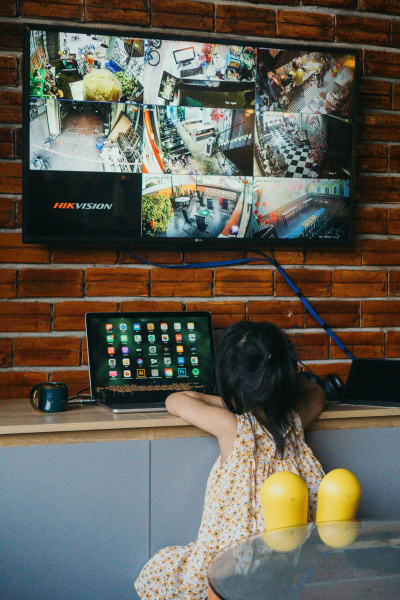
Two setups dominate the market. Traditional analog CCTV packages, bundled with a DVR, coaxial cabling, and a dedicated monitor, remain relevant for building management committees overseeing large compounds. For individual apartments, the standalone smart Wi-Fi camera has become the clear first choice.
Md. Sabbir, a sales representative at Star Tech BD, puts it plainly: "Most apartments don't have the space for a traditional CC camera setup with a monitor and DVR. Wi-Fi cameras from Tapo, EZVIZ, IMOU, and Meari connect directly to your phone—you watch the live feed from anywhere." He notes that since last year, the clearest pattern he has seen is dual-income families buying indoor cameras specifically to monitor their children and caretakers during working hours. Ikram Hossain, a homeowner in Shyamoli, is one of them—their two-year-old stays home in the care of a caregiver. "I'd be in a site meeting, wondering if my son was okay, with no way of knowing short of calling and interrupting everything," he says. He eventually installed two indoor Wi-Fi cameras and a video doorbell. The cameras, a video doorbell, and a fingerprint lock with guest OTP access gave him what he calls "a whole category of anxiety removed."
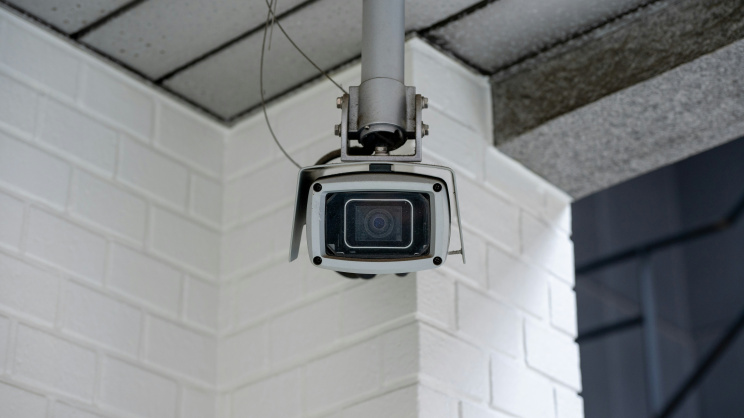
The features at the entry price point—360-degree pan-and-tilt, AI human detection, two-way audio, color night vision—would have been premium specifications three years ago. Indoor units start from around Tk 2,300; while outdoor models designed for Dhaka's weather begin from Tk 4,000. On storage, most buyers skip cloud subscriptions and use a memory card inside the camera instead.
What the Market Offers
For apartment owners looking to secure their own unit without overhauling the building's infrastructure, these products represent the current accessible range across Dhaka's tech markets:
| Security Enhancement | Popular Models in BD | Standout Smart Feature | Estimated Price Range (BDT) |
| Indoor Wi-Fi Cameras | Xiaomi C300, TP-Link Tapo C202 | 360° pan/tilt, AI human motion tracking, two-way audio. | 2,000 – 5,500 |
| Outdoor Smart Cameras | TP-Link Tapo C500, Imou Bullet 2C | Weatherproofing (IP66), active defense sirens, color night vision. | 3,500 – 11,000 |
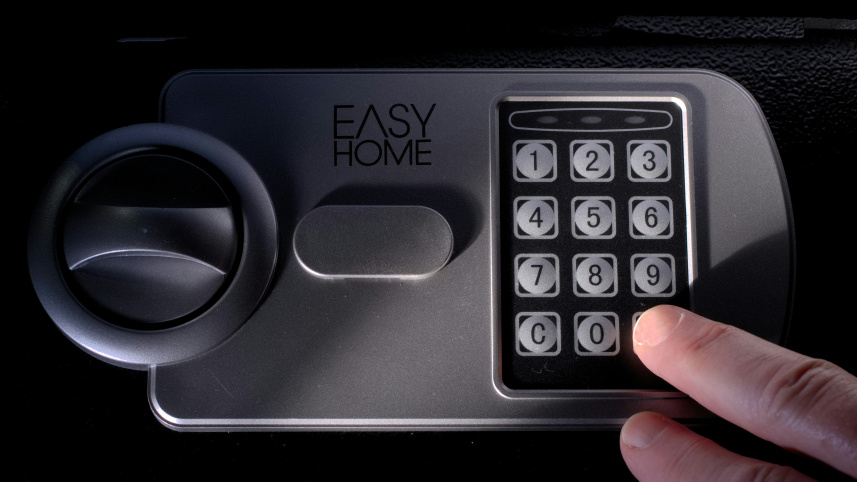
| Biometric Smart Locks | SmartX SX-628, EZVIZ DL05, Stata Bolt | 5-in-1 unlocking (Fingerprint, Card, App, Temporary OTP for guests). | 8,500 – 35,000+ |
| Smart Video Doorbells | Tuya Wi-Fi Bell, Eufy Security Bell | Instant video call to phone when rung; automated motion logging. | 4,500 – 16,000 |
| Magnetic Door Sensors | Verbex AW-300, Tuya Zigbee | Sends a real-time mobile push alert the second a door/window is breached. | 800 – 2,500 |
Beyond cameras, the market offers smart video doorbells, door and window sensors, and biometric smart locks with temporary guest OTP features which are all manageable through a single smartphone app.
The Costs Behind the Cost
Hardware prices have become genuinely accessible, but secondary costs tend to arrive only after the purchase. For traditional IP systems, installation runs Tk 500 to Tk 1,000 per camera. Extra Cat6 cabling costs Tk 20 to Tk 45 per running foot, and PVC casing to protect wiring from moisture and building rodents adds another Tk 15 to Tk 30 per foot—often pushing the total Tk 1,500 to Tk 2,000 higher before the first camera is even live.
For Wi-Fi setups, the critical hidden cost is simpler but easy to overlook: a compact UPS for the home router, priced between Tk 1,500 and Tk 3,000. During load-shedding, if the internet drops for even a few minutes, every smart camera in the apartment goes completely dark.
Dhaka's new reality is uncomfortable, but it has produced a market with practical answers. The technology to genuinely secure a home—to see who is at the door, know when a caretaker arrives, get a push notification when a window opens—is no longer out of reach. The question is not whether to invest. It is only a question of which layer to start with.
 For all latest news, follow The Daily Star's Google News channel.
Comments