


Walking the hidden paths of Morocco
Nearly 700 years ago, a young man from Tangier set out on a road that would not let him rest for almost 30 years. Ibn Battuta crossed deserts and empires and, near the end of his wandering, took a long detour through the hills above Sylhet to meet a saint named Shah Jalal, who rose and embraced him. Today, if you fly out of Dhaka, you leave from Hazrat Shahjalal International Airport, and if you land in northern Morocco, you arrive at Tangier Ibn Battouta. Two airports, two countries, two men who once sat together in Bengal. The road between us is older than we think.
I came to Morocco for an engineering project, expecting to know it the way you know a worksite. Instead, the country took me by the sleeve. What follows is an invitation to walk a little of it with me, because the Morocco worth knowing is not the postcard. It is the one you meet on the road.

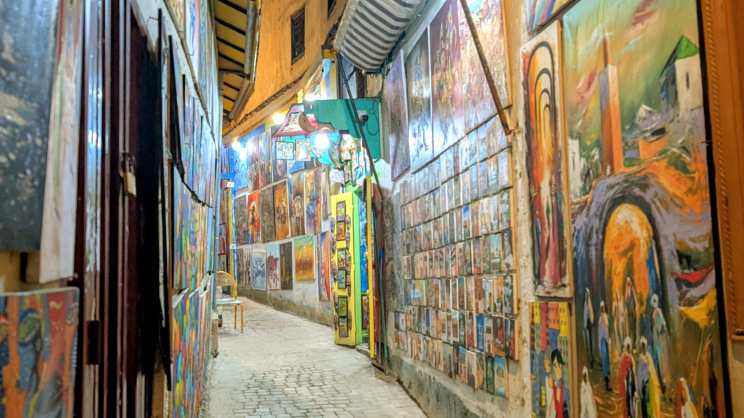
Picture leaving the Atlantic coast and driving inland. First, Fes, that great medieval maze where the lanes are too narrow for cars and a donkey still has right of way. Then Meknes and, beyond it, Volubilis, where Roman columns stand in a field of wildflowers as if the empire had only just stepped out. Near the white town of Moulay Idriss Zerhoun, two hills climb like a held breath, one of the holiest places in the country, named for the man who brought Islam to Morocco.
Beyond the postcard
You may mean only to pass through. You will not be allowed to. On the day of Eid a family pulled me into theirs, and I spent the hours with their children, sticky-fingered and laughing, in a town where I knew no one. I was far from my own family, in a country not my own, yet it was unmistakably Eid: the same prayers and the same sweetness in a different tongue. Moroccans give hospitality the way other people give directions, instinctively, as though your comfort had simply become their responsibility.
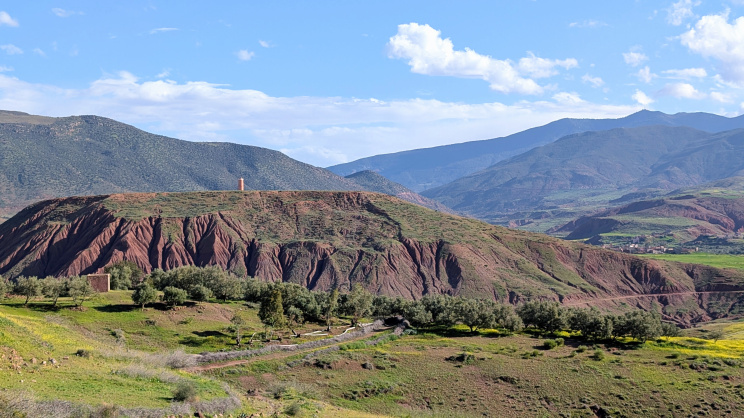
Drive on, and the land begins to climb. There is a night I will not forget at a petrol station in Azrou; nothing glamorous about it, only the tea pressed into my hands by strangers. The next morning brought cedar forests where wild monkeys come down to the roadside, and then Ifrane, a startling Alpine village of pitched roofs and tidy streets that King Hassan II raised out of the Middle Atlas Mountains. Higher still came the mountain lakes, the descent through Azilal to Demnate and the rock bridge at Iminifri.
Two braided stories
It is in these mountains that a second Morocco reveals itself. This is Amazigh country, the people the world once called Berbers, who were here long before the Arabs and remain the deep roots of the nation. On the coast you get by in Darija, the Moroccan Arabic that bends and clips its words until it is nearly a language of its own. In the Atlas, the air carries Tamazight instead, with its own ancient script, Tifinagh, which you notice on the road signs once you know to look. Morocco is not one story but two braided together, and the higher you climb, the more clearly you hear the older one.
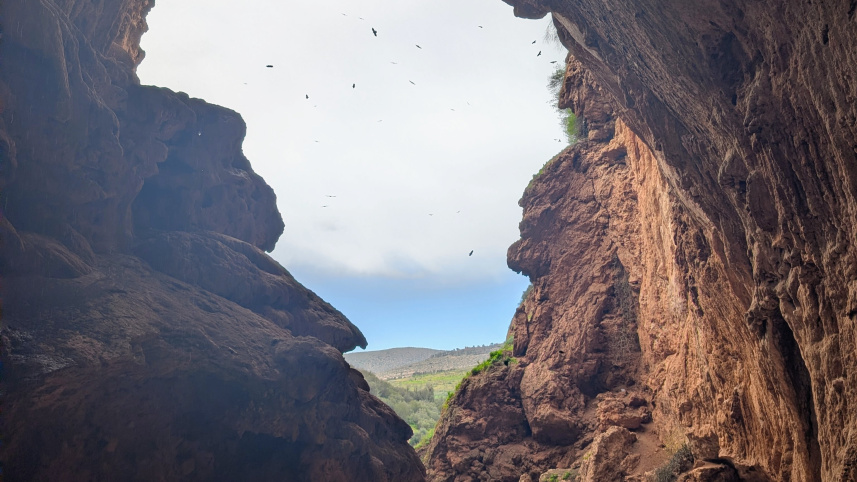
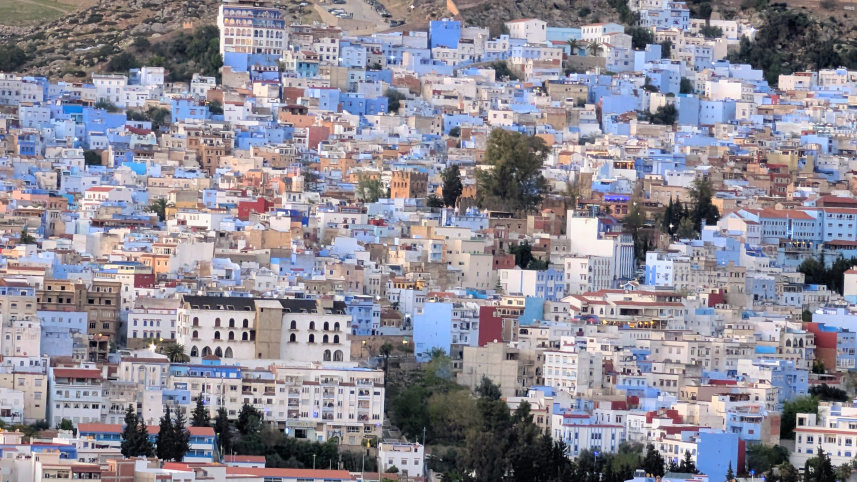
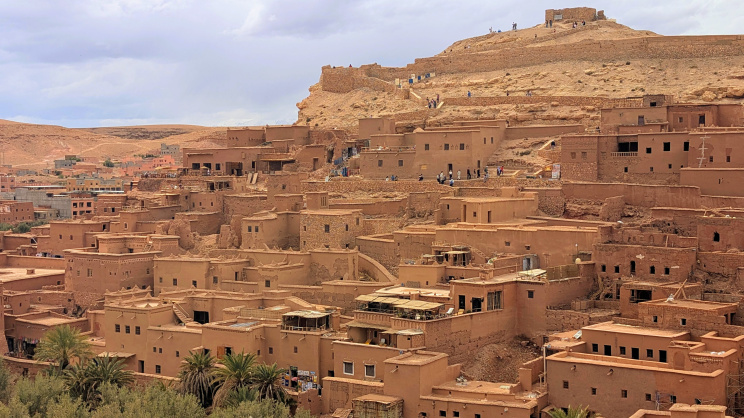
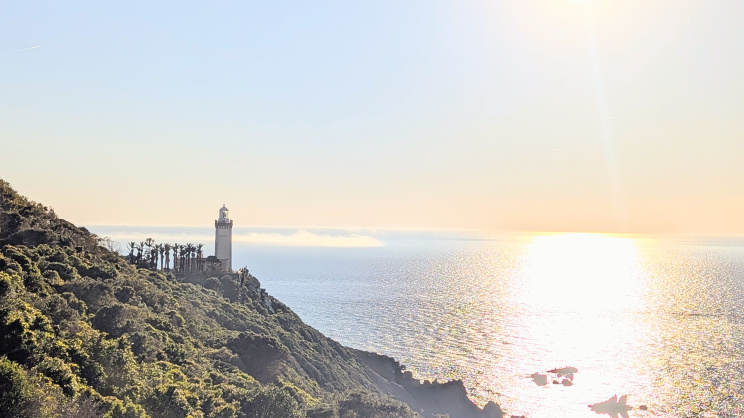
The road keeps giving. East from the high peaks runs one of the most beautiful mountain passes in the country, twisting through the treacherous Atlas to Ouarzazate, the gateway to the Sahara, and the earthen towers of Ait Ben Haddou, where Gladiator was filmed. West lies the windswept calm of Essaouira and Agadir. Then far north to Tangier, where the Strait of Gibraltar lays Europe across the water like a rumour. In The Alchemist, Coelho sends a shepherd boy through this very city, chasing a treasure he will finally find back where he began. Here too is the museum to Ibn Battuta, and the symmetry of it lands: a Bangladeshi standing in the hometown of the man who once travelled to Bengal. Beyond lie Tetouan, the blue lanes of Chefchaouen, and the waterfalls of Akchour.
The gift of walking
Through all of it run the same small pleasures, and they are the ones to come for. Tajine lifted off a single shared dish. Couscous on a Friday. Msemmen, the flaky folded bread, is torn and drowned in honey. And always, everywhere, mint tea, poured from a great height, sweet enough to stand a spoon in, and never quite optional.
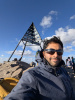
I read Coelho's The Pilgrimage after these travels, and it named something I had felt without words. Coelho walks the old road to Santiago expecting a sword at the end and learns slowly that the road itself was the gift, that the walking mattered more than the arriving. The climb to the summit of Mount Toubkal, the highest peak in North Africa, asked everything of me, and standing at the top, I understood the summit was never the point. The long road had been the point all along.
So consider this an invitation. Ibn Battuta's road still runs between Tangier and Bengal. You only have to set out.
 For all latest news, follow The Daily Star's Google News channel.
Comments