Can India and Bangladesh build a more equal economic partnership?

India and Bangladesh cannot escape geography. Nor should they want to.
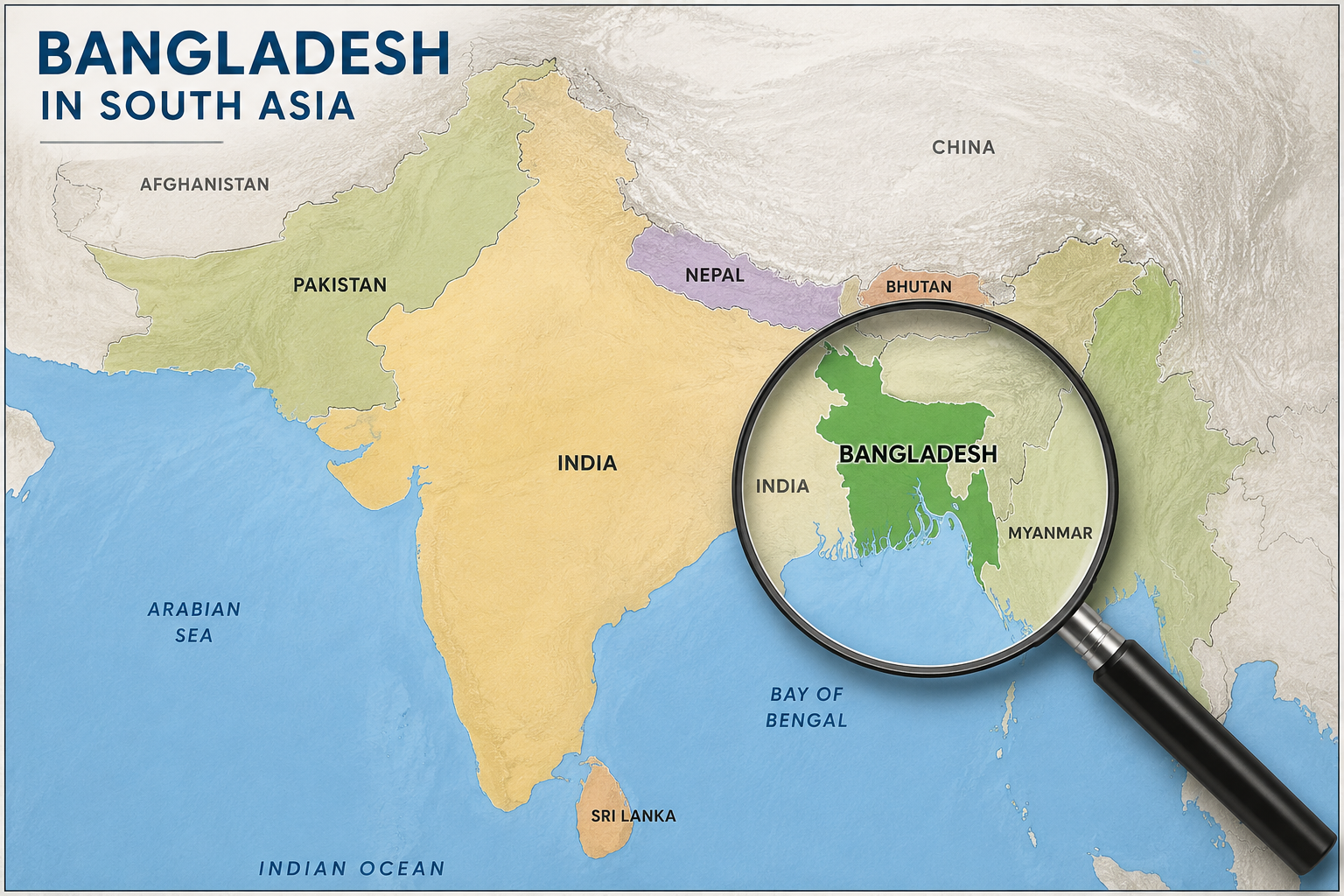
Few neighbouring countries possess such a compelling economic case for cooperation. Bangladesh provides India’s landlocked Northeast with its most economical access to the Bay of Bengal. India offers Bangladesh an enormous neighbouring market, a major source of raw materials and intermediate goods, electricity, investment, and overland access towards Nepal and Bhutan. They share rivers, railway networks, energy infrastructure, supply chains and a border of more than 4,000 kilometres.
Yet geography's significance extends beyond opportunity. It confers leverage, influence, and power—an increasingly important reality today.
On August 10, Prime Minister Tarique Rahman, meeting India’s new High Commissioner Dinesh Trivedi, emphasised the need to create a “conducive environment” for advancing bilateral relations. The meeting took place against the backdrop of the continuing dispute over Sheikh Hasina’s presence in India and Dhaka’s request for her extradition. New Delhi, meanwhile, reiterated its desire for a “positive, constructive and forward-looking” relationship.
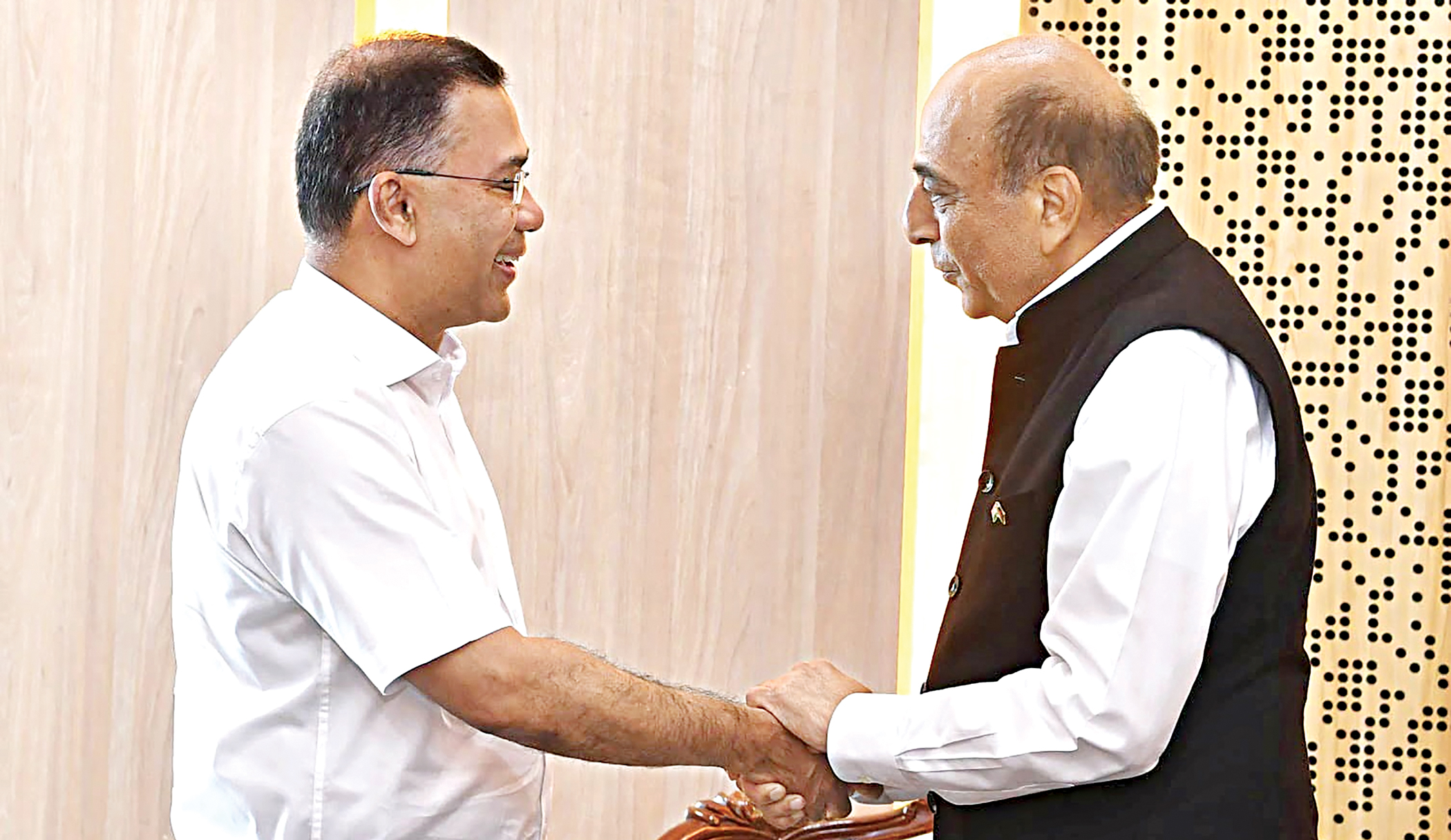
This provides an opportunity to move beyond another temporary political reset.
What India and Bangladesh need is a new economic compact—one that moves the relationship from asymmetric dependence towards rules-based interdependence.
The numbers tell only part of the story
The merchandise trade imbalance is substantial.
According to the Government of India’s latest published bilateral trade figures, India exported about $9.73 billion worth of goods to Bangladesh in FY2025–26 up to February 2026, while importing about $1.62 billion worth of goods from Bangladesh over the same period. Total bilateral merchandise trade over that period was about $11.35 billion. The imbalance is large, but the deficit itself should not become the centrepiece of Bangladesh’s economic grievance.
I made essentially the same argument more than 25 years ago.
In my 2000 study, “Trade Relations with SAARC Countries and Trade Policies of Bangladesh,” I examined Bangladesh’s trade relationship with India in considerable detail. Even then, Bangladesh had a large bilateral trade deficit. I argued that geography, differences in the structures of the two economies, Bangladesh’s dependence on imported intermediate goods, tariff and non-tariff barriers, and the enormous disparity in productive capacity all mattered in explaining that deficit.
National sovereignty is not strengthened by interpreting every interaction with India as domination. Geography cannot be changed. Nor can the enormous disparity in economic size between the two countries.
The fundamental economics have not disappeared.
Bangladesh imports cotton, machinery, chemicals, food products, industrial inputs, and other goods from India because Indian producers often have a combination of proximity, scale, and cost advantages. Some of those imports are subsequently embodied in Bangladeshi exports to Europe, North America and elsewhere.
So, a bilateral deficit is not, by itself, evidence of exploitation.
The more important question is: why has Bangladesh been unable to exploit the Indian market to anything approaching its potential?
Here, the evidence is striking. A World Bank analysis of Bangladesh-India trade and connectivity estimated that a bilateral free trade agreement could increase Bangladesh’s exports to India by 182 percent; if transaction costs were also reduced through improved connectivity, the increase could approach 300 percent.
That should change the policy conversation.
Bangladesh does not primarily need to import less from India. It needs to export much more to India.

I studied SAARC’s promise. We still have not solved the underlying problem
The broader failure is not new.
In my 2001 article in the Journal of Asian Economics, “Is SAARC a Viable Economic Bloc? Evidence from Gravity Model,” I used a gravity-model framework to examine whether South Asian countries were trading with one another at levels justified by their economic size and geographical proximity.
The answer was disappointing.
The results suggested that SAARC countries had not achieved the trade-creating benefits that regional integration should have produced. Geography created the potential for much greater regional trade, but politics and weak institutions prevented it from happening. A quarter-century later, the diagnosis remains remarkably familiar.
The World Bank’s South Asia regional trade analysis notes that intraregional trade accounts for barely 5 percent of South Asia’s total trade, compared with about 25 percent in ASEAN. It estimates that actual regional trade remains far below its potential.
That is an extraordinary indictment of South Asian political economy. The problem is not geography. It is how we govern geography.
When interdependence becomes hegemony
This brings us to the politically sensitive question of Indian hegemony.
The term is often used too casually in Bangladesh. Not every Indian investment is hegemonic. Not every trade deficit signifies domination. Not every disagreement proves a conspiracy.
But Bangladeshis should not pretend that the relationship is symmetrical.
India’s economy, military capacity, population and global diplomatic weight are vastly larger. India is upstream on many of the rivers Bangladesh depends on. Indian territory influences Bangladesh’s physical access to Nepal and Bhutan. Bangladesh imports essential goods, raw materials, and electricity from India.
In political-economy terms, this produces asymmetric interdependence.
Hegemony begins when that asymmetry can be converted into discretionary political leverage.
Bangladesh possesses leverage too. Its geography offers India enormously shorter and cheaper routes connecting the Northeast with the Bay of Bengal and the rest of India. Chattogram and Mongla ports have strategic economic value for India’s northeastern states. This should create bargaining space for both countries.
Bangladesh possesses leverage too. Its geography offers India enormously shorter and cheaper routes connecting the Northeast with the Bay of Bengal and the rest of India. Chattogram and Mongla ports have strategic economic value for India’s northeastern states. Bangladesh is also a large consumer market and an increasingly important manufacturing economy on India’s eastern flank.
This should create bargaining space for both countries. Yet recent experience illustrates the fragility of arrangements that depend too heavily on political goodwill.
In April 2025, India withdrew a transshipment facility that had allowed Bangladeshi exports destined for third countries to pass through Indian land customs stations to Indian ports and airports. India cited congestion, delays and higher costs for its own exporters. Whatever the commercial rationale, the episode demonstrated how quickly connectivity can become entangled with a deteriorating political relationship.
A month later, India’s Directorate General of Foreign Trade imposed new port restrictions on several Bangladeshi products. Ready-made garments could no longer enter through Indian land ports and were restricted to the Kolkata and Nhava Sheva seaports.
Bangladesh had itself introduced restrictions affecting some Indian products. That sequence should worry policymakers in both capitals. Economic integration cannot flourish if every political disagreement risks becoming a customs barrier.
Adani is not merely a power-sector story
The Adani agreement is perhaps the clearest illustration of the intersection between economics, politics and bargaining power.
Under a 25-year agreement signed in 2017, Adani Power supplies Bangladesh with electricity from its 1,600 MW Godda coal-fired plant in Jharkhand.
The plant is important to Bangladesh. That fact should be stated clearly.
As domestic natural-gas shortages constrained electricity generation, Adani supplied a record 8.63 billion kilowatt-hours to Bangladesh in 2025, equivalent to about 8.2 percent of the country’s total electricity supply.
But importance does not eliminate the need for scrutiny. It makes scrutiny more important.
A Bangladesh government-appointed National Review Committee reported in January 2026 that electricity from Godda was priced at a 39.7 percent premium over its nearest private-sector comparator. The committee estimated that the price being paid was roughly 50 percent above an appropriate benchmark, questioned coal pricing and the treatment of Indian corporate taxes, and identified serious anomalies in the procedures through which the agreement was awarded. Adani disputed the implications and stressed that it had continued supplying electricity despite substantial payment arrears.
The appropriate conclusion is not “India bad” or “Adani bad”. It is institutional.
Strategic infrastructure should not depend on opaque, supplier-specific arrangements whose commercial risks fall disproportionately on Bangladesh.
Future cross-border electricity purchases should, wherever feasible, involve competitive procurement, transparent price benchmarks, clear tax treatment and credible international dispute-settlement arrangements. Bangladesh should also increase imports of Nepalese and Bhutanese hydropower through the Indian grid. The goal should be a South Asian electricity market—not dependence on any single generator.
Water is an economic asset, not simply a diplomatic issue
The same political economy applies to water.
The 1996 Ganges Water Sharing Treaty expires in December 2026, and India has officially confirmed that discussions on its future are under way.
The negotiations should not be treated as another foreign ministry ritual.
Water determines agricultural output, fisheries, river navigation, salinity, groundwater recharge, livelihoods and food security. In economic terms, river flows are a form of productive capital.
The continuing absence of a Teesta agreement therefore carries an economic as well as a political cost.
India understandably has domestic federal constraints, particularly involving West Bengal. Bangladesh, however, cannot be expected to treat those internal constraints as a permanent explanation for the absence of an equitable arrangement.
The renewal of the Ganges treaty offers New Delhi an opportunity to demonstrate something larger: that India’s regional leadership can provide public goods to smaller neighbours rather than merely maximise bargaining advantage.
Leadership differs from hegemony.
The Hasina years contain two lessons, not one
It would be intellectually dishonest to describe the India-Bangladesh relationship under Sheikh Hasina as entirely one-sided.
There were major accomplishments.
Security cooperation improved significantly. Railway and road connectivity expanded. Cross-border power trade increased. The long-standing enclave question was finally settled through the implementation of the Land Boundary Agreement and the 2015 exchange of enclaves.
India also extended very substantial concessional credit. Its Ministry of External Affairs reports cumulative Indian lines of credit to Bangladesh of about $7.862 billion. Bangladesh has been the largest recipient of India’s development LOC programme.
But implementation has often been slow. Bangladesh and India had to review problematic projects, and Bangladesh considered reducing the size of portions of the credit programme because of implementation difficulties.
There is a second lesson.
A durable relationship between two states cannot be built around the political fortunes of one leader or one party.
A widespread perception emerged within Bangladesh that India’s Bangladesh policy had become excessively identified with Sheikh Hasina and the Awami League. When the Hasina government collapsed in August 2024, India discovered the strategic cost of insufficient political diversification.
China, meanwhile, moved rapidly to expand its engagement. Reuters reported before Bangladesh’s February 2026 election that Beijing was increasing investment, political outreach and strategic engagement as India’s influence declined.
India’s relationship must therefore be with Bangladesh, not with the Awami League, BNP, Jamaat or any individual government. Bangladesh should follow precisely the same principle in dealing with India.
Bangladesh’s response to Indian asymmetry should not be to run into China’s arms. China is an indispensable economic partner. But China should not become an instrument through which Bangladesh conducts its India policy. That would merely exchange one form of dependence for another. The correct strategy is multi-alignment.
Bangladesh should not replace dependence on India with dependence on China
Bangladesh’s response to Indian asymmetry should not be to run into China’s arms.
China is an indispensable economic partner. Bangladesh should welcome Chinese trade, investment, infrastructure and technology when projects meet appropriate economic, environmental and security tests.
But China should not become an instrument through which Bangladesh conducts its India policy. That would merely exchange one form of dependence for another.
The correct strategy is multi-alignment.
Bangladesh should deepen economic relations simultaneously with India, China, Japan, ASEAN, the European Union, the United States, the Gulf states and other major markets. Strategic autonomy does not require equal distance from every power. It requires the capacity to make decisions in line with Bangladesh’s own economic interests.
What a new economic compact should contain
The agenda is not difficult to identify.
First, India and Bangladesh should revive serious work on a comprehensive economic partnership agreement covering goods, services, investment, customs procedures, standards, digital commerce and dispute settlement.
Second, Bangladesh should focus less on reducing its imports from India and much more on removing the barriers that prevent Bangladeshi companies from accessing the Indian market. The World Bank’s estimate of a potential 182–300 percent increase in Bangladeshi exports should become a measurable policy target.
Third, transit must become a normal commercial service—not a political favour. India should pay economically justified charges for using Bangladeshi infrastructure and ports. Bangladesh should receive predictable transit rights through India to Nepal, Bhutan, and other markets.
Fourth, both countries should resist retaliatory trade policies. Customs access, port use and transshipment arrangements should be governed by durable treaties and transparent rules rather than the political temperature of the month.
Fifth, all major cross-border energy contracts should meet standards of competitive procurement, price transparency and independent review.
Sixth, the Ganges treaty must be renewed on a scientifically credible and climate-responsive basis, while the political obstacles surrounding Teesta should finally be confronted.
And finally, economic cooperation should be institutionalised so thoroughly that it survives changes of government in both Dhaka and New Delhi.
The goal should not be Indian dominance or Bangladeshi resistance to India. It should be something both more pragmatic and more ambitious: a relationship in which neither side needs political goodwill to obtain what transparent economic rules already guarantee.
India does not need a subordinate Bangladesh
Indian policymakers should consider a larger strategic argument.
India gains little from a weak, resentful or permanently suspicious Bangladesh.
A prosperous Bangladesh buys more Indian products. It supplies growing markets in India’s Northeast. It provides efficient connectivity between the Northeast and the Bay of Bengal. It contributes to regional political stability, energy security and maritime commerce.
For India, the most effective answer to China’s growing influence in Bangladesh is therefore not pressure. It is to become the more attractive partner.
That means recognising that regional leadership sometimes requires the larger country to carry more of the burden of creating trust.
Bangladesh must also be realistic.
National sovereignty is not strengthened by interpreting every interaction with India as domination. Geography cannot be changed. Nor can the enormous disparity in economic size between the two countries.
Bangladesh increases its bargaining power by becoming more competitive, diversifying its exports, strengthening institutions, developing alternative connectivity and attracting investment from multiple partners.
National dignity ultimately rests on economic capability.
Beyond 1971—and beyond 2024
Bangladesh should not forget India’s contribution to its liberation in 1971.
But gratitude for history and negotiation over contemporary national interests are not contradictory.
India should similarly recognise that 1971 cannot serve indefinitely as political capital against every subsequent bilateral disagreement.
The next chapter of India-Bangladesh relations should therefore be neither trapped in 1971 nor consumed by 2024. It should ask what India and Bangladesh want eastern South Asia to look like in 2040.
The ingredients of a regional growth corridor are already present: two enormous markets, ports on the Bay of Bengal, India’s Northeast, Nepal and Bhutan, shared rivers, cross-border power, railway networks, road corridors, manufacturing supply chains and millions of consumers.
The economics are compelling.
What is missing is the institutional architecture capable of converting geography into shared prosperity.
When I began studying Bangladesh’s regional trade relationships more than a quarter-century ago, my empirical research pointed to a paradox: South Asia was trading far below what its geography and economic potential suggested.
Twenty-five years later, we still have not fully solved that problem.
India and Bangladesh now have an opportunity to do so.
The goal should not be Indian dominance or Bangladeshi resistance to India.
It should be something both more pragmatic and more ambitious: a relationship in which neither side needs political goodwill to obtain what transparent economic rules already guarantee.
Dr M Kabir Hassan is Professor of Finance in the Department of Economics and Finance at the University of New Orleans. He is a Senior Fulbright Scholar, recipient of the 2016 IsDB Prize in Islamic Banking and Finance, a member of the AAOIFI Ethics and Governance Board, and Chairman of its Education Board.
Send your articles for Slow Reads to slowreads@thedailystar.net. Check out our submission guidelines for details.

Bangladesh First: Rethinking the relationship with India

A new political voice is emerging from the Rohingya diaspora. Why it matters

Bangladesh’s FDI puzzle: Why human capital, not red tape, is the real constraint
Will the Saudi Arabia-Turkiye-Pakistan Makkah Agreement create a new regional security order?

Why Bangladesh needs a regional strategy beyond SAARC
Why every protest matters: Lessons from Bangladesh, India and Nepal

Malaysia and Bangladesh want solutions. Is Myanmar ready for Rohingya return?

Michigan primary: How standing up to Israeli genocide could win Democrats Congress in November
Hormuz 2.0? The Six Degree Channel and Bangladesh's maritime security