Why Bangladesh needs a regional strategy beyond SAARC

On 15 July 2026, in Islamabad, the outgoing Secretary-General of SAARC paid a farewell call on Pakistan's prime minister. The day before, Deputy Prime Minister and Foreign Minister Ishaq Dar had told him that Pakistan wanted a revitalised SAARC, guided by the principles of its charter, to advance regional connectivity, sustainable development and the collective well-being of South Asia. Five months earlier, on 24 February in Dhaka, the same Secretary-General — Md Golam Sarwar, a Bangladeshi — had heard our own Foreign Minister, Dr Khalilur Rahman, reaffirm Bangladesh's commitment to revitalising the SAARC process. In June, in Colombo, he was calling for renewed engagement to re-ignite the organisation he had spent three years running.
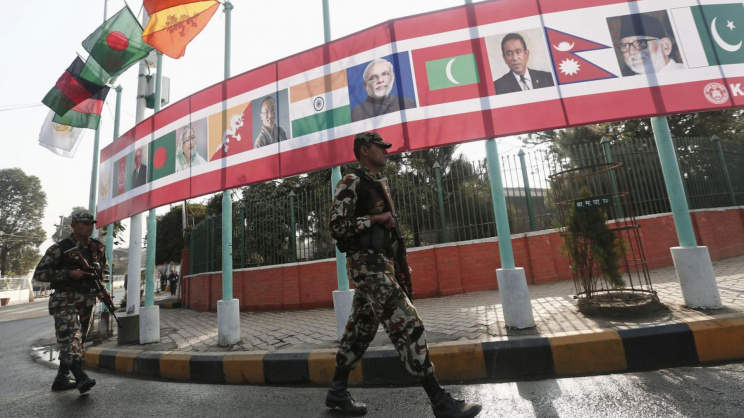
There is an irony here that is difficult to miss. A Bangladeshi diplomat has finished his term hearing sincere assurances from capitals across South Asia that everybody wants SAARC revived, yet he leaves office with no nineteenth summit scheduled. The last summit was held in Kathmandu in November 2014. India's Ministry of External Affairs, in its own June 2026 brief, says summit-level engagement has remained stalled because of the absence of consensus among member states and concerns over cross-border terrorism.
Twelve years. Repeated declarations of support. Still no summit.
The usual explanation is India-Pakistan rivalry, and that explanation has real force. But after spending three decades testing South Asian regionalism empirically, I have come to believe that it is incomplete in a way that matters greatly for Bangladesh's next move. Politics explains why SAARC was paralysed. Economics explains why it was so easy to paralyse.
The question I asked twenty-five years ago
In 2001, I published “Is SAARC a Viable Economic Block? Evidence from Gravity Model” in the Journal of Asian Economics. I asked a simple question: was SAARC a viable economic bloc? I tested the proposition with a gravity model. The answer was not what the regional rhetoric of the time wanted to hear. Geography by itself was not enough. Countries did not trade substantially more with their neighbours simply because their governments had signed a charter expressing a preference for regional cooperation.
I would state the conclusion more sharply today. Before constructing an institution, policymakers need to identify where trade complementarity already exists and where policy can realistically create it. SAARC largely reversed that sequence. We built the secretariat first, enlarged the political ambition, negotiated a preferential trade arrangement and eventually began talking about a common market. What we never built underneath those ambitions was a sufficiently dense layer of firms, factories, financiers and workers whose economic interests depended on the arrangement surviving.
What the updated numbers show
I have now revisited that question with data and methods that were not available to us in 2001. In work with Benito Sanchez and Mohammad Rezoanul Hoque, I re-estimated the gravity model using the CEPII BACI bilateral trade database for 1995-2023 — a global sample of 20,910 country pairs and 584,063 pair-year observations — with Poisson pseudo-maximum-likelihood estimation, now the standard approach in structural gravity. The advantage of using a global sample is important. It moves the question beyond whether South Asian countries trade with one another at all and asks whether they trade as much as comparable countries elsewhere would, given their economic size, income, distance, shared borders and existing agreements.
The findings are not encouraging. SAARC members trade roughly a quarter as much with one another as otherwise similar country pairs do. Two members of the Organization of Islamic Cooperation trade about a third as much as the global norm. The contrast with some other regional groupings is striking. The Gulf Cooperation Council and the Economic Cooperation Organization are clearly trade-creating: their members trade around 3.2 and 3.7 times more with each other than comparable countries elsewhere, without diverting trade away from outsiders.
That distinction matters. If politics alone had derailed SAARC, we would expect geography and economic fundamentals to continue generating substantial underlying commerce, with political conflict merely preventing the institution from formalising it. The data do not show that. The underlying commercial integration is itself unusually weak. SAARC was not simply prevented from governing a healthy regional economy; it rested on an economic foundation that was already too thin.
We made the inputs expensive
The diagnosis becomes even clearer when we look at what South Asian governments have actually done to trade. The World Bank's October 2025 South Asia Development Update, Jobs, AI, and Trade, found that the region's economies are among the least open in the world to international trade and finance. It also found that manufacturers in South Asia face tariffs on intermediate goods — components, raw materials and production inputs — that are more than double those in other emerging market and developing economies.
That is almost the opposite of the policy environment needed to build regional supply chains. A Bangladeshi factory will struggle to combine Indian chemicals, Pakistani yarn and Sri Lankan design services if the inputs required for production are taxed most heavily at the border. The problem, therefore, was not simply that trade complementarity was absent. Policy choices made it harder for complementarity to emerge.
ASEAN did not reach that level because its members are free of political disputes. They are not. It did so because its economies learned to produce together, not merely to sell finished goods to one another. Traditional trade asks what I can sell my neighbour. Modern regional integration asks what we can produce together. South Asia has spent too much of the past forty years concentrating on the first question and too little on the second.
The outcome is visible in the World Bank's own description of the region: intraregional trade is barely five percent of South Asia's total trade, and it is about twenty percent cheaper for a company in India to trade with Brazil than with a neighbouring South Asian country. Compare that with ASEAN Key Figures 2025, which reports that intra-ASEAN trade accounted for 21.4 percent of ASEAN's total merchandise trade in 2024.
ASEAN did not reach that level because its members are free of political disputes. They are not. It did so because its economies learned to produce together, not merely to sell finished goods to one another. Traditional trade asks what I can sell my neighbour. Modern regional integration asks what we can produce together. South Asia has spent too much of the past forty years concentrating on the first question and too little on the second.
The counterfactual, and why Bangladesh should study it closely
SAARC's charter also contains an institutional weakness that allows political friction to become paralysis. Article X requires decisions at all levels to be taken unanimously, while bilateral and contentious issues are excluded from deliberation. In practice, a dispute can block consensus, while the organisation is barred from discussing the dispute that is doing the blocking.
Now consider a counterfactual. Suppose India-Pakistan trade were worth tens of billions of dollars. Suppose thousands of firms on both sides operated interconnected supply chains, with hundreds of thousands of jobs depending on inputs moving across that border. Kashmir would not disappear, and security disputes would not end. But the domestic cost of rupture would rise. Companies would lobby against disruption, workers would worry about their jobs, and investors would penalise instability. Economic integration does not abolish geopolitics; it raises the price of a geopolitical break. SAARC never raised that price enough. That helps explain why, after the Pahalgam attack of April 2025 and four days of fighting that May, bilateral trade could be banned, airspace closed and visas suspended without a commercially powerful constituency in either country able to resist. More than a year after the ceasefire, most of those measures remain in force.
Bangladesh should not treat this as somebody else's problem. Consider our own largest regional trading relationship. In FY2024-25, Bangladesh exported $1.76 billion to India and imported $9.62 billion, producing a deficit of $7.86 billion — the largest we run with any SAARC member. Yet within four months that relationship was administratively narrowed. In April 2025, India withdrew the transshipment facility that allowed Bangladeshi third-country cargo to move through Indian territory. In May 2025, it barred ready-made garments from all land ports, limiting them to two seaports, and restricted processed foods, plastics and furniture at northeastern land crossings. In August 2025, the restrictions were extended to jute goods.
What is revealing is what did not happen. There was no wave of Indian manufacturers protesting the loss of Bangladeshi inputs, because relatively few Indian manufacturers depend on them. More than nine billion dollars of Indian exports flow south, but the relationship is still structured mainly around finished and intermediate goods sold into a market, rather than stages of a genuinely shared production process. A trading relationship of that size can generate substantial revenue and still fail to create a constituency with a direct interest in preserving integration. That is the argument of this article compressed into a single trade lane.
Fast growth, beside itself
The opportunity cost of this weak integration is becoming larger. The World Bank's April 2026 South Asia Economic Update projects regional growth of 6.3 percent in 2026, easing from 7.0 percent in 2025 and recovering to 6.9 percent in 2027 — still faster than any other emerging-market region. Once India is excluded, however, projected growth for the rest of South Asia falls to 4.1 percent.
We therefore have one of the world's fastest-growing neighbourhoods sitting inside one of its least integrated regions, while much of that growth is concentrated in the member whose enthusiasm for SAARC has been the most qualified. South Asia is growing beside itself rather than with itself.
For Bangladesh, the timing is particularly uncomfortable. Export earnings for FY2025-26 were essentially flat at $48 billion, while ready-made garment exports fell 1.64 percent to $38.7 billion. Bangladesh Bank's latest monetary policy statement records headline inflation at 9.4 percent in May 2026 and gross reserves of $31.74 billion at end-June. We are also scheduled to leave least-developed-country status on 24 November 2026, after requesting a three-year deferral that the Committee for Development Policy has recommended and ECOSOC has referred to the General Assembly. Whether graduation comes in 2026 or 2029, the direction is clear: the preferences will eventually go. An economy with such thin regional integration cannot afford to make its trade strategy dependent on the date of the next summit.
Look sideways, not just west
None of this is an argument for abandoning SAARC. India will remain our largest neighbour. Nepal and Bhutan are natural partners in energy, and Sri Lanka offers maritime and services complementarities. Bangladesh proposed South Asian regional cooperation in the first place, and we should continue pressing for the summit process to resume. What we should stop doing is making our regional economic future conditional on that revival.
Before constructing an institution, policymakers need to identify where trade complementarity already exists and where policy can realistically create it. SAARC largely reversed that sequence. We built the secretariat first, enlarged the political ambition, negotiated a preferential trade arrangement and eventually began talking about a common market. What we never built underneath those ambitions was a sufficiently dense layer of firms, factories, financiers and workers whose economic interests depended on the arrangement surviving.
Nor should the answer be to replace one acronym mechanically with another. Bangladesh currently chairs BIMSTEC, and BIMSTEC deserves serious attention. But intra-BIMSTEC trade is only about six percent of members' total trade, and its free trade agreement has been under negotiation since 2004 without being concluded. Creating or joining institutions is not the same thing as creating commerce.
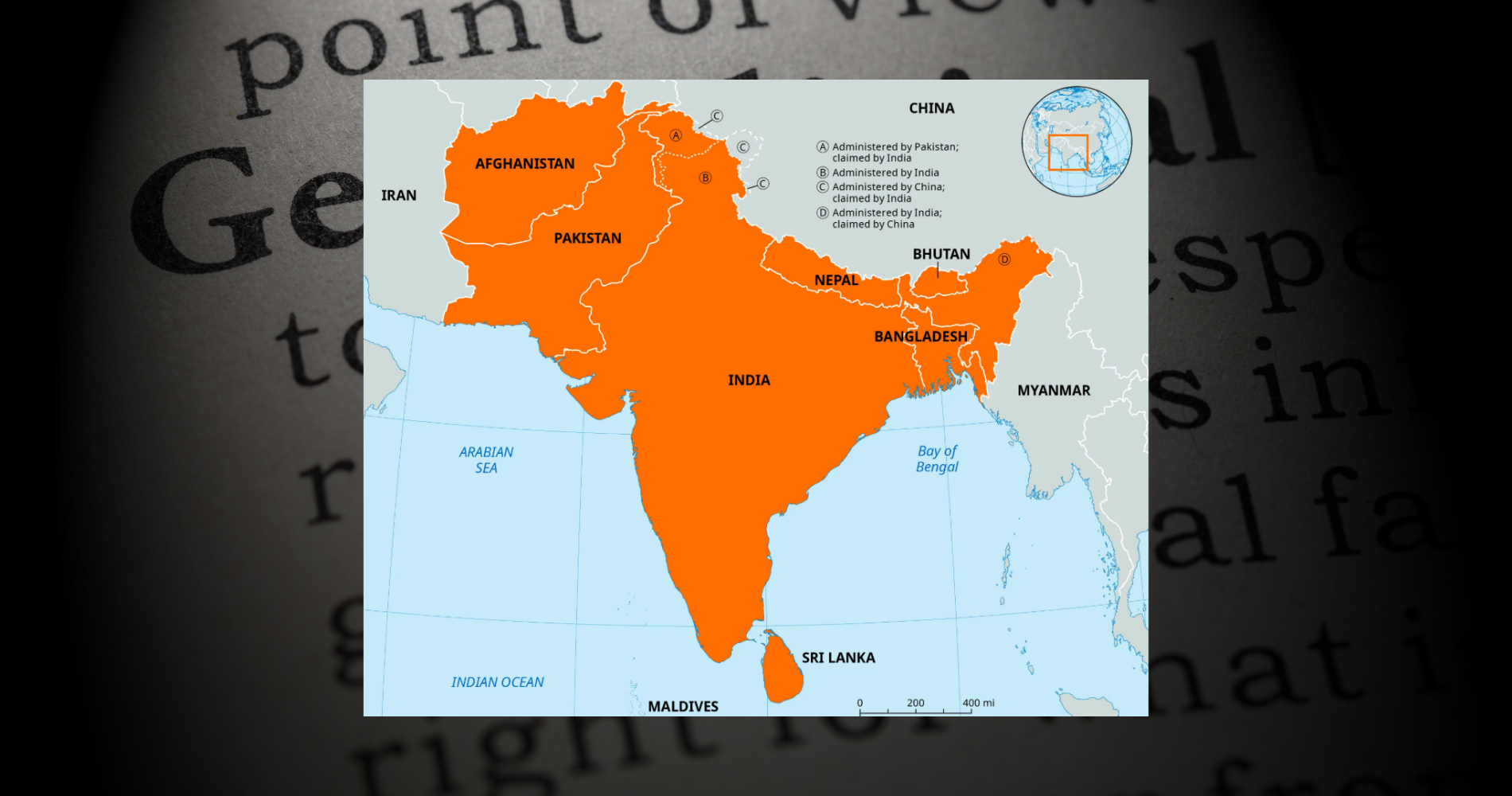
The more interesting option is one Bangladesh has carried for decades without fully developing: SEACO, the South East Asian Cooperation grouping of Bangladesh, Brunei, Indonesia, Malaysia and Maldives. It was first tabled at an Indonesia-Islamic Development Bank seminar in Bandung in 1992 and has been pursued from Dhaka ever since. The idea fits the approach the OIC's Ninth Islamic Summit in Doha called for in 2000: strengthen regional and sub-regional economic groupings as a practical route toward an Islamic Common Market, rather than trying to create the larger market from the top down. On World Bank data, the five countries together are close to half a billion people and about $2.4 trillion in output. That is not a peripheral grouping. It also offers a bridge between two regional systems, because two members are in SAARC and three are in ASEAN.
My own econometric results require an important caveat, and it is better to state it clearly. In the baseline specification, the five SEACO economies trade about six times more with one another than otherwise similar country pairs — about 4.6 times more in the most recent 2015-2023 window — without diverting trade from outsiders. But under the most demanding structural specification, which controls for multilateral resistance, exporter- and importer-year effects, existing ASEAN and SAFTA commitments, contiguity and country size, that premium loses statistical significance. The evidence therefore does not show that creating an organisation called SEACO would, by itself, multiply trade.
What the evidence does show is more useful for policy. These five economies already possess several conditions that SAARC struggled to develop: complementarity across different stages of development, functioning maritime connectivity, overlapping agreements that can be built upon, and commercial relationships that already exist. Bangladesh-Malaysia trade is running at roughly $2.8 billion a year, and its structure is promising: Bangladesh exports labour-intensive manufactures, while Malaysia supplies energy, machinery and intermediate inputs. The institutional lesson is straightforward. Build cooperation around economic relationships that already have a foundation, and then deepen them. Do not assume the institution itself will create that foundation.
What to do in the next twelve months
Not a treaty, at least not at the beginning. The first steps should be practical, modest and inexpensive: a light coordinating mechanism rather than a grand secretariat; mutual recognition of halal certification across the five countries, which could produce a visible commercial gain within two years; interoperable electronic certificates of origin and a regional single-window pilot; a dedicated Bay of Bengal feeder shipping service; and a pipeline of bankable regional projects for the Islamic Development Bank Group and the International Islamic Trade Finance Corporation, which already have relevant instruments. Rules of origin should be harmonised with existing ASEAN and SAFTA commitments rather than layered on top of them. The design should also allow variable geometry — any two or three members able to move ahead without waiting for all five — precisely because unanimity became such a disabling feature of the last institution we built.
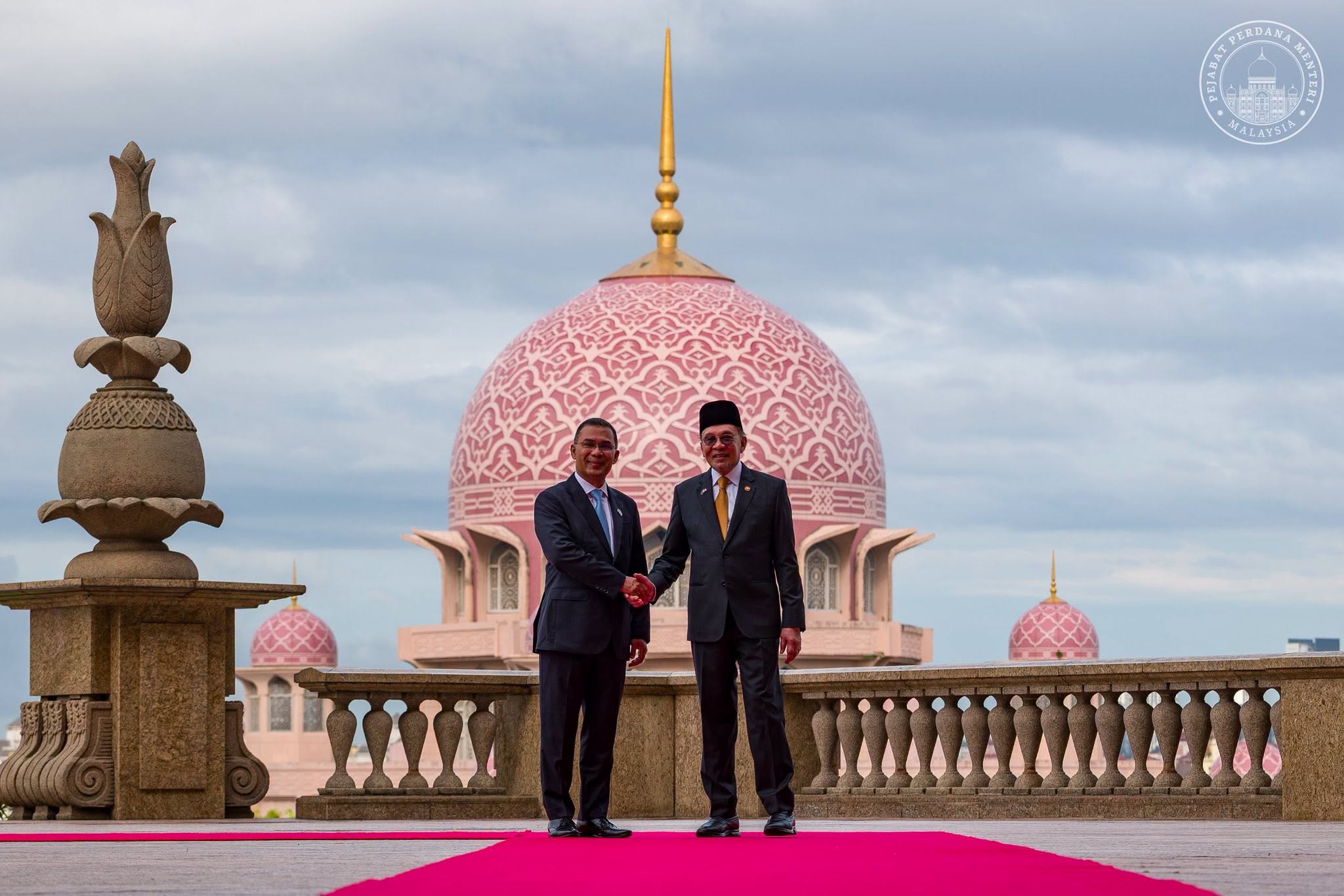
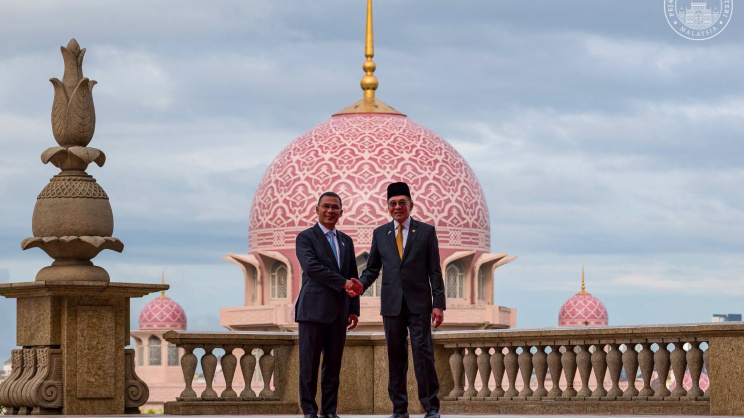
Bangladesh does not have to choose one regional platform and discard the others. The strategy can be SAARC plus BIMSTEC plus SEACO, alongside the Malaysia FTA that our prime minister and Anwar Ibrahim agreed in Putrajaya in June to conclude by 2027. Malaysia and Indonesia already participate simultaneously in ASEAN, the OIC, D-8 and APEC. They are not weakened by these overlapping relationships. Twenty-first-century regionalism does not need to resemble tidy concentric circles on a political map.
Forty-one years after the SAARC charter was signed in Dhaka, the lesson is not that regionalism failed. The lesson is that we practised it in the wrong sequence. We assumed political geography would generate economic integration, when durable political cooperation is more likely to emerge after meaningful economic integration has created interests worth protecting. The next attempt should begin with evidence: where does trade already exceed expectations, where are economies genuinely complementary, and where can regional supply chains realistically be built?
We should keep knocking on the SAARC door. But after twelve years of waiting for someone to answer, Bangladesh should also open another one. It faces east. Whatever we eventually call what lies through it, the principle should reverse the sequence that hollowed out SAARC: economics first, institutions second, politics later.
Dr M Kabir Hassan is Professor of Finance in the Department of Economics and Finance at the University of New Orleans. He is a Senior Fulbright Scholar, recipient of the 2016 IsDB Prize in Islamic Banking and Finance, a member of the AAOIFI Ethics and Governance Board, and Chairman of its Education Board.
Send your articles for Slow Reads to slowreads@thedailystar.net. Check out our submission guidelines for details.
Diplomacy in a turbulent world: How Bangladesh should navigate bilateral ties and regional platforms
What is the UN still good for?
Can the 81st UNGA restore hope in a world of crises?
What Malaysia’s Rohingya repatriation plan means for Bangladesh
Why Bangladesh must reconsider its trade agreement with the US
The Indo-Pacific at a crossroads: What it means for Bangladesh
Could the Teesta redraw the map of India-Bangladesh diplomacy?
Iran’s China moment? From isolation to regional hegemony
Makkah Pact: The geopolitics beyond Islamic solidarity