


Beyond geopolitics: Rethinking regional cooperation in South Asia
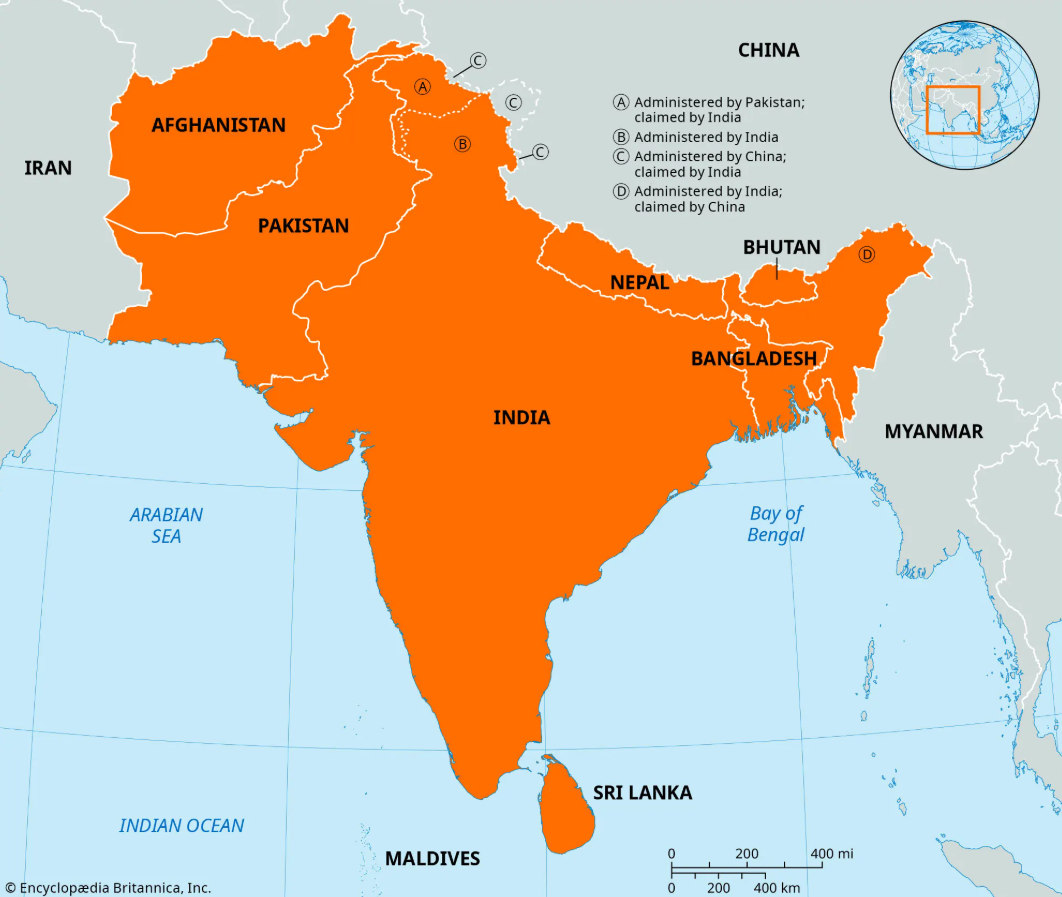
For the last four decades, regional cooperation in South Asia has been interpreted primarily through the prism of geopolitics and traditional security. South Asia has long been recognised as one of the least integrated regions in the world despite its shared geography, cultural connections and historical links. The policy discourse on regional connectivity and integration has largely revolved around the issues of rivalry between India and Pakistan, territorial disputes, military competition, divergent security interests and political tensions. This long-standing trend of mutual distrust and animosity has largely hampered the functioning of the South Asian Association for Regional Cooperation (SAARC), founded in 1985. Political tensions have repeatedly stalled regional initiatives, postponed summits and prevented the organisation from realising its full potential.
South Asia is now confronting a new generation of risks, vulnerabilities and security threats that are largely non-traditional and transboundary in nature, requiring coordinated action by both state and non-state actors. The evolving security landscape demands a fundamental rethink of how regional cooperation is understood and practised.
Understanding the new security landscape in South Asia
The strategic environment of South Asia has been undergoing a profound transformation owing to both traditional and non-traditional security threats. Today, policymakers across South Asia are increasingly concerned with "what threatens South Asia" rather than "who threatens South Asia." This shift in understanding clearly reflects the growing importance of transnational challenges that affect all countries regardless of their political alignments or military capabilities. For example, climate change has emerged as perhaps the single greatest threat to the lives and livelihoods of people across South Asia. Accelerating glacier melt in the Himalayas, increasingly erratic monsoon patterns, rising sea levels and more frequent extreme weather events have disrupted agricultural patterns and productivity, damaged infrastructure, and threatened the livelihoods of millions over the past two decades. Moreover, the region's interconnected river systems demonstrate how environmental challenges transcend national borders, making unilateral responses both inadequate and costly.
Beyond climate change, the region is confronting a complex web of interconnected risks in cybersecurity, pandemics, human trafficking, organised crime, maritime insecurity and energy market disruptions. The intersection of these risks and vulnerabilities often creates cascading crises that many analysts describe as hybrid threats.
The consequences of non-cooperation in responding to these complex and interconnected security threats are becoming increasingly visible across the region. The absence of coordinated disaster response systems, limited cooperation on transboundary water management, inadequate regional preparedness for public health emergencies, and weak collaboration on digital security have all contributed to rising human and economic costs during emergencies and crises. Consequently, these shortcomings resulting from insufficient regional cooperation have increased dependence on external powers for financing, technology transfer and strategic support, often compromising the region's ability to shape and secure its own future.
The costs of non-cooperation are perhaps most evident in the digital domain. As social media platforms have already surpassed traditional media in both reach and influence, the rise of political and religious extremist voices across South Asia has created enormous potential for fuelling tensions throughout the region. In the absence of any regional fact-checking mechanism, this growing disorder in the information space has undermined public trust, heightened tensions between neighbouring societies, and complicated diplomatic engagement.
Pathways for building regional cooperation and collaboration
If South Asian countries are to move beyond decades of geopolitical stalemate, regional cooperation must begin where national interests and priorities already converge. There are significant opportunities to build trust incrementally through practical cooperation in areas that can generate tangible benefits for all. The following four areas represent critical starting points where even modest regional cooperation could deliver measurable improvements in people's lives while creating the confidence necessary for deeper regional engagement.
1. Water security and climate cooperation
The Indo-Gangetic and Brahmaputra river systems support the livelihoods of nearly 400 million people, and the broader Indus, Ganges and Brahmaputra basins depend heavily on the Himalayan glacier system, which provides freshwater to approximately 750 million people across South Asia. Bangladesh, for example, depends on transboundary rivers for approximately 97 per cent of its surface water, while India and Bangladesh alone share 54 transboundary rivers, underscoring the extent of their hydrological interdependence. These shared ecological realities make unilateral responses increasingly ineffective. The region therefore requires an integrated approach that prioritises joint river basin management, integrated flood forecasting, glacier monitoring, climate data sharing and coordinated disaster preparedness. Investments in regional early warning systems and climate adaptation programmes would reduce humanitarian losses while strengthening resilience across borders, building mutual trust and demonstrating that shared environmental challenges can become opportunities for confidence-building.
2. Digital cooperation and information resilience
The second major driver affecting the lives of ordinary citizens in South Asia is the rapid pace of digital transformation, which has emerged as both an opportunity and a challenge. It has created enormous opportunities for economic growth and social connectivity, but it has also exposed societies to new forms of insecurity. Misinformation, disinformation and cyber threats increasingly transcend national boundaries, influencing public opinion, spilling over into street mobilisation and vandalism, undermining trust, and occasionally fuelling diplomatic tensions through confrontational rhetoric. As a result, strengthening digital resilience through regional cooperation, promoting media literacy and collaborative fact-checking has become not only essential but also inevitable for advancing peace and security in South Asia. Regional cooperation across borders to counter information disorder is important not only for protecting the digital space but also for safeguarding democratic institutions and critical infrastructure, while strengthening public trust so that it does not become an obstacle to regional cooperation itself.
3. Blue economy and regional energy cooperation
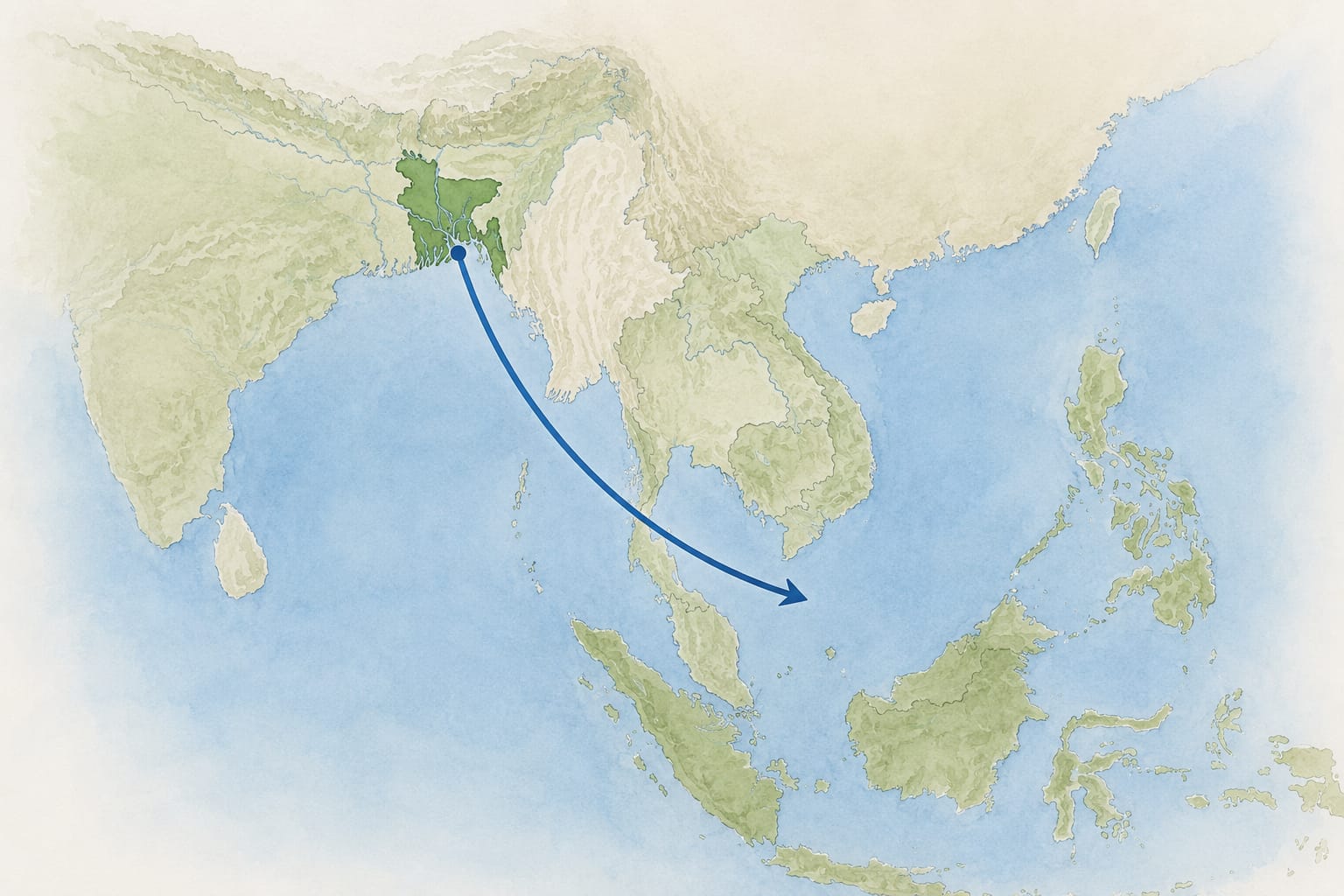
The Bay of Bengal represents one of South Asia's greatest untapped opportunities for regional collaboration. It supports fisheries, maritime trade, tourism, offshore renewable energy and marine biodiversity while connecting South Asia with Southeast Asia and the wider Indo-Pacific. Yet the bay also faces growing pressures from marine pollution, overfishing, coastal erosion and increasingly severe climate-induced disasters. The sustainable management of this shared maritime space requires coordinated regional efforts rather than fragmented national policies. Joint marine conservation initiatives, scientific research, sustainable fisheries management and disaster response mechanisms could generate significant economic and environmental benefits for all littoral states.
Today, policymakers across South Asia are increasingly concerned with "what threatens South Asia" rather than "who threatens South Asia." This shift in understanding clearly reflects the growing importance of transnational challenges that affect all countries regardless of their political alignments or military capabilities.
Like the blue economy, regional energy cooperation offers an equally promising avenue. Nepal and India's north-eastern states possess substantial hydropower potential, estimated at 40 GW and 63 GW respectively, while Bangladesh faces rising energy demand as its economy continues to expand. Cross-border electricity trade has already demonstrated its feasibility through existing power exchanges between Bangladesh and India, as well as recent arrangements enabling Nepalese hydropower exports to Bangladesh through the Indian grid. Greater cooperation in hydropower development would significantly expand regional connectivity, strengthen regional interdependence, and reduce dependence on imported fossil fuels.
4. Border management and human mobility
While borders in South Asia are conventionally viewed through the lens of territorial sovereignty and national defence, they also represent complex intersections of humanitarian, environmental and development challenges. Recent trends in cross-border migration, forced displacement, human trafficking and climate-induced mobility have highlighted the need for a regional policy framework that balances security imperatives with humanitarian standards and international law. For example, the recent episodes of unilateral "push-backs" and "push-ins" along the India-Bangladesh border, together with the prolonged Rohingya refugee crisis, point to the highly complex nature of managing cross-border mobility in today's world. Traditional approaches to border management have frequently contributed to humanitarian crises by creating de facto no-man's lands populated by stranded people along border regions. Effective border management in South Asia must therefore move beyond coercion and embrace a comprehensive framework that addresses the structural causes of human mobility. Rather than viewing such cooperation as a compromise on state sovereignty, regional actors should recognise it as a pragmatic necessity for addressing shared transnational challenges that no country can effectively manage in isolation.
Functional regionalism: A pragmatic roadmap
Regional organisations such as the European Union (EU) and the Association of Southeast Asian Nations (ASEAN) did not begin with comprehensive political agreements. Instead, these organisations evolved through sustained cooperation on practical issues that gradually delivered tangible benefits to their citizens. The history of the European Union demonstrates how initial cooperation in coal and steel ultimately evolved into broader political and economic integration. Likewise, ASEAN has gradually strengthened regional cooperation through consensus-based initiatives in trade, connectivity, disaster management and economic development despite considerable political diversity among its members.
While South Asia's circumstances are undoubtedly unique, and neither model can be replicated in its entirety, the region can nevertheless draw an important lesson: trust is often the outcome of sector-specific cooperation rather than its prerequisite. A similarly pragmatic roadmap could be developed for South Asia by strengthening existing regional and subregional mechanisms, including SAARC, BIMSTEC, BBIN and other sector-specific initiatives. Alongside governments, universities, research institutes, civil society organisations, youth networks, women's organisations and the private sector should all be given greater opportunities to initiate regional and subregional cooperation. Only then can South Asia make meaningful progress in climate resilience, disaster risk reduction, transboundary water sharing, renewable energy, digital security and humanitarian response through regular technical exchanges, joint research and coordinated policy platforms.
Ashish Banik is Director of the Bay of Bengal Society.
Send your articles for Slow Reads to slowreads@thedailystar.net. Check out our submission guidelines for details.

The Indo-Pacific at a crossroads: What it means for Bangladesh
Could the Teesta redraw the map of India-Bangladesh diplomacy?

Iran’s China moment? From isolation to regional hegemony

Makkah Pact: The geopolitics beyond Islamic solidarity
Myanmar’s deteriorating crisis and the political future of the Rohingya

Bangladesh between India and China: The dilemma of defence diversification

What Bangladesh should ask before joining the Makkah Pact

Nepal’s difficult passage: Political change meets ecological crisis

BRICS at 20: Why the New Delhi Summit matters to the Global South
