The forgotten history of football in Bangladesh
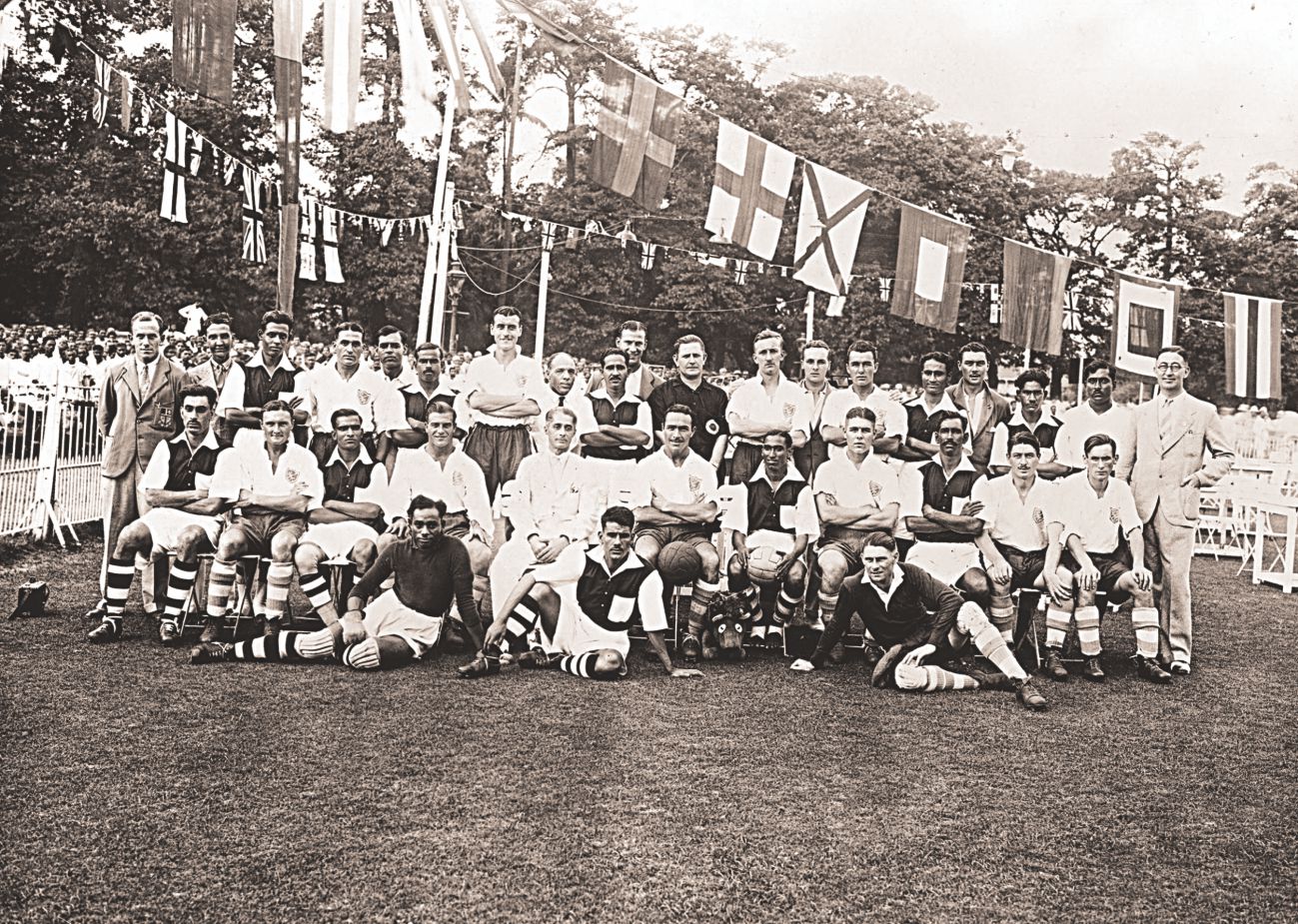
On 21 November 1937, an English football team that had beaten almost everyone, literally everywhere, walked onto a field in Dhaka and lost. The Islington Corinthians were amateurs in name only. They were a touring side halfway through a journey that would carry them across fourteen countries and ninety-five matches. They had already brushed aside Mohun Bagan, the pride of Kolkata. They attracted huge crowds wherever they played and lost almost no matches. Then they met a Dhaka eleven on the Dhaka Sporting Association ground. Ten of the players came from Wari Club, and most were probably college or graduate students. A left-inside named Bhupendra Mohan Sengupta put the ball in the net. Once. One-nil. It was the only match the Corinthians lost on the entire Indian leg of their tour.
Everyone called Sengupta Pakhi Sen. The story, recorded decades later by the football historian Kausik Bandyopadhyay, goes that the Corinthians’ captain said something close to: "We had heard of the Royal Bengal tiger; today we saw it on the field." Whether those were the exact words, nobody can now prove. The line lives in the half-light between record and folklore, where so much of this history sits. But it stuck because it named something real. A colonised people had taken the coloniser’s game and, on a dusty maidan in a provincial town the empire barely noticed, turned it into a victory.
That is the story Bangladesh has all but forgotten. We remember Kolkata. We remember 1911, when Mohun Bagan’s barefoot players beat an English regiment and a myth was born. What has slipped from memory is that the east, Dhaka, Mymensingh, Rangpur, and Chittagong, built its own football, its own heroes, and its own rivalries with the centre, decades before there was a Bangladesh to be proud of. Recovering that history matters now for an unglamorous reason. The country that produced Pakhi Sen no longer fills its stadiums. Instead, every four years, it divides itself between Argentina and Brazil. Young men die for it, electrocuted while hanging flags from rooftops or killed in clashes over teams playing eight thousand miles away. A nation that once played its way towards independence now imports its footballing passions wholesale.
How Bengal made football its own
The British had a word for the Bengali man: effeminate. Clever, wordy, good with a pen, hopeless with a body, he was the opposite of the "martial races" of Punjab and the Frontier whom the Raj recruited into its army. The historian Mrinalini Sinha gave this stereotype its proper name, colonial masculinity, and Paul Dimeo has shown how completely it shaped the way sport arrived in Bengal. Football was supposed to discipline the natives, to drill Victorian obedience into soft middle-class boys. But "The Boys" had other ideas.
Around 1877, a schoolboy named Nagendra Prasad Sarbadhikari is said to have kicked a stray ball back to some British soldiers near a Kolkata ground, been handed one of their own, and never looked back. He went on to organise teams and found clubs. When wealthy members of his Wellington Club objected to playing alongside Moni Das, a low-caste boy, Sarbadhikari dissolved the club rather than exclude him. He then founded a new one, Sovabazar, with Das as one of its players.
What Sarbadhikari began, a generation of clubs carried on, and almost all of it happened in Kolkata. The British had kept the game to themselves: Kolkata FC, the country’s first club, was formed in 1872 and played rugby before it played football. The tradesmen it snubbed broke away to found the Trades Club in 1878, later the Dalhousie Athletic Club. The natives built their own. The Wellington side Sarbadhikari raised in 1884 is remembered as the first Bengali club; Town Club, Sovabazar and Aryan followed from the same circle, and in 1889 came Mohun Bagan, still going today.
The story we chose to believe
Then came 1911. On 29 July, before a crowd remembered as eighty or a hundred thousand, though the match referee later put it nearer twenty thousand, Mohun Bagan beat the East Yorkshire Regiment 2–1 in the IFA Shield final. Ten of the eleven played barefoot against booted soldiers. Shibdas Bhaduri equalised; Abhilash Ghosh scored the winner. Eight of that side came from East Bengal, a fact Dhaka can fairly claim a share of. The win detonated across a province already inflamed by the Swadeshi movement against Lord Curzon’s 1905 Partition of Bengal. The barefoot natives had thrashed the army at its own game.
And here a powerful myth took root, one repeated to this day: that the victory so rattled the British that they reversed the Partition of Bengal a few months later. It is a wonderful story. It is also historically untrue. Boria Majumdar and Kausik Bandyopadhyay call the supposed nationalist weight of 1911 an overburdened cliché; Dwaipayan Sen, in a careful study with the marvellous title “Wiping the Stain Off the Field of Plassey”, shows that the meaning was assembled afterwards, in hindsight. The calendar settles it. Viceroy Hardinge sent his proposal to annul the Partition to London on 19 July 1911, ten days before the match. The decision was about Swadeshi agitation,revolutionary violence, and administrative convenience. It was not about a football score.
The eastern game
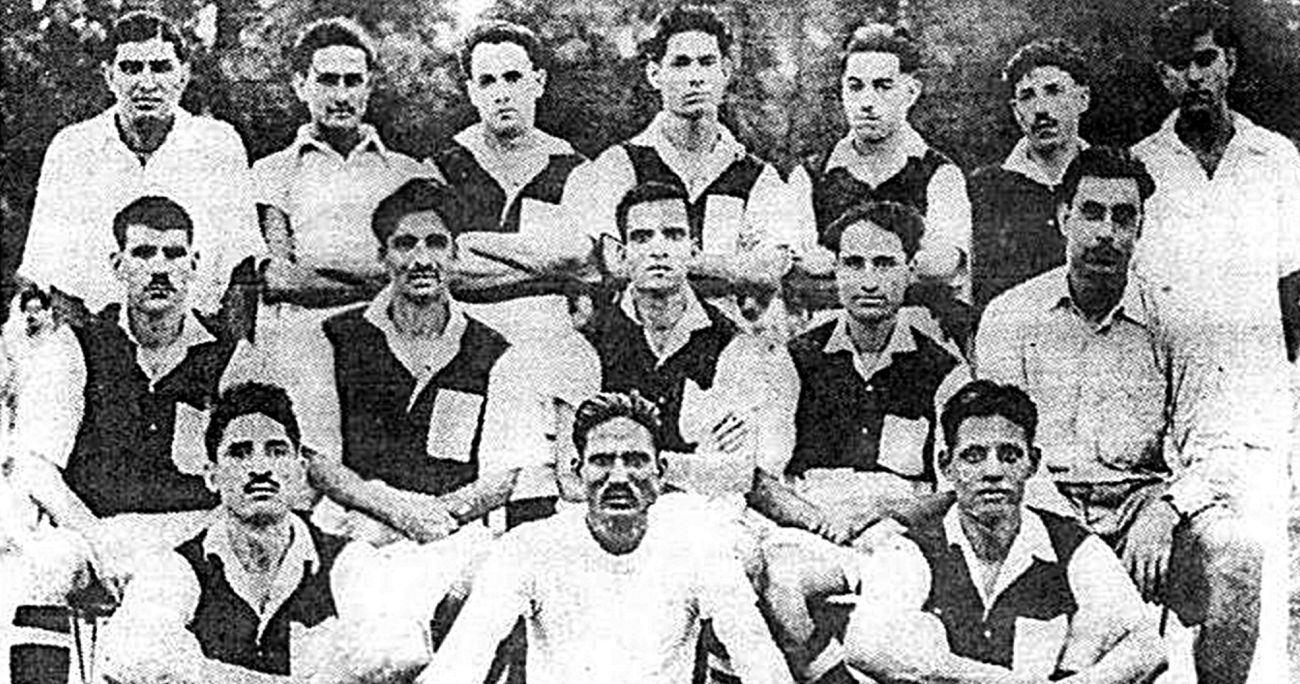
While Kolkata crowned itself the capital of Bengali football, the eastern districts were quietly building a parallel world. The pioneer was Wari Club, founded in Dhaka in 1898 by the zamindar Rai Bahadur Surendranath Roy. Its record reads like a list of giant-killings. In 1910, it beat the Cooch Behar Maharaja’s side, stacked with Kolkata veterans. In 1917, it humbled Lincoln Club, the reigning champions of the Kolkata league. In 1919, it knocked Mohun Bagan out of the IFA Shield. And when England’s Sherwood Foresters toured India in 1925, conceding to no one, Wari became the only Indian team to score against them. It lost 2–1, but wrote its name into the record all the same.
Around Wari grew an entire ecosystem, documented in Dhruba Kar’s study of football club culture in colonial East Bengal: Victoria Sporting Club, established in 1903 by five zamindar families and named, with colonial irony, after Queen Victoria; Tajhat FC, founded in Rangpur in 1905; the Mymensingh tournaments with their famous four-foot-eight Lila Devi Trophy; and the Coutts Cup in Dhaka, restricted to schoolboys under four feet nine.
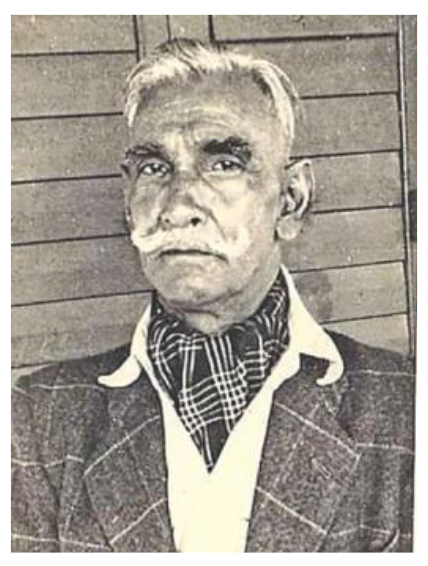
Towering over them all stood Syed Abdus Samad, the Football Jadukar, the magician who captained India and who, after Partition, came home to die in quiet neglect in Dinajpur.
For all of it, the centre of gravity stayed in Kolkata. An East Bengal player who wanted to make a name for himself still had to cross the river and earn it on the Kolkata maidan, where men from the east were marked as Bangals, rustic, second-class, poor cousins of the polished Ghoti establishment. The slight bred its own institutions. In 1920, émigrés from the east founded East Bengal Club precisely to have a side of their own. The rivalry was never only about football.
A nation cut in two, a game cut down
Partition in 1947 sliced Bengal apart and left Dhaka in the eastern wing of a country whose centre of gravity lay a thousand miles to the west. Football survived; fairness did not. East Pakistan produced abundant talent. Its Dhaka First Division League was widely regarded as stronger and more professional than anything in West Pakistan. Yet across twenty-three years of united Pakistan, by the count of the football legend Ghulam Sarwar Tipu, only twenty-three Bengalis ever wore the national shirt.
The east answered on the football field. In 1958, the Aga Khan donated a gold cup, and Dhaka built a tournament around it that drew clubs from across Asia for a generation. The football grew faster and harder as Dhaka clubs imported guest players from the Makrani and Sheedi neighbourhoods of Lyari in Karachi. Among them was Abdul Ghafoor, nicknamed the “Pakistani Pelé”, whose pace and power forced the federation to limit each club to five non-Bengali players. Enthusiasts now call the Aga Khan Gold Cup the spiritual ancestor of the AFC Champions League.
The team that played for a country that did not yet exist
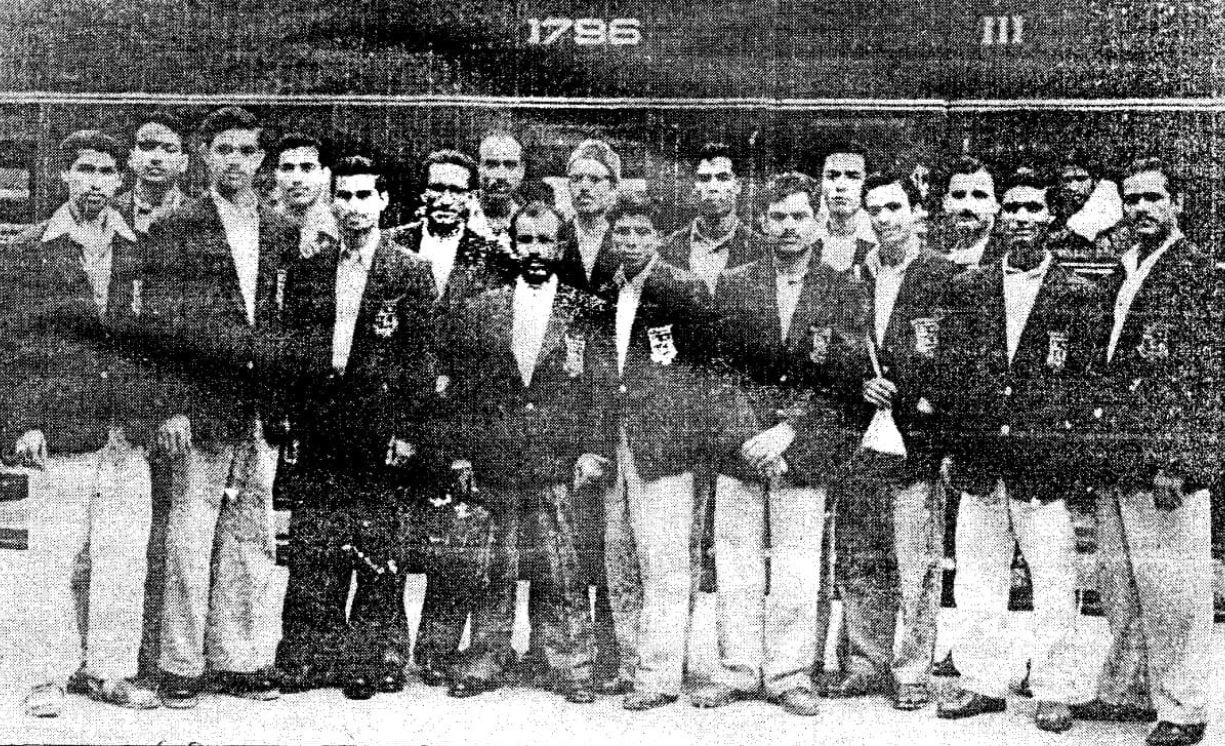
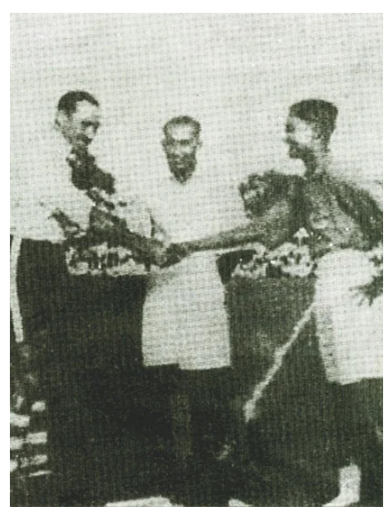
In the summer of 1971, as the Pakistani army’s crackdown drove millions from East Bengal into refugee camps in India, a former footballer named Saidur Rahman Patel had an idea that sounds, on paper, absurd: form a football team. Not to fight. To play. The exiled government in Kolkata gave its blessing and a tiny budget, and the Shadhin Bangla Football Dal, the Free Bengal Football Team, was assembled from players brought together through a radio appeal to the refugee camps. Zakaria Pintoo captained the side. A young Kazi Salahuddin played under the false name “Turjo Hazra”, so the army could not punish his family back home.
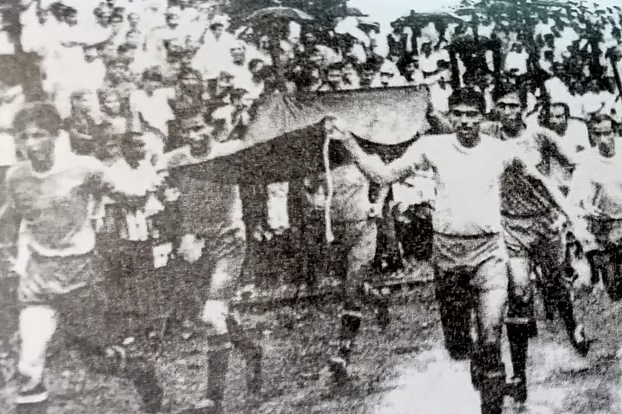
Their debut, on 25 July 1971 at Krishnanagar in Nadia, ended 2–2 and meant nothing on the scoreboard and everything everywhere else. Before kick-off, the players refused to take the field until the flag of Bangladesh, a country no government on earth had yet recognised, was raised beside India’s. The local magistrate, risking his post, allowed it. Over the next months, the team played sixteen matches across India, burned a Pakistani flag on a Kolkata pitch on Pakistan’s Independence Day, and raised roughly five lakh taka for the war effort. They were, in the truest sense, ambassadors of a revolution, proof to a watching world that this was a secular national movement, not a sectarian quarrel. Some of them swapped the ball for the gun before it was over. The goalkeeper in that first match went straight into guerrilla warfare with the Mukti Bahini.
What we built, what we neglected
Freedom brought a golden age. A new club, Abahani, founded in 1972, brought in a foreign coach and modern boots. Against the old giant Mohammedan, it created the Dhaka Derby, the fiercest fixture the country has known. The 1980s were its peak, with packed terraces, title hat-tricks traded back and forth, and a rivalry that split the city. It could turn ugly. In what Bangladeshi football still calls “Black September” in 1982, a refereeing row sparked riots, and General Ershad’s regime arrested Abahani’s stars, Salahuddin and Chunnu among them, on confected charges of plotting a coup, until public fury forced their release.
Then the lights dimmed. When Bangladesh won the ICC Trophy in 1997 and then stunned Pakistan at its first World Cup in 1999, the country found a new national game almost overnight. Sponsors, broadcasters, and the best young athletes followed the money to the cricket field. Federation mismanagement and political meddling did the rest. The terraces emptied. And the passion that had no home turned outward, to other people’s teams, with a ferocity that occasionally kills. One study counted twenty-three deaths in Bangladesh around the 2022 World Cup, mostly young men falling while hoisting the flags of Argentina and Brazil. The footballing passion that once began against the empire now expends itself on other nations’ teams.
There is, lately, a counter-current. The women, for whom Pakistan-era football never had a place, have built one. A national side that did not exist before 2010 has now won the regional championship twice, in 2022 and 2024. And where East Bengal’s players once crossed to Kolkata to be noticed, the traffic now runs the other way. Hamza Choudhury, an FA Cup winner raised in England, pulled on the red and green against India in March 2025; the Canada-born Shamit Shome and the Italy-raised Fahamidul Islam followed within months, alongside the Denmark-born captain Jamal Bhuyan. When they played, the stadiums filled again, with twenty-one thousand attending a single qualifier and thousands more left outside the gates.
Pakhi Sen has no statue. The Dhaka Sporting Association ground where he beat the Islington Corinthians has been built over, and most of the men in that story have been forgotten. But on a November afternoon in 1937, a Wari man from Mymensingh did to a touring English side what no other team in India managed that winter. He scored. Once. And for one afternoon on a Dhaka field, the people the empire called weak beat the people who ruled them.
Dhrubo Alam is Deputy Transport Planner at the Dhaka Transport Coordination Authority (DTCA).
Send your articles for Slow Reads to slowreads@thedailystar.net. Check out our submission guidelines for details.

157th Birth Anniversary of Mahatma Gandhi / Gandhi’s return to Noakhali
Why does Tagore still trouble Bangladesh’s idea of ‘us’?

Can Bangladesh make better use of its zakat money?
Three revolutions that reshaped the world
Paradise lost and found: Rediscovering early modern Bengal
Unbound Mother: The making and remaking of Kaali in Bengal
Do great leaders make history, or does history make them?
Poison and cremation: A forensic history of colonial Bengal