


Why does your ceiling fan fail so soon?

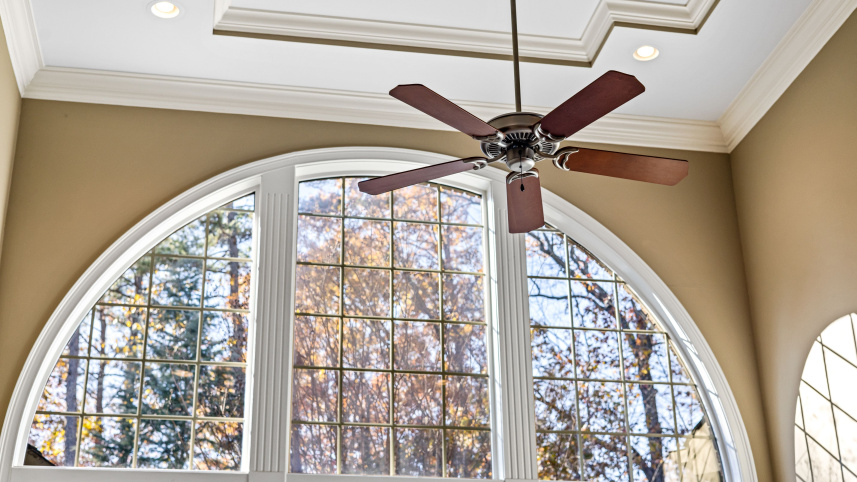
In most Bangladeshi homes, the ceiling fan is treated less as a product and more as a permanent fixture. Once installed, it is expected to run quietly for years without attention. Yet the familiar story repeats itself in thousands of households: a slight drop in speed, a faint humming sound, weaker airflow, and eventually a call to the electrician.
The repair is usually quick, inexpensive, and seemingly harmless. A capacitor is replaced, costing around 300 to 500 BDT, and the fan returns to normal. But within months, or sometimes weeks, the same problem can return.

What appears to be a recurring fault is often something more structural: the result of how fans are chosen, how they are used, and what most people never think about above the ceiling.
What a Ceiling Fan Is Actually Doing
A ceiling fan is simple in appearance but highly dependent on electrical balance. Inside the casing is an induction motor that converts electrical energy into rotational motion. At startup, it cannot begin spinning on its own; it requires a capacitor to create the phase shift that generates the initial torque.
Once running, the system depends on bearings to reduce friction and blades to convert rotation into airflow. When all components work in harmony, the fan feels effortless. But in real conditions with heat, dust, and fluctuating voltage, this balance slowly deteriorates. That deterioration rarely appears as sudden failure. It shows up as gradual loss of performance.
Why Most Problems Begin After Installation
Electricians say that many complaints start long before the first fault appears. “People think a fan is just a fan,” says MD Khalil, a residential electrician working in Dhaka. “But the moment you install the wrong size for a room or connect it to unstable wiring, you are already shortening its life.”
A fan that is too small for a large room is forced to run at higher speeds for longer periods. A fan in an area with voltage fluctuation is repeatedly stressed during startup cycles. And a low-cost model with weaker internal components may perform well initially but deteriorates faster under constant load.
None of these issues are visible at the point of purchase. They only emerge after months of continuous use.
When a Fan Starts to Change
The first sign is usually subtle. A fan that once ran smoothly begins to lose a little speed. Then comes a faint humming sound, often noticeable only at night. Airflow becomes inconsistent. In some cases, the fan may need a manual push to start rotating. At this stage, most households assume the fan has developed a mechanical fault. In reality, electricians say the issue is far more specific.
“As soon as a fan starts slowing and humming, I can predict the problem before opening it,” explains Sharif Islam, another electrician who services residential buildings in Narayanganj. “In most cases, the capacitor has weakened. That’s all.”
The capacitor is essential for generating starting torque and maintaining stable motor function. When it loses efficiency, the motor still runs—but poorly. It struggles to maintain speed and becomes increasingly inconsistent. Heat inside ceiling cavities and long daily operating hours accelerate this process. In many homes, fans run for most of the day with little interruption, giving the capacitor no real recovery time.
Why a 300–500 Taka Repair Keeps Repeating
Capacitor replacement is one of the most common electrical repairs in Bangladesh. It is quick, inexpensive, and restores full functionality almost immediately. This is why it feels routine rather than serious.
But electricians say the cost hides a deeper pattern. “The repair is cheap, so people think it’s a small issue,” says Hasanur, an electrician based in Dhaka. “But the real question is why it keeps happening again and again.” The answer lies in how capacitors degrade. They are sensitive components affected by heat, voltage fluctuation, and continuous load. In lower-quality fans, cheaper capacitors are often used, which shortens their lifespan further.
Once weakened, the capacitor cannot maintain the electrical phase shift required for smooth motor operation. Replacing it restores performance temporarily, but does not change the conditions that caused the failure.
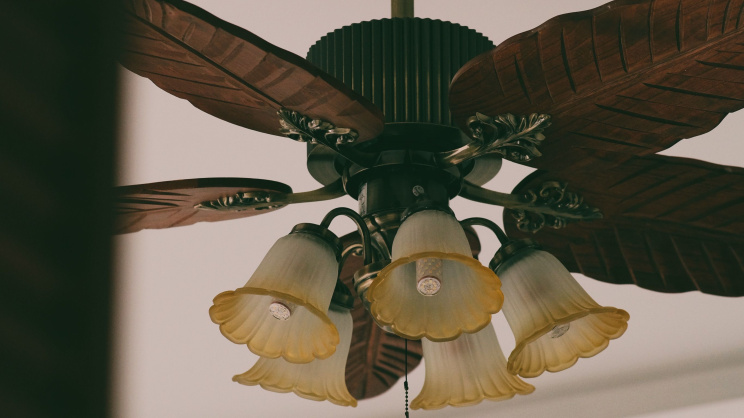
This is why many households find themselves paying the same 300 to 500 taka every year or two for the same fan. Moreover, because capacitor replacement is quick and inexpensive, it is often treated as a routine fix rather than a symptom. The fan continues to be used under the same conditions that caused the failure in the first place, meaning the cycle repeats.
Electricians note that many households replace capacitors multiple times over the lifespan of a single fan, often without considering whether the original selection was appropriate for the room or electrical environment. This creates a perception problem. The fan is seen as unreliable when, in reality, it is operating within predictable engineering limits.
Choosing a Fan That Breaks the Cycle
The solution, according to electricians, is selection. A properly sized fan reduces continuous motor strain. A stable electrical connection reduces capacitor stress. Better-quality internal components extend operational life significantly, even under heavy use.
Increasingly, electricians also point to BLDC fans as a more stable alternative. Unlike traditional induction motors, BLDC systems use electronic control and consume less power, reducing heat and dependency on capacitors altogether. While more expensive initially, they tend to perform more consistently over time, especially in households where fans run for long hours daily.
But even with better technology, fundamentals remain the same. Installation quality, room size compatibility and voltage stability still determine how long any fan will last.
A Machine That Reflects Its Environment
A ceiling fan does not fail randomly. It reacts to the conditions it is placed in. When those conditions are harsh, for example, unstable electricity, continuous use, or poor ventilation, it does not stop working. It slowly loses efficiency until that loss becomes noticeable.
 For all latest news, follow The Daily Star's Google News channel.
 The recurring capacitor replacement, often dismissed as a minor inconvenience, is actually a symptom of this gradual stress. The 300 to 500 taka repair is not the real problem. It is the system’s way of signalling imbalance. And whether that message is noticed early or ignored for years determines not just how long the fan lasts, but also how many times the same repair becomes part of household routine.
Comments