


Project 'Trishna': Ensuring safe drinking water for one lakh people every day
[Special supplement]
For many communities across Bangladesh, access to a glass of safe drinking water is still a distant dream. The lack of clean water continues to expose countless people to waterborne diseases, long-term health complications and financial hardship due to medical expenses.

From schoolchildren in rural areas to patients admitted to hospitals in cities and even their waiting family members- unsafe water silently affects lives every day. Illness-related absenteeism in schools, increased health risks in medical facilities and preventable suffering often stem from this basic crisis of safe water.
Recognizing this urgent reality, Prime Bank PLC. has taken a meaningful step to address one of humanity’s most fundamental needs- safe drinking water. With the support of the private development organization Footsteps, the bank has launched Project `Trishna’, a large-scale initiative dedicated to ensuring access to safe water in high-risk and high-need areas. Under this project, nearly 100,000 people- including school students and hospital patients- are receiving safe drinking water every day across Kushtia, Tangail, Narayanganj, Dhaka, Sunamganj and Chattogram. More than just a water purification effort, Project Trishna has become a symbol of health, awareness and human dignity.
The core objective of Project Trishna is simple yet powerful: to ensure safe water where people are most vulnerable. By prioritizing schools and hospitals, the initiative directly supports two critical pillars of society- education and healthcare. Currently, approximately one lakh individuals benefit daily from purified water under the project. This includes 8,680 students from 20 government schools, around 75,000 people from 26,000 neighboring families and nearly 20,500 patients and healthcare workers in six hospitals in Dhaka. Beyond these numbers lie thousands of transformed lives and stories of renewed hope.
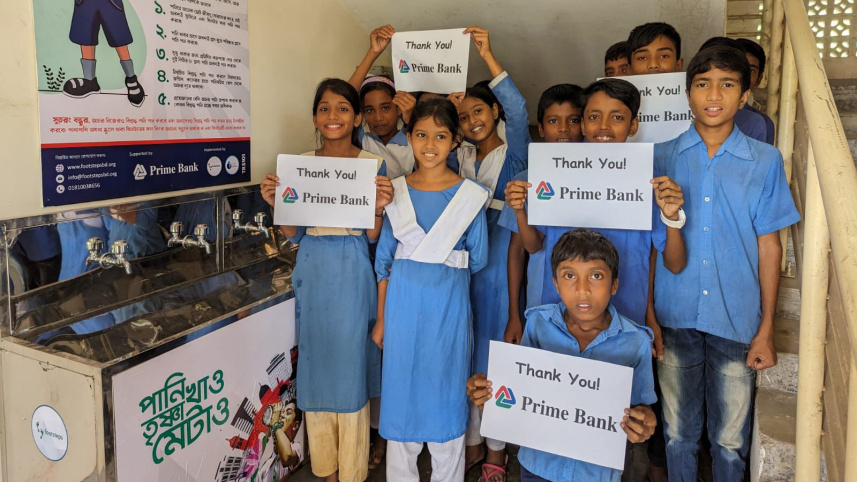
Access to safe water in schools has brought visible and measurable change. Previously, many children frequently suffered from waterborne illnesses, leading to irregular attendance and disrupted learning. Since the implementation of Project Trishna, students are noticeably healthier, attendance rates have improved and concentration levels in classrooms have increased. A shining example is Suabil Government Primary School in Fatikchhari, Chattogram. According to teacher Abul Mohammad Kalam, many students used to fall sick regularly and struggled to attend classes consistently. After the introduction of Project Trishna, the situation began to improve significantly. Students now understand the importance of safe water and have become more health-conscious. For them, clean water is no longer just a means to quench thirst- it is a condition for staying healthy and continuing their education.
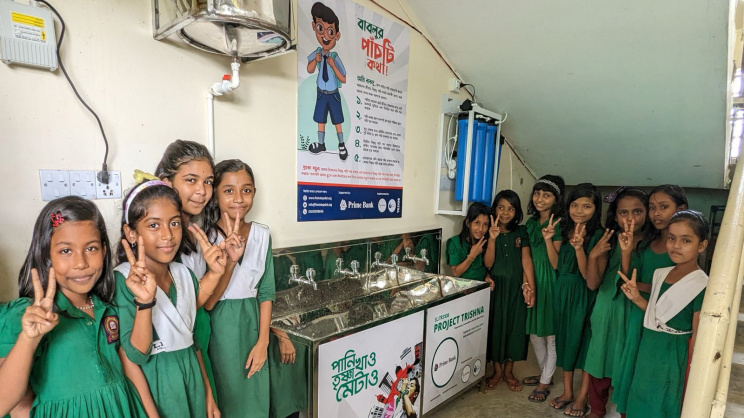
The impact of the project extends far beyond school premises. Through students, the message of safe water usage is reaching surrounding households and communities. The school-based purification systems benefit approximately 26,000 additional families living nearby. Many of these families have become more aware of water quality and hygiene practices. Children are emerging as health ambassadors within their homes, encouraging safer habits and helping lay the foundation for a healthier future generation.
Project Trishna’s contribution to the healthcare sector is equally significant. In six hospitals in Dhaka, purified water systems now provide safe drinking water to nearly 20,500 patients, healthcare professionals and attendants every day. In hospital environments, water quality is directly linked to infection control, patient recovery and overall treatment safety. Fatema Akter, a caregiver at Bangladesh Medical University, noted that access to safe water in the capital has long been a daily challenge. Previously, patients and their families had to purchase bottled water from outside the hospital premises. Project Trishna has greatly reduced this hardship by ensuring reliable access to purified water within hospital facilities, offering comfort and convenience to both patients and staff.
Speaking about the initiative, Md. Ziaur Rahman, Deputy Managing Director (DMD) and Chief Risk Officer (CRO) of Prime Bank PLC, emphasized the deeper significance of the project, `A glass of pure water does more than quench thirst- it protects a child from illness and increases a patient’s chance of recovery. During our field visits, we witnessed how the lack of safe water silently affects ordinary people’s lives. Project Trishna is our effort to ease that suffering. At Prime Bank, we believe that sustainable development requires not only effective risk management but also strong social responsibility. This project reflects that philosophy. For us, it is not merely a CSR activity- it is a responsibility connected to people’s lives. The smile of a schoolchild and the relief of a hospital patient are our greatest achievements. If we can provide safe water to a child today, we believe we are contributing to a healthier, more aware and humane Bangladesh tomorrow. We hope Project Trishna will gradually evolve into a nationwide awareness movement and bring positive change to even more lives.’
Looking ahead, Prime Bank plans to expand Project Trishna to more schools, hospitals and communities across the country. Because safe water is not only about health protection- it is about education, awareness and human dignity. A single drop of pure water can protect a child from illness, just as a responsible initiative can transform thousands of lives. Project Trishna continues to write that story of transformation every day- quietly, yet with profound and lasting impact.
 For all latest news, follow The Daily Star's Google News channel.
Comments