


Changing Climate drives higher demand Singer Bangladesh
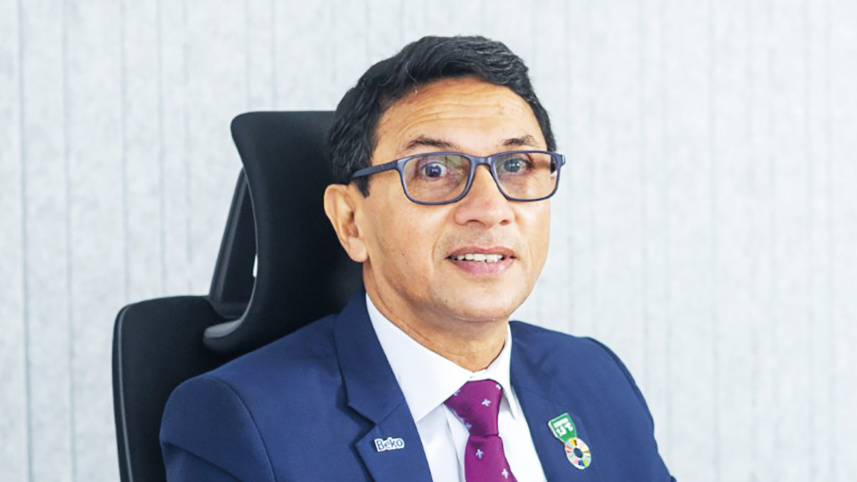
MHM Fairoz, Managing Director & CEO,
Singer Bangladesh Limited

“Smart features are moving beyond “gimmick” status and becoming part of mainstream expectations in premium segments”
As rising temperatures and changing weather patterns continue to influence consumer behaviour in Bangladesh, demand for air conditioners is evolving rapidly. MHM Fairoz, MD and CEO of Singer Bangladesh Limited shares that manufacturers and distributors are closely monitoring both climate trends and shifting customer expectations as they prepare for the 2026 summer season.
The Daily Star (TDS): With temperatures hitting record highs, how has the demand forecast for 2026 changed?
MHM Fairoz (MHMF): our demand forecast for 2026 has increased compared to earlier projections. We anticipate double-digit growth in the residential AC segment. The market is also seeing earlier seasonal demand, with customers purchasing ACs before peak summer months to avoid supply shortages and price hikes. However, current 2026 weather projections suggest no major heatwave is expected. Though, changing lifestyle preferences continue to support steady growth in AC demand.
TDS: Almost all new models focus on Inverter tech. Is there still a future for non-inverter ACs in the Bangladeshi market?
MHMF: While inverter ACs now dominate new model launches due to their superior energy efficiency and lower electricity bills, non-inverter ACs still maintain a limited presence in the market. In price-sensitive segments and certain commercial applications—such as small retail shops, temporary installations, or spaces with short operational hours—non-inverter models remain relevant due to their lower upfront cost. However, the overall market share of non-inverter ACs is gradually declining because the price gap between inverter and non-inverter models has significantly reduced in recent years.
TDS: How are “Smart ACs” (IoT/Wi-Fi enabled) performing in terms of sales? Do consumers actually use the mobile app features or is it still seen as a “gimmick”?
MHMF: Smart ACs with Wi-Fi and IoT capabilities are gradually gaining traction. Sales of smart-enabled models have increased steadily, particularly among urban middle- and upper-income consumers. Initially, many customers perceived app control as a novelty feature. However, usage data and feedback suggest growing adoption of practical functionalities such as remote on/off control, temperature scheduling, and energy monitoring. The ability to switch on the AC before reaching home or track electricity consumption via mobile apps is proving especially appealing.
TDS: Is there a viable roadmap for affordable Solar-Hybrid ACs in Bangladesh to reduce the pressure on the national power grid?
MHMF: Given the increasing pressure on the national power grid, solar-hybrid ACs represent a promising future direction. However, affordability remains the key constraint. While technically feasible, the initial setup cost—including panels, inverters, and battery systems—can be prohibitive for mass adoption. Over time, as solar equipment costs decline and policy support strengthens, solar-hybrid ACs could become a meaningful solution for Bangladesh.
Intervew conducted by Farhan Musfique.
 For all latest news, follow The Daily Star's Google News channel.
Comments