Untold stories of 1971 through private letters
Whenever I tell someone that I have been a philatelist for nearly five decades, an almost universal expectation lights up their eyes. Without fail, the very first question that follows is a predictable one: “How many thousands of stamps do you have in your collection?”
My response is always quiet, modest, and completely unexpected: “I merely have a few hundred postage stamps in my collection. In fact, the total number might be even less than that.”
A look of sheer bewilderment inevitably washes over their faces. They struggle to reconcile the maths. Five decades of dedicated collecting? Half a century spent pursuing a hobby, only to end up with a collection that could easily fit inside a single slim binder? How is that even possible?
Their confusion, however, opens the door to a far richer conversation. It gives me the wonderful opportunity to introduce them to the true depth, nuance, and soul of philately—a world that extends far beyond the small, perforated pieces of gummed paper most people envision.
Beyond the perforations: What is philately?
To the casual observer, stamp collecting is a quantitative hobby—a pursuit defined by volume, with album pages filled with colourful portraits of historical figures, exotic flora, or commemorations of significant anniversaries. But true philately is not merely stamp collecting; it is the comprehensive study of the entire postal transmission system.
A serious philatelist does not just look at a stamp as a finished piece of art. They are fascinated by its entire life cycle. They study:
The Printing & Production Process: From early conceptual sketches and essays to proof prints, colour trials, paper types, watermarks, and perforations—analysing both mint (unused) and postally used examples.
Postal Mechanics: The complex matrix of postal rates, domestic and international routes, transit times, handstamps, and the endless variety of cancellation marks applied by postmasters across different eras.
Postal Stationery: Pre-printed official materials that do not require an adhesive stamp, such as pre-stamped postcards, stamped envelopes, aerogrammes, registered covers, and official wrappers.
Yet, beyond the physical paper and ink, there lies another layer—one that turns postal artefacts into living historical documents.
When you examine a commercial envelope (known in philately as a “cover”), you often find penned annotations, official transit labels, and handwritten remarks by postmasters. If you are fortunate enough to find the original letter still preserved inside that envelope, a doorway opens directly into the past.
By analysing these postal remarks and reading the surviving correspondence, a philatelist can reconstruct the microhistory of a specific moment—uncovering clues about the social structures, economic anxieties, political turmoil, and human emotions of a forgotten day.
This specialised, deeply human branch of the hobby is known as Social Philately.
Social philately: Listening to the Echoes of the common man
Unlike traditional philately, which often focuses on rare printing errors or high-value classic stamps once owned by royalty, social philately belongs entirely to the common people. It does not concern itself with grand state proclamations; it listens to the everyday heartbeat of society. It reflects the quiet joys, daily struggles, economic hardships, and sudden tragedies of ordinary lives.
The journey of these intimate family letters into a philatelist’s collection is often bittersweet. Letters written on pre-stamped postcards or folded aerogrammes have the correspondence written directly on the postal stationery itself. With traditional envelopes, families often preserved the enclosed letters inside. Culturally, South Asian families held a deep reverence for written correspondence. Personal letters were kept in tin trunks, wooden drawers, or carefully tied bundles of cloth—treasured by the original recipients and preserved as family heirlooms by their children.
For many years, my primary area of research within Social Philately focused on letters marked “Returned to Sender.”
When a letter fails to reach its intended destination, the postal clerk writes a brief official explanation on the cover before redirecting it back to the sender. In most cases, these postal remarks are cold, efficient, and terse—consisting of a single rubber-stamped or handwritten word, such as “Left”, “Refused”, “Absent”, or “Deceased”.
Occasionally, however, a postman encounters a situation so unusual, or an environment so disrupted, that a single standardised word simply cannot convey the reality on the ground. In those rare moments, the postal worker steps outside the confines of their rigid administrative role and writes a detailed explanation across the face of the envelope:
“Due to an outbreak of smallpox in that village, the mail cannot be delivered.”
“The recipient of the letter has gone to the deep sea for several days for fishing. Hence the letter cannot be delivered.”
“From the neighbours I came to know that 35 to 40 years ago, the owner of the letter went to India forever.”
Curating these postal remarks is a profound experience. Consider that last remark, written on a simple commercial cover from the 1980s: “35 to 40 years ago, the recipient went to India forever.” In one brief, matter-of-fact sentence written by a local mail carrier, you are looking at a direct echo of the 1947 Partition of Bengal—a monumental historical event that displaced millions of families, distilled into a neighbour’s memory recorded on an undelivered letter four decades later.
However, if a simple remark such as “Gone to India” on a cover from the 1980s points back to 1947, that same phrase written on an envelope during 1971 carries a vastly different and much darker significance. During 1971, “going to India” meant fleeing across the border as a refugee to escape genocide, systematic violence, and all-out war.
Realising this, I began to narrow the focus of my life’s collection. I stopped chasing large quantities of general stamps and decided to focus my energy with greater care, sensitivity, and precision: I began collecting and preserving the surviving personal letters of 1971.
The unexpected archives: How the letters of 1971 survived
During the nine gruelling months of the Bangladesh Liberation War in 1971, society was severely fractured. Yet, despite widespread destruction, military blockades, and constant danger, the civil administrative machinery—including the postal network—never became completely non-operational across the entire country. In an era long before mobile phones, social media, or reliable telecommunications, the post office remained a vital lifeline connecting separated families across war-torn districts.
The journey of these intimate family letters into a philatelist’s collection is often bittersweet. Letters written on pre-stamped postcards or folded aerogrammes have the correspondence written directly on the postal stationery itself. With traditional envelopes, families often preserved the enclosed letters inside. Culturally, South Asian families held a deep reverence for written correspondence. Personal letters were kept in tin trunks, wooden drawers, or carefully tied bundles of cloth—treasured by the original recipients and preserved as family heirlooms by their children.
However, emotional ties inevitably fade across generations. By the time the third generation inherits a property, the personal context surrounding those letters is often lost. When old ancestral family homes are demolished or sold to property developers, these “insignificant old papers” are routinely cleared out and thrown into scrap bins.
It is at this critical juncture that local paper scavengers, scrap traders, and philatelic middlemen step in. They buy these discarded bundles by weight, sort through them, and sell the surviving covers to collectors of historical postal material. In doing so, they inadvertently rescue invaluable historical evidence from total destruction.
Whispers under the eye of the censor
To truly understand a letter written in Bangladesh during 1971, one must understand the psychological terror under which it was composed.
Although the Pakistan Martial Law Administration never officially promulgated an explicit nationwide postal censorship decree, the public lived in constant, paralysing fear. Everyone knew that mail was vulnerable to random interception, military inspection, or betrayal by informants at any processing hub, railway station, or local post office.
As a result, people practised strict self-censorship. They avoided direct political statements, refrained from mentioning the Mukti Bahini (freedom fighters), and avoided naming the Pakistan Army. They wrote cautiously, using mundane family updates as a cloak.
In the folds of these fragile, yellowed pieces of paper lie the intimate, unvarnished memories of 1971—the quiet tears, the desperate hopes, the violent disruptions of everyday life, and the enduring dignity of ordinary people. To hold these letters is to hold history itself. And to preserve them for future generations is the greatest privilege a philatelist could ever ask for.
Yet, despite this enforced silence, the sheer weight of the war’s psychological dread could not be fully suppressed. It seeped through the cracks of everyday prose:
July 1971 – A letter from West Pakistan to Dhaka: A young daughter living in West Pakistan writes to her father residing in occupied Dhaka. Unaware of the full scale of the atrocities occurring in the East because of heavy state media censorship, she tries to describe her daily routine, but a quiet sense of guilt breaks through her writing:
“Life is very normal here and I sometimes feel very guilty that I am enjoying myself here while my loved ones are passing their days in tension, at Dacca.”
May 1971 – A schoolteacher in Comilla: In early May, just weeks after the military crackdown had expanded across the country, a schoolteacher stranded in Comilla writes to her husband trapped in Dhaka. She desperately wants to reunite with him, but the collapse of safe transport and pervasive fear prevent her from making the journey:
“I am unable to go to Dacca to meet you because nobody is ready to go with me—even Dulahbhai is afraid to accompany me on the journey.”
Historical context: The 11 May ambush at Tala Port, Faridpur
Operation Searchlight, launched on 25 March 1971, began in Dhaka and other major cities close to military cantonments. From the very beginning, resistance fighters began gathering across the liberated zones (muktanchal) of the country. However, a limited number of fighters equipped with meagre weaponry could not sustain such an uneven resistance for very long. Consequently, over time, Pakistani forces captured most of the liberated areas.
Pakistani generals had estimated that they would establish control over all of East Pakistan by April, and by early May, they had succeeded in establishing an apparent dominance.
Against this backdrop, on 10 May 1971, the military authorities in East Pakistan issued an order directing all East Pakistani citizens to return to their respective workplaces immediately. To disseminate the message rapidly, the directive was repeatedly broadcast over the radio.
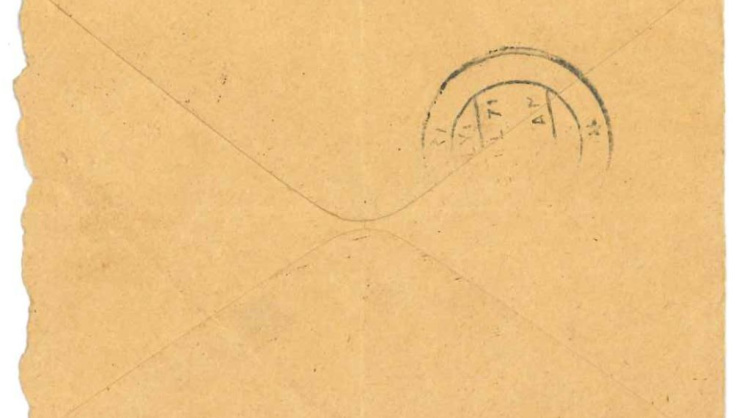
On 11 May 1971, employees from southern Bengal residing in Dhaka set off for Khulna aboard a Rocket Steamer from Narayanganj, travelling through Faridpur. Alongside ordinary passengers, the steamer was carrying a group of about fifty Pakistani soldiers and a substantial supply of military provisions. They were travelling to Khulna in civilian clothes under the leadership of a major.
En route, when the steamer reached Tala Port in Faridpur, local boatmen relayed news of the soldiers’ presence to a freedom fighters’ camp located in Manikhar village.Upon receiving the news, the group of freedom fighters made an immediate decision to attack the Rocket Steamer and managed to capture it with almost no resistance. The Bengali passengers on board were gathered together and made to take an oath that they would not assist the Pakistan government under any circumstances, after which they were released. The Bengali passengers then left the area on foot.
All the Pakistani soldiers, including the major, were taken to a nearby river shoal (char). Following a brief trial there, they were sentenced to death, and the executions were carried out on the spot.
Afterwards, the steamer was sunk along with the passengers’ belongings and the military supplies.
That same afternoon, the Pakistan Army entered Gopalganj town with the assistance of some local collaborators and subsequently launched an attack on the Manikhar camp. Initially, the freedom fighters successfully repelled the assault, but it soon became impossible to withstand the Pakistani forces and their superior modern weaponry. Once the freedom fighters had been dispersed, the Pakistan Army set the village on fire.
One of the freedom fighters who participated in this operation was Mohammad Abdur Rauf. An interview detailing his wartime activities was included in the ninth volume of the Bangladesh Liberation War Documents (Muktijuddho Dalilpatra).
A window into history: The letter to “Hena”
It is extraordinarily rare to find a personal, private letter that directly corresponds with a major wartime event documented in an official historical record such as the Bangladesh Liberation War Documents (Muktijuddho Dalilpatra). Yet, among the few hundred items in my modest collection, one particular letter stands out as a remarkable record of human vulnerability and history.
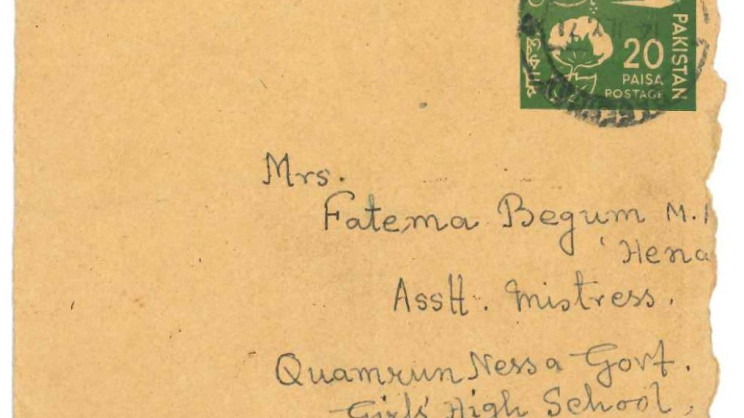
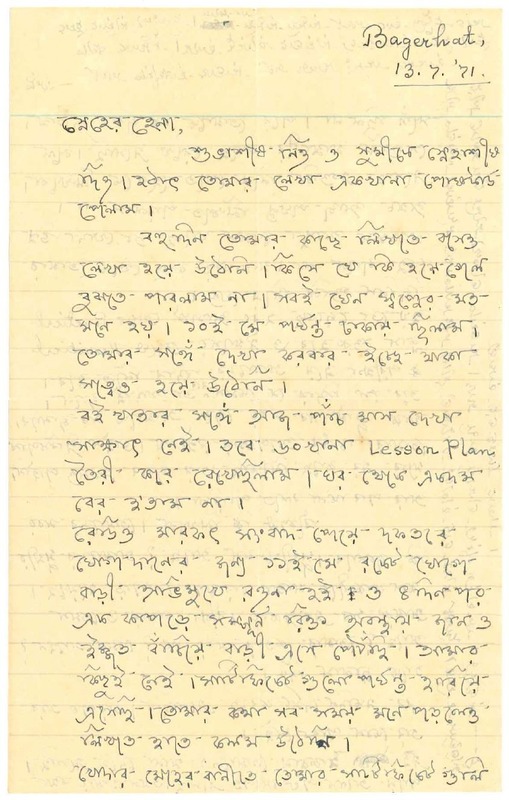
Written on 11 July 1971, from Bagerhat (then a subdivision of Khulna District), the letter was addressed to Mrs Fatema Begum (Hena), MA, an Assistant Mistress at Quamrun Nessa Government Girls’ High School in Tikatuly, Dhaka.
The author of the letter—addressing Hena affectionately as a younger relative—was an educated woman, likely a schoolteacher herself, who had survived a harrowing journey from occupied Dhaka back to her ancestral village. Crucially, she records setting off on her journey on the exact date of the Tala Port incident: 11 May.
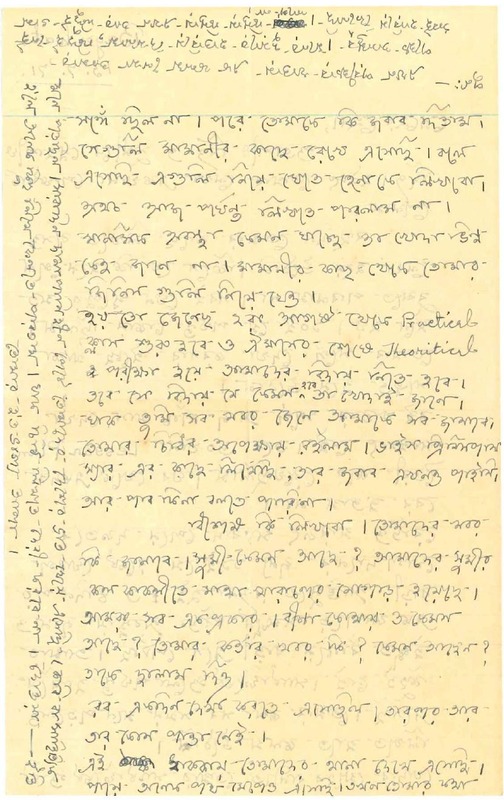
The letter reads as a deeply moving personal chronicle of displacement, trauma, loss, and endurance:
Dear Hena,
Accept my blessings and give my love to Sumi. I was surprised to receive a postcard from you out of nowhere.
For a long time, I sat down to write to you, but couldn’t bring myself to finish. I couldn’t comprehend how everything unfolded. It all feels like a dream. I was in Dhaka until May 10th. Despite my wish to see you, I couldn’t manage to do so.
I haven’t been in touch with my books or notebooks for five months now. However, I had prepared 60 Lesson Plans. I didn’t step out of the house at all.
Upon hearing the announcement over the radio, I set off for home on May 11th via rocket steamer to report to the office. After four days, I finally reached home with empty hands—with nothing but the clothes—barely saving my life and honor. I have nothing left; I even lost all my academic certificates along the way. Although you were constantly on my mind, my hand simply refused to pick up a pen to write.
As the writer continues, the combination of administrative compulsion and overwhelming personal despair becomes palpably clear. The military regime was issuing radio broadcasts ordering government employees and teachers to return to their posts in an effort to project an illusion of “normalcy” to the international community, even as river routes were turning into active battlefields.
By the grace of God, your certificates were not with me. Otherwise, how could I have ever faced you? I left them with Mamani (aunt). I told her I would write to Hena to collect them. Yet, until today, I couldn’t write. God alone knows the agonizing state of my mental health. Please collect your documents from Mamani.
Perhaps you have heard that practical classes are scheduled to begin on August 2nd, and the theoretical exams will take place at the end of that month, marking our final departure. What kind of farewell that will be, only God knows. Anyway, please find out all the news and keep me informed. I will be awaiting your reply. I wrote to the Vice Principal Sir, but I haven’t received a response yet, and I don’t know if I ever will.
There is not much else to write. Please let me know how you all are doing. How is Sumi? Our little Sumi’s endless chatter almost drives us mad with joy. All of us here are managing somehow. Where is Bina, and how is she? What is the news about your husband? How is he? Please convey my regards to him.
Rob came to see us one day. After that, there has been no trace of him.
During this ordeal, I happened to pass through your sub-district (thana). I had to cover a great distance on foot. I was thinking of you the entire time. On an empty stomach, after a whole day without food or water, I finally ate a meal of rice in your hometown. Had I been a poet or a writer, I could have penned so much about it. In any case, do not delay in replying. With prayers and love,
Yours affectionately,
Your unfortunate Apa.
Finally, she concludes the letter with a postscript that powerfully captures the psychological trauma experienced by countless Bangladeshis in 1971:
P.S.: Right now, it feels impossible for me to write even a single word on an exam paper. I searched through the doors of my mind, only to find nothing—I have lost everything. Consumed by constant anxiety, I no longer find joy in anything.
The true measure of a collection
When people ask me why I have only a few hundred stamps and covers after spending nearly fifty years as a philatelist, I show them letters like the one written to Hena on 11 July 1971.
Philately, in its highest form, is not a game of numbers. It is not about hoarding thousands of duplicate stamps in mass-produced albums. It is about stewardship.
A single cover, carrying an authentic postmark from a small river station in 1971 and containing a letter that documents a woman walking miles on an empty stomach during a perilous journey home on 11 May—the very day a Rocket Steamer was captured and later sunk at Talaghat—can tell us more about history than a thousand mint-condition stamps stored in a vault.
In the folds of these fragile, yellowed pieces of paper lie the intimate, unvarnished memories of 1971—the quiet tears, the desperate hopes, the violent disruptions of everyday life, and the enduring dignity of ordinary people. To hold these letters is to hold history itself. And to preserve them for future generations is the greatest privilege a philatelist could ever ask for.
A.Z.M. Akhlaqur Rahman is a renowned philatelist and vice-president of Philatelic Society of Bangladesh.
Send your articles for Slow Reads to slowreads@thedailystar.net. Check out our submission guidelines for details.
The extraordinary journey of Atish Dipankar Srigyan
Forgotten story of Jeanette Van Tassel, the American woman who flew over Dhaka in 1892
Beyond 1947 / A personal essay
Abul Mansur Ahmad / A global quest in search of a nation

Chand Bibi and the forgotten history of Muslim women’s political resistance
Women’s voices in Nazrul’s Dhumketu
How Milad-un-Nabi shaped Muslim cultural life in colonial Bengal
What Rashomon teaches us about truth and human behaviour
Why Chittagong never became a maritime city