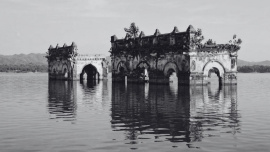
Banglay Bidroho: A rare collection of Liberation War paintings
From the very beginning of March 1971, the people of Bengal took to the streets in pursuit of independence. Responding to the call for freedom, all were preparing to join the Liberation War. Artists, too, sought to inspire the people through their work, creating artworks across various media. It is against this backdrop of resistance, struggle, and the pursuit of liberation that the series of paintings “Banglay Bidroho”(Rebellion in Bengal) emerged.
These prints were created in Chattogram in mid-March 1971. Published by the Artists–Writers–Cultural Activists Resistance Association, Chattogram, the series featured works by six artists. Notably, these prints were produced even before the Liberation War formally began. Such expressive visual narratives—speaking of freedom, independence, and resistance—continue to inspire to this day. The series has since become a valuable artefact of the Liberation War.
Preface
8 March 1971. Chattogram city.
That afternoon, a spontaneous gathering of local cultural figures took place at “Sahitya Niketan,” the residence of Professor Abul Fazal. Presided over by him, the meeting was attended by prominent individuals including Dr A. R. Mallik (Vice-Chancellor of the University of Chittagong), Professor Syed Ali Ahsan, Mahmud Shah Qureshi, Mohammad Abu Jafar, Mahbub Talukdar, Rashid Choudhury, Kamal A. Khan, Momtajuddin Ahmad, Syed Mohammad Shafi, Mahbub Hasan, Tareq Sobhan, O. C. M. Rosario, Anisuzzaman, Abdur Rob, alongside numerous students and young cultural activists.
Formation of the Resistance Association
At this meeting, the Artists–Writers–Cultural Activists Resistance Association was formed, with the aim of mobilising the public in support of the independence movement. One of its first initiatives was to organise a procession, which later marched from Sahitya Niketan to New Market.
In his book, Amar Ekattor, Anisuzzaman recalls that the call of the Resistance Association received a strong response: “Everyone wanted to do something for the country… Resistance committees were formed in various areas, and in some places, training centres were established.”
On 15 March 1971, the Association organised a public gathering at Laldighi Maidan. Following speeches and musical performances, Momtajuddin Ahmad’s play “Ebarer Sangram” was staged.
“Banglay Bidroho”
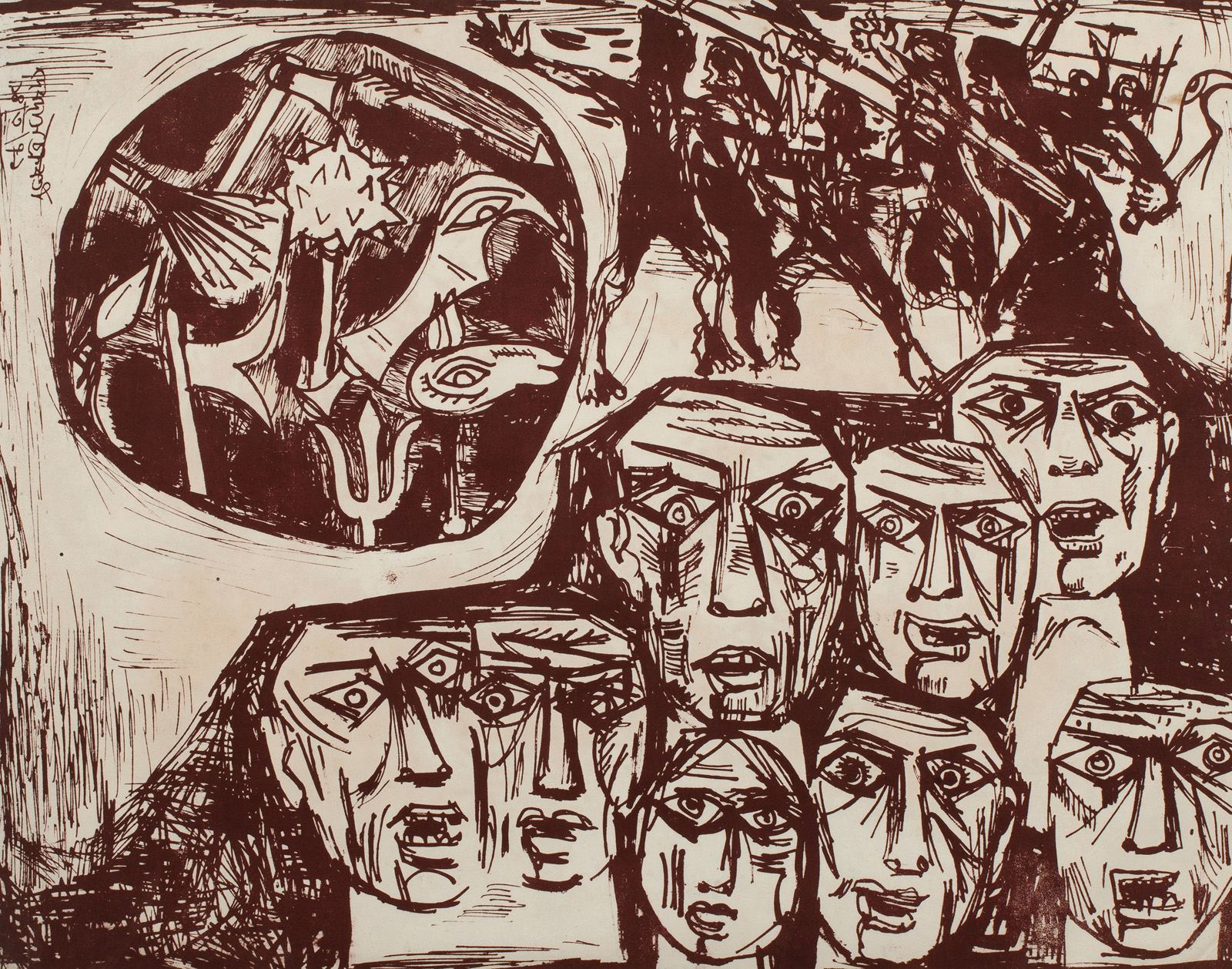
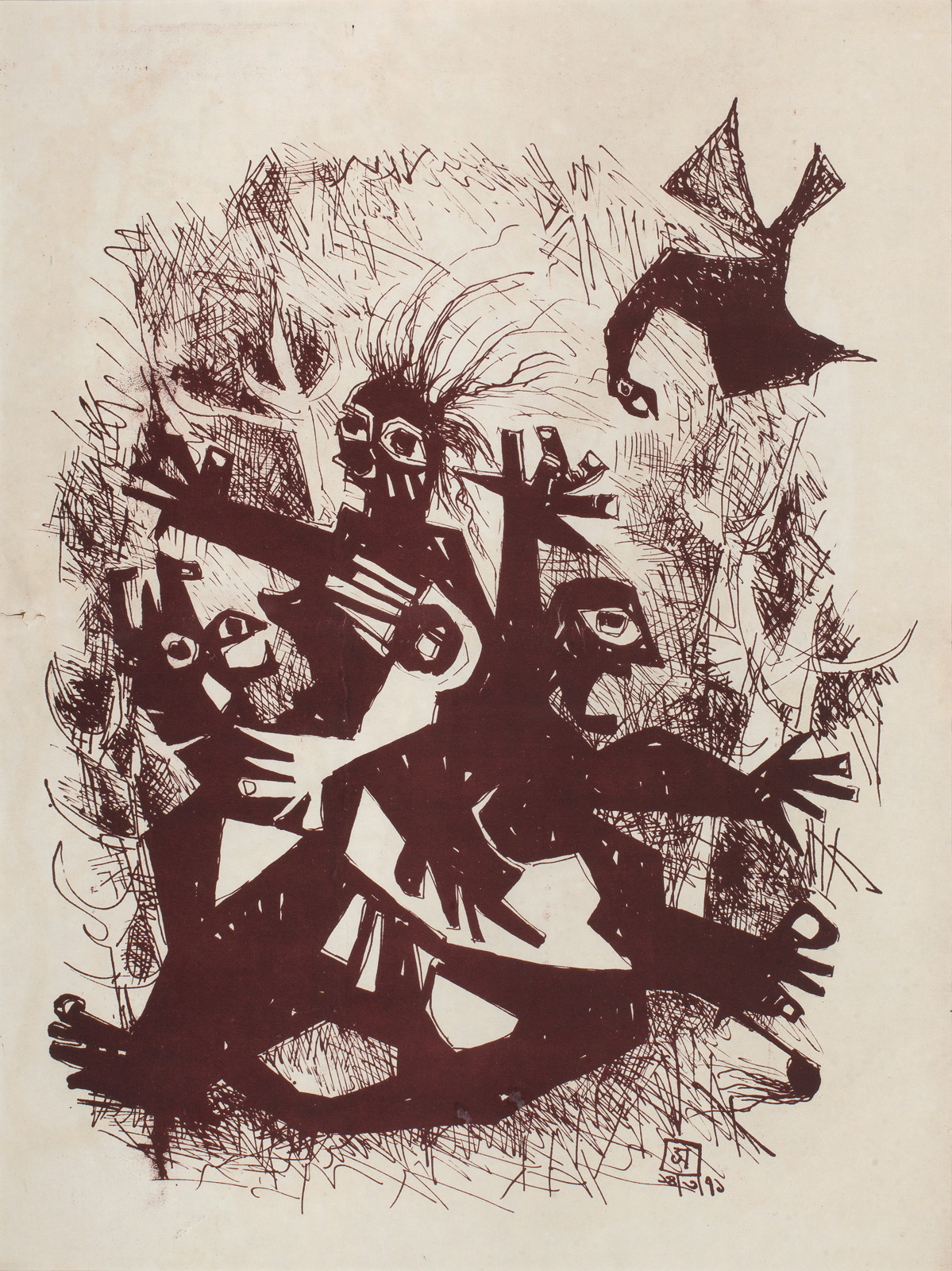
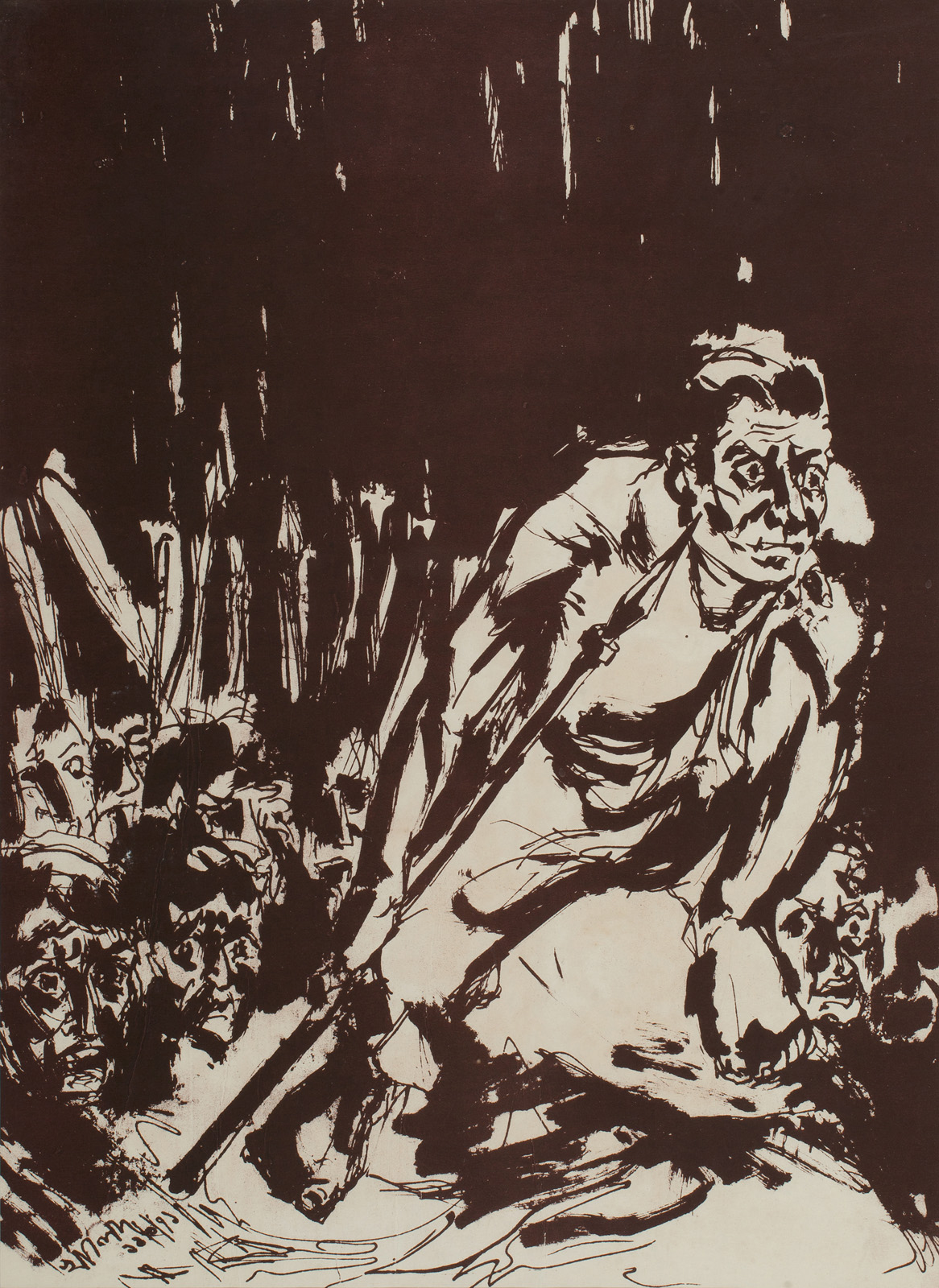
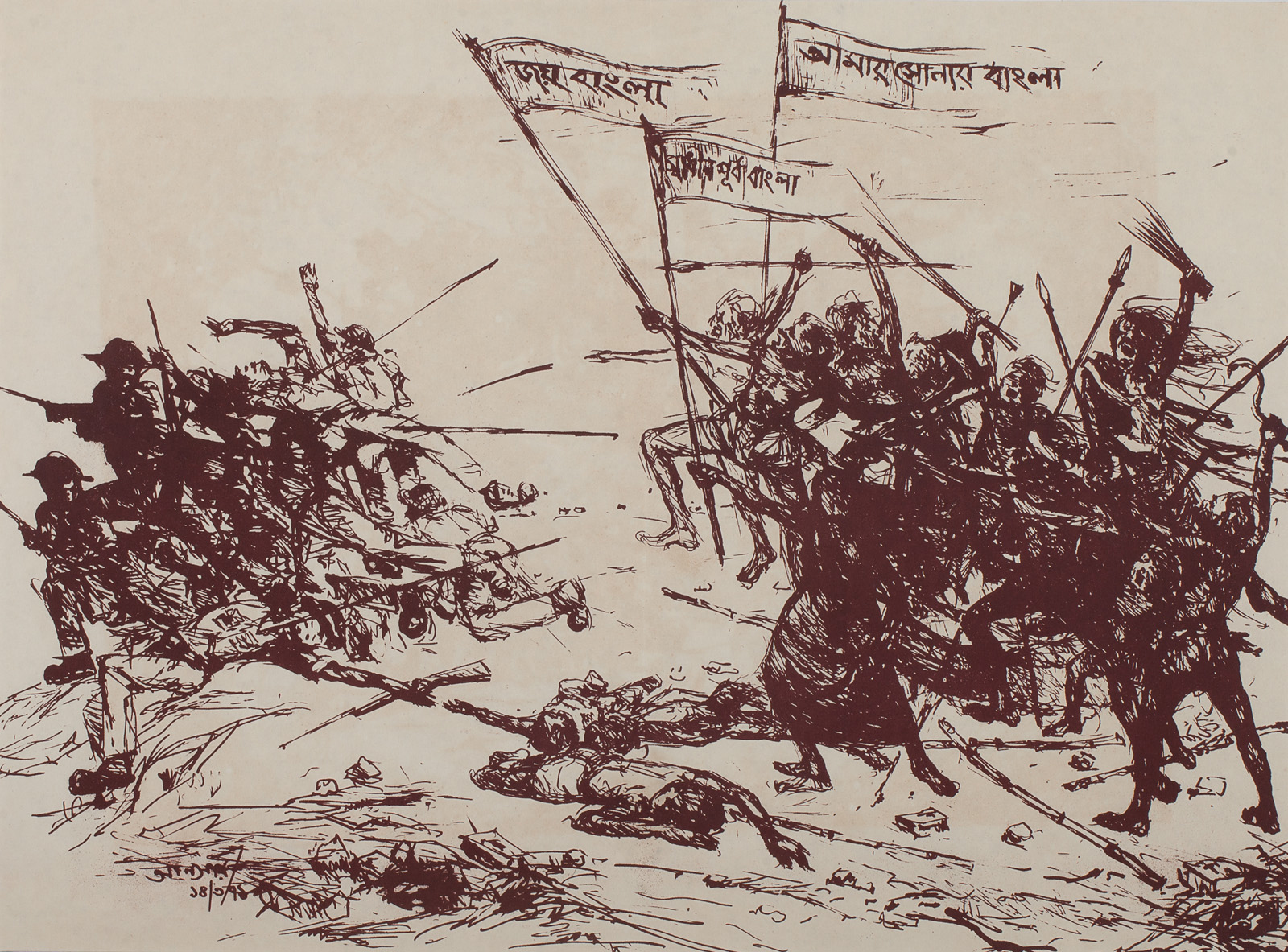
At the Laldighi Maidan gathering, a folio of prints titled “Banglay Bidroho” (Rebellion in Bengal) was sold at an affordable price to raise funds. The folio included one print each by Rashid Choudhury (1932–1986), Devdas Chakraborty (1933–2008), Sabih-ul Alam (b. 1940), Syed Abdullah Khalid (1942–2017), Ansar Ali (1943–2018), and Mizanur Rahim (b. 1946).
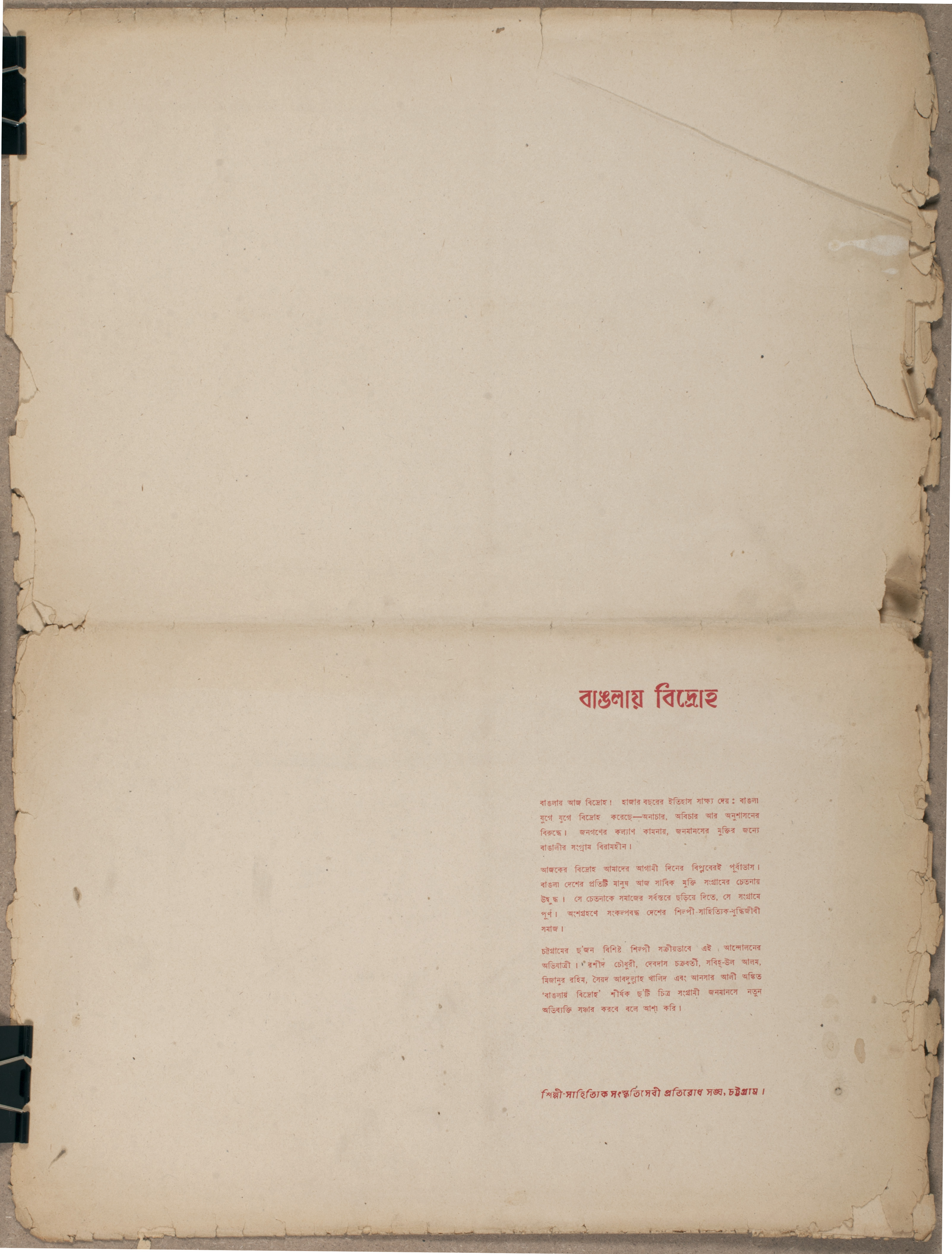
The folio was published by the Resistance Association of Chattogram with its introductory note written by Mahmud Shah Qureshi (b. 1936).
In his foreword, Qureshi wrote: “Today, Bengal rises in rebellion. History bears witness that through the ages, Bengal has risen against injustice, oppression, and tyranny. In pursuit of public welfare and liberation, the Bengali struggle has been relentless.
Today’s rebellion is a prelude to tomorrow’s revolution. Every individual in Bengal is inspired by the spirit of a meaningful struggle for freedom. Artists, writers, and intellectuals are committed to spreading that spirit across all levels of society and to participating fully in the struggle.
Six distinguished artists of Chattogram are active participants in this movement. It is hoped that their works, collectively titled ‘Banglay Bidroho’, will evoke new expressions within the minds of the struggling masses.”
About the prints
Each print measured 51 cm by 39 cm and was produced using offset lithography. The exact number of folios published remains unknown. The introductory text was printed in red on the envelope containing the prints. Today, these rare works are preserved in museums, archives, and private collections across Bangladesh.
Recalling the time, Mahmud Shah Qureshi remarked: “It was a moment of intense struggle. We were all deeply stirred. After Bangabandhu’s 7 March speech, we in Chattogram were fully committed to independence. Rashid Choudhury asked me to write the foreword for the album. I initially declined, but he insisted—and so I wrote it.”
Reflecting on its significance, he added: “We undertook this work with great risk and fervour. It is a historic event. A group of artists published a print album in support of the Liberation War—something truly remarkable.”
Artists’ reflections
Artist Mizanur Rahim, one of the contributors, recalled: “I joined the Fine Arts Department at the University of Chittagong as a teacher in January 1971. Rashid Choudhury, head of the department at that time, was also the founder of the departmnet. Devdas Chakraborty joined around the same time, and our students incluing Syed Abdullah Khalid, Ansar Ali. Sabih-ul Alam was also working with us.”
On the creation of the series, he said: “In March 1971, Rashid Choudhury proposed that we produce prints for a public gathering at Laldighi Maidan. We decided to produce some prints to take to the public gathering. He brought a few lithographic plates. At that time, it was not feasible for us to carry out lithography on stone. Rashid Choudhury, Devdas Chakraborty, Syed Abdullah Khalid, Ansar Ali, Sabih-ul Alam, and I—the six of us each created one image on the plates. These were likely printed at the litho press of The Daily Azadi newspaper.”
He added that the prints were monochromatic—produced in black, brown, and maroon—and sold in folios for a nominal price of five taka.
Artist Sabih-ul Alam reflected: “We painted what we felt. We wanted freedom. People of all faiths—Hindus, Muslims, Buddhists, Christians—shared this aspiration. We expressed it through our art.”
The responsibility of the artist and the language of the art
The folio is preserved at the Liberation War Museum. Trustee and writer Mofidul Hoque observed: “The connection between art and political movements in Bangladesh dates back to the Language Movement of 1952. In March 1971, it reached an unprecedented intensity. Artists participated in the movement through their own creative language. The significance of these works has evolved over time. They represent the responsibility of the artist—one that must be fulfilled through the language of art itself.”
He further remarked on the print by Rashid Choudhury included in the series that the style of this work closely resembles the imagery Chowdhury had created for banners commemorating the 21 February observances at the time. These works stand as important examples of public art. They also bear witness to the idea that all living beings were participants in Bengal’s rebellion. A similar imprint can be observed in the other works in the series as well.
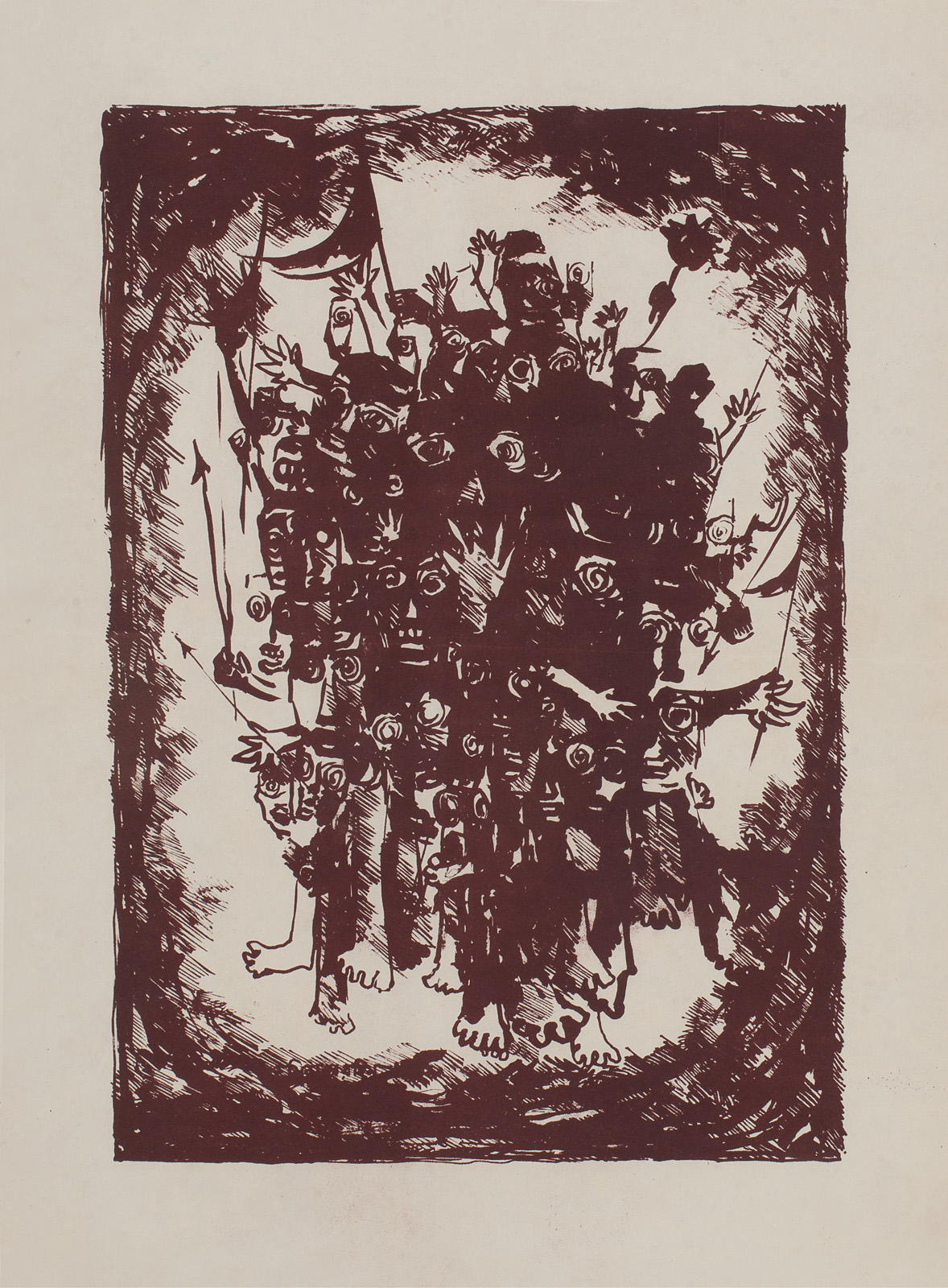
Historian Muntasir Mamun, who owns a copy of the folio, noted, “To my knowledge, no such series existed before March 1971. Artists from the University of Chittagong played a pioneering role. Though many of the artists are not widely known today, their works vividly capture the sense of an impending struggle. This is what makes the series unique.”
A testament of public art
Visual artist and former professor Dhali Al Mamun described the series as “an extraordinary document of the Bangladeshi state.” It reflects the cultural resistance that accompanied the Liberation War—one of the earliest such examples where students and teachers from Chittagong University were involved.
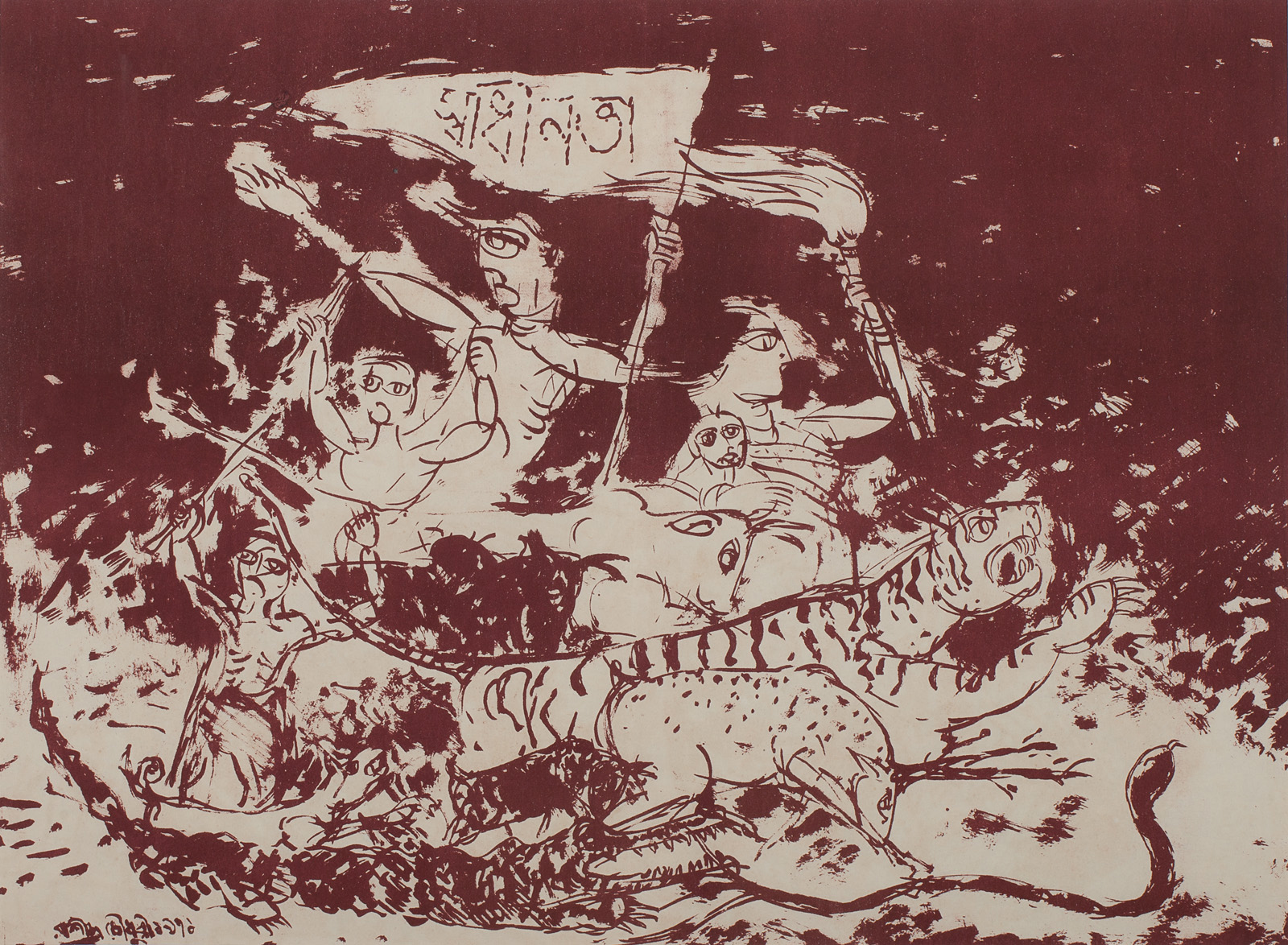
He further emphasised, “These prints combine elements of public art and modernism. They reflect protest, social reality, and an effort to communicate with the masses. Deeply connected to the ideals of freedom and liberation, they continue to inspire people even today.”
Ashfaqur Rahman is a writer and journalist.
Send your articles for Slow Reads to slowreads@thedailystar.net. Check out our submission guidelines for details.
Part I / From Artificial Intelligence to the Artificial State: Is the Trajectory Inexorable?
157th Birth Anniversary of Mahatma Gandhi / Gandhi’s return to Noakhali
Why does Tagore still trouble Bangladesh’s idea of ‘us’?
Can Bangladesh make better use of its zakat money?
Three revolutions that reshaped the world
Paradise lost and found: Rediscovering early modern Bengal
Unbound Mother: The making and remaking of Kaali in Bengal
Do great leaders make history, or does history make them?
Poison and cremation: A forensic history of colonial Bengal