Forgotten story of Jeanette Van Tassel, the American woman who flew over Dhaka in 1892
A few days ago, late one afternoon, I walked through the narrow lanes of Old Dhaka and into the Christian Cemetery in Narinda. Standing among the weathered graves, I found myself thinking of those lines and of a woman who died more than a century ago—Jeanette Van Tassel, Bengal’s first recorded female aeronaut.
The cemetery, said to have been established in the 17th century, is filled with rows of old graves, many more than a hundred years old. Some bear names carved into stone; others have cement plaques marking the dead.
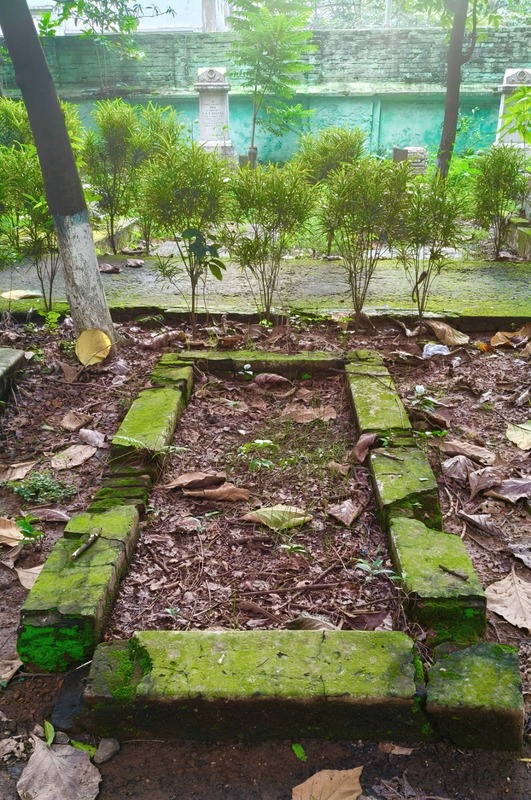
Among them lies a neglected grave, almost forgotten by time. There is no nameplate, no inscription, no visible clue to identify the person buried there. Yet beneath that unmarked grave lies one of the most remarkable figures in Dhaka’s history—Jeanette Van Tassel.
Today, seeing an aircraft, helicopter, parachute or balloon in the sky is hardly unusual. But when people were first attempting to conquer the sky, flight was a different proposition altogether. It was thrilling and wondrous, but also extraordinarily dangerous.
One such story unfolded in Dhaka.
On March 16, 1892, residents of the city witnessed something that, at the time, seemed almost unimaginable in this part of the world.
A 24-year-old American woman was going to rise into the sky in a balloon and then descend by parachute. Thousands gathered along both banks of the Buriganga River to witness the spectacle.
The woman at the centre of it all was Jeanette Van Tassel. And her flight over Dhaka ended in a tragedy that remains one of the most poignant stories in the city’s history.
An agreement
The ballooning exhibition was organised by Nawab Khwaja Ahsanullah of Dhaka to celebrate his receiving the title of “Nawab Bahadur” in 1892.
At the time, balloonist Park Van Tassel and his troupe were based in Calcutta. Balloon exhibitions were their profession, and Jeanette was one of the troupe’s star attractions.
German photographer Fritz Kapp reportedly introduced the troupe to Nawab Ahsanullah. An agreement was then reached to stage the balloon exhibition in Dhaka for Tk 10,000—an enormous sum at the time.
The city soon began buzzing with anticipation. Announcements were made across Dhaka, telling people that on a particular day, a foreign woman would rise into the sky in a balloon. Public curiosity reached fever pitch.
The afternoon Dhaka stood still
March 16, 1892. Late afternoon.
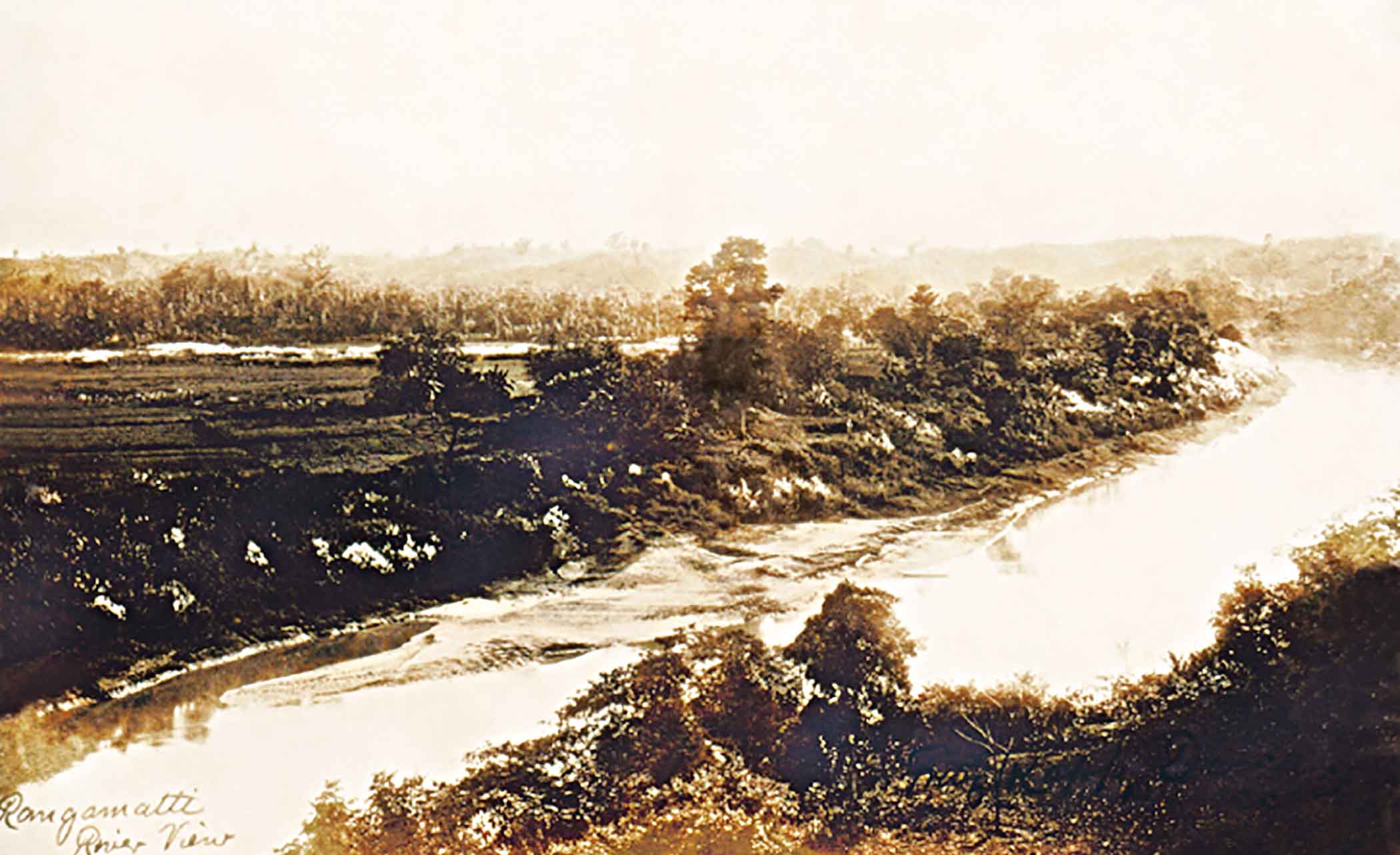
Crowds poured towards both banks of the Buriganga. Boats filled the river. People gathered along the shore and climbed onto rooftops for a better view. The grounds and roof of Ahsan Manzil were also packed with spectators.
On the southern bank of the Buriganga, the balloon began to inflate.
Wood was burned with kerosene to produce hot air, which was then fed into the balloon. This is how the spectacle was described in the diary of Ganiur Raja, a grandson of Sylhet’s mystic poet and songwriter Hason Raja.
Jeanette was supposed to descend onto the roof of Ahsan Manzil.
The arrangement had been made for a practical reason. The women of the Nawab’s household, living in purdah, could not simply go outside and join the crowds. So, the Nawab wanted Jeanette to land on the palace roof, allowing the women of the household to watch the spectacle from there.
Jeanette reportedly agreed to the dangerous and uncertain landing for an additional five thousand taka.
Jeanette in the sky
At around 6:20 pm, the ropes holding the balloon were released. The enormous balloon began rising almost immediately. Thousands of people below erupted in excitement.
According to Ganiur Raja, the woman rose so high that she reached an altitude where kites and vultures could be seen.
Jeanette stood on a small wooden platform suspended beneath the balloon as it climbed higher and higher.
One account says the balloon rose to nearly six thousand feet.
But the flight was not going according to plan.
The wind carried her far from Ahsan Manzil.
A strong wind was blowing from the south. Jeanette had already taken the risk of jumping from balloons many times before. But nobody knew that the jump she was about to make in Dhaka would be her last.
The balloon drifted away from Ahsan Manzil and continued farther and farther. Eventually, Jeanette had to make a decision. She jumped.
Different accounts say that her parachute descent in Dhaka was her 41st such jump.
Once the parachute opened, the wind caught it and carried Jeanette northwards. People on the ground began running after her, following the direction in which she was drifting. No one knew where she would eventually land.
Then, suddenly, she became caught in a tree.
The place was largely uninhabited at the time, part of an area surrounded by gardens and woodland associated with the Nawab family. Later accounts have variously placed the location somewhere around present-day Shahbagh, Ramna or the Dhaka University area.
Jeanette was still alive.
A failed rescue
Police arrived at the scene to rescue her.
An English police officer, accompanied by several local policemen, began organising the rescue.
Bamboo poles were brought to help Jeanette climb down. But she was reluctant to descend using the bamboo. She wanted to wait until proper equipment could be brought. She knew that falling from the height at which she was trapped could be fatal.
The police, however, repeatedly urged her to come down. Eventually, they attempted to lower her using the bamboo.
Then disaster struck. The bamboo reportedly broke, or one of its joints came apart. Jeanette fell to the ground, sustaining severe injuries
She was taken to hospital. Two days later, on March 18, she died.
Her story did not end with her death
Jeanette’s death caused a major stir in Dhaka.
Some locals blamed the failed rescue operation for her death. English-language newspapers, however, reportedly presented a different perspective. There were also allegations that rumours had spread among Dhaka’s residents.
One account suggests that Jeanette’s family considered taking legal action against the police. But, as so often happens with old tragedies, the controversy gradually faded from public memory.
Jeanette was buried at the old Christian Cemetery in Narinda. And over time, even her grave became almost impossible to identify.
Who was Jeanette?
For decades, Jeanette’s identity remained shrouded in uncertainty.
Ganiur Raja’s travel account put her age at 15 or 16. But an old death register preserved at St Thomas’ Church in Old Dhaka later gave her age as 24 and listed her occupation as an aeronaut.
Her family background is also the subject of differing accounts.
One study says Jeanette was born in Cincinnati, Ohio, and that her maiden name was Jeanette Rumary.
Her father was George John Rumary, and her mother was Jane Tingley. She was reportedly the fourth of eight children.
But there are disagreements over her family, her relationship with Park Van Tassel and even the identities of other members of the troupe.
Some sources describe Jeanette as Park Van Tassel’s wife. Others identify her simply as a member of his troupe. There are also claims that “Van Tassel” was used as a professional name by members of the ballooning team.
As a result, the details of Jeanette’s life cannot yet be neatly assembled into a single, definitive biography.
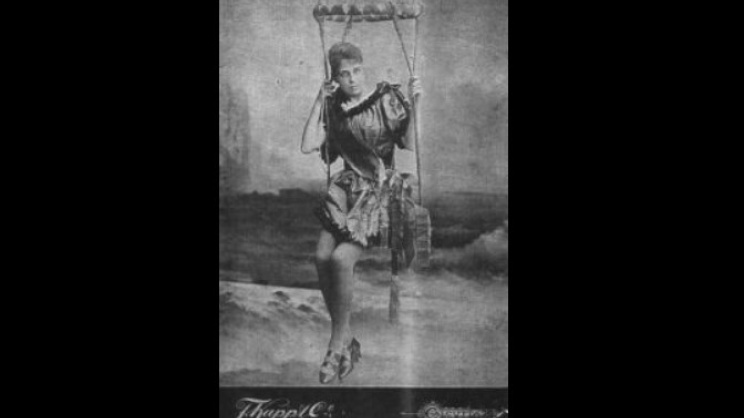
Even her photograph is uncertain.
A photograph long circulated as an image of Jeanette may not actually be of her.
However, it is certain that Jeanette was a professional aeronaut who travelled with the Van Tassel troupe and took part in balloon exhibitions in different parts of the world.
How Jeanette was rediscovered
Much of the credit for bringing Jeanette’s forgotten story back to light goes to architect and researcher Shamim Aminur Rahman.
He told The Daily Star that he first came across the story while reading Ganiur Raja’s account of his travels in Dhaka.
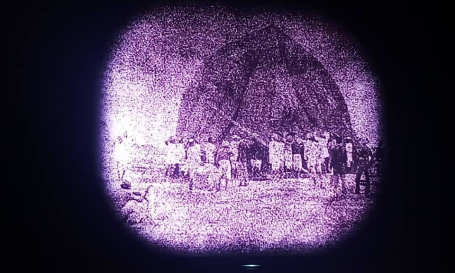
His investigation took a major turn in 1989, when he found an old photograph in the collection of Khwaja Halim, a descendant of the Dhaka Nawab family.
“I found an old photograph,” Shamim recalled. “It showed a huge, partly inflated balloon surrounded by a large crowd. I compared it with Ganiur Raja’s description, and that is how the investigation began to move forward.”
He then searched the old death registers at St Thomas’ Church in Old Dhaka.
There he found Jeanette’s name, age, occupation and date of death.
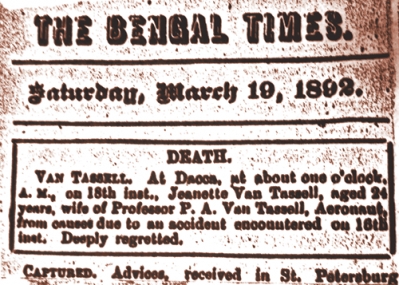
Rahman also examined microfilms of old newspapers preserved in the manuscript section of the University of Dhaka. He says The Bengal Times carried a report on Jeanette’s death on March 19, 1892.
In 2000, Shamim Aminur Rahman published his research book, Dhakar Prothom Akashchari Van Tassel (Van Tassel, Dhaka’s First Aeronaut).
The book helped bring Jeanette Van Tassel’s story back into public view more than a century after her death.
A woman who dared to fly
Jeanette’s story is not simply the story of a balloon ride gone tragically wrong.
It is also a story about a time when the sky was still largely unknown territory.
In 1892, flying was not a routine part of life. There were no aeroplanes. There were no modern aviation systems or safety procedures.
Jeanette knew the risks. She had already made dozens of parachute descents.
Yet she climbed into that balloon over Dhaka. For a few extraordinary minutes, she became the woman everyone in the city was watching.
Thousands looked up as she disappeared into the sky. Thousands followed her path when the wind carried her away. And when she became trapped in a tree, the crowd watched as an attempted rescue turned into a fatal accident.
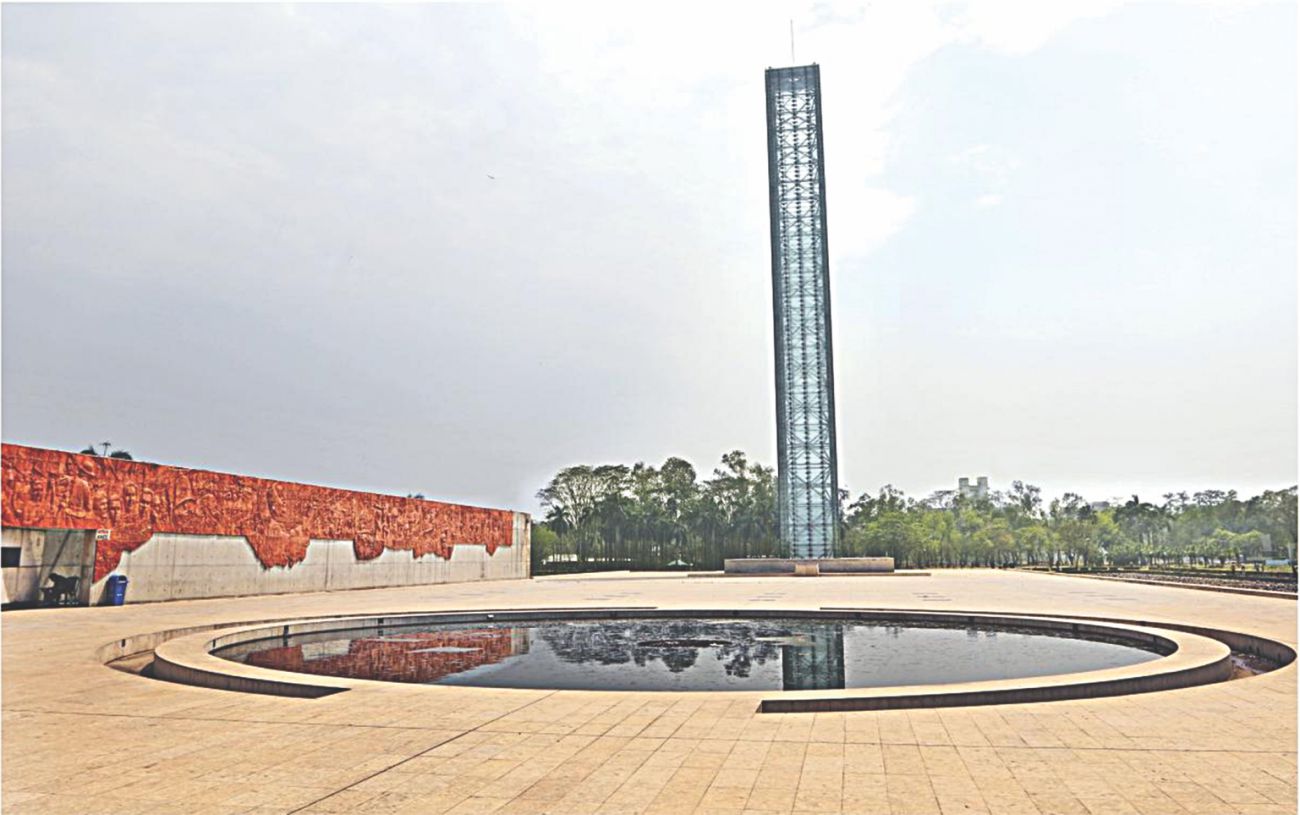
More than 130 years later, the city has changed almost beyond recognition.
The Buriganga is still there. Ahsan Manzil still stands. The places from which people once watched Jeanette rise into the sky have been transformed by time.
And somewhere in Narinda, beneath a weathered and almost forgotten grave, lies the woman who once made Dhaka look up.
Fahima Kaniz Lava is a journalist. She can be reached at fahima.kaniz.mkt@gmail.com.
Send your articles for Slow Reads to slowreads@thedailystar.net. Check out our submission guidelines for details.
Beyond 1947 / A personal essay
Abul Mansur Ahmad / A global quest in search of a nation

Chand Bibi and the forgotten history of Muslim women’s political resistance

Women’s voices in Nazrul’s Dhumketu
How Milad-un-Nabi shaped Muslim cultural life in colonial Bengal
What Rashomon teaches us about truth and human behaviour
Why Chittagong never became a maritime city

The many worlds of Ghulam Murshid
Operation Jackpot: How Bangladesh’s naval commandos struck at Pakistan’s lifeline in 1971