The extraordinary journey of Atish Dipankar Srigyan
Atish Dipankar was born around 982. We know much of his life from Tibetan chroniclers who tried to preserve his life story. They place his birthplace in Bikrampur. The village now identified as his birthplace is called Bajrajogini (Vajrayogini). I have wondered how old this name really is. Was the village already called Bajrajogini during Atish’s time? The question is particularly interesting because Vajrayana Buddhism flourished in this region during that time, and Vajrayogini is the name of a Tantric Buddhist deity.
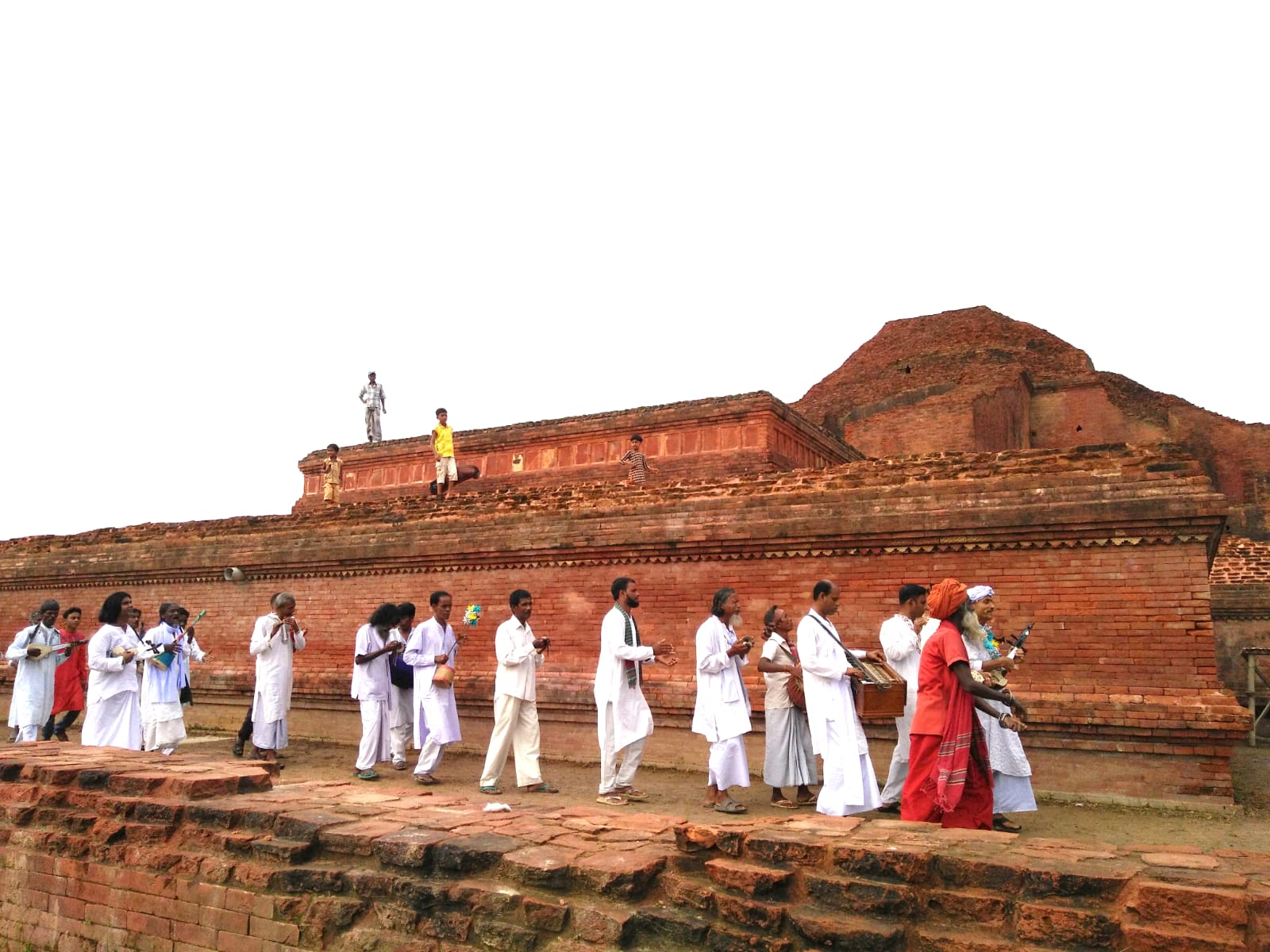
Even though southeastern Bengal, including Bikrampur, lay beyond the Pala heartland to the west, it was part of the Buddhist Chandra kingdom at the time of Atish’s birth. The two realms—the Pala Empire and the Chandra Kingdom—shared a Buddhist political culture and participated in connected religious networks. This broader region—which includes the modern states of Bihar and West Bengal in India and much of Bangladesh—was one of the great centers where Mahayana and Vajrayana Buddhist ideas, with their diverse worldviews, were studied, refined and debated in the great monasteries and libraries of Nalanda, Vikramashila, Odantapuri, Somapura and Devaparvata. We know Somapura today as Paharpur, while the extensive Buddhist ruins at Mainamati in Comilla belonged to the religious and cultural world associated with ancient Devaparvata.
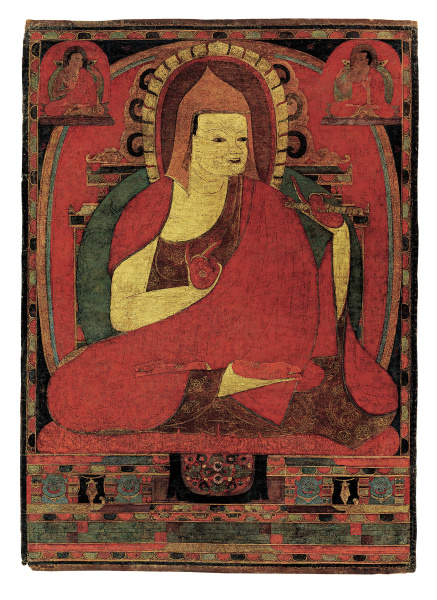
Atish received an excellent education in Buddhist philosophy and practice within this great network of Buddhist learning, studying under some of the leading Buddhist teachers of his time. He became a highly educated Buddhist monk and scholar. But he wished to learn more, especially about how to cultivate Bodhicitta. Bodhicitta—literally “the mind of awakening”—is the aspiration to attain enlightenment not for oneself alone, but for the benefit of all sentient beings.
Atish Dipankar was born around 982. We know much about his life from Tibetan chroniclers who sought to preserve his life story. They place his birthplace in Bikrampur. The village now identified as his birthplace is called Bajrajogini (Vajrayogini). I have wondered how old this name really is. Was the village already called Bajrajogini during Atish’s time? The question is particularly interesting because Vajrayana Buddhism flourished in this region during that period, and Vajrayogini is the name of a Tantric Buddhist deity.
Atish Dipankar was born around 982. We know much about his life from Tibetan chroniclers who sought to preserve his life story. They place his birthplace in Bikrampur. The village now identified as his birthplace is called Bajrajogini (Vajrayogini). I have wondered how old this name really is. Was the village already called Bajrajogini during Atish’s time? The question is particularly interesting because Vajrayana Buddhism flourished in this region during that period, and Vajrayogini is the name of a Tantric Buddhist deity.
Even though southeastern Bengal, including Bikrampur, lay beyond the Pala heartland to the west, it was part of the Buddhist Chandra Kingdom at the time of Atish’s birth. The two realms—the Pala Empire and the Chandra Kingdom—shared a Buddhist political culture and participated in interconnected religious networks. This broader region—which includes the modern states of Bihar and West Bengal in India and much of Bangladesh—was one of the great centres where Mahayana and Vajrayana Buddhist ideas, with their diverse worldviews, were studied, refined and debated in the great monasteries and libraries of Nalanda, Vikramashila, Odantapuri, Somapura and Devaparvata. We know Somapura today as Paharpur, while the extensive Buddhist ruins at Mainamati in Comilla belonged to the religious and cultural world associated with ancient Devaparvata.
Atish received an excellent education in Buddhist philosophy and practice within this great network of Buddhist learning, studying under some of the leading Buddhist teachers of his time. He became a highly educated Buddhist monk and scholar. But he wished to learn more, especially about how to cultivate Bodhicitta. Bodhicitta—literally, “the mind of awakening”—is the aspiration to attain enlightenment not for oneself alone, but for the benefit of all sentient beings.
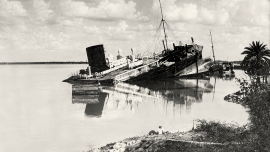
Atish heard of a great scholar living somewhere in Suvarnadvipa who was particularly renowned for his teachings on the cultivation of Bodhicitta. And here the story becomes really interesting. Modern specialists have debated where Suvarnadvipa was. Could this have been the island of Sumatra, where great Buddhist centres existed at the time, including Muara Jambi, whose extensive ruins survive today? Or was it in the Malay Peninsula, at a place called Kedah? It is most frustrating not to know exactly where Atish spent the next 12 years of his life under the tutelage of a scholar named Dharmakirtisri, also known as Serlingpa. There was another Dharmakirti—the great Indian Buddhist philosopher and logician of the 7th century—but we know very little about this Dharmakirtisri.
But what intrigues me is the fact that, in the 11th century, the fame of a distant Buddhist scholar in Malaya or Sumatra could reach Bengal, and Atish could undertake this extraordinary journey and return. I tried to find out from which port Atish could have embarked on this historic journey, but to no avail. By this time, Tamralipti, the great ancient port of Bengal, was already in decline. Arab geographers describe another port called “Samandar”—possibly derived from the word samudra, or shomudro—which some historians have identified with a port near or at present-day Chattogram. Could Atish have sailed from there? We simply do not know.
In any case, it seems that the later part of Atish’s life is better documented, largely because of the painstaking work of Tibetan chroniclers. After returning from Suvarnadvipa, he became a very well-known expositor of Buddhist doctrine and worked at such great monasteries as Nalanda and Vikramashila. He was a scholar and teacher at Vikramashila when the story took another turn.
Things were happening in faraway Tibet. After a long period of political and religious turmoil, the Buddhist rulers of western Tibet were looking to India for authoritative teachers who could help restore Buddhist learning and practice. A group sent to India returned with news of Atish’s reputation. Subsequently, a delegation of nine men was sent specifically to persuade Atish to come to Tibet. Atish did not agree to go. The leadership at Vikramashila was also unwilling to let him leave. According to Tibetan accounts, eight of the nine members of that delegation died during the perilous journey. Another mission, however, eventually came. This time, Atish relented.
Atish spent about three years in western Tibet before travelling to central Tibet. There, he became an influential scholar and teacher and played an important role in the revival and reorganisation of Tibetan Buddhism. He wrote a short but influential treatise called Bodhipathapradipa—The Lamp for the Path to Enlightenment—which presented the Buddhist path as a systematic progression and had a lasting influence on the later Tibetan Buddhist tradition.
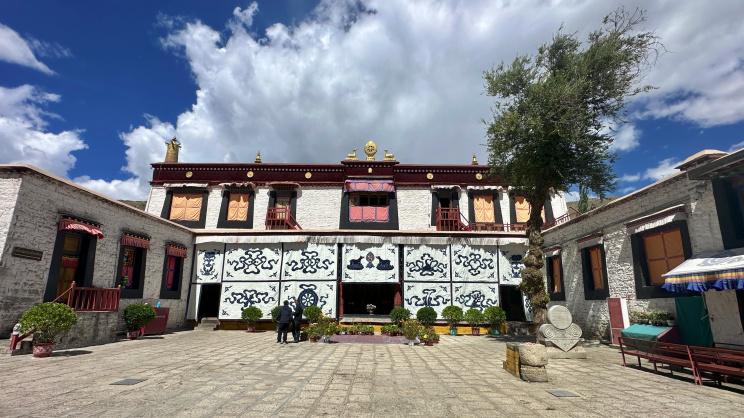
Atish had intended to return to India but died at Nyethang, near Lhasa, in 1054, at the age of about 72. A shrine associated with him is still revered there. In Tibet, he came to be known as Jowo Je—Lord Atish. He had been born Chandragarbha and later took the monastic name Dipankar Srigyan, while Atish—roughly meaning “the eminent master”—was the honorific by which he became known to history.
Atish had intended to return to India but died at Nyethang, near Lhasa, in 1054, at the age of about 72. A shrine associated with him is still revered there. In Tibet, he came to be known as Jowo Je—Lord Atish. He had been born Chandragarbha and later took the monastic name Dipankar Srigyan, while Atish—roughly meaning “the eminent master”—was the honorific by which he became known to history.
There is one more question I have often thought about: what languages did Atish have to use in his scholarly and travel endeavours? Sanskrit was the mainstay of Buddhist scholarship, whether he was at Vikramashila or Somapura, and could provide a common scholarly language even in Suvarnadvipa. But outside the monastery walls, he must have encountered very different local languages. In Bikrampur, Atish would have spoken an eastern Indo-Aryan vernacular belonging to the linguistic world from which Bengali was emerging—the same broad period that gave us the Charyapada. We have little idea what language he used in everyday life during his twelve years in Suvarnadvipa—perhaps an early form of Malay or another local language. Tibet gives us a clearer picture. Atish worked with Tibetan translators and eventually took part in translating and revising Sanskrit Buddhist texts into Tibetan.
Even after one thousand years, I find it difficult to imagine the physical reality of Atish’s journeys. Atish had to brave the turbulent seas to reach Suvarnadvipa and, decades later, cross the formidable Himalayas on his way to Tibet, perhaps travelling at different stages on foot, on horseback or even on elephants. Even in modern times, we would think twice before undertaking such arduous journeys through extreme weather and difficult terrain, with the added dangers of pirates at sea and thieves and bandits on land.
But Atish’s journey was also a journey of ideas. For many Bangladeshis, it may come as a surprise that the Tibetan Buddhism that much of the world knows today was, to a significant degree, shaped by the Mahayana Buddhist intellectual traditions that were taught and preserved in the viharas that once dotted the landscape of Bengal and Bihar.
Dipen Bhattacharya is a California-based writer and retired professor of physics and astronomy. His work spans fiction as well as writings on Bangladesh’s geological history and astronomy.
Send your articles for Slow Reads to slowreads@thedailystar.net. Check out our submission guidelines for details.
Forgotten story of Jeanette Van Tassel, the American woman who flew over Dhaka in 1892
Beyond 1947 / A personal essay
Abul Mansur Ahmad / A global quest in search of a nation

Chand Bibi and the forgotten history of Muslim women’s political resistance
Women’s voices in Nazrul’s Dhumketu
How Milad-un-Nabi shaped Muslim cultural life in colonial Bengal
What Rashomon teaches us about truth and human behaviour
Why Chittagong never became a maritime city
The many worlds of Ghulam Murshid