


The elderly deserve dignity, not just care or support

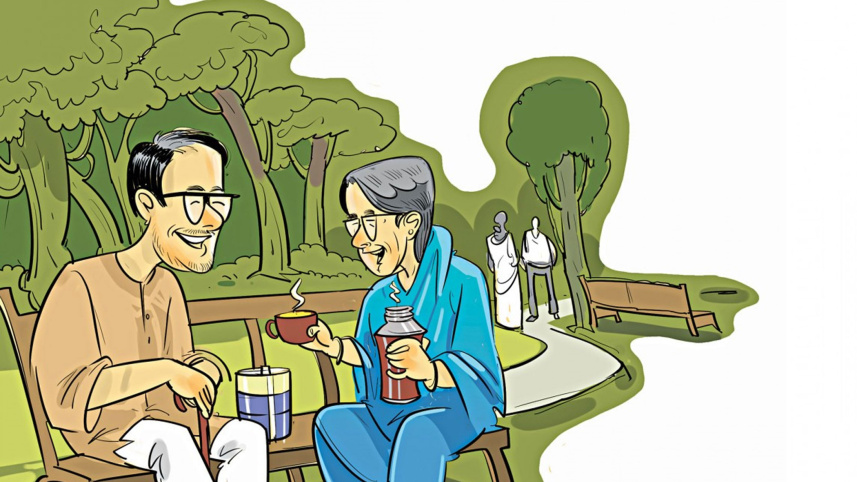
Old age comes with mixed feelings. At times, it feels deeply rewarding—a period to look back on life’s accomplishments and memories, and appreciate its beauty and gifts. On the other hand, being “old” can also bring disappointment, frustration, isolation, and deprivation.
I was thinking recently about how many days we celebrate: Children’s Day, Mother’s Day, Father’s Day, Valentine’s Day, Family Day, and so many others. And then, a day dedicated to older persons. A full cycle, indeed. Do we really need another day on the calendar to remember them in our already busy, hectic, and complicated lives? As an older person myself, I believe we do.

When we were young, life seemed much simpler. We were busy raising families, earning a living, and building our future. We hardly had time to look back—even the birthdays of our six or seven siblings (then) often passed without celebration. Today, life has become much more complex and competitive: overcrowded job market, children’s education and future, challenges related to transport, pollution, traffic jams, inflation, security, and rising medical costs are all occupying our minds every day.
The parents who once made decisions for us, made sacrifices for us, and showed us the road ahead gradually become dependent on us. The roles are reversed, leading to some difficult questions: how to manage our limited time and resources for our elderly parents? How to make space for an elderly parent in a modern apartment? How to cope with their various health issues?
And then comes the question that all of us must confront at one point or another: are we adding life to years or just years to life? The development of medical and health sciences, increased per capita income, and improved living conditions in recent decades have helped people live longer, and that is certainly good news. Bangladesh’s life expectancy is now around 75 years and is expected to rise further. But living longer is only one part of the story. The bigger question is: how do we live those additional years with good health, dignity, purpose, and happiness?
Older people already account for 9.3 percent of the population, and this proportion is expected to rise substantially in the coming decades. At the same time, chronic illnesses are becoming increasingly common. Cardiovascular disease, hypertension, diabetes, chronic obstructive pulmonary disease (COPD), kidney disease, and dementia are affecting older people and families across the country. Non-communicable diseases (NCDs) account for roughly 71 percent deaths in Bangladesh.
And there is another difficult reality: the cost of healthcare. A very large share of healthcare expenditure in Bangladesh is paid directly by families. Out-of-pocket spending reportedly accounted for 73 percent of health expenditure in 2021. For families living with chronic illness, the financial burden of medicines, tests, checkups, hospitalisation, and long-term care can be overwhelming and even devastating.
Against this reality, can we dream of a future where people live not just longer but also with the care, quality, and dignity expected, especially as they grow old? I think we can and we should. For this to happen, we need to put greater emphasis on healthy lifestyles, early detection of diseases, and proper management of health issues. Stronger primary healthcare, community-based support, and social protection, as well as better arrangements for long-term palliative care, are also necessary.
Ageing is also not only a health issue. It is also a family issue, a social issue, an economic issue and, ultimately, a human issue. Older people need opportunities to remain active, engaged, and useful. They need to feel that they still matter. Families need support to care for their ageing members without feeling overwhelmed. And society at large needs to recognise that today’s young people are tomorrow’s older people, and build safeguards accordingly.
Personally, with the passing years I have started looking at older people and life itself from a different perspective. I look around at the people of my age and beyond and ask myself: what do the old really need at this stage of life? Perhaps the answer is much simpler than we think. We need love. We need care. And above all, we need respect. Not pity. Not being forgotten. Not simply being looked after. But rather the feeling that I am alive, still important, still useful, and still valued.
Growing older does not mean that life has come to an end. It just means that we have entered yet another chapter of life; one which can be every bit as meaningful as the previous chapters. That, to me, is what dignified ageing should be like. Happy ageing!
Laila Karim is a development professional.
Views expressed in this article are the author's own.
Follow The Daily Star Opinion on Facebook for the latest opinions, commentaries, and analyses by experts and professionals. To contribute your article or letter to The Daily Star Opinion, see our guidelines for submission.
 For all latest news, follow The Daily Star's Google News channel.
Comments