


Bangladesh needs to reform its trade policy to boost exports

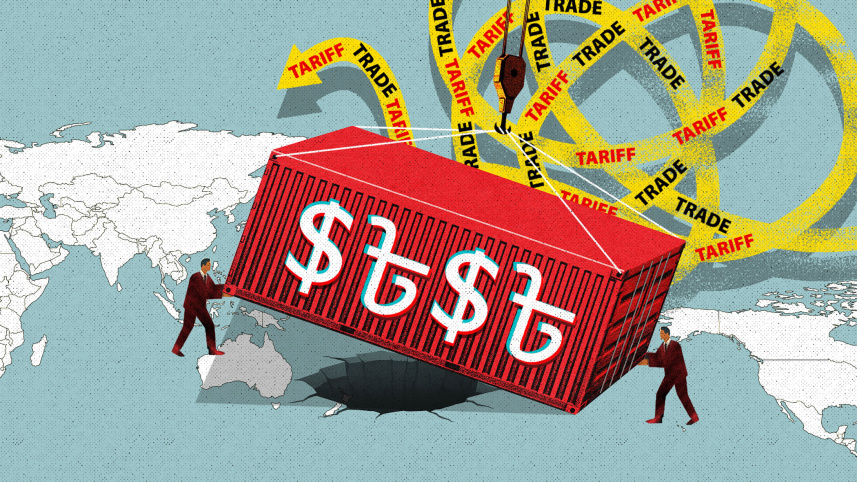
Bangladesh’s trade policy faces an inherent contradiction. While the country has spent decades trying to diversify its exports, attract foreign investment, and enter more sophisticated international markets, much of its trade system still gives firms stronger incentives to operate in a protected domestic market than to compete globally. Although the RMG industry avoided this problem by enjoying bonded facilities and duty-free imports of raw materials, many other industries were not treated similarly. Bangladesh, therefore, pursues export diversification through policies that often make exporting less attractive.
The LDC graduation—currently scheduled for November 24, 2026, with the UN General Assembly yet to finalise a proposed three-year extension—makes the trade issue even more pressing. Under the European Union’s new GSP framework, Bangladesh is expected to retain Everything But Arms preferences for three years after graduation, at least until the end of 2029. This provides breathing space, but does not address the underlying weakness. The real test is whether Bangladesh can develop competitive firms outside the garments sector before preferential access narrows and external competition becomes more demanding.

The tariff regime helps explain why that transition has been slow. While Bangladesh has decreased conventional customs duties over time, para-tariffs and supplementary charges continue to provide a high level of protection for many sectors, resulting in an anti-export bias. If final goods receive high protection while imported machinery, components, and intermediate inputs remain costly, firms are encouraged to concentrate on the domestic market. Exporting requires them to face world prices, stricter standards, and stronger competition. Protection reduces those pressures at home and can weaken incentives to invest in productivity.
The RMG industry is an example of both what was successful and what failed. RMG exporters were provided an “enclave”-type arrangement to access duty-free imported input materials. These arrangements allowed firms to develop economies of scale, take advantage of Bangladesh’s labour-cost benefits, and link their manufacturing processes to international markets. In contrast, no similar privileges were implemented for other industries that could have potentially been exporters in the same scale as RMG, such as leather products, light engineering products, agro-processed goods, pharmaceutical products, electronic products, etc. While there is strong political settlement around supporting RMG, such settlement is weak for other sectors.
Therefore, many non-RMG sectors face distortive tariffs, restrictive standards requirements, high transportation/logistics costs, limited access to trade finance, and regulatory barriers. Adding sectors to a list of export priorities does little if the underlying incentive structure remains unchanged. Therefore, reforms in the tariff structure should not be treated as separate from reforms in supporting industrial upgrading and entry into international trade.
This is where political economy comes into play. Protections create easily identifiable “winners” and less visible “losers.” A protected producer will immediately recognise the benefits of a tariff through increased profit margins or decreased competition. On the other hand, the costs of such protections are distributed throughout society. Consumers pay higher prices; downstream producers must buy more costly inputs; and potential exporters may find it impossible to compete in global markets. The latter groups are typically unorganised and possess little power to affect public policy. Industry associations, by contrast, have strong incentives to lobby for protection, often using employment or infant-industry arguments. Some temporary protection can be justified, but protection without clear performance conditions can easily become an entitlement.
The revenue system also reinforced the problem. For many years, the National Board of Revenue (NBR) has relied upon taxes collected at the time of imports. As such, the trade policy requires the NBR to lower its levels of border protection, whereas fiscal policy requires the NBR to generate more revenue from the border. However, this conflict goes beyond being simply a technical inconsistency. In fact, it provides bureaucratic incentives for the NBR and creates significant political barriers to reforming the current system. Until Bangladesh expands its base for collecting taxes domestically, improves the administration of Value Added Tax (VAT), eliminates exemptions from taxation, and improves direct tax collection, the ability to rationalise tariffs will continue to be restricted. Without these changes, any attempt to decrease trade-related taxes will likely encounter the same type of fiscal resistance that has occurred in the past.
When it comes to tariff liberalisation, the current global trade architecture poses a critical challenge for policymakers. Growing protectionism in many developed and advanced developing countries has created doubts among policymakers in countries like Bangladesh over the usefulness of tariff liberalisation at home. This concern cannot be dismissed outright. However, Bangladesh’s problem is different. The inconsistencies and imbalances within our own trade regime cannot be ignored simply because protectionism is increasing abroad. Protectionist measures in other countries cannot serve as an economic justification for Bangladesh to preserve its flawed incentive structure.
Trade reforms in Bangladesh must prioritise eliminating the distorted para-tariffs that increase the cost of imported inputs used by domestic firms, and result in large disparities in protection levels for final products and intermediate inputs. Any remaining protective measures must be clearly defined, have a set expiration date, and undergo periodic reviews. Additionally, government assistance to industries should be redirected from protecting them indefinitely from foreign competitors to supporting investment in technology, skills development, compliance with international standards, export financing, and infrastructure development.
Trade agreements add another layer to this. The Japan-Bangladesh Economic Partnership Agreement (EPA), signed in February 2026, was Bangladesh’s first EPA and marked a move towards reciprocal trade arrangements. But an FTA needs to be supported by domestic reform. While a Foreign Trade Agreement (FTA) can reduce partner-market tariffs, it cannot make Chattogram port faster, reduce customs discretion, improve testing facilities, ensure reliable energy, or help firms comply with rules of origin. Preferential access will remain underutilised if exporters cannot use it competitively.
The same caution applies to the Regional Comprehensive Economic Partnership (RCEP). Bangladesh’s accession bid moved forward in September 2026 when RCEP ministers approved an accession working group for Bangladesh. Integration with Asian production networks could create opportunities for investment, intermediate-goods trade, and participation in regional value chains. It would also expose protected domestic industries to stronger competition. Therefore, Bangladesh has to prepare its tariff structure, customs regime, standards institutions, and affected industries while using integration to attract investment.
The reform priorities are clear. Bangladesh needs to reduce anti-export bias, simplify the tariff structure, strengthen domestic revenue mobilisation, modernise customs, strengthen standards infrastructure, and lower logistics costs. Bonded facilities and duty-free input access should become easier for credible non-RMG exporters rather than remain concentrated in established sectors. Bangladesh’s trade policy has reached a point where maintaining old incentives is increasingly costly; the next phase should therefore be organised around competitiveness, not the preservation of protection.
Dr Selim Raihan is professor in the Department of Economics at the University of Dhaka and executive director at South Asian Network on Economic Modeling (SANEM). He can be reached at selim.raihan@gmail.com.
Views expressed in this article are the author's own.
Follow The Daily Star Opinion on Facebook for the latest opinions, commentaries, and analyses by experts and professionals. To contribute your article or letter to The Daily Star Opinion, see our guidelines for submission.
 For all latest news, follow The Daily Star's Google News channel.
Comments