The South Korea opportunity Bangladesh is overlooking

In the wake of multiple domestic and international shocks since the summer of 2024, a nascent “Bangladesh First” foreign policy and regional strategy appears to be emerging. Rather than privileging any single relationship or leaning into intensifying Indo-Pacific competition, Dhaka seeks “constructive engagement with all major powers”. The goals are sensible and likely achievable: greater diplomatic and political space, enhanced and resilient security capabilities and the systems that underlie them, continued economic development up the value chain as a manufacturing hub, development of human capital through education and training opportunities, and a respected place within an inclusive, responsive regional order.
Dhaka is therefore earnestly pursuing optionality through a robust portfolio of partnerships that hopefully will not curdle into dependencies. The vision appears not merely to balance within the traditional “big three” of India, China, and the US, but to diversify beyond those giants. Recent analysis has detailed the relationships Bangladesh ought to build with Japan, Australia, ASEAN and Gulf groupings, Turkey, and other members of the wider Western and Muslim worlds. This nascent strategy is directionally sound, but habitually overlooks what should be a critical piece of the puzzle: South Korea.
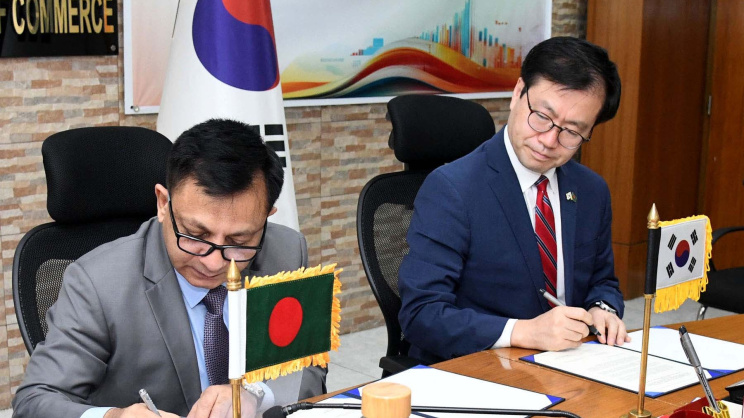
South Korea-Bangladesh ties have made tangible progress recently, most notably through an agreement in principle on the Comprehensive Economic Partnership Agreement (CEPA), which is expected to significantly open trade and investment channels once implemented. And yet, multiple otherwise excellent analyses featuring lengthy lists of bespoke, developing relationships entirely neglect even to mention Seoul. Failing to incorporate the South Korea partnership and its momentum into the guiding strategic documents would be a significant oversight, as Seoul’s offerings fit Dhaka’s needs unusually well.
To start, South Korea’s geopolitical profile suggests a high-reward, relatively low-risk proposition for Bangladesh. Seoul is a member of Washington’s regional network and cannot credibly be characterised as non-aligned. However, the ROK generally seeks to keep its hard-balancing role within that network largely bounded by the Korean Peninsula, and its relationship with China is usually more stable and less rivalrous than the China-Japan relationship. Further, Seoul has neither the intention nor the capacity to become a genuine “independent power” in distant South Asia. Rather, beyond its immediate neighbourhood, South Korea tends to behave in the wider Indo-Pacific as a low-drama, pragmatically cooperative, order-building partner. This tendency is particularly pronounced when Seoul is led by a liberal president, as was the case under Moon Jae-in and is now under the current Lee administration.
Of course, risks are not non-existent; for example, South Korea’s especially close defence and technological relationship with the US means that Korean arms procurements could be negatively perceived in Beijing. However, as far as high-capacity regional partners go, Seoul represents a comparatively low-risk partner for a Dhaka that must be wary of arousing jealousy, suspicion or tensions in Delhi, Beijing or Washington.
Prosperity: Industrial upgrading
The established and potential benefits that South Korean state and societal actors could bring to Bangladesh and its people are considerable. Foremost is the economic domain, where the CEPA agreement already holds promise. South Korea is a top-five foreign investor, accounting for over $1.5 billion, or nearly 10% of the total stock. The success of Youngone and its Korean Export Processing Zone, employing tens of thousands in the garment industry, demonstrates that Bangladeshi-Korean commercial partnerships are viable. South Korea also shows potential as a partner in improving the environment that supports those partnerships, including through frameworks for billions in development financing for infrastructure and rural areas.
Looking forward, the Vietnamese comparison deserves attention in illustrating how Bangladesh should cultivate its economic relationship with South Korea. Considerable differences between Vietnam and Bangladesh abound, and simply grafting the former’s experience onto the latter would be unsound. Nonetheless, as Vietnam achieves high levels of growth and steadily moves up the value chain from footwear to electronics, it is perhaps the best recent example for Bangladesh to look to in its bid to become a manufacturing-export hub beyond garments. Hanoi’s headline investment and trade figures, along with firm-level qualitative scrutiny, show the indispensable role that South Korea has played through investment, component imports, and integration into global value chains. South Korea can thus claim co-equal status with China and the US as one of Vietnam’s most important economic development partners. Similarly, in Bangladesh’s push into electronics, light engineering, shipbuilding, and digital and IT industries, there are very few better partner candidates than South Korea to provide the necessary capital, technology, and components.
To actually facilitate that move, Dhaka ought to target and develop the standards, efficiencies, regulatory environment, relationships, and high-performing domestic champions that relevant Korean firms such as Samsung Electronics or Hyundai seek. Perhaps most important of all, Bangladesh needs to reduce its reliance on Least Developed Country (LDC) trade preferences to attract investment. It must also be said that, from an explicitly geopolitical or strategic perspective, South Korea is an effective economic alternative to China; while Dhaka certainly cannot, and should not, “replace” Beijing with Seoul, avoiding overconcentration with China or any other partner can stave off potential dependencies or pressure from that partner’s rivals, in this case an anxious Delhi or Washington.
Peace: The ideal arms supplier?
In the security domain, with the BNP’s explicit calls to modernise and enhance the military while building the domestic defence industry in mind, South Korea can support Bangladesh’s practical and strategic diversification goals, especially from an arms-trade and defence-industry perspective. Korean defence firms have grown into bona fide global powerhouses, with equipment from Hanwha, Hyundai, LIG Nex1, KAI, and others having a reputation for affordability, reliability, and high performance across air, land, and sea domains. Export partners are often provided with cooperative arrangements featuring fast delivery, localised production, and technology transfer. Concrete examples include the apparent performance of the Cheongung-II missile defence system in the recent Middle East conflict, and South Korea becoming the Philippines’ largest defence supplier from 2019 to 2023 amid Manila’s current enhancement and modernisation drive. South Korea is not yet a major Bangladeshi supplier or domestic defence-industry partner, but the BNS Bangabandhu and related past MOUs demonstrate that such a relationship can work when sufficient effort is applied. Therefore, if deemed appropriately suitable, Bangladesh should follow through on reported interest in Korean submarines and helicopters, explore other capabilities such as howitzers, and push for localised production where possible. Analysis of Bangladesh-Japan relations shows that genuine resilience and capacity require not just the most visible military hardware, but the underlying enabling technological systems and critical infrastructure, and here too, Seoul thrives.
China has long been Bangladesh’s dominant defence supplier, and Dhaka must decide whether to deepen that relationship or pursue meaningful diversification in this sensitive domain. If it chooses the latter, the same strategic logic that underpins economic diversification applies to defence. South Korea offers an opportunity for diversification beyond China to ease Indian or American concerns about Dhaka joining a “Chinese sphere of influence”, without making Beijing feel “replaced” by an avowed rival. Thus, if Dhaka seeks partners to quickly and affordably enhance its defence capabilities with minimal political or strategic strings attached, it ought to look to Seoul.

Opportunities for a greater security partnership beyond the industrial-supplier domain are more limited but real. South Korea does not have the same bandwidth as India, China, the US, or even Japan to become a regular enforcer of maritime order in the Bay of Bengal, or Bangladesh’s premier partner in intelligence, surveillance and reconnaissance (ISR), counterterrorism, or humanitarian assistance and disaster relief (HADR). It does, however, have a successful track record in naval modernisation and capacity-building, cyber cooperation, military education, and joint training with broader Indo-Pacific partners such as India and Indonesia. In this respect, Seoul could slot in as a tidy addition to Dhaka’s growing security partnerships, and perhaps is already beginning to do so.
People: Upskilling and opportunity
Given the urgency of human capital development, people-to-people and sociocultural dimensions are essential to any Bangladeshi strategic partnership. South Korea has much to offer beyond the country’s hallyu-based general attractiveness. For Dhaka’s drive to upgrade its people’s educational qualifications and technical skills, South Korean firms, universities, and government-backed initiatives, including those of KOICA, possess significant capacity.
Bangladeshis studying at Korean universities, often under scholarship programmes, or working in South Korea and sending home remittances currently number in the thousands. Within Bangladesh, KOICA has committed millions of US dollars to funding AI talent development and is upgrading the Bangladesh-Korea Technical Training Centre (BKTTC), which provides vocational and technical training to thousands annually.
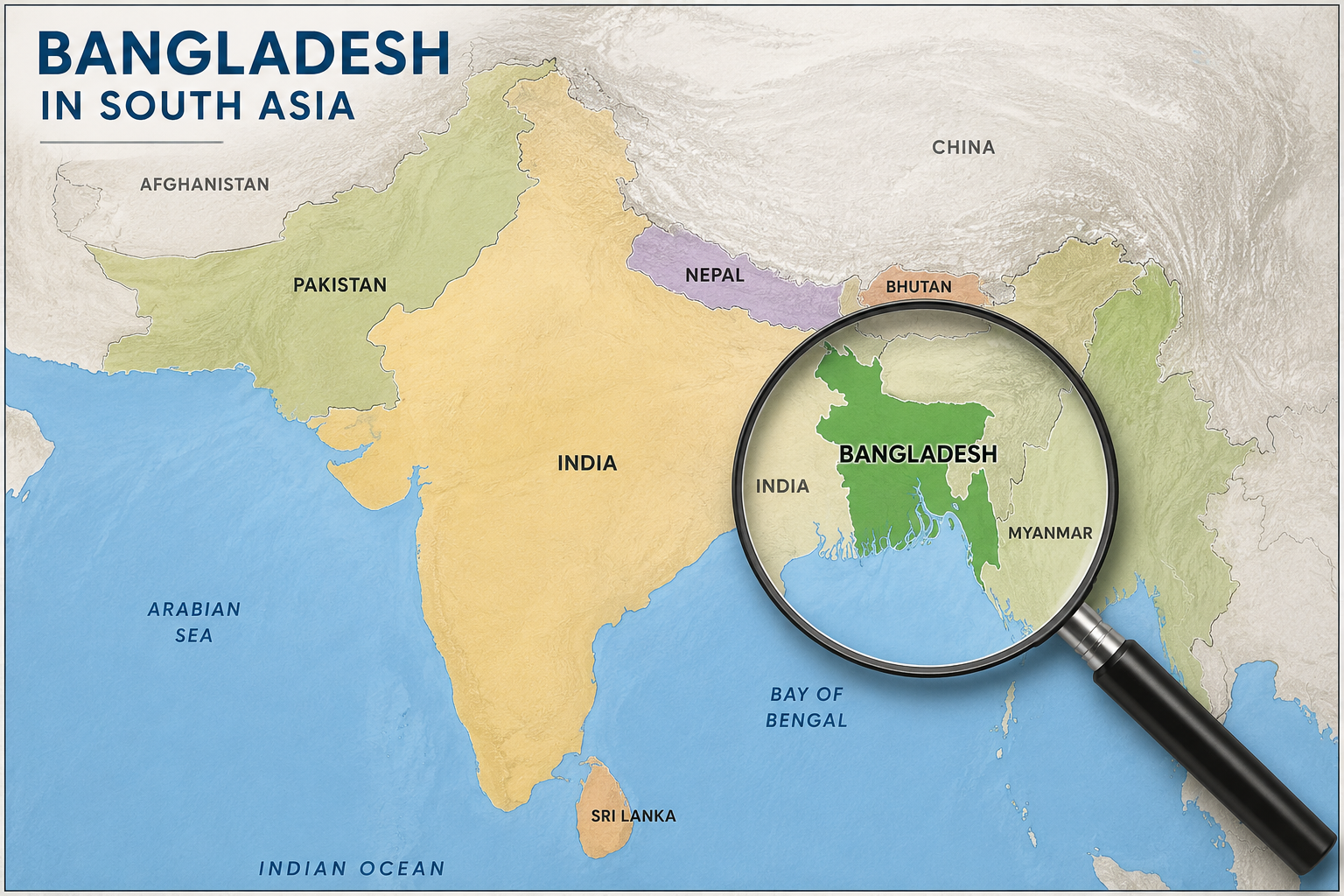
These tangible results, however, should be viewed as a first step. South Korean tertiary education ranks among the best in Asia and is globally competitive, representing a leading alternative for talented young Bangladeshis beyond the West or China. Vietnam is again a compelling comparison; as it rapidly upskills, that emerging economic power now sends more students to Korean universities than to those in America, China, Japan, or Australia. South Korea’s ageing society also suggests that the country will soon be pressed to bring in more foreign workers, representing a possible Gulf-style opportunity, if relevant policies become conducive, for those who develop language and other relevant skills. South Korea thus presents high-potential opportunities for Bangladesh with comparatively little downside, even if the relationship has flown under the radar so far.
Limitations and next steps
With tangible results and potential across diplomacy, economics, security, and human capital sketched out, the limitations of the South Korea partnership for Bangladesh must be made explicitly clear. What makes South Korea’s Indo-Pacific approach, and in turn its potential place in Bangladesh’s portfolio of partners, particularly attractive also creates a hard ceiling.
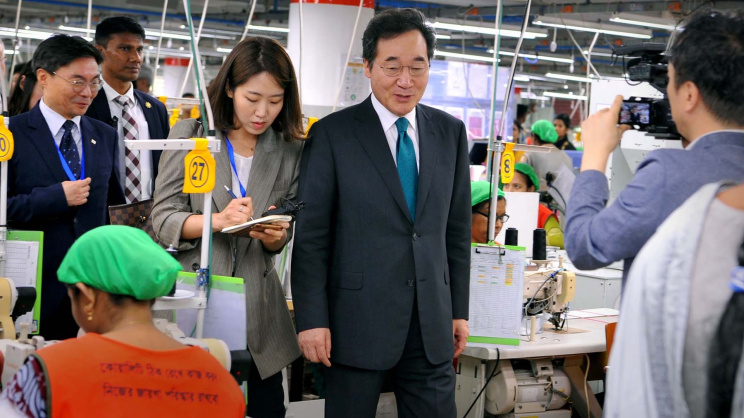
South Korea’s immediate security concerns are severe, stemming from its menacing nuclear neighbour on the peninsula and, as Bangladeshis should find relatable, the overlapping great-power rivalries involving the US, China, Japan, and Russia in its immediate neighbourhood. Therefore, Seoul could not impose a strategic vision upon far-flung South Asia even if it wished to do so, and any engagement must follow the subdued, constructively results-oriented approach. Cautious restraint thus cannot be abandoned in South Korea’s own Indo-Pacific strategy, making it unrealistic to replicate, for example, Japan’s Free and Open Indo-Pacific (FOIP) approach. Further, China’s sheer economic heft and unique advantages in cost and scale represent a permanent, distinct edge over South Korea. A properly realised South Korea partnership is therefore not a panacea for Bangladesh’s dilemma of managing so many powerful influences. Seoul’s value to Dhaka, then, lies in strategic diversification to build space and optionality, alongside accruing substantial benefits in critical domains, rather than replacing or balancing against the current major powers.
Nonetheless, the South Korea-Bangladesh relationship possesses a strong starting point, real momentum, and some solid results, such as the Youngone partnership, the BKTTC, and, most recently, CEPA. What remains unrealised, however, is the conversion of this progress into a more systematically strategic arrangement capable of delivering robust investment and industrial upgrading, more diversified and resilient defence procurement and capacity, and human capital development. Unfortunately, South Korea seems to be largely an afterthought in the otherwise sound emerging “Bangladesh First” strategy. Instead of being implicitly lumped into the “other regional actors” category, the ROK should be a leading target in Bangladesh’s push to go beyond the “big three”.
Given Seoul’s overstretched diplomatic bandwidth and lower prioritisation of South Asia, however, the likely inclination towards Bangladesh among its far-sighted politicians, diplomats, and bureaucrats will be positive but perhaps not especially proactive. In other words, the burden of initiative lies at least partly with Dhaka. It is therefore imperative that Bangladeshi analysts, strategists, diplomats, politicians, and others formulating and implementing the country’s emerging foreign policy strategy direct more attention, focus, and effort towards South Korea than is evident under the current status quo. The next steps are: One, identify and address the precise internal limitations that have made Bangladesh a less attractive destination for industrial investment than, say, Vietnam. Two, target achievable defence procurements and other partnerships geared towards front-end feasibility, expansion potential, local capacity-building, and spillover effects. Three, lean into available opportunities for human capital development, especially through Korean-language skills.
Liam Mullett is a recent graduate of the Lee Kuan Yew School of Public Policy, where he was awarded the Best Master in International Affairs Student and worked at the Centre on Asia and Globalisation. His research focuses on Indo-Pacific security, geopolitics and geoeconomics, minilateralism, and the role of regional US allies and partners, especially South Korea.
Send your articles for Slow Reads to slowreads@thedailystar.net. Check out our submission guidelines for details.
Beyond the ‘end of history’ and the ‘clash of civilisations’ / What kind of world order is emerging?
Geopolitical ghosts and the United Nations
BRICS is bigger, but can it deliver?
Can Tarique Rahman’s plan break the Rohingya repatriation deadlock?
Diplomacy in a turbulent world: How Bangladesh should navigate bilateral ties and regional platforms
What is the UN still good for?
Can the 81st UNGA restore hope in a world of crises?
What Malaysia’s Rohingya repatriation plan means for Bangladesh
Why Bangladesh must reconsider its trade agreement with the US