What kind of world order is emerging?
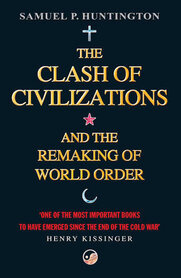
Francis Fukuyama's 1989 thesis, The End of History, advanced the argument that, following the collapse of Soviet communism, Western liberal democracy represented the terminus of ideological evolution. It now reads as a period piece. Samuel Huntington's rival prediction (1993) of a "Clash of Civilizations", that future conflict would run along cultural and religious fault lines rather than ideological ones, has aged, if not perfectly, then far better. The 9/11 attacks on the Twin Towers delivered an early jolt to the end-of-history thesis, well before the structural pressures that followed in the global order. Analysts seized on the event as proof of the naïveté of the 1990s optimism, arguing that the end of the Cold War did not mark the close of major global conflicts. Fareed Zakaria of CNN called the moment "the end of the end of history", while George Will, the American journalist, argued that history was back after taking something of a vacation.
In fact, religious and civilisational identities have become a central political axis in ways neither theorist fully anticipated: Islamist movements continue to shape politics from the Sahel to South Asia, while the rise of Hindutva in India has recast its constitutional commitment to a secular, pluralist republic into what the Carnegie Endowment describes as an explicitly majoritarian, religiously defined nationalist project. Both trends illustrate a broader global pattern in which religious and ethnic identities are being mobilised as organising principles of the state, displacing the secular, universalist assumptions that underwrote the post-1945 order.
This civilisational turn is closely intertwined with a drift towards illiberal democracy. Elected leaders in many states have used electoral legitimacy to retain the form of democracy while hollowing out its basic content. Freedom House's most recent assessment found that global freedom has declined for 20 consecutive years, with only about one-fifth of the global population now living in countries rated "free", a sobering reversal of Fukuyama’s prediction.

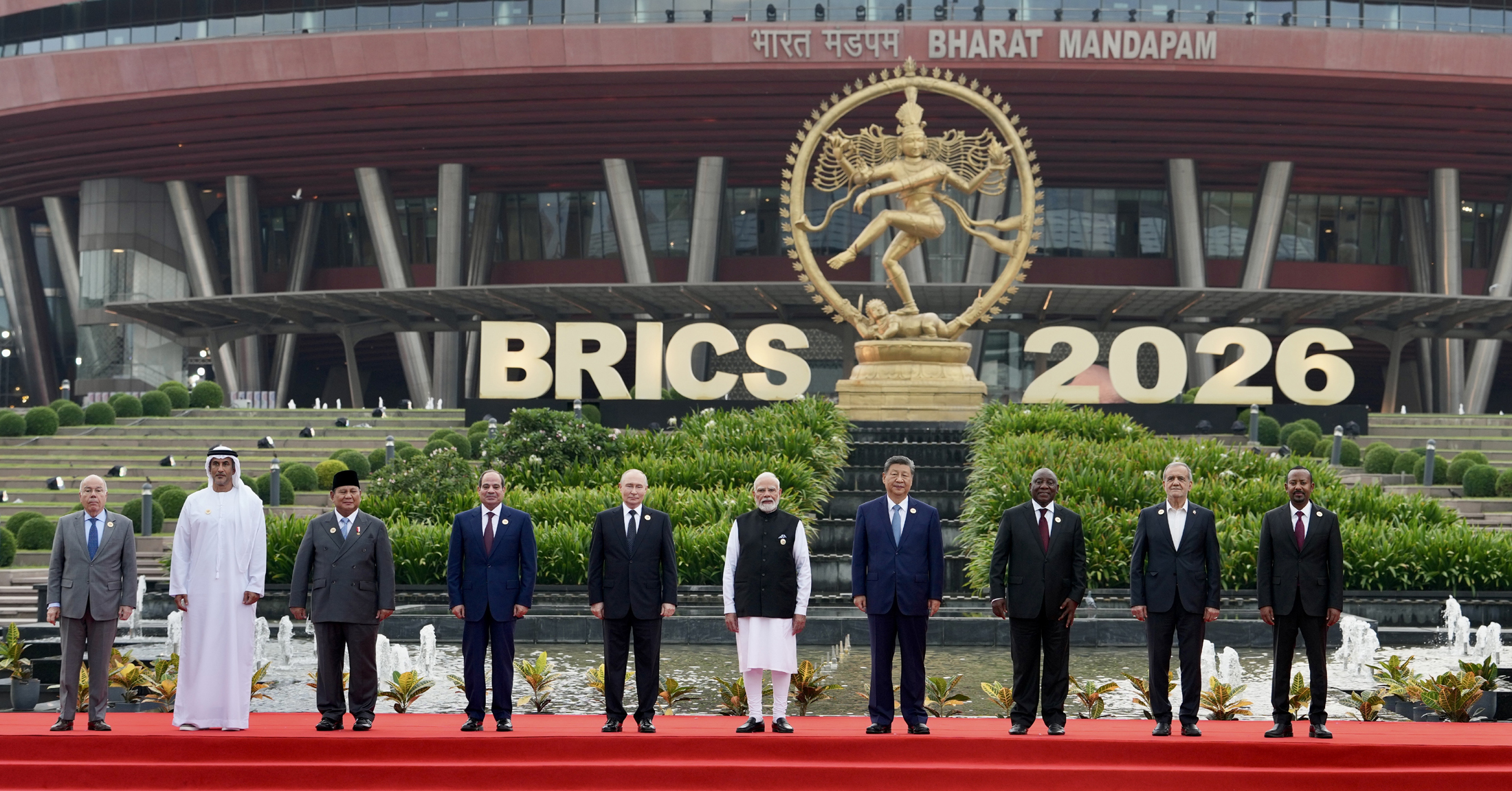
The single most consequential structural change of the past forty years has been the rise of China from a peripheral, agrarian economy to the largest economy in the world, though not in dollar terms, but on a purchasing-power-parity basis. China's share of global GDP (PPP) has grown tenfold from roughly 2% in 1980, according to IMF data compiled by the CSIS ChinaPower Project, an unprecedented transformation in modern history. This shift is not merely additive: it has altered the structure of global trade, supply chains and finance, underpinning Beijing's growing diplomatic and military weight from the Indo-Pacific to Africa and Latin America. BRICS members’ efforts to reduce reliance on the US dollar in international trade are adding a new dimension to the ongoing economic rivalry.
The political response in the West has been a turn towards economic nationalism. Tariff wars, unilateral actions, industrial subsidies, export controls on semiconductors, and "friend-shoring" of supply chains have replaced the presumption that trade integration was an unambiguous good. This nationalist turn is compounded by widespread anxieties about crony capitalism and the perception, in both authoritarian and democratic states, that political elites have captured the gains of globalisation while the number of billionaires has multiplied. Together, deglobalisation pressures and elite capture are eroding public confidence in the very institutions, including the UN, WTO, IMF and World Bank, that were built to manage economic interdependence.
Great-power rivalry is also playing out through the weakening of multilateralism. Nowhere is this retreat more evident than in foreign aid. According to the OECD, official development assistance fell by 23% in 2025 alone, the steepest annual contraction on record, driven by cuts from the US and other major donors. This is occurring precisely as humanitarian need, driven by conflicts, displacement and climate shocks, is rising, leaving a widening gap between the demands and the resources committed to meeting them.
Perhaps the most unpredictable variable shaping the next decades is technology, and above all artificial intelligence.
This weakening of multilateral solidarity has been accompanied by rising militarism. Global military spending reached an estimated $2.9 trillion in 2025, the 11th consecutive year of growth and the highest level ever recorded by the Stockholm International Peace Research Institute. These sharp increases in Europe and Asia reflect the wars in Ukraine and the Middle East, as well as tensions in the Taiwan Strait. A world that once spoke of a post-Cold War "peace dividend" is now rearming to the teeth.
Perhaps the most unpredictable variable shaping the next decades is technology, and above all artificial intelligence. For years, American firms were assumed to hold a durable lead in frontier AI. The 2025 release of Chinese start-up DeepSeek's R1 model, built at a fraction of the cost of its Western rivals and offering comparable performance, punctured that assumption and signalled a genuine pluralisation of global AI leadership.
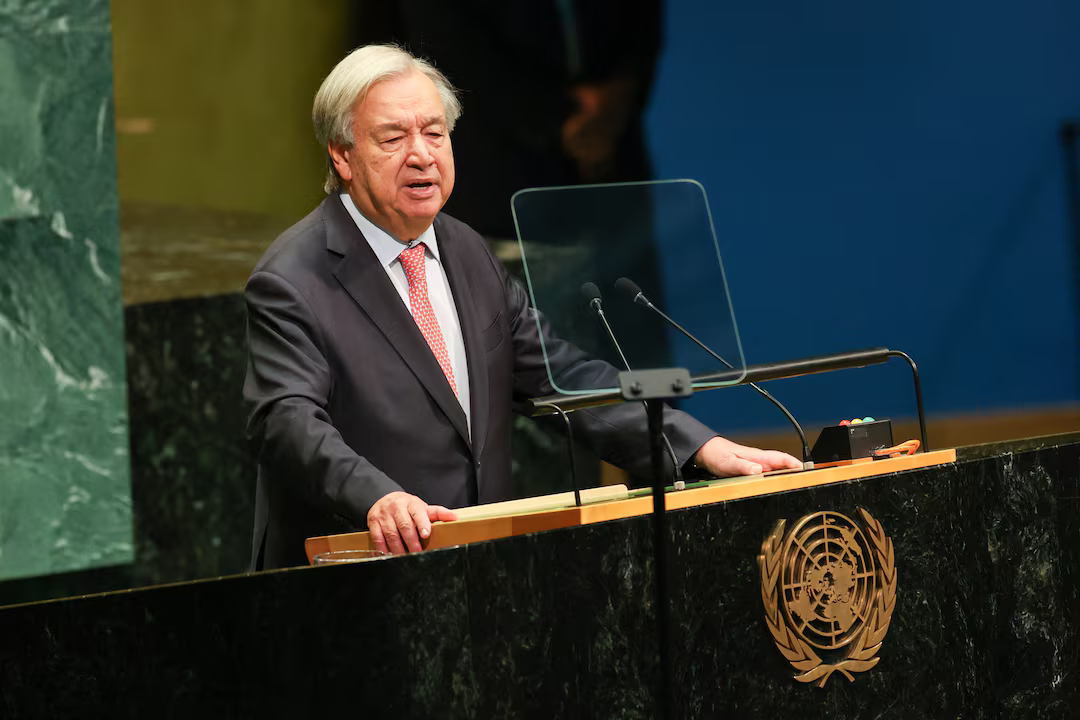
AI is not a narrow commercial contest; it is rapidly becoming central to military power and economic productivity, which is why the technology race has become inseparable from the broader geopolitical rivalry. At the same time, the underlying scientific advances in machine learning, genetic engineering, neural interfaces and longevity research are giving new substance to what Britannica describes as the once-speculative philosophy of post-humanism: the prospect that human cognition, biology, and even identity and survival might be reshaped by technology. Whether or not these visions are realised on the timeline their proponents imagine, they are already reshaping ethical debate, defence planning and public anxiety about what human agency will mean in a world of increasingly capable machines. Reflecting these concerns, the UN Security Council convened a meeting on 23 September to discuss AI and international security, where a number of CEOs of leading AI companies were invited to share their experiences.
Overlaying all of these dynamics is the accelerating reality of climate change. Scientists tracking the indicators behind the IPCC assessments estimate that human-induced warming reached about 1.37°C above pre-industrial levels in 2025, producing more frequent and devastating disasters. Climate disruption interacts corrosively with the other trends: it strains multilateral institutions and aid budgets; it provides fresh material for nationalist and religious political entrepreneurs to exploit resource competition and migration anxieties; and it adds a further dimension to great-power rivalry as states compete over resources, shipping routes opened by melting ice, and the technologies of decarbonisation. Climate change is no longer a discrete policy problem; it is a structural condition within which other elements of the emerging order must now operate.
Thus, the loose consensus of the 1990s that market liberalisation, democratic governance, and multilateral cooperation would spread together is now fractured. What is emerging instead is a multipolar world, contested and shaped simultaneously by the meteoric rise of China, a resurgence of nationalism and religious identity, the erosion of multilateralism, and a technological revolution centred on AI, whose implications for power and even for human identity remain unclear. However, economic power is certainly diffusing towards Asia even as nationalism raises new barriers to exchange. Navigating the next several decades will require states, institutions, and citizens to abandon the assumption of an inevitable liberal convergence and instead manage, deliberately and continuously, a genuinely plural and unsettled global order.
Mizan R Khan is Technical Lead at the LDC Universities Consortium on Climate Change (LUCCC).
Send your articles for Slow Reads to slowreads@thedailystar.net. Check out our submission guidelines for details.

The South Korea opportunity Bangladesh is overlooking
Geopolitical ghosts and the United Nations
BRICS is bigger, but can it deliver?
Can Tarique Rahman’s plan break the Rohingya repatriation deadlock?
Diplomacy in a turbulent world: How Bangladesh should navigate bilateral ties and regional platforms
What is the UN still good for?
Can the 81st UNGA restore hope in a world of crises?
What Malaysia’s Rohingya repatriation plan means for Bangladesh
Why Bangladesh must reconsider its trade agreement with the US