


How can we become technology creators, not just users?
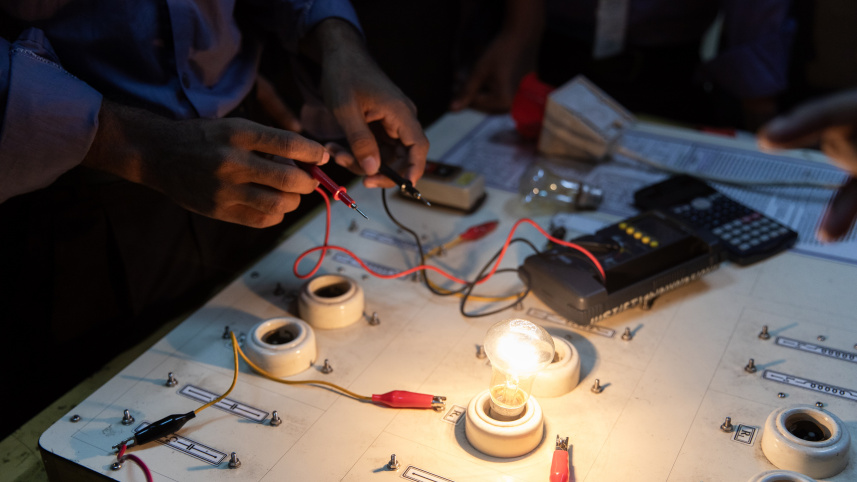
Bangladesh’s industrial sector has made significant progress over the past few decades. As industries ranging from garments and food processing to plastics, packaging, pharmaceuticals, and steel have expanded and modernised, technology has become increasingly central to how they operate. Bangladeshi engineers are increasingly working with programmable logic controllers (PLCs), variable frequency drives (VFDs), servo systems, human-machine interface (HMI) systems, supervisory control and data acquisition (SCADA), industrial controllers, and embedded systems. More importantly, some industries in Bangladesh are already demonstrating that local engineers can develop practical solutions to reduce dependence on imported technology. These efforts may still be limited in scale, but they show that the right capability and talent exist. The question is whether these efforts will remain isolated successes or whether we can build a stronger industrial technology ecosystem around them.
At a modern factory, the components and software may be imported. When an important component fails, we often depend on imported spare parts or the original manufacturer’s technical support. In many cases, even a specialised control solution requires foreign technology. So, we are not simply importing products. We are also creating long-term dependence on spare parts, software, technical support and, in some cases, technological decisions. This means money leaves the country, but there is another cost: the shrinking opportunity for us to develop technology ourselves. This does not mean we should stop using foreign technology. That would neither be realistic nor desirable. Every technologically advanced country has learned from technologies developed elsewhere. We should use global technologies, understand how they work and learn from them. But learning should not end at becoming a user for life.

An engineer should not only learn how to operate a machine by reading its manual. Over time, they should also develop the ability to design the machine’s control system, modify it and, where possible, build an alternative. This requires system-level thinking. Modern industrial technology is no longer confined to one engineering discipline. An industrial controller may involve power electronics, circuit design, microcontrollers, embedded software, control algorithms, communication, and data processing. Motor drives, EV chargers, industrial robots, and Industrial IoT systems similarly require several disciplines to work together. Therefore, knowing one PLC software, one programming language or one electrical system is not enough. Future engineers need to understand the complete system—from power and electronics to control, software, communication, and data. But skilled engineers alone cannot create technology. They also need the right working environment. In a real industrial project, an engineering team may spend days, weeks, or months developing a solution. Engineers consider technical requirements, safety, reliability, maintenance, available space, energy efficiency, materials, and cost before preparing a proposal for management.
Management review is also essential. Questions about cost, safety, reliability, and technical justification are part of responsible decision-making. But experienced senior managers can often add greater value when their concerns and suggestions are shared at the beginning rather than only at the final stage. Early involvement can also prevent unnecessary redesign, repeated calculations, additional approvals, and delays. If organisations expect engineers to solve problems, develop new systems, and innovate, they must also give them enough time and mental space to think. Audits, safety procedures, quality control, and documentation are essential. But excessive reporting, repeated documentation, and unnecessary administrative processes can consume the time engineers need for creative problem-solving.
Beyond technical knowledge, engineering creativity requires time, attention, freedom, and management confidence. A good engineer looks for the root cause of an issue, improves the system, and tries to prevent the same problem from happening again. An innovative engineer goes one step further and asks whether the existing solution itself can be improved or replaced. This is also where universities and industries need to work more closely together. A real factory problem could become a research problem. Reducing the energy consumption of a production line; developing a low-cost alternative to an imported industrial controller; developing local PLCs, VFDs, EV chargers, SCADA systems, or Industrial IoT platforms can all become meaningful research areas.
Research should not be measured only by the number of papers published. We should also ask: how many real problems were solved? How many prototypes were developed? How many technologies reached actual industrial use? Industry owners also have an important role to play here. Local technology needs opportunities to be tested and improved in real industrial environments. A locally developed product may not initially have the decades of research and thousands of installations behind it that an established global brand has. But without opportunities for pilot projects and practical validation, local technology will never mature. Our goal should therefore be more than “made in Bangladesh.” We should aim for “engineered in Bangladesh.”
That means developing our own designs, control algorithms, firmware, software, testing and, where possible, manufacturing capabilities. It also means building an ecosystem of hardware engineers, embedded engineers, software developers, printed circuit board (PCB) designers, automation engineers, technicians, and local suppliers. Bangladesh should not remain only a market for foreign industrial technology. We should gradually develop the capability to become a technology creator and, eventually, a technology exporter. We should use foreign technology. We should learn from foreign technology. But we should not remain users forever.
Md Shah Kamal is manager of automation & maintenance at Kalyar Replica Ltd, ACME Group, and MSc student at Dhaka University of Engineering & Technology (DUET).
Views expressed in this article are the author's own.
Follow The Daily Star Opinion on Facebook for the latest opinions, commentaries, and analyses by experts and professionals. To contribute your article or letter to The Daily Star Opinion, see our guidelines for submission.
 For all latest news, follow The Daily Star's Google News channel.
Comments