


Pay rape response workers urgently
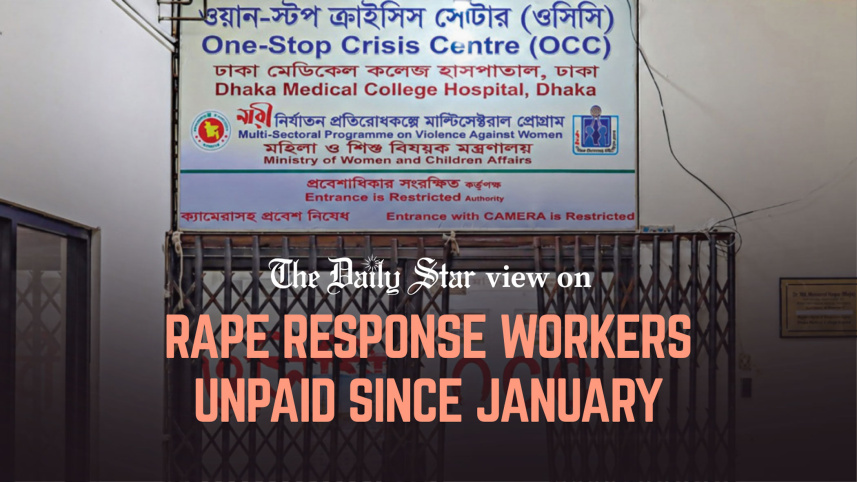
It is unacceptable that 373 rape response workers providing vital services to survivors of rape and gender-based violence have been working without pay since January. They serve at One Stop Crisis Centres (OCCs), One Stop Crisis Cells, and the National Forensic DNA Profiling Laboratory, providing legal, psychological and other support alongside medical and forensic services. The programme, launched in July 2000 as a joint initiative of the government and the Danish International Development Agency (Danida), has been providing specialised support to survivors for more than two decades. Its fourth phase ran from July 2016 to June 2024 before the programme was revived in July 2025 under the government’s annual development plan. The new project, which will run until December 2029, has funds for outsourced personnel, but the Finance Division has not allowed those funds to be reappropriated to pay the existing workers.
Meanwhile, three attempts to hire an outsourcing agency since January were cancelled over procurement and procedural problems. The employees have nevertheless continued providing services despite months of non-payment and uncertainty over their jobs. How can the authorities ask people to provide these essential services without paying them? The workers have sent several letters to the ministry detailing how the prolonged non-payment has pushed their families to the brink of destitution. It has also led to temporary work stoppages, which disrupted these essential services.

We must ask why such specialised services need to be outsourced in the first place. What is the rationale for replacing experienced workers who have built up expertise over more than two decades with personnel hired through private agencies? Has the government properly assessed the implications for survivor confidentiality, the handling of forensic evidence and the continuity of trauma counselling and legal support? The outsourcing policy itself allows exemptions in cases involving confidentiality, public interest or specialised services, subject to approval. The government should therefore carefully consider whether outsourcing is appropriate for these services.
The Ministry of Women and Children Affairs and the Finance Division must resolve this matter without further delay. The workers’ outstanding salaries should be cleared immediately, and arrangements must be made to ensure that these vital services continue without interruption. If the government proceeds with outsourcing, it must also ensure that the transition does not compromise confidentiality, expertise or the quality of support provided to survivors.
 For all latest news, follow The Daily Star's Google News channel.
Comments