


How public schools can protect children from extreme heat

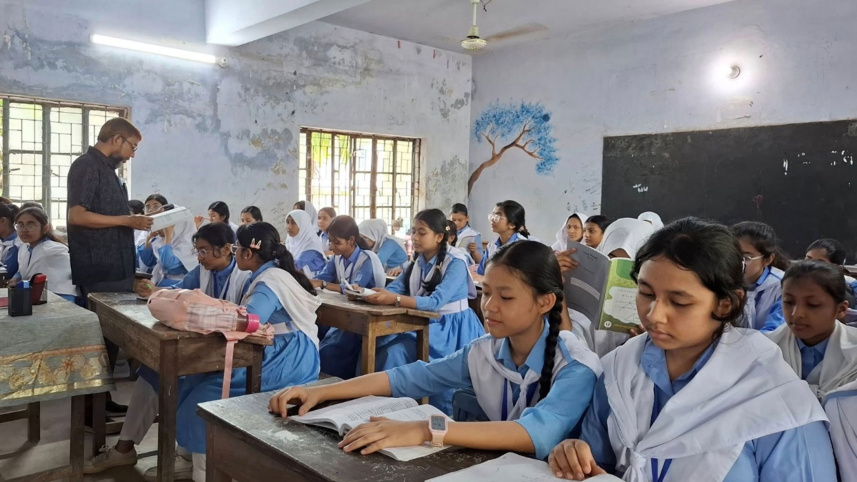
A recent study indicates that if global temperatures rise by 1.5 degrees Celsius, 2.5 crore children in Bangladesh could experience five or more months of heat stress. If global temperatures rise by 2 degrees Celsius, the number is projected to be even higher. This risk is particularly significant for children in urban areas, where rising temperatures are compounded by the heat island effect.
This year’s extended monsoon, combined with rising temperatures, has made heat increasingly difficult for us. On September 27, the country’s highest temperature—35.5 degrees Celsius—was recorded in Dhaka, Khulna, and Chandpur. As the temperature was close to heatwave levels, the heat felt intense. For young children, the consequences are severe and extend beyond physical discomfort. Prolonged exposure to heat can affect their health, cognitive ability, and learning.

The human body regulates its temperature through sweating, known as thermoregulation. In high temperatures, sweat carries heat from the body and removes it as it evaporates. But evaporation becomes difficult when the surrounding air contains high levels of moisture. In our tropical monsoon climate, high humidity makes it difficult for the body to cool itself naturally. When high humidity is combined with rising temperatures, the “feels like” temperature increases and the body is pushed closer to its thermal limits.
For young children, these conditions pose greater risks. Immature thermoregulation makes them sweat less and overheat more quickly, making them more vulnerable to heat stress. Studies have linked heat stress among children with heat-related illness, hospital visits, asthma exacerbation, and worsening digestive and renal conditions.
The effects of heat are not limited to children’s physical health. Excessive heat also affects their concentration and cognitive ability. Teachers have reported fatigue, distraction, reduced attention, and irritation among students. With prolonged exposure, these effects can translate into loss of learning. Longitudinal studies have found that a 1-degree Fahrenheit increase in temperature reduces academic performance by 1 percent.
The growing body of evidence underscores the need to address the adverse effects of increasingly frequent heatwaves on children. However, at a national scale, ensuring protection from heat at home for every child is difficult, particularly where families’ socioeconomic conditions limit access to resilient homes, cooling technologies, and other adaptive measures. This creates an opportunity to protect our children where they are brought together at scale: in public schools.
Children spend a substantial part of their waking hours at school each day, making classroom conditions an important part of their daily exposure to heat. Public schools, in particular, serve large numbers of children, including those who have limited protection from heat at home. They can therefore provide a more equitable point of intervention. Yet many public schools lack adequate measures to provide comfortable thermal conditions. Improving these conditions should be treated as part of protecting children’s health and learning.
The first step is to reduce heat gain within school buildings. The amount of heat entering a classroom depends on decisions made long before children occupy it, including the design of roofs and walls. Reflective roofs and walls with appropriate insulation can reduce heat entering through the building envelope. New public-school construction should incorporate these climate-responsive design requirements, while older schools should have retrofit guidelines to make necessary changes.
But reducing heat gain is only part of the challenge. Humidity is an inherent part of our geographical climate, and our buildings must be designed around it. This principle was reflected in a recent conversation I had with prominent architect Rafiq Azam, who designed the Aga Khan Academy based on features of our tropical monsoon climate. He emphasised the need for school architecture to align with our climatic features through a combination of passive and active techniques.
Passive solutions include shading and natural ventilation. Shading by trees and green roofs can reduce direct exposure and lower indoor temperatures, while cross-ventilation, supported by additional fans, can improve air movement. Together, these measures can make indoor conditions more tolerable in humid heat.
Where passive measures are insufficient, and resources permit, air conditioning should also be considered. Research has found that classroom air conditioning can mitigate the negative effects of high temperatures on learning outcomes. It may not be feasible for every school, but targeted investment could provide controlled environments during the hottest periods. Such investment could prioritise schools serving children who are particularly vulnerable to heat because of poor housing conditions.
These measures should not be treated as a separate climate agenda. They should be integrated into existing investments in school infrastructure, safety and learning environments. The current approach to protecting children from heat remains largely reactive, with school closures when temperatures reach dangerous levels. While closures can protect children during extreme heat, they do not address students’ experience on days when temperatures remain close to thresholds, nor do they protect children from heat in their homes. As extreme heat becomes a recurring feature of our climate, protecting children requires a more systematic approach.
Climate-responsive schools could also serve a wider public purpose. As extreme heat becomes an increasingly important urban climate risk, appropriately designed and safely managed school spaces could function as community cooling centres during dangerous heat events. Bangladesh already has a precedent for using schools as cyclone shelters and relief centres. The same public infrastructure could be adapted to provide refuge during extreme heat events, which are common these days.
Significant investments are already underway to improve school infrastructure. Thermal comfort should be treated as an integral component of such investments. Alongside infrastructure, heat-safety measures should also be incorporated into broader school-safety initiatives under the government’s School Level Improvement Plan (SLIP). As SLIP provides resources for school-level improvements, these investments should also address thermal conditions, making school environments resilient to a changing climate.
We may not be moving fast enough to stop the world from getting hotter, but we can still determine how much heat affects our children’s health, learning and development. We have an opportunity to better equip our public schools to protect children from the adverse effects of an extreme climate. As the government seeks to reform the education system, heat considerations should be mainstreamed into education policies and practices. Investing in heat-resilient schools is an investment in healthier children, better learning, and a more climate-ready future.
Maisha Bint Salam is sustainability expert at Nexus360, currently pursuing her master’s at the University of Cambridge in the UK.
Views expressed in this article are the author's own.
Follow The Daily Star Opinion on Facebook for the latest opinions, commentaries, and analyses by experts and professionals. To contribute your article or letter to The Daily Star Opinion, see our guidelines for submission.
 For all latest news, follow The Daily Star's Google News channel.
Comments