


Follow, share, comment, get scammed: Deepfakes push fake ‘Family Card’ offers on Facebook
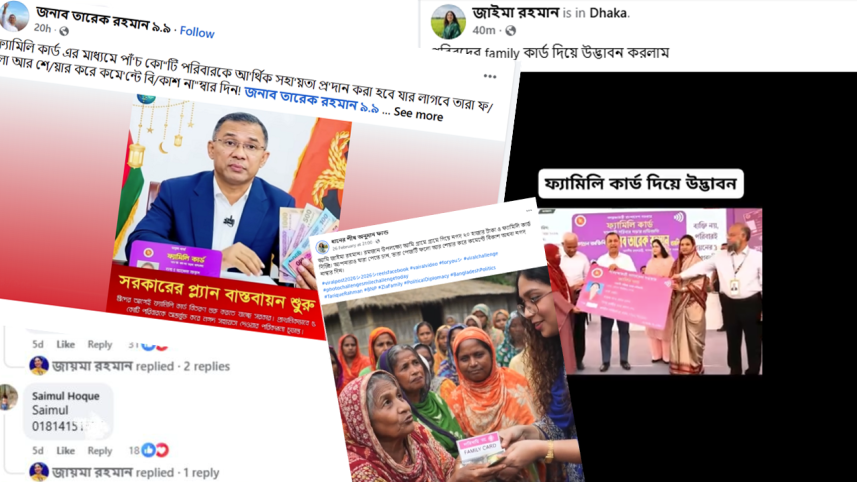
On February 22, a video began circulating on Facebook showing Prime Minister Tarique Rahman handing over money to several members of the army. Numerous bundles of cash were seen on the table in front of them. In the video, the AI-synthesised voice of Tarique Rahman states, “Countrymen, I am giving Family Cards and money to the army members to distribute to you. Those who wish to receive them, please follow, share, and comment.”
Four days later, a reel featured a deepfake of Zaima Rahman, Tarique’s daughter, saying she was visiting villages and giving away Tk 20,000 in cash along with the Family Cards. “Those of you who wish to receive them, please follow and share the page and provide your bKash or Nagad numbers in the comments.”

Review of the comment section shows many users fell for this trap and shared their personal contact numbers.
Between February 19 and 26, The Daily Star documented 52 deepfake videos of Tarique Rahman and his family members offering Family Cards or cash rewards. Analysis of the posts shows the fake offers are mainly aimed at increasing page engagements while also harvesting personal information, including names and addresses.
The Daily Star found that at least 31 pages and groups, operating under different names, were used to promote such fraudulent offers during a seven-day period last month.
This newspaper contacted at least seven pages, but none of them responded. However, in a report published on February 24, fact-checking organisation Dismislab revealed that the primary motive behind producing these deepfake videos about Tarique Rahman and his family is to rapidly increase followers and subsequently sell the pages.
Mohammad Sojol Sheik, the admin of a Facebook page named “Janatar Inqilab,” told Dismislab that instead of going through the lengthy process of monetisation, their main objective is to quickly grow followers using AI-generated videos and then sell the pages for profit.
Among the 52 Facebook posts analysed, 32 directly featured deepfakes of Tarique Rahman, and 13 of Zaima Rahman. At least seven videos featured all three members of the family, including Tarique’s wife Dr Zubaida Rahman. In at least 31 cases, the scammers offered Family Cards in return for “liking” and “following” the pages. Another 15 posts offered cash rewards, also for engaging with the pages.
Two Facebook pages bearing the name of Zaima Rahman, with slight variations in spelling, were created on February 18 and 22. Within just seven days, one page accumulated 57,000 followers while the other reached 32,000 at the time of writing, showing how quickly these pages attracted large followers.
In a 10-second deepfake video created in the likeness of Zaima Rahman, it is claimed that ‘‘5,000 people will each be given Tk 5,000 at midnight’’. Viewers are told that only those who share the video will receive the money. As of filing this report, the video had been viewed 310,000 times.
Many bKash numbers have been posted in the comment sections. In several instances, personal addresses have also been provided.
In another deepfake video featuring the likeness of Tarique Rahman, viewers are directly asked to submit their “bKash and Nagad numbers.” It is stated that those who have not yet provided their numbers should do so immediately, as the names of the winners will be announced within four hours.
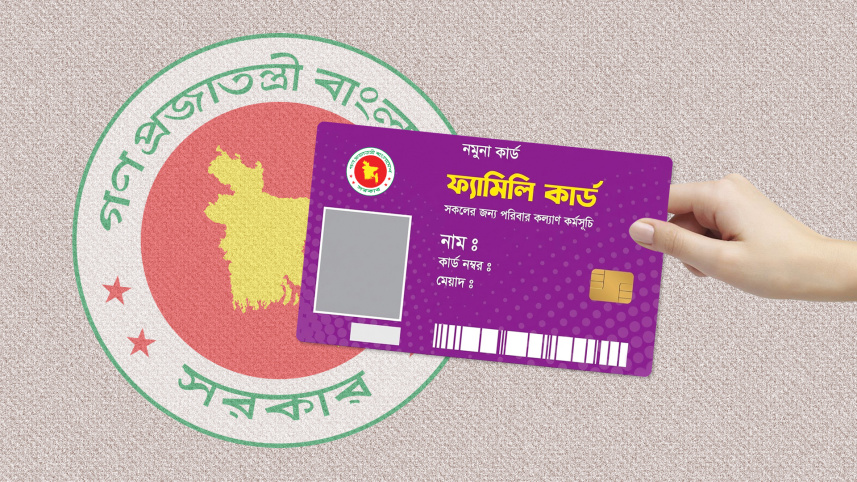
The government has launched the “Family Card” programme on a pilot basis. Under the initiative, 37,567 households from selective areas will get Tk 2,500 each through their bank accounts or mobile wallets before Eid. The programme, which aims to provide one card for each family, will expand in other parts of the country gradually.
However, even before the official rollout, misinformation has been circulated on social media through deepfake videos falsely claiming that the Family Card distribution had already begun, accompanied by fake offers.
Md Sayeed Al-Zaman, a digital media researcher and assistant professor at the Department of Journalism and Media Studies at Jahangirnagar University, told The Daily Star, “When such deepfake videos urge users to share specific content, people with limited digital literacy often become involved and help spread it further. This allows the content creators to generate revenue from Facebook.”
At the same time, personal information such as mobile phone numbers, bKash numbers, and addresses ends up in the hands of these scammers, which may later be used for various types of fraud, he said, adding, “These scams operate in a similar way across the world, and Bangladesh is no exception.”
As users voluntarily share their names, addresses, and mobile numbers on social media, they are creating significant risks to their personal privacy and financial security.
 For all latest news, follow The Daily Star's Google News channel.
According to UNCTAD's Digital Economy Report 2021, “There are plenty of security threats related to data on the internet, including data breaches, identity theft, malware, ransomware and other types of cybercrime.”
Interpol warns that social media has become the preferred channel for these crimes. Cybercriminals exploit the information shared publicly to conduct “Social Engineering” attacks.
Comments