


Lack of women judges in the Supreme Court

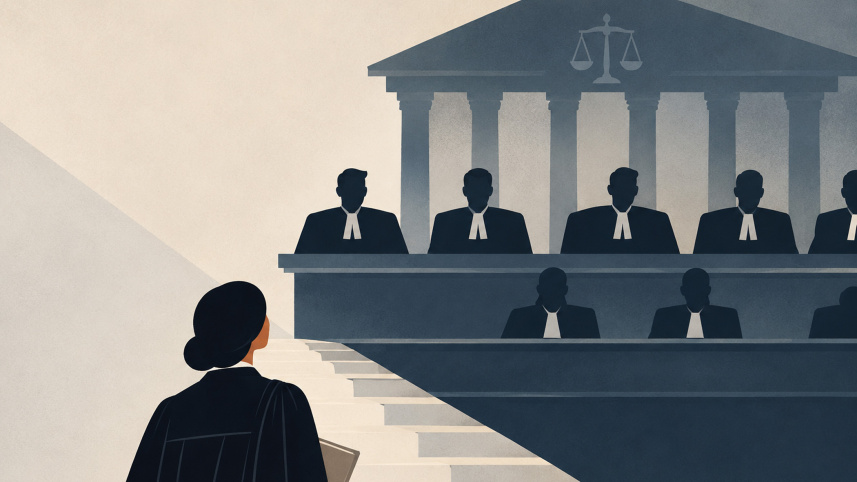
Though hundreds of female judges have been serving in the lower courts across the country with competence and integrity, their presence thins sharply at the Appellate and High Court Divisions of the Supreme Court of Bangladesh (SCOB), raising questions over appointments, professional opportunities, and institutional pathways.
While 677 women judges out of total 2,235 are currently serving in the subordinate judiciary, only nine women judges serve in the SCOB. Amongst them, one out of five serves in the Appellate Division and eight out of 99 serve in the High Court Division, sources at the Supreme Court Registrar General’s Office said.

According to some female legal experts, the shortage of female judges is more than a matter of numbers as it reduces the diversity of judicial experience, can weaken women’s confidence in the justice system and creates a visible glass ceiling for women in the legal profession. Meanwhile, Attorney General Md Ruhul Quddus Kazal said that meaningful steps are needed to increase women’s representation in the higher judiciary, while stressing that merit and integrity must remain paramount.
“We should certainly take meaningful steps to increase the representation of women in the judiciary. But while doing so, we must remain extremely cautious to ensure that no unqualified, incompetent, or dishonest person is appointed or elevated merely to achieve gender representation,” he told The Daily Star.
“One of the reasons for the disparity between the representation of men and women in the higher judiciary may be the relatively small number of women lawyers from the Bar who are available for consideration for judicial appointment”, he said.
The attorney general, however noted, “Due to various practical realities, some women lawyers may not be able to remain equally serious or committed to the profession over the long term. At the same time, perhaps we have not done enough to make the legal profession more attractive and supportive for women or to retain them in the profession”.
“I can see a practical example of this myself in the case of appointments to the Attorney General's Office. We have around 270 Law Officers, but only a handful—perhaps 10 to 12—are women lawyers. There is comparatively less interest among women lawyers in joining this office. One possible reason is that, in the professional environment, they may not always have sufficient opportunities to demonstrate their professional abilities and make their mark on an equal footing with their male counterparts”.
“Therefore, in my view, we should focus on developing the skills and capabilities of women lawyers and, at the same time, create a professional environment in which they can remain in the legal profession for the long term and have adequate opportunities to demonstrate their abilities. In this way, we should seek to reduce, as far as possible, the disparity between the representation of men and women in the higher judiciary”, the attorney general further added.
Barrister Ruhul Quddus Kazal also said that anyone appointed to any position must meet the standards of both competence and integrity. “A person should not be appointed to any position, particularly in the higher judiciary, merely on the basis of being a woman or a man if that person is otherwise unqualified, incompetent, or lacking in integrity”, he cautioned.
“Very recently, we have witnessed the resignation or retirement of several judges of the High Court Division of the Supreme Court. Some of them were unable to continue performing their judicial duties until the end of their judicial careers. In some cases, their service came to an end after prolonged periods of leave. It has also been reported that there are specific allegations of corruption against some female judges in similar circumstances,” he added.
Barrister Sarwat Siraj Shukla, a senior Supreme Court lawyer, told this correspondent that it is unfortunate that Bangladesh is yet to get its first female chief justice.
“The number of female judges in High Court Division is negligible. Only a handful of women have made it to the Appellate Division. There are significant number of competent female judges in our subordinate courts. However, they do not find their way into our higher judiciary. There is scope to increase the intake from subordinate to judiciary”.
“Scarcity of competent senior female lawyers in our higher judiciary is one of the reasons why we do not have sufficient intake from the bar. It will take time to create an ecosystem conducive to preparing women lawyers fit to be judges. It is high time a temporary measure is taken by the government to ensure that certain percentage of judges are women,” she added.
Advocate Ishrat Hasan told this newspaper that the fact that 677 women serve in the subordinate judiciary while only nine serve in the Appellate and High Court Divisions shows that the problem is not a lack of qualified women but limited institutional pathways to the higher judiciary.
“Unlike recruitment to the judicial service through competitive examinations, appointments to the Supreme Court under Article 95 of the Constitution lack sufficiently transparent, measurable and gender-responsive criteria. The limited elevation of experienced female District and Sessions Judges, unequal family responsibilities and restricted access to professional networks further widen this gap”, she said.
The lawyer added that although judicial decisions must be based on law and evidence rather than gender, the shortage of women judges reduces diversity of judicial experience, weakens women’s confidence in the justice system and creates a visible glass ceiling for female judges and lawyers.
“In light of Articles 27 and 28 of the Constitution, Bangladesh should adopt a transparent judicial appointment law, ensure the meaningful inclusion of qualified women in shortlists, elevate more experienced women from the subordinate judiciary and publish gender-disaggregated appointment data. This is not a concession to women or a compromise on merit; it is necessary for substantive equality, public confidence and a stronger, more representative judiciary,” she added further.
Advocate Tasmiah Nuhiya Ahmed, another Supreme Court lawyer, said, “the significant gap between women’s representation in Bangladesh’s subordinate judiciary and the Supreme Court deserves serious institutional attention. The presence of hundreds of female judges in the lower judiciary proves that Bangladesh has no shortage of qualified, capable and experienced women judges. Yet, their numbers decline sharply at the higher level.”
She said that the issue is not competence or availability, but the pathway to appointment and elevation to the SC.
“Unlike the comparatively structured judicial service system, SC appointments follow a different constitutional process. Historically, women have been underrepresented among both senior lawyers and judges elevated from the subordinate judiciary, narrowing the pipeline to the highest level,” she said.
 For all latest news, follow The Daily Star's Google News channel.
 The lawyer added that greater gender diversity can strengthen public confidence and bring broader professional and life experiences to the judiciary, particularly in cases involving women and children. She stressed that appointments should never be based on quotas or compromise merit. Instead, equally qualified women should receive fair consideration, including experienced female judges and distinguished women lawyers.
“A more transparent and structured appointment process, balancing merit, integrity, professional excellence and diversity, could help ensure that women’s progress in the lower judiciary is reflected at the SC level”, Tasmiah opined.
Ashutosh Sarkar is a senior reporter at the Daily Star.
Comments