


Bangladesh football’s bitter lesson in Jakarta: Dooley echoes old concerns
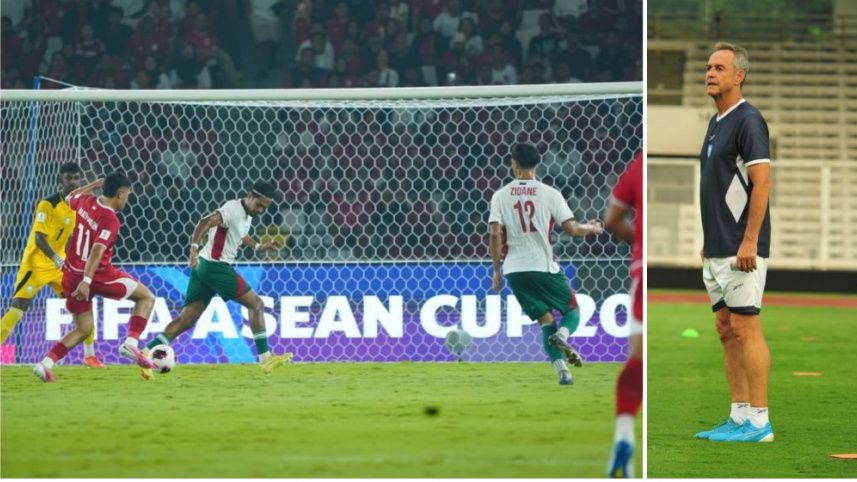
Thomas Dooley did not exactly discover anything new about Bangladesh football in Jakarta. In fact, almost everything the American-German coach said after Bangladesh’s humiliating 9-2 defeat to Indonesia in the ASEAN Cup group-stage final match has been discussed, debated and repeated for years.
The difference this time was perhaps the scale of the defeat—and the fact that the observations came from a coach who had just watched the shortcomings unfold against a much faster and technically superior opponent.

At the Gelora Bung Karno Stadium in Jakarta, Bangladesh were simply unable to cope with Indonesia’s pace, intensity, technical quality and decision-making. Despite having several overseas-based players, including Hamza Choudhury, Shamit Shome, Zidane Yousuf, Farhaan Ali Wahid, Shuki Itofusa, Tareq Kazi Raihan and Zayyan Ahmed, Bangladesh were exposed repeatedly as Indonesia turned the match into a one-sided contest.
The gulf was not merely tactical. It was a reflection of the footballing environments from which the two teams have emerged.
Bangladesh, ranked 181st in the FIFA rankings, finished the tournament with three defeats, conceding 13 goals and scoring only twice. Indonesia, ranked 118th, demonstrated why there is such a substantial gap between the two sides.
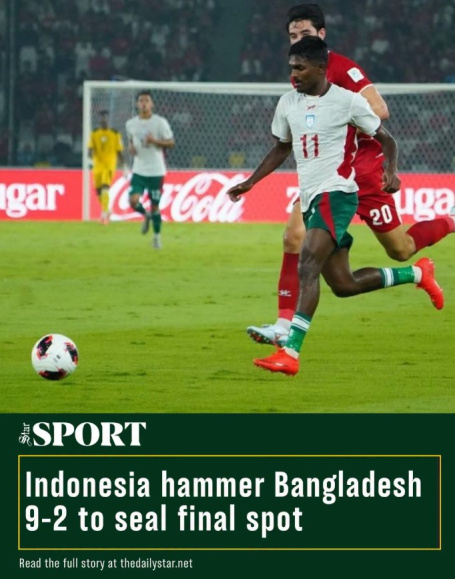
Dooley’s diagnosis was blunt: Bangladesh players simply do not get enough time playing and training at the intensity required to compete at a higher level.
“What we can learn [from this tournament], it is always like this when you want to develop and get better: it doesn't come overnight; it takes time,” Dooley said. “You have to find out what players you have, how they think, play, and train, and then discover what mistakes they make when real game time comes.”
There is little novelty in that assessment.
Bangladesh’s domestic coaches have been saying much the same thing for years—about inadequate training intensity, limited quality matches, slow decision-making, technical deficiencies and the lack of a sufficiently competitive domestic league. Yet the problems remain stubbornly familiar.
Dooley put a number to the problem, citing the much-discussed “10,000 hours” of practice required to reach the top level.
“You have to put 10,000 hours into football to reach the top of the leagues—that's about three hours a day for many years. That is something we are missing in Bangladesh to reach the level of other countries,” he said.
And perhaps that is the most uncomfortable part of the conversation. Bangladesh cannot expect players to make up years of developmental deficiencies simply by bringing in a handful of overseas-based footballers or changing coaches.
Against Indonesia, the shortcomings were visible in almost every department. Bangladesh players were slower to recognise situations, slower to make decisions and slower to execute them.
“When you play against these teams; your thinking and decision-making are slower, and your speed is slower,” Dooley said. “Everything in football is about speed: how fast you realise a situation, how fast you execute it, and how long it takes to get the ball under control.”
Again, nothing particularly revolutionary there. It is a criticism that has followed Bangladesh football for generations.
The real question is why the same problems continue to exist.
Indonesia, Malaysia and Thailand have invested in more competitive domestic structures, regular international matches and greater exposure for their players. Their best footballers increasingly move abroad and compete in stronger leagues, bringing that experience back into their national teams.
Dooley pointed directly to that difference.
“Look at the Malaysian teams playing in a league much stronger than ours in Bangladesh, or look at Indonesia and Thailand; those teams are better because they are training every single day for a year and playing very important games every weekend,” he said.
His point is difficult to dismiss. A national team does not suddenly become competitive simply because its players gather for a few days before an international match. International football is often the final product of a much larger football ecosystem.
 For all latest news, follow The Daily Star's Google News channel.
 And that ecosystem is where Bangladesh continues to lag.
Dooley also believes the value of the ASEAN Cup should not be measured only by results. For him, heavy defeats can be useful if they expose weaknesses that can subsequently be corrected.
The coaching staff, he said, are using video analysis to show players their mistakes repeatedly and train them to make better decisions, improve their passing and become comfortable with both feet.
“If you only play against teams behind you in the rankings and win, it looks great and builds confidence, but you don't develop,” Dooley said. “When you finally play a better, faster team, you are suddenly shocked.”
That is precisely what happened in Jakarta.
There was, however, an important context to the 9-2 scoreline. Indonesia needed a big victory to overtake Malaysia on goal difference and reach the final, meaning they had an incentive to continue attacking long after the outcome of the match itself had effectively been settled.
Dooley pointed to Indonesia’s earlier match against Singapore, where they took the lead and then managed the game rather than continuing to chase goals.
Against Bangladesh, there was no such luxury.
“Now, they had to beat us by a wide margin, turning it into a situation where they play seven minutes of added time just to score another goal,” Dooley explained.
That context does not erase Bangladesh’s shortcomings, but it does help explain why the scoreline became so extraordinary.
Now Bangladesh return home with the SAFF Championship in Dhaka awaiting them in November. And here Dooley’s message changes.
The ASEAN Cup, he says, was about learning. The SAFF Championship will be about winning.
“Our games here are for learning, but when we get back home, we need to win the SAFF tournament. There is no question about that.”
That is the immediate challenge.
But beyond November lies the much bigger question—the one Bangladesh football has been asking itself for years: when will the lessons finally turn into structural change?
Comments