


Fatema Tuz Jahara: The Bangladeshi behind China’s Olympic cricket dream

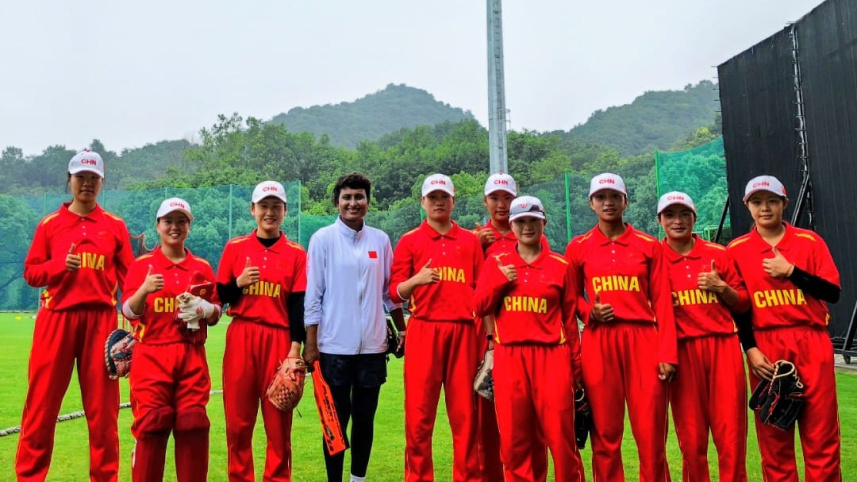
In 2023, Fatema Tuz Jahara walked into a cricket programme still trying to find its place in China. She found a women’s team with athletic ability but limited experience and little continuity.
The former Bangladesh international spent the next two years helping reshape the national setup. By the time she left China to join the Qatar national team in January this year, around 25 players were living and training in Hangzhou, a more structured daily programme was in place, and international-standard cricket venues were being developed in three cities.

“When I came here, they were building international cricket stadiums in three cities at the same time,” Jahara told The Daily Star.
“Very soon, they will completely move into one of those three stadiums. Soon, you will see China hosting many ICC and ACC events.”
The transformation was not straightforward. Cricket was not yet a secure career in China, while education remained essential, making it difficult to retain players.
“In China, it is difficult to survive without money or a job. That means education is a must,” said Jahara, who previously coached BKSP, Maldives and Sydney Cricket Club.
Several players moved on after university, while the senior generation retired together.
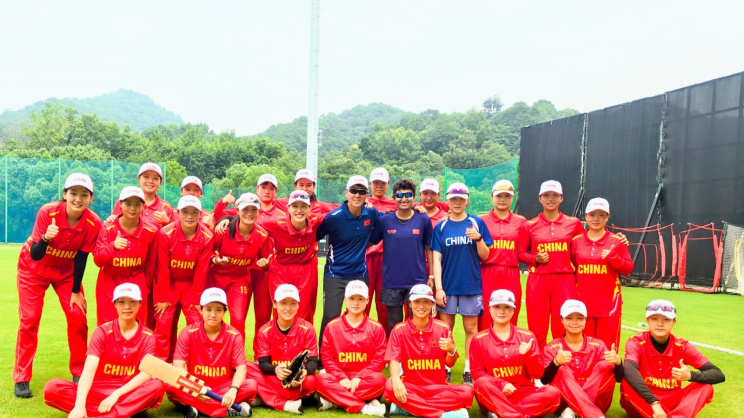
“All the senior players retired at around the same time. So I was left with a completely new group,” she said.
Jahara had to rebuild, identifying potential as much as teaching technique. One of her finds was Mingyue Zhu, whom she first noticed while Zhu was umpiring at a Belt and Road tournament in 2024.
Jahara had to rebuild, identifying potential as much as teaching technique.
“I noticed her physique and felt that she could be a good player. So I told her, ‘Once you finish your umpiring, join the national team.’”
Zhu began as a batter, but Jahara then asked her to bowl as well. She developed into an all-rounder and is now China’s captain.
Jahara also became a player-coach, demonstrating batting skills herself because the players often learned fastest by watching and repeating.
“I was kind of a player-coach with them. I would play and show them how to play different shots: the front-foot shots, back-foot shots and everything else.”
The progress became visible internationally.
China returned to the Asian Games this year after a 12-year absence, qualifying for Aichi-Nagoya after finishing among the top three at the Asian Games Women’s Cricket Qualifier in Kuala Lumpur. Their match against Bangladesh was washed out.
“I was actually very hopeful but also quite nervous about that match because if it had taken place, there could have been an upset,” Jahara said.
“Currently, the Chinese team are playing at a certain rhythm and level. They were ranked around 45th or 46th before, and now they are ranked 36th.”
The next step is to widen the base. China are expanding junior leagues, school teams and domestic competitions, with Jahara estimating that 200 to 300 players are now involved.
Cricket’s return to the Olympic programme for Los Angeles 2028 has given China another reason to invest, but the target is Brisbane 2032.
 For all latest news, follow The Daily Star's Google News channel.
 “Among the associate countries, China are the best at the moment. China are starting to operate at a fully professional level, including women’s cricket, and as an Olympic event, China are looking to win an Olympic medal,” Jahara said.
Cricket’s return to the Olympic programme for Los Angeles 2028 has given China another reason to invest, but the target is Brisbane 2032.
“They won’t be able to make it in 2028. They are going all out with the 2032 Olympics in Brisbane, Australia, as their target.”
For Jahara, that ambition is grounded in what she saw during her time there.
“It seemed realistic to me. Otherwise, why would they be developing three international venues at the same time and investing so much money in five-star hotels, gyms, swimming pools and whatever else is required?”
Comments