Youth, protests and pragmatism: What history tells us about the future

Why are student protests erupting across the world? How do they compare with past protest movements globally? What do they portend for international relations?
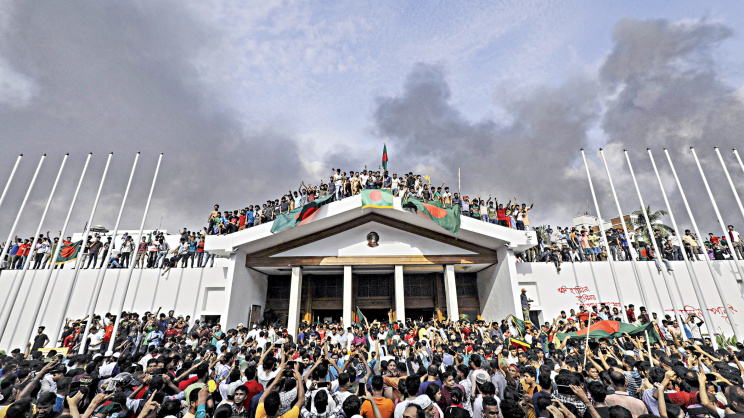
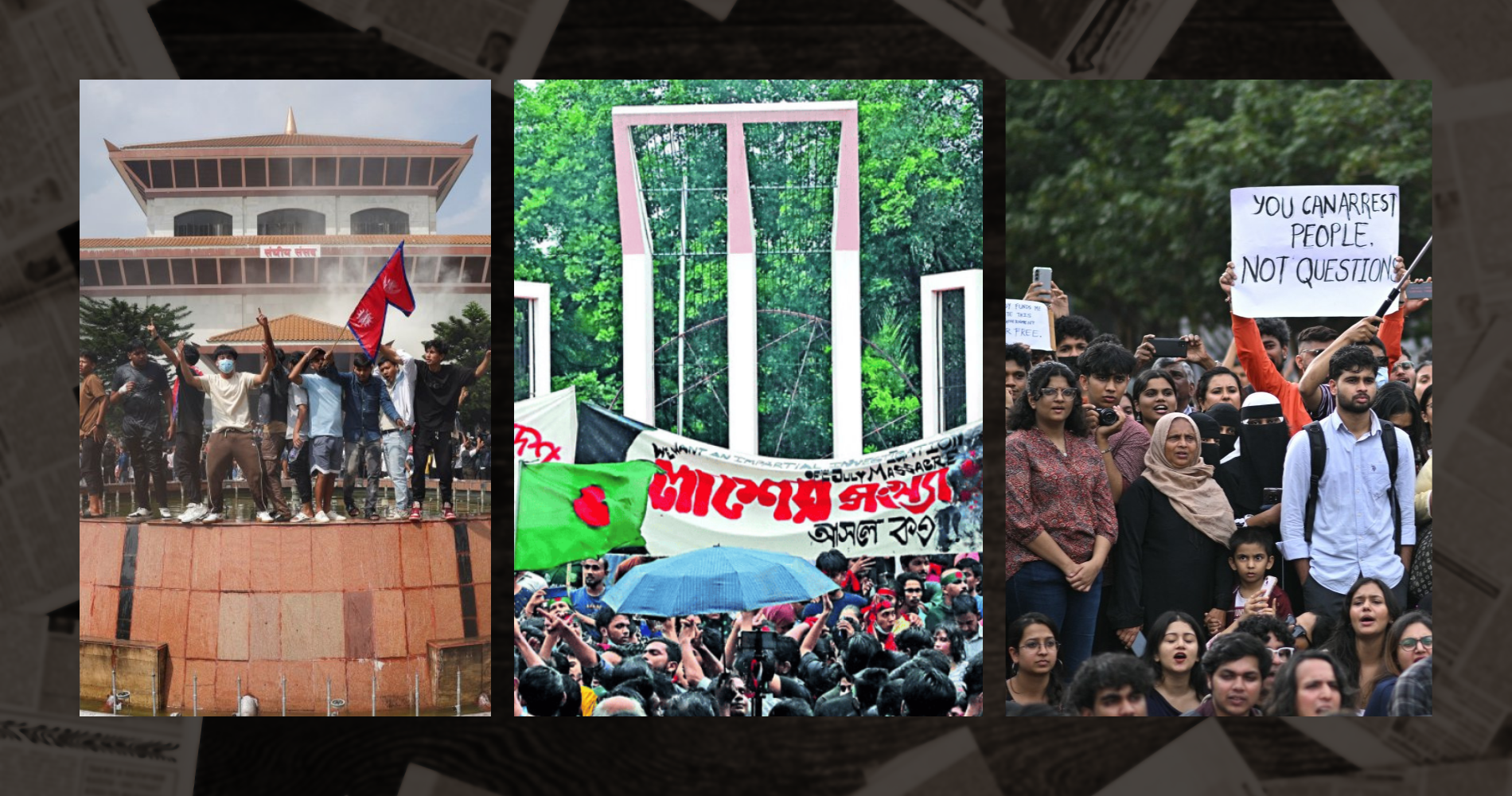
Along with Nepal and Sri Lanka, Bangladesh exemplified how a government with a deficient democratic record could be toppled. It was among the least ‘democratic’ of the 75-odd countries holding elections in 2024. Yet it climbed five notches (the highest climb by any country that year) on the Freedom House ‘democracy’ ladder. Over the previous 10 years, it had slipped 10 places.
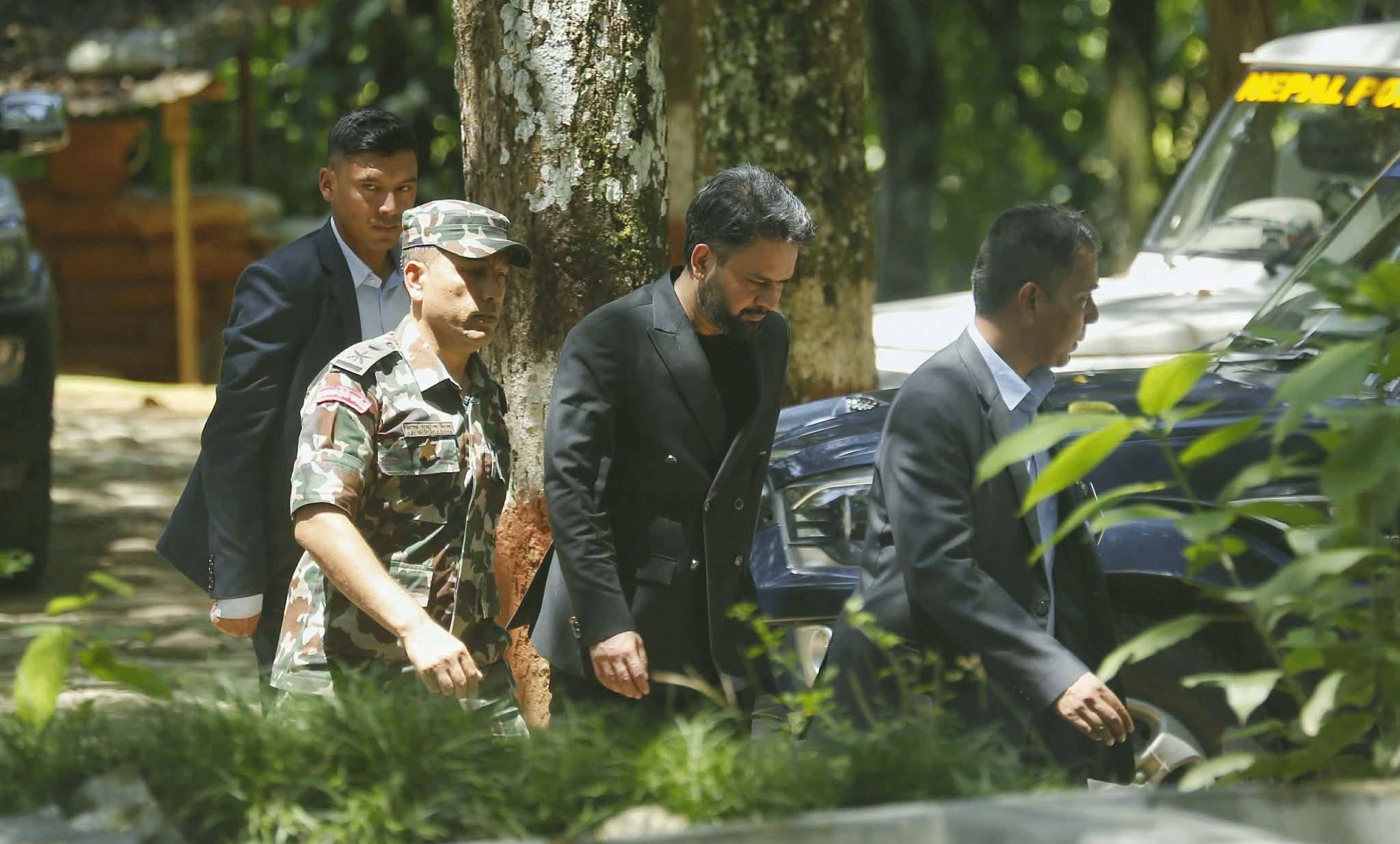
Nepal and Sri Lanka witnessed similar developments. Nepal elected the transparency-driven, 35-year-old mayor of Kathmandu, Balendra Shah, as its youngest prime minister in March 2026. His party, the Rastriya Swatantra Party (RSP), won 182 out of 275 seats. The demand for transparency spread across the country as the ‘new’ replaced the ‘old’.
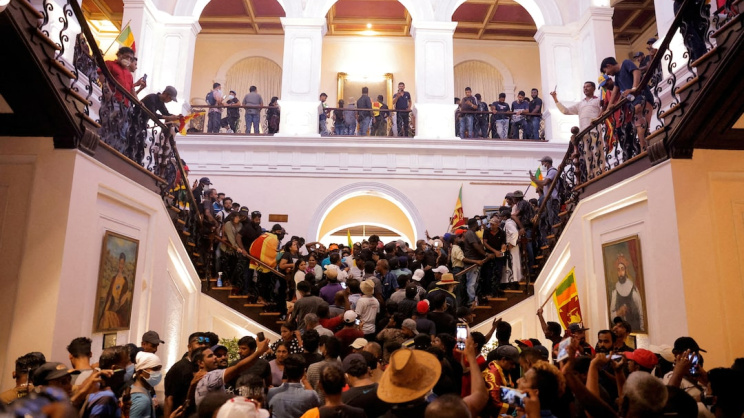
Sri Lanka, too, wanted change, though not necessarily through youth leadership. Fifty-seven-year-old Marxist Anura Kumara Dissanayake led his National People’s Power (NPP) to victory, securing 159 of the 225 seats, including support from ethnic minority voters. Why? Not necessarily because Marxism was popular (particularly since he cooperates with the World Bank), but because the ‘tried and tested’ political establishment had to go.
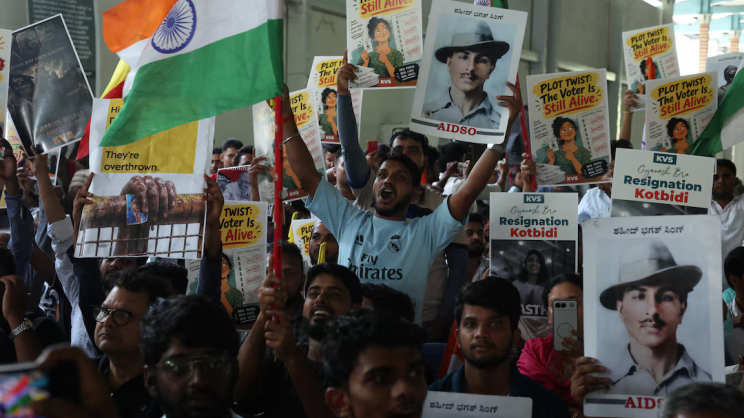
Elsewhere in South Asia, India’s ongoing ‘cockroach movement’ (Cockroach Janata Party) also targets the ‘establishment’. Emerging from protests against leaked examination questions in July 2026, the party also emphasises youth participation (one leader, Abhijeet Dipke, is barely 30 years old) and particularly women's representation (proposing to reserve 50 per cent of parliamentary seats for women).
Europe’s young people are showing similar tendencies. Following a summer marked by deadly heatwaves and forest fires, French secondary school students and young people, particularly in Spain’s major cities, have protested loudly, extensively and persistently against failing education and housing policies, respectively. Elections were rescheduled for the following month in Spain. France’s regular election is due next year (while its protests are also inspiring Belgian youths). Protesters want changes sooner.
Even Americans are seething. We will know in a month whether young Americans take electoral revenge for spiralling prices resulting from an unpopular war, while Brazilians may punish ageing policymakers blamed for today’s social problems (the growth of evangelical beliefs, populism, crime and so on). In a year, young Argentinians will show whether the 55 per cent vote share Javier Milei received in 2023 will decline further from the 35–40 per cent level seen today.
Will domestic problems hamper international relations, particularly when dependence on external forces is growing (as the Hormuz price crisis demonstrates starkly and social media illustrates more subtly)? Domestic interests are driving tariff policies, as we can see unfolding before our eyes. Is Bangladesh preparing accordingly? Does it have a Plan B?
Another domestic dynamic is democracy, which provides a platform for uninhibited expression. Can democracy and tariffs coexist? That tension invites populism. Is democracy being reshaped to accommodate populism, as democratic voting patterns appear to confirm? Navigating these tempest-tossed seas is not easy.
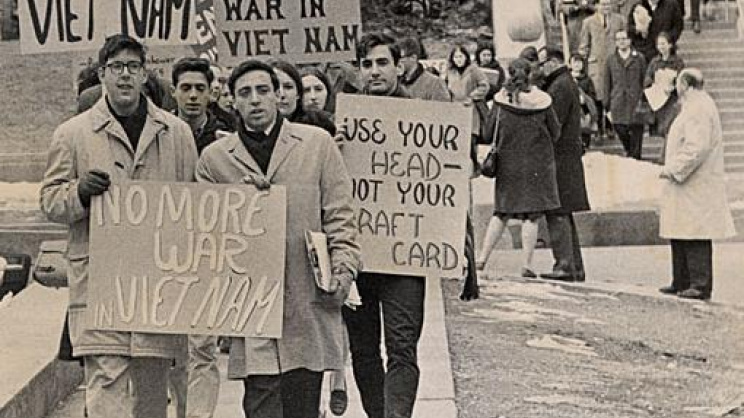
Comparing historical episodes offers further insights. Using their most prominent platform, music (the equivalent of social media in terms of its reach and influence at the time), Baby Boomers (born after World War II but before 1965) expressed their pain through songs such as ‘Where Have All the Flowers Gone?’, ‘Blowin’ in the Wind’, ‘Eve of Destruction’ and ‘Universal Soldier’, among others. They emphatically demanded an end to wars. International developments mattered greatly then, as the Vietnam War illustrated, but unchecked domestic police power was equally unpopular: ‘Ohio’ (with its refrain ‘Four dead in Ohio’) and ‘For What It’s Worth’ conveyed that sentiment. Challenging established authority and advancing civil rights movements became rallying cries. The issues were broad in scope then. Immigration, which fuels populism today, gradually brought more specific concerns to the forefront. As immigration increasingly divides countries, the importance of the links between domestic and international developments only grows.
Youth protests outside the West focused on domestic failings, particularly dictatorships, as Pakistan’s student movements demonstrate. These movements challenged the military government established in 1958, contributed to pressures surrounding the introduction of ‘basic democracy’ by 1962, and eventually helped force Field Marshal Ayub Khan to resign in 1969. Pakistan’s most democratic election took place in 1970. Ill-prepared to accept its outcome, Pakistan descended into a crisis that culminated in its break-up in 1971.
Similar cases were widespread across the ‘Third World’ and ‘non-aligned’ countries, driven by both domestic and external factors. Domestic concerns were important for newly independent countries pursuing democracy and development. Similarly, external considerations involved securing foreign assistance to advance development and gaining international support to strengthen democracy. The Cold War undermined both objectives by weakening democracy and strengthening dictatorships (as seen in Iran, Pakistan and Turkey, which belonged to the Central Treaty Organization, or CENTO; in the Southeast Asian members of the Southeast Asia Treaty Organization, or SEATO, along with Pakistan; and even in Chile, where Salvador Allende was overthrown by General Augusto Pinochet Ugarte in 1973 despite his commitment to democracy).
Development assistance came with political ‘strings’ attached, and ‘Third World’ countries reluctantly complied. They eventually challenged these arrangements and called for a New International Economic Order (NIEO) in 1974, seeking greater economic independence and room for manoeuvre.
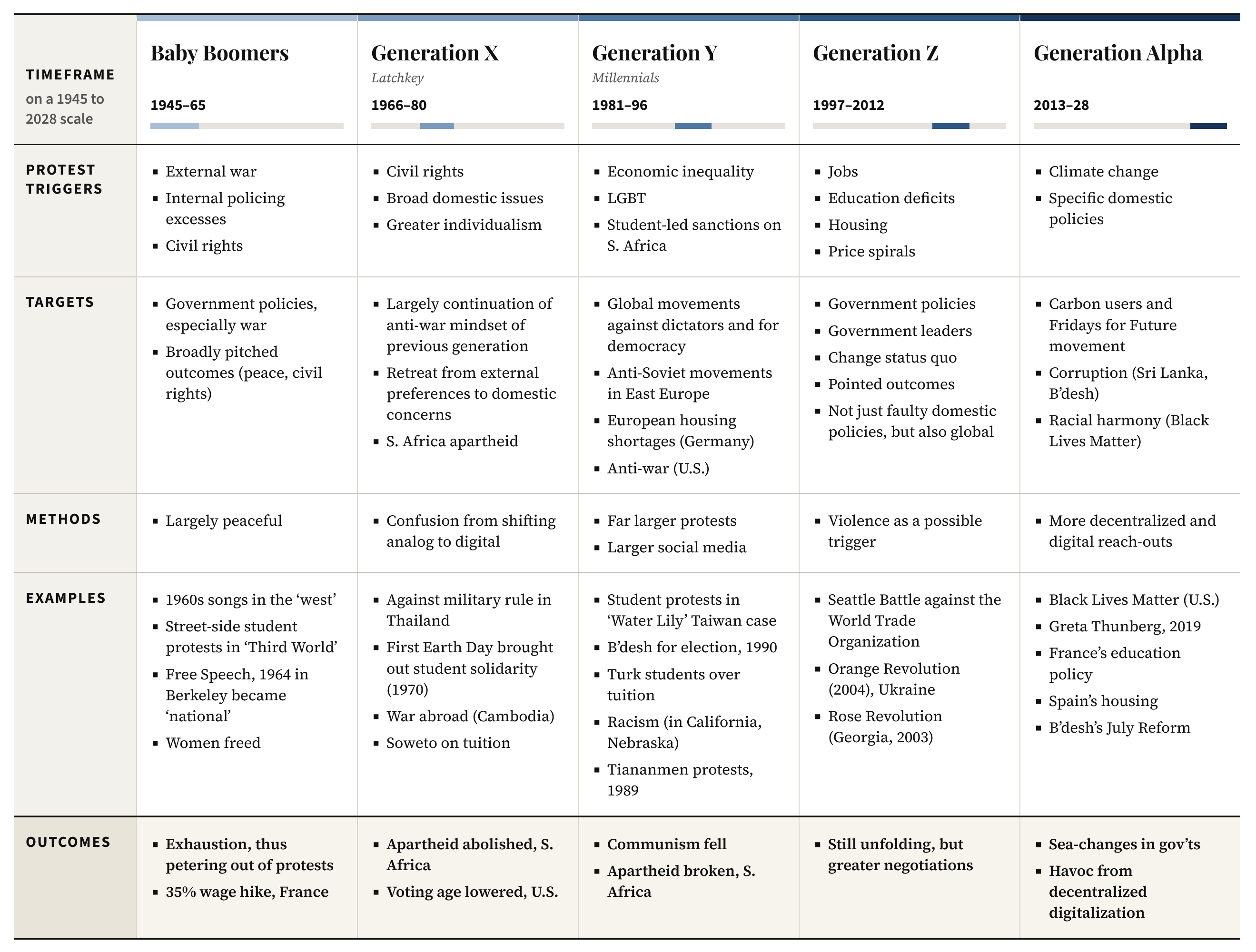
By then, new generations had begun to emerge (roughly every 15 years): Generation X (1966–1980), Generation Y (or Millennials, 1981–1996), Generation Z (1997–2012) and today’s Generation Alpha (2013–2028), as shown in the table. Analysts might argue that the principal casualties were the hopes raised by the end of World War II. People progressively lived longer and raised smaller families, but increasingly serious policymaking failures continued to undermine their expectations. Growing government bailouts and deficits fuelled public disenchantment. As demands for democracy increased, protests multiplied: African Americans in the United States fought for voting rights (culminating in the Voting Rights Act of 1965); movements for gender equality subsequently gained momentum worldwide; and citizens across the ‘Third World’ continued, and in many cases still continue, to struggle for the right to vote freely.
Spiralling domestic challenges have intensified other concerns. Climate change is one, migration another (both legal and illegal), and smuggling a third, among others. Together, these challenges threaten to erode the gains achieved since World War II. Greta Thunberg brought climate change forcefully into public debate, helping amplify the concerns of younger generations, including Generation Alpha. Ironically, concerns about employment tend to generate political responses primarily at the local or domestic level rather than internationally, complicating the much-needed connections between domestic and international policymaking.
At least four themes emerge from these developments. First, the increasingly inward focus of post-World War II youth protests has gradually fuelled nationalism. Second, although more people worldwide demand democratic rights, democracy itself is not necessarily advancing. Freedom House reports a continuing decline in global freedom. Third, despite enormous strides in economic development (from the spread of the Second Industrial Revolution to the emergence of the Third and Fourth Industrial Revolutions), societies have become increasingly stratified (through growing inequality) and segregated (along ethnic, political and racial lines). Finally, the combined pursuit of democracy and development has generated costs that even democratic and developed countries increasingly struggle to bear.
As hopes turn to despair, international relations also suffer. First, as established societies confront the pressures and political debates surrounding immigration, populism has gained ground, particularly across Western Europe and the United States. Second, the proliferation of populist governments can heighten the risk of conflict, as the experience of the 1930s starkly demonstrated. Third, as balanced policymaking gives way to more divisive approaches, the authority delegated to international organisations also begins to erode. Finally, this unstable environment alters the global structure, challenges world leaders, creates uncertainty and reshapes international political dynamics. Together, these developments deepen crises over time.
Electoral outcomes over the past two to three years (in Bangladesh, Nepal and Sri Lanka) could offer indications of future political developments (in Argentina, Brazil, France, Spain and the United States, among others): growing populism and increasingly widening political and social divisions.
‘We ain’t seen nothing yet’, as the saying goes. In 1962, Bob Dylan warned of a ‘hard rain’ to come. The optimistic ‘fathers’ and their ‘blue-eyed sons’ in Dylan’s imagery could travel through ‘misty mountains’ and along ‘crooked highways’, but not necessarily reach the idealised destinations they had envisioned through ending wars, advancing democracy and embracing development. That predicament has intensified over time and now makes the need for balanced, pragmatic policymaking increasingly urgent, both within individual countries and in relations between them.
Imtiaz A. Hussain is a professor of Global Studies and Government (GSG) at Independent University, Bangladesh (IUB).
Send your articles for Slow Reads to slowreads@thedailystar.net. Check out our submission guidelines for details.

What should 'Bangladesh First' mean for foreign policy?

Navigating the US-China rivalry: Bangladesh cannot outsource its AI sovereignty
After America leaves, what next for Iraq?
Three years after October 7: When a date became an alibi for genocide
Can Bangladesh capitalise on the Bay of Bengal’s strategic rise?

Who pays for Israel’s nuclear dominance?

How much higher can oil prices go?

Beyond the ‘end of history’ and the ‘clash of civilisations’ / What kind of world order is emerging?

The South Korea opportunity Bangladesh is overlooking