After America leaves, what next for Iraq?
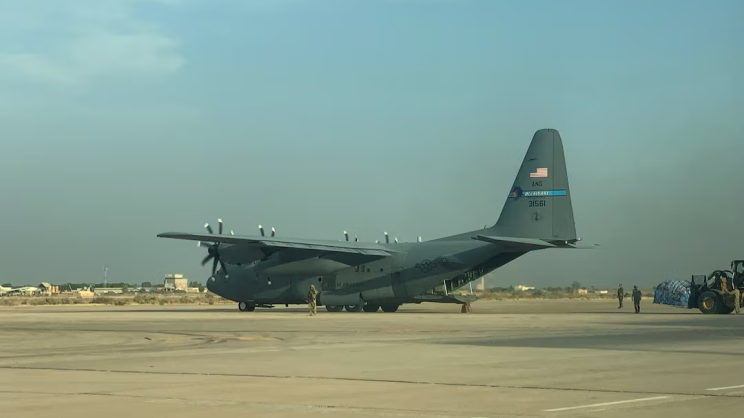
The last American transport aircraft left Erbil on 30 September, ending a protracted military presence that began in 2003. The date came from an agreement signed in 2024, when the region looked very different. However, the regional theatre has grown increasingly strained since 28 February, when the US-Israel alignment initiated a joint military campaign against Iran, with no sign of a ceasefire in sight. Hence, the question crops up: will this exit not embolden the beleaguered Iranian regime? Whatever the consequences, Washington has kept to the promised timetable, and President Trump flamboyantly called the exit ‘a decisive victory over ISIS’.
Americans have left like this before. In December 2011, the last convoy crossed into Kuwait on a schedule George W. Bush had signed and Barack Obama carried out. Mosul fell to the Islamic State in June 2014, and American aircraft were bombing Iraq again by August. In Afghanistan, the Doha deal of February 2020, negotiated with the Taliban and without Kabul, promised an exit by May 2021. Joe Biden moved the date to 11 September. Kabul fell on 15 August, two weeks before the final flight.
However, Iraq is not Afghanistan. Iraq has oil revenue and an army that has fought ISIS cells largely on its own for years. The danger here is slower to emerge. For two decades, the Iran-aligned militias justified their covert rackets by pointing to the presence of American troops. That external factor has gone, although the weapons and resistance cells, in all probability, remain active. Hours after the withdrawal, Kataib Hezbollah’s leader, Abu Hussein al-Hamidawi, declared that ‘the resistance has won this round’ and denied any disarmament deal with Prime Minister Ali al-Zaidi. His spokesman says the group is bound by no timetable. So the daunting challenge for Iraq under Prime Minister Al-Zaidi will be to control the pushback and disarm men who might be delighted to believe that they have defeated a superpower.
Yet the contrary view, affirmed by the Pentagon, is that the Islamic State holds no territory. Nevertheless, in January, Kurdish-led forces abandoned the al-Hol camp in Syria, and the United States moved ISIS prisoners into Iraqi custody under a plan covering up to 7,000 detainees. They are now being kept incarcerated in Iraqi jails while the coalition’s task force operates from Jordan. In July 2013, eighteen months after the first American exit, the group that became ISIS stormed Abu Ghraib and freed some 500 inmates. The two threats feed each other. If militias loyal to Tehran tighten their grip on Sunni provinces, the resentment that supplied ISIS with recruits could return, while jihadist violence would give the militias a fresh reason to remain armed.
The region is rapidly becoming exposed to this looming risk. The Kurdistan region counted more than 1,000 drone and missile attacks during the war. More such offensives are anticipated as American air defences have left along with the American forces. Jordan, which now hosts the anti-ISIS headquarters, may palpably become a likelier target. Saudi Arabia has already been struck from Iraqi soil by militias working with the Houthis; Riyadh therefore faces a hostile front to its north as well as its south, for which the parties to the Makkah Pact recently met in an emergency meeting to bolster security. Turkey, which has long kept troops in northern Iraq, is now gradually scaling down its military posture there as part of its agreement to hand the strategic base back to Iraq. For Iran, battered by seven months of bombing, Iraq is the one arena where it has gained, though Iran itself remains a weakened patron. Henceforth, with no American soldiers left to absorb the shock of retaliation, the United States and Israel may find it easier to return and bomb Iraq from the air in the future.
Finally, confronting the puzzle of what transpires from this withdrawal requires a combination of perceptions about how to weigh threats while keeping the option of future intervention open. Until then, the US seems intent on avoiding violent and costly regional entanglements. Of course, its priority will be to maintain maritime security at vital chokepoints. Hence, the US withdrawal from Iraq cannot be equated with a generalised approach towards an overall shift away from the Persian Gulf. This pull-out, therefore, should not be naively construed as a compromise of America’s persistent strategic engagement in the Gulf, even though allies hosting US forces in the Gulf and East Asia have watched several exits governed by the calendar.
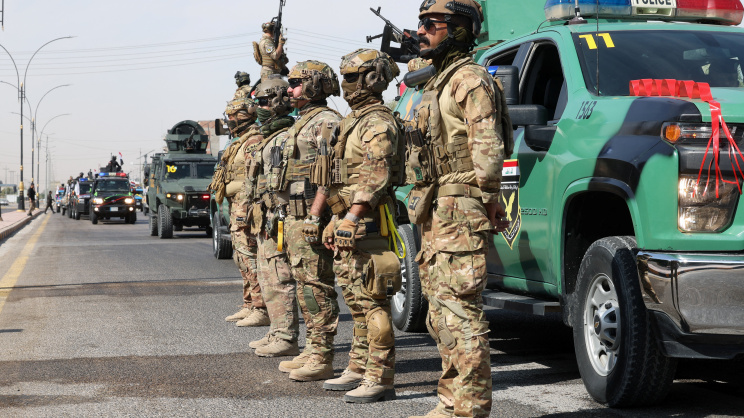
NATO pulled its mission out of Iraq in March because of the war. Al-Zaidi has invited foreign powers to invest, and China, already the largest buyer of Iraqi oil, is the obvious candidate to fill the commercial space without taking on any security burdens. Baghdad is also seeking export routes to avoid the Strait of Hormuz. That search matters to India because, for years, India has featured among the biggest buyers of Iraqi crude and is home to millions of workers with ties to the Gulf whose safety depends on diplomacy, not war.
None of this means that the troops should stay indefinitely. Iraq’s parliament voted for their departure in January 2020, and a foreign garrison cannot be the permanent answer to a country’s political problems. What deserves scrutiny is the method: a date fixed two years in advance and adhered to while a war continues next door. When information-sharing, rescue operations and the protection of regional infrastructure assume greater urgency, intuition suggests keeping boots on the ground. Otherwise, will the Eagle return for a third time?
Dr Gouri Sankar Nag is Professor of Political Science at SKB University, West Bengal, and Dr Arpan Bhattacharya is Assistant Professor of Political Science at Ramananda College, Bankura, West Bengal.
Send your articles for Slow Reads to slowreads@thedailystar.net. Check out our submission guidelines for details.
Three years after October 7: When a date became an alibi for genocide
Can Bangladesh capitalise on the Bay of Bengal’s strategic rise?
Who pays for Israel’s nuclear dominance?

How much higher can oil prices go?
Beyond the ‘end of history’ and the ‘clash of civilisations’ / What kind of world order is emerging?

The South Korea opportunity Bangladesh is overlooking
Geopolitical ghosts and the United Nations
BRICS is bigger, but can it deliver?
Can Tarique Rahman’s plan break the Rohingya repatriation deadlock?